History of World Baseball Classic in Timeline


The World Baseball Classic (WBC) is an international baseball tournament sanctioned by the World Baseball Softball Confederation (WBSC). Organized by World Baseball Classic Inc., a partnership between the WBSC, Major League Baseball (MLB), and the Major League Baseball Players Association (MLBPA). The winner receives the World Baseball Classic Championship Trophy and the title of "world champion." It stands as one of the two major senior baseball tournaments sanctioned by the WBSC, alongside the WBSC Premier12.
3 hours ago : Predictions surface for the 2026 World Baseball Classic, focusing on Team USA's chances.
Experts are making predictions for the 2026 World Baseball Classic, analyzing Team USA's potential roster, lineup, and chances of winning the tournament. Dark horse teams and breakout stars are also being considered for the upcoming event.


1912: Baseball at the Summer Olympic Games
Baseball was intermittently played at the Summer Olympic Games as early as 1912.
1938: Inaugural Amateur World Series
In 1938, the inaugural Amateur World Series was contested by Great Britain and the United States, with Great Britain winning.
1984: Baseball as demonstration sport at Los Angeles Games
In 1984, baseball was recognized as an official demonstration sport at the Los Angeles Games.
1988: Amateur World Series Renamed
In 1988, the Amateur World Series was renamed the Baseball World Cup.
1992: Baseball as medal sport at Summer Olympics
In 1992, at the Summer Olympic Games, baseball was accorded the status of a medal sport.
2004: Campaigning for a professional baseball tournament
In 2004, Gene Orza began campaigning for a tournament with the express involvement of top-level professional ballplayers.
May 11, 2005: Inaugural tournament announced
On May 11, 2005, the inaugural World Baseball Classic tournament was announced by MLB commissioner Bud Selig and MLBPA president Donald Fehr.
May 2005: Announcement of the first World Baseball Classic tournament
In May 2005, the first World Baseball Classic tournament was announced by Bud Selig, the commissioner of Major League Baseball.
September 16, 2005: NPB accepts invitation
On September 16, 2005, after four months of negotiations, Nippon Professional Baseball (NPB) officially notified the IBAF and MLB they had accepted the invitation to participate in the tournament.
2005: MLB proposes World Baseball Classic
In 2005, MLB and its Players Association proposed the creation of the World Baseball Classic as an invitational event.
March 3, 2006: First game in WBC history
On March 3, 2006, the first game in WBC history saw South Korea defeat Chinese Taipei 2–0 at the Tokyo Dome.
2006: Daisuke Matsuzaka wins MVP in 2006
Daisuke Matsuzaka of Japan won the MVP award in 2006, pitching 13 innings and finishing with a 3–0 record. Soon after this performance, Matsuzaka received a multi-million dollar contract to join the Boston Red Sox of MLB.
2006: First WBC tournament
From 2006 to 2023, the WBC has been held five times, with Japan, the Dominican Republic, and the United States winning the championship. Japan secured back-to-back wins in 2006 and 2009.
2006: Japan wins the 2006 WBC
In 2006, Yu Darvish helped Japan clinch their successful defense of their championship in extra innings against South Korea with a final score of 5-3.
2006: High-caliber players participate in the WBC
In 2006, many high caliber players from both MLB and in leagues around the world participated in the WBC. Amongst the players that made the All-WBC team were Americans Derek Jeter and Ken Griffey Jr. From Japan, Daisuke Matsuzaka, Ichiro Suzuki, and Tomoya Satozaki were on the team. Other internationals included players from Cuba—Yulieski Gurriel, Yoandy Garlobo, and Yadel Martí; and from the Dominican Republic—Albert Pujols, Pedro Martínez, and José Bautista.
2006: First World Baseball Classic held
In 2006, the first World Baseball Classic was held as an invitational event, coexisting with Olympic baseball and the Baseball World Cup.
2006: 2017 tournament format returned to 2006 format
The 2017 tournament returned to the format used in 2006, where both the first and second rounds were round-robin, though with the addition of tiebreaker games if needed.
2006: Success of the 2006 tournament
The success of the 2006 tournament led organizers to immediately begin planning for a follow-up tournament in 2009.
2008: Olympic baseball coexistence
Until 2008, the World Baseball Classic coexisted with Olympic baseball as tournaments sanctioned by the International Baseball Federation.
2009: Daisuke Matsuzaka wins MVP again in 2009
Again in the 2009 WBC, Daisuke Matsuzaka received the world classic MVP, finishing with a record of 3–0 and an ERA of 2.54.
2009: WBC planned every four years
Following the 2009 event, plans were made for the WBC to be repeated every four years.
2009: Extra innings rule implemented in 2009
From 2009 through 2017, starting with the 11th inning, teams automatically start with runners on first and second base. The baserunners are the players in the two batting order positions previous to the leadoff batter for the inning. Organizers put this rule in place starting with the 2009 tournament, although originally, it did not come into effect until the 13th inning.
2009: Key players do not participate in the 2013 Tournament
In the 2013 tournament, many key players from the 2009 Japanese team such as Yu Darvish, Ichiro, and Hisashi Iwakuma did not participate.
2009: NPB players' union concerns
Nippon Professional Baseball (NPB) and its players' association had a disagreement over participation in the tournament, with the players' union concerned about representation for the 2009 tournament.
2009: High-profile field in the 2009 Classic
The 2009 classic saw a similarly high-profile field, with a number of players such as future Hall of Famers Pedro Martínez, Iván Rodríguez, and Chipper Jones and the major international debuts of Cuba's Yoenis Céspedes and Aroldis Chapman.
2009: 2009 WBC format change
The 2009 iteration of the tournament featured the same 16 teams from 2006. However, the round-robin format from 2006 was replaced by a modified double-elimination format for the first two rounds.
2009: Qualifying round
The buildup to the 2013 tournament included a qualifying round for the first time, with the four lowest finishers from 2009 having to re-qualify against 12 additional teams.
2009: Planning for a follow-up tournament
The success of the 2006 tournament led organizers to immediately begin planning for a follow-up tournament in 2009.
2011: Baseball World Cup Discontinued
In 2011, the Baseball World Cup was discontinued after the WBSC accepted an MLB suggestion to make the WBC the officially-sanctioned world championship.
2011: WBSC discontinues Baseball World Cup
In 2011, the WBSC discontinued the Baseball World Cup, last held that year.
2011: Baseball World Cup
Prior to the advent of the WBC, the Baseball World Cup was sanctioned by the International Baseball Federation (IBAF) and held 38 times from 1938 to 2011.
September 2012: Compromise reached with tournament organizers
In September 2012, Japanese players agreed to take part in the 2013 tournament after reaching a compromise with tournament organizers on sharing sponsorship and licensing revenue.
2012: Baseball dropped from Olympic program
In 2012, baseball was once again dropped from the Olympic program.
2013: Qualifying round added in 2013
A qualifying round was added leading into the 2013 tournament and takes place in the year before the main tournament. Brazil and Spain were the first new countries to earn berths in the WBC via qualification, and so far the addition of qualifying has allowed seven nations to play in the tournament who were not part of the original 16.
2013: Dominican Republic won WBC without losing a game
After the match, Japan was congratulated for their victory by Japanese prime minister Fumio Kishida. They became the second team to win the WBC without losing a single game the entire tournament, after the Dominican Republic in 2013.
2013: Extra innings rule implemented in the 2009 WBC
As no extra-inning games in either the 2009 or 2013 WBCs reached the point where the rule came into play, it took until the 2017 WBC for it to affect a game's outcome.
2013: Tiebreaker rules and Team Quality Balance in 2013
During the 2013 WBC, the number of runs by which a team wins a game may be relevant if a tie later develops in the standings. In such cases, teams are ranked by their Team Quality Balance, which rewards them for scoring by as many runs as possible, and for winning with as few of their batters getting out as possible when batting in the bottom of the inning. This caused problems during the 2013 WBC, where one game spawned a bench-clearing brawl between Canada and Mexico: Canadian hitter Chris Robinson had bunted for a base hit after Canada had already taken a large lead, causing Mexican pitcher Arnold León to throw three consecutive pitches at the next hitter, Rene Tosoni.
2013: Boycott threat and player participation in the 2013 Tournament
For the 2013 tournament, Japanese players threatened to boycott the event despite its domestic popularity, before later agreeing to take part after reaching a compromise in September 2012 with tournament organizers on sharing sponsorship and licensing revenue. Nevertheless, many key players from the 2009 Japanese team such as Yu Darvish, Ichiro, and Hisashi Iwakuma did not participate. However, other prominent MLB players played, such as Miguel Cabrera, David Wright, R. A. Dickey, Joey Votto, Adrián González, Robinson Canó, and José Reyes, among many others.
2013: Robinson Canó wins MVP in 2013
In 2013, Robinson Canó won MVP after hitting .469 with two home runs and six RBI in the tournament.
2013: IBAF merged with ISF
In 2013, the IBAF merged with the International Softball Federation to form the World Baseball Softball Confederation (WBSC).
2013: Qualifying round added to WBC tournament
In 2013, the WBC tournament included a qualifying round for the first time, with the four lowest finishers from 2009 having to re-qualify against 12 additional teams.
2013: WBC Sanctioned Tournament
In 2013, the WBC was one of the two main senior baseball tournaments sanctioned by the WBSC, alongside the Premier12.
2013: Third installment of the Classic
In 2013, the third installment of the Classic was held.
2013: Dominican Republic Winning Streak
In 2017, the defending champion Dominican Republic extended its WBC winning streak to 11 games, dating to the 2013 tournament, before being eliminated in the second round.
2013: Qualification setup for 2013 and 2017 WBCs
The qualification setup for the 2013 and 2017 WBCs featured the top 12 finishing teams from the previous WBC being automatically entered in the following edition, while the four lowest finishers were relegated to the qualifying round.
2017: Extra innings rule affects game outcome in 2017
As no extra-inning games in either the 2009 or 2013 WBCs reached the point where the rule came into play, it took until the 2017 WBC for it to affect a game's outcome. There were three such games in 2017, and all three were decided in the 11th inning.
2017: Former All-Stars participate in 2017
In 2017, former All-Stars such as Adam Jones, Chris Archer, Buster Posey, Paul Goldschmidt, Andrew McCutchen and others played for the United States. For the Dominican Republic, former All-Stars Adrián Beltré, Robinson Canó, Manny Machado, José Reyes, Edinson Vólquez, and more participated. Adrián González returend for Mexico, and Yadier Molina and Carlos Beltrán represented Puerto Rico alongside up-and-coming stars such as Javier Báez, Carlos Correa, and Francisco Lindor. Venezuela's roster included Jose Altuve and Miguel Cabrera.
2017: Fourth installment of the Classic
In 2017, the fourth installment of the Classic was held.
2017: Marcus Stroman played for Puerto Rico in 2023.
Marcus Stroman, the MVP of the 2017 WBC with the U.S., chose to play for Puerto Rico in 2023.
2017: 2017 tournament format
The 2017 tournament returned to the format used in 2006, where both the first and second rounds were round-robin, though with the addition of tiebreaker games if needed.
2017: Qualification setup for 2013 and 2017 WBCs
The qualification setup for the 2013 and 2017 WBCs featured the top 12 finishing teams from the previous WBC being automatically entered in the following edition, while the four lowest finishers were relegated to the qualifying round. Qualifying consisted of four four-team modified double-elimination tournaments, with the winners earning the last four slots in the main tournament.
2017: Tiebreakers changed for the 2017 WBC
The tiebreakers were changed starting in the 2017 WBC to be "fewest runs allowed per inning of defense in head-to-head games", which still places an emphasis on scoring as many runs as possible (whilst also allowing the fewest runs as possible).
2017: Marcus Stroman wins MVP in 2017
Toronto Blue Jays pitcher Marcus Stroman won the award in 2017 for the U.S. Stroman posted a 2.35 ERA over three starts and no-hit Puerto Rico through six innings in an 8–0 win in the Finals.
2017: All 16 participants from 2017 WBC received automatic bids
With the 2023 WBC expanding to 20 teams, all 16 participants from the 2017 WBC received automatic bids.
January 2020: WBC expansion announcement
In January 2020, MLB announced that the 2021 WBC would be expanded to 20 teams.
March 2020: 2021 tournament postponed
On March 12, 2020, MLB announced that the 2021 tournament would be postponed due to the COVID-19 pandemic.
2020: Baseball as optional event
In 2020, baseball appeared as an optional event in the Olympics.
2021: Postponement of the 2021 WBC
In March 2020, MLB announced that the 2021 tournament would be postponed due to the COVID-19 pandemic.
2021: 2021-22 CBA plans for next WBC
The collective bargaining agreement (CBA) from the 2021–22 Major League Baseball lockout planned for the next WBC to be held in 2023.
October 5, 2022: WBC Qualification Concluded
On October 5, 2022, qualification for the tournament concluded, with Nicaragua claiming the final berth in a victory against Brazil.
March 21, 2023: 2023 WBC took place
The 2023 WBC competition took place from March 8 to March 21, 2023.
2023: All-time WBC individual leaders
All-time WBC individual leaders in various counting statistical categories through the end of the 2023 tournament, excluding qualifier games.
2023: All-WBC team selections in 2023
At the end of each tournament, an all-star team is selected based on their play in the tournament. At the end of the 2023 tournament, Japanese two-way player Shohei Ohtani is the only player to be named to the All-WBC team at two separate positions, having been named to the 2023 team as both a designated hitter and a pitcher. Japanese pitcher Daisuke Matsuzaka, Puerto Rican catcher Yadier Molina and Puerto Rican shortstop Javier Báez are the only players to be named to the All-WBC team twice.
2023: Video review added in 2023
Beginning in the 2023 WBC, video review is available for all situations as it would be during a MLB regular season game.
2023: MLB Stars Participate in 2023 Classic
For the 2023 classic, the MLB urged its stars to participate which motivated a cascade of others including Mike Trout, Trea Turner, Paul Goldschmidt, Nolan Arenado, J. T. Realmuto, Mookie Betts and more of MLB's finest to join the U.S.
2023: Shohei Ohtani wins MVP in 2023
In 2023, Los Angeles Angels two-way superstar Shohei Ohtani claimed MVP honors after slashing .435/.606/.739 as a hitter and posting a 1.86 ERA and 11 strikeouts in 92⁄3 innings as a pitcher, also pitching the final inning of Japan's win over the U.S. in the final.
2023: Next WBC announced
In 2023, MLB commissioner Rob Manfred announced the next World Baseball Classic would be held in 2026. Sixteen teams qualified by making the top four of their respective pools during the 2023 tournament.
2023: Randy Arozarena played for Mexico in the 2023 WBC.
In 2023, Randy Arozarena, who was born in Cuba, opted to play for Mexico since WBC rules allowed players who legally were residents in a country to play for that country, having asked Mexican president Andrés Manuel López Obrador to help him in his case for approval of his application as a citizen of Mexico.
2023: Heritage Participation in the 2023 WBC
In 2023, St Louis Cardinals teammates Lars Nootbaar and Tommy Edman participated as part of Japan and South Korea, respectively, in honor of both their mothers' heritages. Similarly, Los Angeles Dodgers player Freddie Freeman played for Canada, in honor of his late mother.
2023: Former All-Stars on the U.S. team in 2023
In 2023, former All-Stars on the U.S. team included Mike Trout, Nolan Arenado, Pete Alonso, Mookie Betts, Tim Anderson, Jeff McNeil, J. T. Realmuto, Kyle Schwarber, Trea Turner, Kyle Tucker, Ryan Pressly, Lance Lynn, Miles Mikolas, and Paul Goldschmidt.
2023: WBC extra-innings rules changed in 2023
In 2023, the rule was changed to bring the WBC in line with MLB extra-innings rules.
2023: Japan wins the 2023 tournament
Japan won the championship in the 2023 tournament, marking their third win overall.
2023: 2023 WBC Viewership
The 2023 WBC was one of the most viewed sporting events in the world.
2023: Popularity and revenue of the 2023 WBC
The 2023 tournament was broadcast in 163 territories through 63 media partners, and it was broadcast in 13 languages globally. MLB said the tournament had revenues of $90–100 million. In Japan, nearly 100 million people watched the WBC in 2023, and at least 55 million people watched the end of the tournament, as Shohei Ohtani struck out Mike Trout. In 2023, the Pool D game between Puerto Rico and the Dominican Republic was viewed by 62% of households in Puerto Rico.
2023: Qualification format changed for the 2023 WBC
With the 2023 WBC expanding to 20 teams, the qualifying format changed, as well. All 16 participants from the 2017 WBC received automatic bids. The restructured qualifying round consisted of a pair of six-team double-elimination tournaments, from which the winners and runners-up advanced to play in the 2023 WBC.
May 2024: Locations announced for pool play and quarterfinal rounds
In May 2024, the locations for the pool play rounds were announced as Miami, Florida; Houston, Texas; San Juan, Puerto Rico; and Tokyo, Japan. The quarterfinals will be split between Miami and Houston, and the final round will be played in Miami.
March 2025: Qualifying tournament
In March 2025, Nicaragua, Chinese Taipei, Colombia, and Brazil were determined through a qualifying tournament for participation in the next WBC tournament.
2026: Next WBC
The next WBC was announced to be held in 2026. Sixteen teams qualified by making the top four of their respective pools during the 2023 tournament. The other four participants, Nicaragua, Chinese Taipei, Colombia, and Brazil were determined through a qualifying tournament in March 2025.
Mentioned in this timeline
The United States of America is a federal republic located...
Puerto Rico is a self-governing Caribbean archipelago and island that...
Venezuela officially the Bolivarian Republic of Venezuela is located on...
Buster Posey is a retired American professional baseball catcher who...
Shohei Ohtani is a Japanese professional baseball player for the...
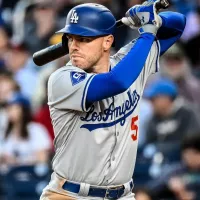
Freddie Freeman is a professional baseball first baseman currently playing...
Trending
58 minutes ago Sabalenka Dominates at Indian Wells; Osorio's Performance in the Spotlight
58 minutes ago Thunder defeat Knicks: Shai Gilgeous-Alexander shines with clutch performance at MSG.

59 minutes ago Jamal Murray Injury Forces Nuggets Lineup Change; Return Questionable for Friday.

59 minutes ago Drew McIntyre faces Cody Rhodes for Undisputed WWE Title match at SmackDown.

59 minutes ago Lizzo to Headline Houston Rodeo's Black Heritage Day After COVID Cancellation.
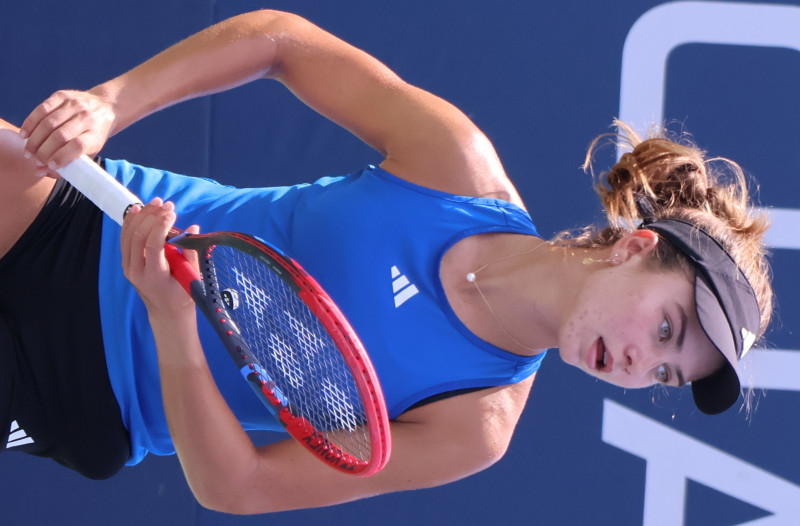
2 hours ago Sabalenka Dominates, Eyes First Indian Wells Title After 100th Match Win
Popular

Ken Paxton is an American politician and lawyer serving as...
Markwayne Mullin is an American politician and businessman serving as...
Jesse Jackson is an American civil rights activist politician and...
Hillary Diane Rodham Clinton is a prominent American politician lawyer...
Jim Carrey is a Canadian-American actor and comedian celebrated for...
Corey Lewandowski is an American political operative lobbyist commentator and...