History of Benjamin Netanyahu in Timeline

Share: FB Share X Share Reddit Share Reddit Share
Benjamin Netanyahu

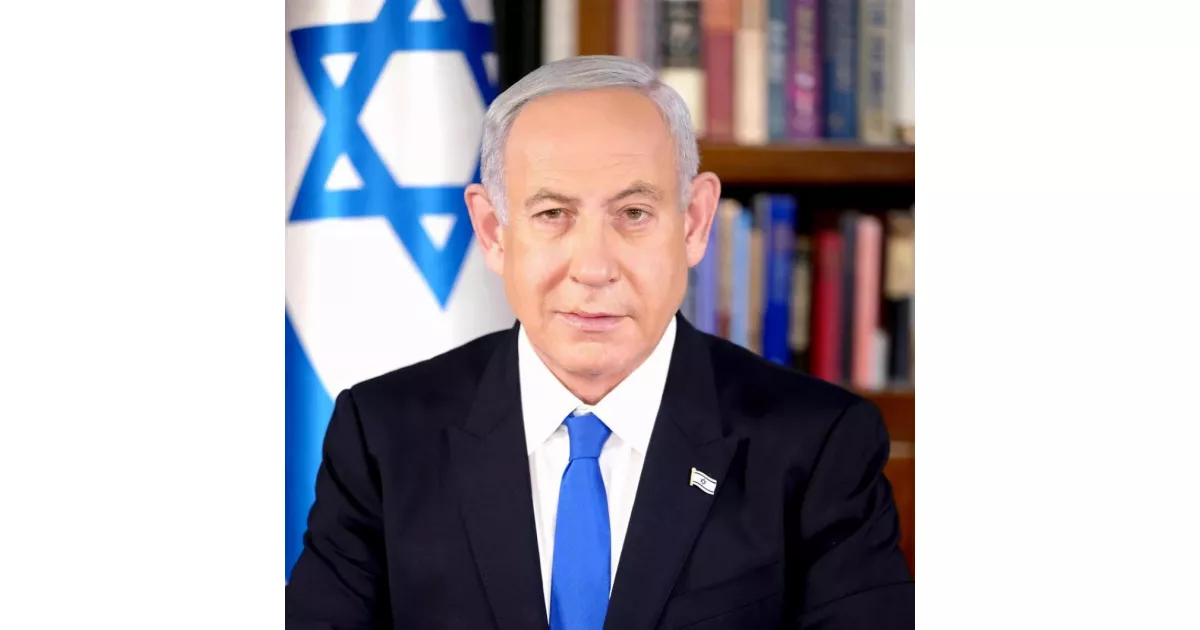
Benjamin "Bibi" Netanyahu is an Israeli politician and diplomat, currently serving as Prime Minister of Israel since 2022. He also held the position from 1996 to 1999 and again from 2009 to 2021. Notably, Netanyahu is the longest-serving prime minister in Israel's history.

1911: Family Migration to Palestine

In 1911, Netanyahu's maternal family migrated from Minneapolis to Petah Tikva in the Mutasarrifate of Jerusalem.

1948: Foundation of the State of Israel

Yitzhak Rabin was born in Jerusalem, under the British Mandate of Palestine, prior to the 1948 founding of the Israeli state).

October 1949: Netanyahu's Birth

In October 1949, Benjamin Netanyahu, later known as "Bibi", was born. He would become a prominent Israeli politician and diplomat, serving multiple terms as Prime Minister of Israel.

1949: Netanyahu's Birth

In 1949, Benjamin Netanyahu was born in Tel Aviv.

1956: Family Lived in the United States

Between 1956 and 1958, the Netanyahu family lived in the United States in Cheltenham Township, Pennsylvania, while his father taught at Dropsie College.

1958: Family Lived in the United States

Between 1956 and 1958, the Netanyahu family lived in the United States in Cheltenham Township, Pennsylvania, while his father taught at Dropsie College.

1963: Family Lived in the United States

From 1963 to 1967, the Netanyahu family lived in the United States in Cheltenham Township, Pennsylvania.

1967: Graduation and Dissatisfaction

In 1967, Benjamin Netanyahu graduated from Cheltenham High School. He and his brother Yonatan grew dissatisfied with the superficial way of life, including the youth counterculture movement.

1967: Return to Israel and Enlistment in IDF

In 1967, Netanyahu returned to Israel after graduating from high school to enlist in the Israel Defense Forces.

1967: Policy of "three no(s)"

In a nod to the 1967 Khartoum Conference, Netanyahu emphasized a policy of "three no(s)" consisting of no withdrawal from the Golan Heights, no discussion of the case of Jerusalem, no negotiations under any preconditions.

March 1968: Battle of Karameh

In March 1968, Netanyahu participated in the Battle of Karameh as part of the IDF's Sayeret Matkal unit.

May 1972: Rescue of Sabena Flight 571

In May 1972, Netanyahu was involved in the rescue of the hijacked Sabena Flight 571, during which he was shot in the shoulder.

1972: Netanyahu and Weizmann Move to the U.S. for Studies

In 1972, Benjamin Netanyahu and Miriam Weizmann moved to the United States for studies. Miriam enrolled in Brandeis University, while Benjamin studied at MIT.

1972: Return to the US

In 1972, Netanyahu returned to the United States for education after serving in the Israel Defense Forces.

October 1973: Service in Yom Kippur War

In October 1973, Netanyahu returned to Israel from his studies in the United States to serve in the Yom Kippur War.

February 1975: Bachelor's Degree in Architecture

In February 1975, Netanyahu completed a bachelor's degree in architecture at MIT under the name Ben Nitay.

1976: Economic Consultant for Boston Consulting Group

From 1976 to 1978, Netanyahu worked as an economic consultant for the Boston Consulting Group in Boston, Massachusetts.

1976: Master's Degree from MIT

In 1976, Netanyahu earned a master's degree from the MIT Sloan School of Management.

April 1978: Birth of Daughter Noa

On April 29, 1978, Benjamin Netanyahu and Miriam Weizmann had their daughter, Noa.

1978: Economic Consultant for Boston Consulting Group

From 1976 to 1978, Netanyahu worked as an economic consultant for the Boston Consulting Group in Boston, Massachusetts.

1978: Return to Israel and Founding of Institute

In 1978, Netanyahu moved back to Israel and founded the Yonatan Netanyahu Anti-Terror Institute.

1978: Return to Israel

In 1978, Netanyahu returned to Israel.

1978: Appearance on Boston Local Television

In 1978, Netanyahu, under the name "Ben Nitay", appeared on Boston local television, arguing against the Arab refusal to accept the State of Israel.

1978: Affair with Fleur Cates

In 1978, while Miriam Weizmann was pregnant, Benjamin Netanyahu began an affair with Fleur Cates, a non-Jewish British student he met at the university library.

1980: Running the Jonathan Netanyahu Anti-Terror Institute

Between 1978 and 1980, Netanyahu ran the Jonathan Netanyahu Anti-Terror Institute.

1981: Marriage to Fleur Cates

In 1981, Benjamin Netanyahu married Fleur Cates, who converted to Judaism.

1982: Director of Marketing for Rim Industries

From 1980 to 1982, Netanyahu served as the director of marketing for Rim Industries in Jerusalem.

1982: Deputy Chief of Mission

In 1982, Moshe Arens appointed Netanyahu as his Deputy Chief of Mission at the Israeli Embassy in Washington, D.C. During the 1982 Lebanon War, he served as a spokesperson for Israel.

1984: Israeli Ambassador to the United Nations

Between 1984 and 1988, Netanyahu served as the Israeli ambassador to the United Nations.

1987: Passing secret US documents to Israel

In 1987, Jonathan Pollard passed secret US documents to Israel.

1988: Israeli Ambassador to the United Nations

Between 1984 and 1988, Netanyahu served as the Israeli ambassador to the United Nations.

1988: Divorce from Fleur Cates

In 1988, after moving with Benjamin Netanyahu to Israel, Fleur Cates sued for divorce.

1988: Return to Israel and Joining Likud Party

Prior to the 1988 Israeli legislative election, Netanyahu returned to Israel and joined the Likud party. He was later elected as a Knesset member.

July 1991: Marriage to Sara Ben-Artzi and Birth of Son Yair

In July 1991, Benjamin Netanyahu married Sara Ben-Artzi. Their son Yair was born on July 26, 1991.

1991: Spokesman for Israel and Madrid Conference

During the Gulf War in early 1991, Netanyahu emerged as the principal spokesman for Israel in media interviews. He was also a member of the Israeli delegation at the Madrid Conference.

1992: Likud Party Defeat

Following the defeat of the Likud party in the 1992 Israeli legislative elections, Shamir retired from politics.

1993: Affair Confession on Live Television

In 1993, Benjamin Netanyahu confessed on live television to having an affair with Ruth Bar, his public relations advisor, after a political rival threatened to release a compromising video.

1993: Election as Chair of Likud

In 1993, Netanyahu rose to prominence after being elected as chair of the Likud party, becoming the leader of the opposition.

1993: Victory in Likud Party Leadership Election

In 1993, the Likud party held a party leadership election, and Netanyahu was victorious, defeating Benny Begin and David Levy.

October 1994: Birth of Son Avner

On October 10, 1994, Benjamin Netanyahu and Sara Ben-Artzi's son Avner was born.

1995: Netanyahu Argues for Tightening Immigration Laws in "Fighting Terrorism"

In his 1995 book, "Fighting Terrorism: How Democracies Can Defeat Domestic and International Terrorism", Netanyahu advocated for tightening immigration laws in Western countries as an effective method to combat terrorism.

Fighting Terrorism: How Democracies Can Defeat Domestic and International Terrorists

1995: Interim Agreement of 1995

The Interim Agreement of 1995 was an agreement, which was to be implemented in details as per the Wye River Memorandum signed in November 1998 by Netanyahu and Arafat.

January 1996: Assassination of Yahya Ayyash and Hamas Retaliation

In January 1996, following the Shin Bet's assassination of Hamas military leader Yahya Ayyash, Mohammed Deif organized a bombing campaign inside Israel as retaliation.

March 1996: Suicide Bombings Before Election

In March 1996, a wave of suicide bombings occurred shortly before the Israeli election, resulting in the deaths of 32 Israelis. These attacks significantly impacted Shimon Peres's campaign.

May 1996: Victory in the 1996 Israeli Legislative Election

On 29 May 1996, Netanyahu won the 1996 Israeli legislative election, becoming the youngest person in the history of the position and the first Israeli prime minister to be born in the State of Israel.

September 1996: Netanyahu Meets Arafat

On 4 September 1996, Netanyahu first met Palestinian president Arafat, after having spoken by telephone prior to the meeting. During their first meeting on September 4, 1996, Netanyahu emphasized the need to consider the needs of both sides based on reciprocity and the assurance of security and well-being for both Israelis and Palestinians. Arafat expressed his determination to work with Netanyahu and his government.

1996: Opening of the Western Wall Tunnel Exit

In 1996, Netanyahu, in conjunction with Jerusalem's mayor Ehud Olmert, decided to open an exit in the Arab Quarter for the Western Wall Tunnel. This decision, which Peres had previously put on hold, sparked three days of rioting by Palestinians, resulting in the deaths of dozens of Israelis and Palestinians.

1996: Netanyahu's Victory in the 1996 Israeli General Election

In 1996, the bombing campaign led by Deif and the failure of Israeli intelligence to prevent it were factors that contributed to the defeat of Prime Minister Shimon Peres and the Israeli Labor Party in the 1996 Israeli general election. This resulted in the victory of Netanyahu's Likud party, which opposed the Oslo Accords. After Netanyahu's victory, the attacks stopped for almost a year.

1996: Reported Friendship with Katherine Price-Mondadori

In 1996, the media reported that Benjamin Netanyahu had a 20-year friendship with Katherine Price-Mondadori, an Italian-American woman.

1996: Election as Prime Minister

In the 1996 general election, Netanyahu achieved a significant milestone by becoming the first Israeli prime minister elected directly by popular vote.

January 1997: Signing of the Hebron Protocol

In January 1997, specifically on January 14, 1997, the talks between Netanyahu and Arafat culminated in the signing of the Hebron Protocol.

1997: Mossad Operation to Assassinate Hamas Mashal

In 1997, Netanyahu authorized a Mossad operation to assassinate Hamas leader Khaled Meshal in Jordan. On 27 September 1997, the Mossad team injected poison into Mashal's ears in Amman, but the plot was exposed and agents were arrested. King Hussein demanded the antidote, and Netanyahu relented after pressure from US President Bill Clinton, releasing Jordanian and Palestinian prisoners. The incident damaged Israeli-Jordanian relations.

1997: Police Recommendation for Indictment on Corruption Charges

In 1997, police recommended Netanyahu be indicted on corruption charges for influence-peddling. He was accused of appointing an attorney general who would reduce the charges, but prosecutors ruled there was insufficient evidence to go to trial.

May 1998: Exchange of Remains After Ansariya Ambush

On 25 May 1998, the remains and body parts of at least three soldiers who died in the Ansariya ambush were exchanged for 65 Lebanese prisoners and the bodies of 40 Hizbullah fighters and Lebanese soldiers captured by Israel. Netanyahu described it as "one of the worst tragedies that has ever occurred to us".

November 1998: Signing of the Wye River Memorandum

In November 1998, Netanyahu and Arafat signed the Wye River Memorandum, detailing steps for the Israeli government and Palestinian Authority to implement the 1995 Interim Agreement. On November 17, 1998, the Knesset approved the memorandum.

1998: Raised the issue at the Wye River Summit

In 1998, Netanyahu raised the issue of Jonathan Pollard's early release at the Wye River Summit, claiming president Bill Clinton had privately agreed to release Pollard.

1999: Temporary Retirement from Politics

After being defeated by Ehud Barak in the 1999 Israeli prime ministerial election, Netanyahu temporarily retired from politics. He subsequently served as a senior consultant with Israeli communications equipment manufacturer BATM Advanced Communications for two years.

1999: Defeat in Election and Entry to Private Sector

In 1999, Netanyahu was defeated in the election and transitioned into the private sector after his term as Prime Minister.

1999: Police Recommendation for Trial on Corruption

In 1999, the Israel Police recommended Netanyahu be tried for corruption for $100,000 in free services from a government contractor. However, Israel's attorney general did not prosecute, citing difficulties with evidence.

2000: Desire to Return to Politics

With the fall of the Barak government in late 2000, Netanyahu expressed his desire to return to politics. He insisted that general elections should be held, claiming that otherwise it would be impossible to have a stable government. Netanyahu decided eventually not to run for the prime minister position, a move which facilitated the rise to power of Ariel Sharon.

September 2002: Testimony Regarding the Alleged Nuclear Threat Posed by the Iraqi Regime

On 12 September 2002, Netanyahu lobbied for the invasion of Iraq, testifying under oath as a private citizen before the U.S. House of Representatives Government Reform Committee regarding the alleged nuclear threat posed by the Iraqi régime: "There is no question whatsoever that Saddam is seeking and is working and is advancing towards the development of nuclear weapons…" He also testified, "If you take out Saddam, Saddam's regime, I guarantee you that it will have enormous positive reverberations on the region."

September 2002: Canceled Speech at Concordia University

On 9 September 2002, a scheduled speech by Netanyahu at Concordia University in Montreal, Quebec, Canada was canceled after hundreds of pro-Palestinian protesters overwhelmed security and smashed through a window. Netanyahu was not present at the protest, having remained at his hotel throughout the duration. He later accused the activists of supporting terrorism and "mad zealotry".

2002: Visited Pollard at his North Carolina prison

In 2002, Netanyahu visited Jonathan Pollard at his North Carolina prison.

2002: Appointment as Foreign Minister

In 2002, after the Israeli Labor Party left the coalition and vacated the position of foreign minister, Prime Minister Ariel Sharon appointed Netanyahu as foreign minister. Netanyahu challenged Sharon for the leadership of the Likud party in the 2002 Likud leadership election, but failed to oust him.

2003: Diagnosis of Right Bundle Branch Block

Around 2003, Benjamin Netanyahu was diagnosed with right bundle branch block (RBBB).

2003: Appointment as Finance Minister

Following the 2003 Israeli legislative election, Sharon offered Netanyahu the Finance Ministry. Some pundits speculated that Sharon made the move because he deemed Netanyahu a political threat. Sharon and Netanyahu agreed that Netanyahu would have complete freedom as finance minister and have Sharon back all of his reforms, in exchange for Netanyahu's silence over Sharon's management of Israel's military and foreign affairs.

2004: Threat to Resign Over Gaza Pullout Plan

In 2004, Netanyahu threatened to resign from office unless the Gaza pullout plan was put to a referendum.

August 2005: Resignation Over Gaza Withdrawal

On 7 August 2005, Netanyahu submitted his resignation letter as Finance Minister, shortly before the Israeli cabinet voted to approve the initial phase of withdrawal from Gaza.

September 2005: Attempt to Hold Early Primaries

In September 2005, Netanyahu attempted to hold early primaries for the position of the head of the Likud party, while the party held the office of prime minister – thus effectively pushing Ariel Sharon out of office. The party rejected this initiative.

December 2005: Retaking the Likud Leadership

On 20 December 2005, Netanyahu retook the leadership of the Likud party, with 47% of the primary vote.

2005: Return to Lead Likud

In 2005, Netanyahu returned to lead the Likud party, positioning himself in the opposition.

March 2006: Likud Takes Third Place in Knesset Elections

In the March 2006 Knesset elections, Likud took third place behind Kadima and Labor, and Netanyahu served as Leader of the Opposition.

2006: Leading the Opposition

Between 2006 and 2009, Netanyahu led the opposition in Israeli politics.

August 2007: Reelection as Likud Chairman

On 14 August 2007, Netanyahu was reelected as chairman of the Likud and its candidate for the post of prime minister with 73% of the vote.

2008: Opposition to Israel-Hamas Ceasefire

In 2008, Netanyahu opposed the IsraelHamas ceasefire, stating that it was an agreement to the rearming of Hamas.

2008: Removal of Benign Colon Polyp

In the first half of 2008, doctors removed a small colon polyp from Benjamin Netanyahu that proved to be benign.

February 2009: Support for New Elections

Following Tzipi Livni's election to head Kadima and Olmert's resignation, Netanyahu declined to join the coalition Livni was trying to form and supported new elections, which were held in February 2009. Netanyahu was the Likud's candidate for prime minister in the 2009 Israeli legislative election which took place on 10 February 2009.

February 2009: Designation as Prime Minister

In February 2009, Likud won the second highest number of seats in the election. On 20 February 2009, Netanyahu was designated by Israeli President Shimon Peres to succeed Ehud Olmert as prime minister, and began negotiations to form a coalition government.

February 2009: Netanyahu Describes Iran as Greatest Threat

In February 2009, after being asked to be prime minister, Netanyahu characterized Iran as the greatest threat Israel had ever faced, stating Iran's pursuit of nuclear weapons posed the gravest threat since the war of independence.

March 2009: Approval of the 32nd Government

In March 2009, Netanyahu presented his cabinet for a Knesset "Vote of Confidence" on 31 March 2009. The 32nd Government was approved that day by a majority of 69 lawmakers to 45 and the members were sworn in.

July 2009: Government Approval and Economic Actions

In July 2009, a survey found most Israelis supported Netanyahu's government, giving him an approval rating of 49 percent. Netanyahu lifted checkpoints in the West Bank to allow free movement and flow of imports, which resulted in an economic boost during July 2009.

August 2009: Call for Recognition and Security Settlement

In August 2009 Netanyahu called for recognition of Israel as the national state of the Jewish people and a security settlement.

September 2009: Netanyahu Addresses UN, Criticizes Iran

In September 2009, speaking before the UN in New York, Netanyahu voiced a different opinion to Iranian president Ahmadinejad's speech, stating that Iran's regime is fueled by extreme fundamentalism and their actions are a struggle between civilization and barbarism.

September 2009: Address to the UN General Assembly

On 24 September 2009, in an address to the UN General Assembly, Netanyahu stated that Iran posed a threat to world peace and that the UN should prevent it from obtaining nuclear weapons. He also responded to Iranian president Mahmoud Ahmadinejad's questioning of the Holocaust.

2009: Return as Prime Minister

After the 2009 legislative election, Netanyahu successfully formed a coalition and became prime minister once again.

2009: Increase in African Migrants Crossing into Israel

Between 2009 and 2013, approximately 60,000 individuals migrated to Israel from various African nations. Netanyahu voiced concerns that the high number of migrants threatened the social cohesion, national security, and national identity of the country.

2009: Support for Palestinian State Questioned

In 2009, US Secretary of State Hillary Clinton voiced support for the establishment of a Palestinian state – a solution not endorsed by Netanyahu, with whom she had pledged US cooperation. Netanyahu said negotiations with the Palestinians would be conditioned on them recognizing Israel as a Jewish state.

2009: Endorsement of a "Demilitarized Palestinian State"

In 2009, ten days after Obama's speech, Netanyahu gave a speech in which he endorsed a "Demilitarized Palestinian State". Netanyahu stated he would accept a Palestinian state if Jerusalem were to remain the united capital of Israel, the Palestinians would have no army, and give up their demand for a right of return. He endorsed for the first time a Palestinian state alongside Israel.

March 2010: Netanyahu Remarks on Friendship with Biden

In March 2010, during a joint statement with Joe Biden, Benjamin Netanyahu remarked that their friendship had started almost three decades prior.

March 2010: Approval of Construction in Jerusalem

In March 2010, the Israeli government approved construction of additional apartments in a Jewish housing development in northeast Jerusalem called Ramat Shlomo, which led to public condemnation from the US.

September 2010: Agreement to Direct Talks and End of Settlement Freeze

In September 2010, Netanyahu agreed to enter direct talks with the Palestinians, mediated by the Obama administration. On 27 September, the 10-month settlement freeze ended, and the Israeli government approved new construction in the West Bank, including East Jerusalem.

2010: Formed the Concentration Committee

In 2010, Netanyahu formed the Concentration Committee and the bill, which was pushed forward by his government, implemented its recommendations.

November 2011: Biden Highlights Longstanding Relationship with Netanyahu

In November 2011, Joe Biden stated that his relationship with Benjamin Netanyahu had lasted for 39 years.

2011: Sarkozy and Obama's Private Comments About Netanyahu at G-20 Summit

During the 2011 G-20 Cannes summit, then-French president Nicolas Sarkozy was overheard saying to then-U.S. president Barack Obama, "I cannot bear Netanyahu, he's a liar", to which Obama reportedly responded, "You're fed up with him, but I have to deal with him every day."

2011: Netanyahu Arranges Prisoner Swap for Gilad Shalit

In 2011, Netanyahu arranged the exchange of 1000 Hamas and Fatah prisoners, including terrorists, for Gilad Shalit. Israeli officials estimated that a significant portion of those released resumed terrorist activities.

2011: Ungrateful to the US and endangering Israel

In 2011, US Defense Secretary Robert Gates said Netanyahu was ungrateful to the US and endangering Israel.

2011: Netanyahu's Proposed Budget Cuts and Security Cooperation with the U.S.

In 2011, amidst concerns that Netanyahu's proposed budget cuts would hinder the armed forces' battle readiness, Netanyahu opted to cut social programs instead and pledged to increase the defense budget. Despite this, the military still faced a significant budget shortfall. A U.S. State Department representative noted unprecedented security cooperation between Israel and the United States under Netanyahu and Obama.

2011: Response to Social Justice Protests

In 2011, in response to Israeli social justice protests over the high cost of living, Netanyahu appointed the Trajtenberg Committee to submit recommendations to lower living costs.

September 2012: Netanyahu's UN Speech on Iranian Uranium Enrichment

In September 2012, Netanyahu addressed the UN General Assembly and set a "red line" at 90% uranium enrichment by Iran, which he illustrated with a cartoon graphic of a bomb. He said that at current enrichment rates, Iran would be able to produce enough enriched uranium for a bomb by the following spring or summer.

October 2012: Merger of Likud and Yisrael Beiteinu Parties

In October 2012, Netanyahu and Foreign Minister Avigdor Lieberman announced that their parties, Likud and Yisrael Beiteinu, had merged and would run together on a single ballot in Israel's 2013 elections.

November 2012: Ended the November 2012 ceasefire agreement

In June 2014, Missile and rocket exchanges between Gaza militants and the IDF escalated after the bodies of the teenagers were discovered on 30 June 2014. Israel started Operation Protective Edge in the Gaza Strip, formally ending the November 2012 ceasefire agreement.

2012: Netanyahu Warns of Iranian Nuclear Threat

Early in 2012, during Israel's Holocaust Remembrance Day ceremony, Netanyahu cautioned against the dangers of an Iranian nuclear bomb, drawing parallels to Jewish leaders' warnings during World War II. He also confirmed the 2012 Burgas bus bombing was coordinated with Iran. This led to accusations of political exploitation of the Holocaust.

2012: Netanyahu and Barak Consider Military Action Against Iran

In 2012, Netanyahu and Defense Minister Ehud Barak reportedly formed a close, confidential relationship as they considered potential military action against Iran's nuclear facilities, following Israel's Begin Doctrine. Former officials criticized their rhetoric as appealing to "the idiots within the Israeli public".

2012: Netanyahu's Ties with U.S. Republican Party and Mitt Romney

In 2012, Netanyahu maintained close ties with the congressional leadership of the U.S. Republican Party and its presidential candidate, Mitt Romney. Netanyahu and Romney had first met while working at the Boston Consulting Group in the mid-1970s.

2012: Recognition of Palestinian Right to a State

In 2012, Netanyahu officially recognized for the first time the right for Palestinians to have their own state in an official document, a letter to Mahmoud Abbas, though as before he declared it would have to be demilitarized.

2012: Biden Notes Lengthy Relationship with Netanyahu

In 2012, during the U.S. vice presidential debate, Joe Biden stated that the relationship with Benjamin Netanyahu has lasted for 39 years.

2012: Netanyahu Government Passes "Prevention of Infiltration Law"

In 2012, the Netanyahu government enacted the "Prevention of Infiltration Law", mandating automatic detention for individuals, including asylum-seekers, entering Israel without permission. This law was met with criticism from Amnesty International.

July 2013: Tenders for Private Ports

In July 2013, Netanyahu issued tenders for the construction of private ports in Haifa and Ashdod as part of a campaign of port privatization.

August 2013: Ros-Lehtinen Raises Wultz Case with Israeli Officials

In August 2013, Ros-Lehtinen, as chair of the House Middle East and South Asia subcommittee, raised the issue of the Wultz family's lawsuit with Israeli officials, emphasizing the importance of providing the family with necessary support for their case.

October 2013: Netanyahu Comments on Iranian Regime and Nuclear Weapons

In October 2013, Netanyahu praised Persia's history and stated that if the Iranian regime possessed nuclear weapons, the Iranian people would never be free from dictatorship.

December 2013: Approval of Business Concentration Law

In December 2013, the Knesset approved the Business Concentration Law, which intended to open Israel's highly concentrated economy to competition to lower consumer prices, reduce income inequality, and increase economic growth.

2013: Government of National Unity

In 2012, Netanyahu oversaw the creation of a government of national unity to see Israel through until the 2013 elections.

2013: Trump Endorses Netanyahu for Israeli Elections

In 2013, Donald Trump made a video endorsing Benjamin Netanyahu during the Israeli elections, calling him a "terrific guy, terrific leader, great for Israel".

2013: Netanyahu Caught Between Commitments in Terror-Financing Case

In 2013, Netanyahu faced a conflict between a commitment to the family of terror victim Daniel Wultz to cooperate in a terror-financing case against Bank of China in the U.S. District Court and a conflicting promise reportedly made to China. This created diplomatic pressure and legal challenges.

2013: Netanyahu Requests Legislation to Circumvent Supreme Court Ruling on "Prevention of Infiltration Law"

In 2013, following the Supreme Court of Israel's declaration that the "Prevention of Infiltration Law" was illegal due to the indefinite detention of asylum seekers from Africa, Netanyahu sought legislation to bypass the Supreme Court's decision.

June 2014: Criticism of Palestinian Unity Government and Search Operation

In June 2014, Netanyahu criticized the Palestinian Authority for forming a unity government with Hamas and launched a search and arrest operation on the West Bank after the kidnapping and murder of three Israeli teenagers, blaming Hamas for the act.

October 2014: Obama Administration Official Calls Netanyahu "Chickenshit"

In October 2014, Jeffrey Goldberg reported that a senior official in the Obama administration called Netanyahu a "chickenshit" after Netanyahu accused Obama of "acting contrary to American values". Secretary of State John Kerry phoned Netanyahu to clarify that such statements were unacceptable. Tensions between the Netanyahu and Obama governments were high.

October 2014: Privatization Plan and Criticism of Settlements

In October 2014, Netanyahu's government approved a privatization plan to reduce corruption and politicization in government companies and criticized settlements, leading to a rebuke from the White House. Netanyahu explained that he does not accept residency restrictions for Jews, and said that Jerusalem's Arabs and Jews should be able to buy homes wherever they want.

December 2014: Firing of Ministers and Dissolution of Government

On 2 December 2014, Netanyahu fired ministers Yair Lapid and Tzipi Livni, leading to the dissolution of the government.

March 2015: Address to the United States Congress

In March 2015, Benjamin Netanyahu addressed the United States Congress, marking his third speech to a joint session. The day before announcing he would address Congress, Time reported that he tried to derail a meeting between U.S. lawmakers and the head of Mossad, Tamir Pardo, who intended warning them against imposing further sanctions against Iran.

March 2015: New elections

New elections held on 17 March 2015 after the government was dissolved.

May 2015: Formation of Coalition Government

In May 2015, Netanyahu returned with his party Likud leading the elections and President Rivlin granted Netanyahu an extension to build a coalition. He formed a coalition government within two hours of the midnight 6 May deadline with Jewish Home, United Torah Judaism, Kulanu, and Shas.

August 2015: Approval of Two-Year Budget

In August 2015, Netanyahu's government approved a two-year budget that would see agricultural reforms and lowering of import duties to reduce food prices, deregulation of the approval process in construction to lower housing costs and speed up infrastructure building, and reforms in the financial sector to boost competition and lower fees for financial services.

October 2015: Netanyahu claims al-Husseini gave Hitler the idea of exterminating Jews

In October 2015, Benjamin Netanyahu stated that the Grand Mufti of Jerusalem, Haj Amin al-Husseini, gave Adolf Hitler the idea to exterminate Jews, a claim dismissed by most historians, who note that al-Husseini's meeting with Hitler occurred after the mass murder of Jews had already begun. Israeli academics strongly criticized the claim.

2015: Statements on Palestinian Statehood

As election day approached in the 2015 Israeli elections, Netanyahu answered 'indeed' when asked whether a Palestinian state would not be established in his term, and reiterated his support for a two-state solution.

2015: Mossad Assessment on Iran's Nuclear Program Leaked

In 2015, cables were leaked indicating that Mossad assessed Iran did not appear ready to enrich uranium to levels required for a nuclear bomb at the time of Netanyahu's 2012 UN speech.

March 2016: Coalition crisis over prayer space at the Western Wall

In March 2016, Netanyahu's coalition faced a potential crisis as ultra-Orthodox members threatened to withdraw over the government's proposed steps to create non-Orthodox prayer space at the Western Wall. They stated they would leave the coalition if the government offers any further official state recognition of Conservative and Reform Judaism.

December 2016: U.S. abstains from UN Security Council Resolution 2334

On 23 December 2016, the United States, under the Obama Administration, abstained from United Nations Security Council Resolution 2334, effectively allowing it to pass. On 28 December, U.S. Secretary of State John Kerry strongly criticized Israel and its settlement policies in a speech, and Netanyahu strongly criticized both the UN Resolution and Kerry's speech in response.

2016: Israel to Wait Until After 2016 U.S. Election to Repair Relationship with White House

Due to rifts between Netanyahu and members of the Obama administration, Israel reportedly planned to wait until after the 2016 U.S. presidential election before attempting to repair relations with the White House.

2016: Closeness to Donald Trump

From 2016, Netanyahu emphasized his close relationship with Donald Trump, making it central to his political appeal.

January 2017: Israel withdraws dues from the UN

On 6 January 2017, the Israeli government withdrew its annual dues from the organization, which totaled $6 million in United States dollars, following criticism of a UN Resolution and a speech made by John Kerry in late December 2016.

January 2017: Israeli police investigate Netanyahu in "Case 1000" and "Case 2000"

Since January 2017, Netanyahu has been investigated by Israeli police in two connected cases, "Case 1000" and "Case 2000". In Case 1000, Netanyahu is suspected of having obtained inappropriate favors from businessmen, including James Packer and Hollywood producer Arnon Milchan. Case 2000 involves alleged attempts to strike a deal with the publisher of the Yedioth Ahronot newspaper group, Arnon Mozes, to promote legislation to weaken Yedioth's main competitor in exchange for more favorable political coverage.

February 2017: Netanyahu visits Australia

In February 2017, Netanyahu became the first serving prime minister of Israel to visit Australia. During the three-day official visit, accompanied by his wife, Sara, and a delegation of business representatives, Netanyahu and Prime Minister of Australia Malcolm Turnbull were scheduled to sign several bilateral agreements. Netanyahu recalled the 100-year relationship between the countries, starting when the Australian Light Horse regiments liberated Beersheba during World War I.

August 2017: Netanyahu suspected of fraud, breach of trust, and bribes

In August 2017, Israeli police confirmed that Netanyahu was suspected of crimes involving fraud, breach of trust, and bribes in the two cases, "Case 1000" and "Case 2000". The next day, it was reported that the prime minister's former chief of staff, Ari Harow, had signed a deal with prosecutors to testify against Netanyahu.

October 2017: Israel announces departure from UNESCO

In October 2017, shortly after the US announced the same action, Netanyahu's government announced it was leaving UNESCO due to what it saw as anti-Israel actions by the agency, and it made that decision official in December 2017.

December 2017: Israel officially notifies UNESCO of withdrawal

In late December 2017, the Israeli government officially notified UNESCO of its withdrawal, following the initial announcement in October 2017 regarding its intention to leave the organization due to perceived anti-Israel actions.

February 2018: Police recommend Netanyahu be charged with corruption

In February 2018, Israeli police recommended that Netanyahu be charged with corruption. According to a police statement, sufficient evidence exists to indict the prime minister on charges of bribery, fraud, and breach of trust in the two cases. Netanyahu responded that the allegations were baseless and that he would continue as prime minister.

April 2018: Netanyahu accuses Iran of violating the Iran nuclear deal

In April 2018, Netanyahu accused Iran of not upholding its end of the Iran nuclear deal after presenting a cache of over 100,000 documents detailing the extent of Iran's nuclear program. Iran denounced Netanyahu's presentation as "propaganda".

April 2018: Erdoğan Calls Israel "Terror State" and Netanyahu "Terrorist"

In April 2018, Turkish President Recep Tayyip Erdoğan called Israel a "terror state" and Netanyahu a "terrorist", further escalating tensions between the two leaders.

July 2018: Knesset passes the Nation-State Bill

In July 2018, the Knesset passed the Nation-State Bill, a Basic Law supported by Netanyahu's coalition government. Analysts viewed the bill as a sign of Netanyahu's coalition advancing a right-wing agenda.

November 2018: Recommendation for Netanyahu indictment

In November 2018, Economic Crimes Division Director Liat Ben-Ari recommended indictment for Netanyahu for "Case 1000" and "Case 2000" corruption cases.

2018: Netanyahu Develops Relationship with Jair Bolsonaro After Election

Following Jair Bolsonaro's election in 2018, Netanyahu developed a close relationship with the Brazilian president.

2018: Netanyahu investigated in "Case 4000"

In 2018 Netanyahu was also investigated in "Case 4000", where he was suspected of giving regulatory favors to Shaul Elovitch, owner of Bezeq telecommunication company, in exchange for positive publications in news website Walla!.

2018: Netanyahu praises North Korea-United States Summit

In 2018, Netanyahu commended US President Donald Trump on the historic summit in Singapore between North Korea and the United States, stating that it was an important step in the effort to rid the Korean peninsula of nuclear weapons.

2018: Netanyahu Condemns Polish Prime Minister's Comments on Holocaust Perpetrators

In 2018, after the Polish prime minister suggested that there were Jewish perpetrators implicated in the Holocaust, Netanyahu denounced the comments as "outrageous". This led to a crisis in Israel-Poland relations, which was later resolved with a joint communiqué endorsing research into the Holocaust and condemning the term "Polish concentration camps".

February 2019: Attorney general announces intent to indict Netanyahu

In February 2019, the Israeli attorney general announced his intent to file indictments against Netanyahu on bribe and fraud charges in three cases.

March 2019: Netanyahu and Erdoğan Trade Insults

In March 2019, after Turkey denounced Netanyahu as a racist, Netanyahu called Erdoğan a dictator and mocked him for imprisoning journalists. Erdoğan responded by calling Netanyahu "the thief who heads Israel".

April 2019: Netanyahu brokers deal uniting Jewish Home with Otzma Yehudit

Prior to the April 2019 Israeli legislative election, Netanyahu helped broker a deal that united the Jewish Home party with the far-right Otzma Yehudit party, in order to form the Union of the Right-Wing Parties. The motivation of the deal was to overcome the electoral threshold for smaller parties. The deal was criticized in the media, as Otzma is widely characterized as racist and traces its origins to the extremist Kahanist movement.

June 2019: Netanyahu Renames Settlement After Trump

In June 2019, Benjamin Netanyahu officially renamed a settlement in the disputed Golan Heights after then U.S. President Donald Trump.

November 2019: Netanyahu formally indicted and relinquishes portfolios

On 21 November 2019, Netanyahu was formally indicted on bribe and fraud charges, potentially facing up to 10 years in prison for bribery and three years for fraud and breach of trust. On 23 November 2019, it was announced that Netanyahu, in compliance with legal precedent, would relinquish his agriculture, health, social affairs and diaspora affairs portfolios.

2019: Indictment on Charges

In 2019, Netanyahu was indicted on charges including breach of trust, bribery, and fraud, which led to him relinquishing ministerial posts except for prime minister.

January 2020: Trump Frustrated with Netanyahu's Rhetoric

In January 2020, Donald Trump reportedly became frustrated with Benjamin Netanyahu's rhetoric regarding the annexation of the Jordan Valley and considered endorsing his political opponent, Benny Gantz.

January 2020: Netanyahu formally charged

On 28 January 2020, Netanyahu was officially charged with crimes.

May 2020: Netanyahu's criminal trial set to begin

Netanyahu's criminal trial was set to begin on 24 May 2020, having been initially scheduled for March of that year but delayed due to the COVID-19 pandemic.

May 2020: Netanyahu sworn in for fifth term; protests erupt

On 17 May 2020, Netanyahu was sworn in for a fifth term as prime minister in a coalition with Benny Gantz. Against a background of the COVID-19 pandemic in Israel and Netanyahu's criminal trial, protests broke out against him in front of the prime minister's residence.

2020: Netanyahu Praises U.S. Airstrike That Killed Soleimani

In 2020, Netanyahu praised the U.S. airstrike at Baghdad International Airport that killed Iranian General Qasem Soleimani, commending Trump for acting "swiftly, forcefully and decisively".

2020: Collapse of Rotation Agreement

In 2020, the rotation agreement between Netanyahu and Benny Gantz collapsed, contributing to political instability.

March 2021: Israel leads in COVID-19 vaccinations per capita

By March 2021, Israel became the country with the highest vaccinated population per capita in the world against COVID-19, during Netanyahu's premiership.

May 2021: Escalation in Jerusalem leads to Operation Guardian of the Walls

After tensions escalated in Jerusalem in May 2021, Hamas fired rockets on Israel from Gaza, which prompted Netanyahu to initiate Operation Guardian of the Walls, lasting eleven days.

June 2021: Removal from Premiership

In June 2021, Netanyahu was removed from the premiership after a period of political turmoil.

June 2021: Netanyahu ousted as prime minister

On 13 June 2021, Naftali Bennett and Yair Lapid formed a coalition government, ousting Netanyahu from his position as prime minister, ending his 12-year tenure.

December 2022: Netanyahu sworn in as prime minister again

After the 2022 election, Netanyahu was sworn in as prime minister again as the leader of a hardline coalition. He started his sixth term on 29 December 2022.

2022: Return After Election

After the 2022 election, Netanyahu returned to the position of Prime Minister of Israel.

2022: Netanyahu leads opposition into legislative election

After the end of his second premiership, Netanyahu began his third stint as the leader of the opposition. Likud remained the largest party in the twenty-fourth Knesset. He led the opposition into the 2022 Israeli legislative election.

2022: Netanyahu Writes Positively About Putin in His 2022 Book

In his 2022 book, Netanyahu characterized Russian President Vladimir Putin positively, describing him as "smart, sophisticated, and focused on returning Russia to its historical greatness".

2022: Settlement housing unit construction triple the amount advanced in 2022

In its first six months, construction of 13,000 housing units in settlements, almost triple the amount advanced in the whole of 2022.

February 2023: Government approves legalization of settler outposts

In February 2023, the government approved the legalization of nine settler outposts in the occupied West Bank. Finance Minister Bezalel Smotrich took charge of most of the Civil Administration, obtaining broad authority over civilian issues in the West Bank. Israeli peace groups condemned the move as de jure annexation of the occupied territories.

April 2023: Netanyahu's criminal trial ongoing

As of April 2023, Netanyahu's criminal trial was still ongoing.

June 2023: Netanyahu explains refusal to send weapons to Ukraine

In June 2023, Netanyahu said Israel is concerned "with the possibility that systems that we would give to Ukraine would fall into Iranian hands and could be reverse engineered, and we would find ourselves facing Israeli systems used against Israel", explaining Israel's refusal to send lethal weapons to Ukraine.

July 2023: Pacemaker Implanted

On July 22, 2023, Benjamin Netanyahu had a pacemaker implanted in his body.

October 2023: Israel enters war against Hamas after surprise attack

On 7 October 2023, after Palestinian militants from Gaza launched a major surprise attack, Netanyahu announced that Israel would enter a war against Hamas. He threatened to "turn all the places where Hamas is organized and hiding into cities of ruins", called Gaza "the city of evil", and urged its residents to "leave now". He proposed opposition parties Yesh Atid and National Unity enter an emergency unity government, after Leader of the Opposition Lapid urged Netanyahu put "aside our differences and form an emergency, narrow, professional government."

December 2023: Netanyahu faces criticism during meeting with released hostages

In December 2023, Netanyahu faced criticism during a meeting with released Israeli hostages. One hostage accused him of putting politics "above the return of the kidnapped." Netanyahu said Israel should support the "voluntary migration" of Palestinians from Gaza.

December 2023: South Africa v. Israel Case at ICJ

In December 2023, Netanyahu's government faced a case at the International Court of Justice (ICJ) initiated by South Africa regarding allegations of orchestrating genocide in Gaza.

2023: Judicial Reform Protests

In early 2023, Netanyahu's coalition pursued judicial reform, which sparked large-scale protests across the country.

2023: Netanyahu Engages in Diplomacy with Xi Jinping

Since 2023, Netanyahu and Chinese President Xi Jinping have been engaged in diplomacy due to strained relations between the US and Israel. The Gaza war has complicated the diplomatic situation, with China remaining neutral.

March 2024: Hernia Discovered

In March 2024, a hernia was discovered on Benjamin Netanyahu.

October 2024: Assassination Attempt and Invasion of Lebanon

In October 2024, Netanyahu survived an assassination attempt and subsequently ordered an invasion of Lebanon, aiming to dismantle Hezbollah's military capabilities.

November 2024: ICC Arrest Warrant

In November 2024, the International Criminal Court (ICC) issued an arrest warrant for Netanyahu for alleged war crimes and crimes against humanity related to the ICC investigation in Palestine.

December 2024: Invasion of Syria

Following the fall of the Assad regime in December 2024, Netanyahu directed an invasion of Syria.

December 2024: Prostate Removed Following Infection

In December 2024, Benjamin Netanyahu's prostate was removed following a urinary tract infection caused by an enlargement.

2024: Strained Relationship with Biden over Rafah Offensive

During Spring 2024, the relationship between Joe Biden and Benjamin Netanyahu became strained over Israel's Rafah offensive.

June 2025: Netanyahu Authorizes Airstrikes Against Iran, Beginning Twelve-Day War

In June 2025, Netanyahu authorized airstrikes against Iran, initiating the Twelve-Day War. He described the operation's goal as dismantling Iran's nuclear capabilities, which he considered a "clear and present danger" to Israel, while also advocating for regime change.

November 2025: Netanyahu requests pardon from president Isaac Herzog

On 30 November 2025, Netanyahu formally asked for a pardon from president Isaac Herzog.

2025: Israeli Strikes on Iran and Twelve-Day War

In 2025, Netanyahu presided over Israeli strikes on Iran, which then escalated into the Twelve-Day War.

February 2026: Major Attack on Iran with the US

In February 2026, Netanyahu launched a major attack on Iran in conjunction with the United States, with the stated objective of regime change.

February 2026: Netanyahu summoned over classified document leak investigation

In February 2026, the Attorney General and Cabinet Legal Advisor of Israel summoned Netanyahu to provide explanations to the police regarding an investigation into the leak of classified documents to the German newspaper Bild. The case reportedly concerns attempts to obstruct investigations into the leak of sensitive Israeli documents. Previously, Netanyahu's chief of staff, Tzachi Braverman, was arrested on suspicion of attempting to impede the investigative process regarding the leak to foreign media.