


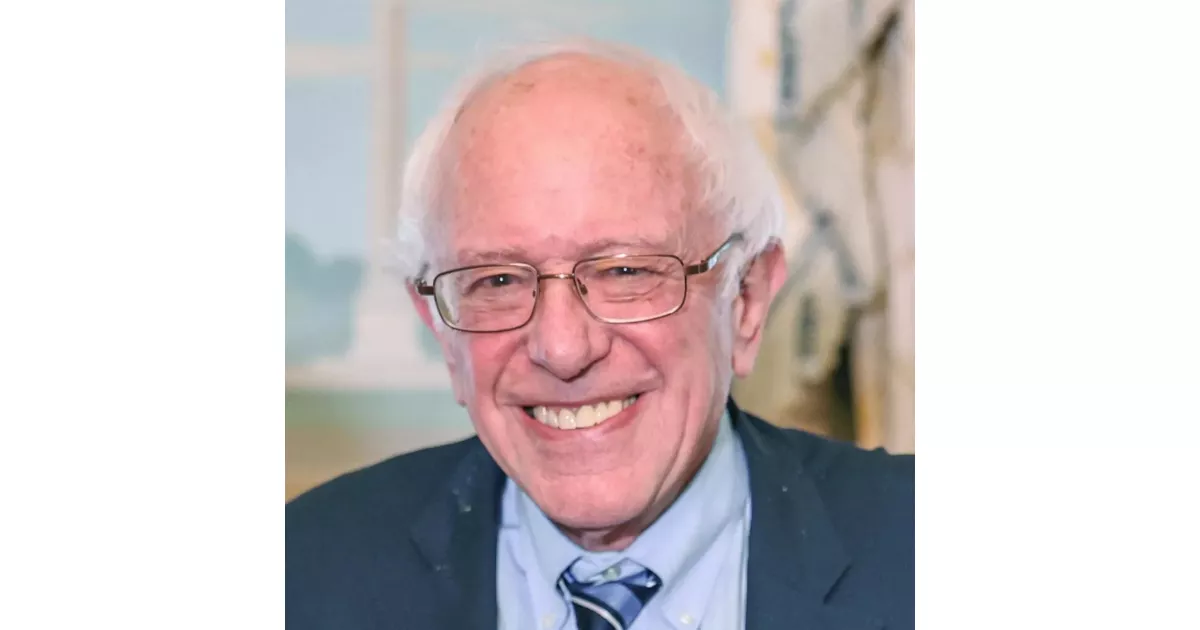
Bernie Sanders is a prominent American politician and the senior U.S. Senator from Vermont since 2007. As the longest-serving independent in Congress, he closely aligns with the Democratic Party, twice seeking their presidential nomination. A self-described democratic socialist, Sanders is a leading figure in the modern American progressive movement, advocating for policies that address income inequality, universal healthcare, and campaign finance reform. His long career in public service reflects a consistent commitment to social and economic justice.
1921: Elias Sanders immigrates to the US
In 1921, Elias Sanders, Bernie's father, immigrated to the United States.


September 8, 1941: Birth of Bernard Sanders
On September 8, 1941, Bernard Sanders, later known as Bernie Sanders, was born. He would become an American politician and activist.
1948: Last Socialist Elected to U.S. House of Representatives until Sanders
In 1948, Vito Marcantonio won his last term, marking the last time a socialist was elected to the U.S. House of Representatives until Sanders.
1952: Last Independent Elected to U.S. House of Representatives until Sanders
In 1952, Frazier Reams of Ohio won his second term, marking the last time an independent was elected to the U.S. House of Representatives until Sanders.
1956: First introduced to political activism
In 1956, Sanders was first introduced to political activism when his brother Larry joined the Young Democrats of America and campaigned for Adlai Stevenson II.
1959: Studied at Brooklyn College
From 1959, Sanders studied at Brooklyn College.
1960: Studied at Brooklyn College
Until 1960, Sanders studied at Brooklyn College.
January 1962: Protested Segregation at University of Chicago
In January 1962, Sanders protested the University of Chicago's segregated campus housing policy and camped outside the president's office, leading to a commission to investigate discrimination.
1963: Volunteered on Israeli kibbutz
In 1963, Bernie Sanders and Deborah Shiling Messing volunteered for several months on the Israeli kibbutz Sha'ar HaAmakim after having met in college.
1963: Volunteering at Kibbutz Sha'ar HaAmakim
In 1963, Bernie Sanders and his first wife volunteered at Sha'ar HaAmakim, a kibbutz in northern Israel, in cooperation with the Labor Zionist youth movement Hashomer Hatzair.
1963: March on Washington and Arrest
In 1963, Sanders attended the March on Washington for Jobs and Freedom and was fined $25 for resisting arrest during a demonstration against segregation in Chicago's public schools.
1963: End of racial segregation
In the summer of 1963, the University of Chicago ended racial segregation in private university housing.
1964: Marriage to Deborah Shiling Messing
In 1964, Bernie Sanders married Deborah Shiling Messing and purchased a summer home in Vermont.
1964: Graduation from the University of Chicago
In 1964, Sanders graduated from the University of Chicago.
1965: First Eugene V. Debs Foundation Award
In 1965, John L. Lewis won the first Eugene V. Debs Foundation Award.
1966: Divorce from Deborah Shiling Messing
In 1966, Bernie Sanders and Deborah Shiling Messing divorced; they had no children together.
1968: Moved to Stannard, Vermont
In 1968, Sanders moved to Stannard, Vermont.
1969: Birth of son Levi Sanders
In 1969, Levi Sanders, Bernie Sanders's son with then-girlfriend Susan Campbell Mott, was born.
1970: Stannard Population
In 1970, the population of Stannard, Vermont, was 88 residents.
1971: Birth of Heather Titus
In 1971, Heather Titus (née Driscoll), one of Jane O'Meara Driscoll's children who Bernie Sanders considers his own, was born.
1971: Joined Vermont's Liberty Union Party
In 1971, Sanders joined Vermont's Liberty Union Party and became a candidate for several offices.
1971: Stay at Myrtle Hill Farm
In 1971, Sanders stayed at Myrtle Hill Farm, a Vermont commune, but was asked to leave after three days for not contributing to physical labor.
1972: Ran for Governor of Vermont
In 1972, Sanders ran for governor of Vermont as the Liberty Union candidate.
1974: Birth of Carina Driscoll
In 1974, Carina Driscoll, one of Jane O'Meara Driscoll's children who Bernie Sanders considers his own, was born.
1974: Ran for U.S. Senator
In 1974, Sanders ran as a candidate in the general election for U.S. senator.
1975: Birth of Dave Driscoll
In 1975, Dave Driscoll, one of Jane O'Meara Driscoll's children who Bernie Sanders considers his own, was born.
1976: Workplace Democracy Proposal
As early as 1976, Sanders proposed workplace democracy, advocating for public ownership and control of major industries by the workers themselves.
1976: Ran for Governor of Vermont
In 1976, Sanders ran for governor of Vermont as the Liberty Union candidate.
1976: Gubernatorial election
Richard Sugarman showed Sanders a ward-by-ward breakdown of the 1976 Vermont gubernatorial election.
1976: Liberty Union Campaign
The 1976 campaign was the zenith of the Liberty Union's influence, with Sanders collecting 11,317 votes for governor.
October 1977: Resignation from Liberty Union Party
In October 1977, Sanders announced his retirement from the Liberty Union Party.
1977: Worked as a writer and director
After resigning from the Liberty Union Party in 1977, Sanders worked as a writer and as the director of the nonprofit American People's Historical Society (APHS).
1977: Quit Liberty Union Party
In 1977, Sanders quit the Liberty Union Party to become an independent.
November 8, 1980: Announced Candidacy for Mayor
On November 8, 1980, Sanders announced his candidacy for mayor.
1980: Presidential Election
During the 1980 presidential election, Sanders was one of three electors for the Socialist Workers Party in Vermont.
1980: Served as an elector for the Socialist Workers Party
In 1980, Sanders served as an elector for the Socialist Workers Party.
1981: Elected mayor of Burlington, Vermont
In 1981, Sanders was elected as an independent for mayor of Burlington, Vermont.
1981: Campaign against waterfront development plans
In 1981, as mayor, Sanders campaigned against plans to convert Burlington's waterfront into expensive condominiums, hotels, and offices, supporting a plan for a mixed-use district.
December 3, 1982: Announced Reelection Campaign
On December 3, 1982, Sanders announced that he would seek reelection.
January 22, 1983: Endorsement by Citizens Party
On January 22, 1983, the Citizens Party voted unanimously to endorse Sanders, although Sanders ran as an independent.
1983: Speech at the Socialist Party USA conference
In 1983, Sanders gave a speech at the conference of the Socialist Party USA.
December 5, 1984: Announced candidacy for third term as mayor
On December 5, 1984, Bernie Sanders, after initially considering not running, announced that he would seek a third term as mayor of Burlington.
1984: Endorsed Walter Mondale
In 1984, Sanders, although an independent, endorsed Democratic presidential candidate Walter Mondale.
1985: Hosted Noam Chomsky at Burlington City Hall
In 1985, Sanders, as mayor, hosted Noam Chomsky at Burlington City Hall for a foreign policy speech, praising him as an important voice.
December 1, 1986: Announced reelection bid for fourth mayoral term
On December 1, 1986, Sanders, despite associates claiming he was tired of being mayor, announced his intention to seek reelection for a fourth term as the mayor of Burlington.
1986: Started Bernie Speaks with the Community
In 1986, Sanders began hosting and producing a public-access television program called Bernie Speaks with the Community.
December 1987: Recorded Folk Album
In December 1987, while mayor of Burlington, Bernie Sanders recorded a folk album, "We Shall Overcome", with 30 Vermont musicians, performing vocals in a talking blues style.
1987: Recorded folk album
In 1987, Sanders collaborated with 30 Vermont musicians to record a folk album, We Shall Overcome.
1987: Definition of Democracy
In 1987, Sanders defined democracy as public ownership and workers' self-management in the workplace, advocating for democratic control over factories and shops.
1987: Announced would not seek another mayoral term
In 1987, after winning the election, Sanders announced that he would not seek another mayoral term after that election.
May 28, 1988: Marriage to Jane O'Meara Driscoll
On May 28, 1988, Bernie Sanders married Jane O'Meara Driscoll, who later became president of Burlington College, in Burlington, Vermont.
1988: Interviewed Yaroslavl mayor on trip to Soviet Union
During a trip to the Soviet Union in 1988, Sanders interviewed the mayor of Burlington's sister city Yaroslavl about housing and health care.
1988: Cameo in Sweet Hearts Dance
In 1988, Bernie Sanders had a cameo role in the comedy-drama film Sweet Hearts Dance, playing a man distributing candy.
1988: Ended Bernie Speaks with the Community
In 1988, Sanders ended his public-access television program called Bernie Speaks with the Community.
1988: Endorsed Jesse Jackson
In 1988, Sanders endorsed Democratic presidential candidate Jesse Jackson enthusiastically.
1988: First ran for US House of Representatives
In 1988, Sanders first ran for the US House of Representatives, adopting a strategy of winning the Democratic Party primary and then running as an independent in the general election.
1988: Ran for U.S. House seat and lost
In 1988, Sanders ran for the U.S. House seat representing Vermont's at-large congressional district, placing second with 38% of the vote.
1989: Sanders left office
In 1989, upon Sanders's departure from office, Bouricius noted that Sanders had profoundly altered the political landscape of Burlington and Vermont.
1990: Elected to the U.S. House of Representatives
In 1990, Sanders was elected to the U.S. House of Representatives, representing Vermont's at-large congressional district.
1990: Benefitted from NRA opposition in US Representative bid
In 1990, Sanders's campaign to become a US Representative was aided by the National Rifle Association of America's opposition to his opponent, Peter Smith, due to Smith's changed stance on firearm restrictions.
1991: Co-founded Congressional Progressive Caucus
In 1991, Sanders and five other House members co-founded the Congressional Progressive Caucus.
1991: Voted against resolution authorizing use of force against Iraq
In 1991, Sanders voted against the resolution authorizing the use of force against Iraq.
1991: Elected to the U.S. House of Representatives
In 1991, Sanders was elected to the U.S. House of Representatives, marking the first time an independent was elected since 1952 and the first socialist since 1948.
1991: Lectured at Hamilton College
In 1991, after serving as mayor, Sanders lectured in political science at Hamilton College.
February 7, 1992: Sponsored Cancer Registries Amendment Act
On February 7, 1992, Sanders sponsored the Cancer Registries Amendment Act to establish cancer registries to collect data on cancer, motivated by high breast cancer rates in Vermont.
October 2, 1992: Cancer Registries Amendment Act introduced in Senate
On October 2, 1992, Senator Patrick Leahy introduced a companion bill in the Senate to Sanders' Cancer Registries Amendment Act.
October 24, 1992: Cancer Registries Amendment Act signed into law
On October 24, 1992, President George H. W. Bush signed the Cancer Registries Amendment Act into law after it passed both the House and Senate.
1993: Voted against the Brady Bill
In 1993, Sanders voted against the Brady Bill, which mandated federal background checks when buying guns and imposed a waiting period on firearm purchasers in the United States.
1993: Voted against the Brady Handgun Violence Prevention Act
In 1993, as a US representative, Sanders voted against the Brady Handgun Violence Prevention Act, which established background checks and wait periods for handgun purchases.
1994: Won reelection with 3%
During the 1994 Republican Revolution, Sanders won reelection by 3% with 50% of the vote.
1994: Voted for the Violent Crime Control and Law Enforcement Act
In 1994, Sanders voted for the Violent Crime Control and Law Enforcement Act due to the inclusion of the Violence Against Women Act and the ban on certain assault weapons, while criticizing other parts of the bill.
1995: Congress was entirely under Republican control
Since 1995, when Congress was entirely under Republican control, Sanders was able to get more roll call amendments passed than any other congressman.
1996: Voted against bill prohibiting police from purchasing tanks
In 1996, Sanders voted against a bill that would have prohibited police from purchasing tanks and armored carriers.
1996: Voted against funding for CDC firearm research
In 1996, Sanders voted against additional funding for the Centers for Disease Control and Prevention for research on firearm-related issues.
1998: Voted for bill increasing minimum sentencing for possessing a gun
In 1998, Sanders voted for a bill that would have increased minimum sentencing for possessing a gun while committing a federal crime to ten years in prison.
1999: Acted in My X-Girlfriend's Wedding Reception
In 1999, Bernie Sanders acted in the film My X-Girlfriend's Wedding Reception as Rabbi Manny Shevitz, mourning the Brooklyn Dodgers' move.
1999: Voted against rolling back Glass-Steagall legislation
In 1999, Sanders voted and advocated against rolling back the Glass–Steagall legislation provisions.
October 2000: Permanent normal trade relations with China extended
In October 2000, permanent normal trade relations status was extended to China.
2001: Voted for the Authorization for Use of Military Force Against Terrorists
In 2001, Sanders voted for the Authorization for Use of Military Force Against Terrorists.
2002: Voted against resolution authorizing use of force against Iraq
In 2002, Sanders voted against the resolution authorizing the use of force against Iraq.
June 2003: Criticized Federal Reserve chair Alan Greenspan
In June 2003, Sanders criticized Federal Reserve chair Alan Greenspan, expressing concern that he was "way out of touch" and prioritizing the wealthy and large corporations.
2003: Opposed the invasion of Iraq
In 2003, Sanders opposed the invasion of Iraq, particularly objecting to the Bush administration's decision to start the war unilaterally.
February 2005: Introduced bill to withdraw permanent normal trade relations with China
In February 2005, Sanders introduced a bill to withdraw permanent normal trade relations status that had been extended to China in October 2000, citing American jobs being lost to overseas competitors.
April 21, 2005: Entered race for U.S. Senate
On April 21, 2005, Sanders entered the race for the U.S. Senate after Senator Jim Jeffords announced his retirement.
May 2005: Endorsement from Howard Dean
In May 2005, Howard Dean endorsed Sanders and considered him an ally who "votes with the Democrats 98% of the time".
June 2005: Proposed amendment to limit Patriot Act
In June 2005, Sanders proposed an amendment to limit Patriot Act provisions related to obtaining individuals' library and book-buying records; the amendment passed the House but was later removed.
2005: Named "amendment king" by Rolling Stone
In 2005, Rolling Stone called Sanders the "amendment king" for passing more roll call amendments than any other congressman since 1995, due to his ability to form coalitions across party lines as an independent.
2005: Voted for legislation giving gun manufacturers legal immunity
In 2005, Sanders voted for legislation that provided gun manufacturers legal immunity against claims of negligence.
2005: Voted for the Protection of Lawful Commerce in Arms Act
In 2005, Sanders voted for the Protection of Lawful Commerce in Arms Act, which aimed to prevent firearms manufacturers and dealers from being held liable for negligence when crimes have been committed with their products.
March 2006: Obama campaigned for Sanders
In March 2006, then-Senator Barack Obama campaigned for Sanders in Vermont.
2006: Ran for US Senate
In 2006, Sanders ran for the US Senate, continuing his strategy of winning the Democratic Party primary and then running as an independent in the general election.
2006: Elected to the U.S. Senate
In 2006, Sanders was elected to the U.S. Senate, becoming the first non-Republican elected to Vermont's Class 1 seat since 1850.
2006: Declined Vermont Democratic Party Nomination for U.S. Senate in 2006
Sanders declined the Vermont Democratic Party nomination for U.S. Senate in 2006, 2012, and 2018.
2007: Became a senator
In 2007, Bernie Sanders became the senior United States senator from Vermont, a position he has held since.
2007: Caucus with the Democrats
In 2007, Bernie Sanders caucused with the Democrats, giving them a 51-49 majority in the Senate during the 110th Congress.
2007: Helped kill immigration reform bill
In 2007, Bernie Sanders helped kill a bill introducing comprehensive immigration reform, arguing that its guest-worker program would depress wages for American workers.
2008: Voted against Troubled Asset Relief Program (TARP)
In 2008, Sanders voted against the Troubled Asset Relief Program (TARP).
2008: Clinton Supporters Voted for John McCain
In 2017 analysis in Newsweek found that 12% of those who voted for Sanders in the Democratic primary voted for Trump in the general election, a lower proportion than that of Clinton supporters in 2008 who voted for John McCain.
February 4, 2009: Sponsored amendment to TARP funds
On February 4, 2009, Sanders sponsored an amendment to ensure that TARP funds would not displace US workers.
December 2009: Added provision to Affordable Care Act to fund community health centers
In mid-December 2009, Bernie Sanders successfully added a provision to the Affordable Care Act to fund $11 billion to community health centers, especially those in rural areas.
2009: Supported legalizing same-sex marriage in Vermont
In 2009, Sanders demonstrated his long-standing advocacy for LGBT rights by supporting the legalization of same-sex marriage in Vermont.
December 10, 2010: Delivered 8-hour speech against Tax Relief Act
On December 10, 2010, Sanders delivered an 8-hour and 34-minute speech against the Tax Relief, Unemployment Insurance Reauthorization, and Job Creation Act of 2010.
2010: Supported the DREAM Act
In 2010, Bernie Sanders supported the DREAM Act, which would have provided a path to citizenship for undocumented immigrants who had been brought to the United States as minors.
February 2011: Speech published as "The Speech"
In February 2011, Nation Books published Sanders' speech as The Speech: A Historic Filibuster on Corporate Greed and the Decline of Our Middle Class, with proceeds going to Vermont nonprofits.

August 2011: Approval rating of 67%
In August 2011, a Public Policy Polling found that Sanders's approval rating was 67% and his disapproval rating 28%, making him then the third-most popular US senator.
2011: Suggested someone should challenge Obama
In 2011, Bernie Sanders suggested that it was "a good idea" for someone to challenge Obama in the primaries.
2012: Considered running against Obama
During the 2012 Democratic presidential primaries, Bernie Sanders considered running against President Obama in the primaries due to dissatisfaction with Obama's "attempts to trade Social Security cuts for tax hikes".
2012: Re-elected to the Senate
In 2012, Sanders was re-elected to the U.S. Senate.
2012: Declined Vermont Democratic Party Nomination for U.S. Senate in 2012
Sanders declined the Vermont Democratic Party nomination for U.S. Senate in 2006, 2012, and 2018.
November 2013: Suggested Elizabeth Warren could be president
In November 2013, Bernie Sanders suggested that Senator Elizabeth Warren could be president and that she might earn his backing if she ran.
2013: Burlington regarded as one of the most livable cities
As of 2013, Burlington was regarded as one of the most livable cities in the United States.
2013: Chaired Senate Veterans' Affairs Committee
From 2013, Sanders chaired the Senate Veterans' Affairs Committee.
2013: Supported Gang of Eight's immigration reform bill
In 2013, Bernie Sanders supported the Gang of Eight's comprehensive immigration reform bill after securing a $1.5 billion youth jobs program provision.
2013: Larry Sanders Retired from Oxfordshire County Council
In 2013, Bernie Sanders's elder brother, Larry, retired from the Oxfordshire County Council, where he represented the East Oxford division as a Green Party county councillor.
2013: Introduced legislation to reauthorize and strengthen the Older Americans Act
In 2013, as chairman of the Senate Subcommittee on Primary Health and Aging, Bernie Sanders introduced legislation to reauthorize and strengthen the Older Americans Act, which supports Meals on Wheels and other programs for seniors.
2013: Chairman of the United States Senate Committee on Veterans' Affairs
In 2013–14, Bernie Sanders was chairman of the United States Senate Committee on Veterans' Affairs (during the Veterans Health Administration scandal).
June 9, 2014: Sponsored Veterans' Access to Care through Choice, Accountability, and Transparency Act
On June 9, 2014, Bernie Sanders sponsored the Veterans' Access to Care through Choice, Accountability, and Transparency Act of 2014 to reform the Department of Veterans Affairs in the wake of the Veterans Health Administration scandal.
July 31, 2014: Veterans' Access to Care bill passes both chambers
On July 31, 2014, Bernie Sanders' bill, the Veterans' Access to Care through Choice, Accountability, and Transparency Act of 2014, which was incorporated into the House version, passed both chambers of Congress.
August 7, 2014: Veterans' Access to Care bill signed into law
On August 7, 2014, the Veterans' Access to Care through Choice, Accountability, and Transparency Act of 2014, sponsored by Bernie Sanders, was signed into law by President Obama.
December 2014: Elizabeth Warren declined to run for president
In December 2014, Elizabeth Warren said she was not running for president.
2014: Ranked third in favorability
In 2014 Bernie Sanders ranked third in favorability
2014: Criticism of Israel's actions during the Gaza war
In 2014, Bernie Sanders criticized Israel's actions during the Gaza war.
April 30, 2015: Announced intention to seek Democratic nomination for president
On April 30, 2015, Bernie Sanders announced his intention to seek the Democratic Party's nomination for president.
May 2015: DNC Announces Six Debates
In May 2015, the Democratic National Committee (DNC) announced that there would be six debates, leading to criticism about the limited number and scheduling.
June 2015: Campaign Events Draw Overflow Crowds
In June 2015, Bernie Sanders' campaign events unexpectedly drew large crowds across the country, surpassing those of Hillary Clinton in some instances.
July 1, 2015: Campaign Stop in Madison Draws Largest Crowd
On July 1, 2015, Bernie Sanders' campaign stop in Madison, Wisconsin, drew the largest crowd of any 2016 presidential candidate to that date, with approximately 10,000 attendees.
July 29, 2015: Online Meetup Draws 100,000 Supporters
On July 29, 2015, an online meetup organized by the Sanders campaign brought 100,000 supporters to over 3,500 simultaneous events nationwide, demonstrating the campaign's grassroots support.
September 2015: The New York Times Coverage Criticized
In September 2015, The New York Times' coverage of the Sanders campaign was criticized for being dismissive and lacking seriousness compared to its coverage of other candidates.
October 2015: Remarks on Religion on Jimmy Kimmel Live!
In October 2015, Bernie Sanders discussed his religious views on Jimmy Kimmel Live!, describing himself as "not particularly religious" and sharing his belief in God in a connected way.
November 15, 2015: Response to Paris Attacks
On November 15, 2015, in response to the Islamic State of Iraq and the Levant (ISIL)'s attacks in Paris, Sanders cautioned against Islamophobia and said, "We gotta be tough, not stupid" in the war against ISIL, adding that the US should continue to welcome Syrian refugees.
November 2015: Speech on Democratic Socialism
In November 2015, Sanders gave a speech at Georgetown University about his view of democratic socialism, its place in the policies of presidents Franklin D. Roosevelt and Lyndon B. Johnson, and its emphasis on a decent standard of living for working families.
November 2015: Most popular U.S. Senator
In a November 2015 Morning Consult poll, Bernie Sanders reached an 83% approval rating among his constituents, making him the most popular US senator.
December 4, 2015: Won Time's Person of the Year readers' poll
On December 4, 2015, Bernie Sanders won Time's 2015 Person of the Year readers' poll with 10.2% of the vote, though he did not receive the editorial board's award.
December 2015: Network News Coverage Skews Heavily Towards Trump
In December 2015, a report found that major networks like CBS, NBC, and ABC spent significantly more time reporting on Trump than on Sanders, despite their similar polling results.
2015: Attended Tashlikh Ceremony
In 2015, Bernie Sanders attended a Tashlikh atonement ceremony with the mayor of Lynchburg on Rosh Hashanah afternoon.
2015: Became ranking minority member on Senate Budget Committee
In 2015, Bernie Sanders became the ranking minority member on the Senate Budget Committee.
2015: Larry Sanders Ran for Parliament
In 2015, Larry Sanders ran as a Green Party candidate for Oxford West and Abingdon in the British general election, finishing fifth.
2015: End of term as chair of Senate Veterans' Affairs Committee
In 2015, Sanders finished his term as chair of the Senate Veterans' Affairs Committee.
2015: Sanders Received Excess Media Coverage
In 2015, Sanders received coverage that far exceeded his standing in the polls.
January 2016: Campaign Raised $20 Million
In January 2016, Bernie Sanders' presidential campaign raised $20 million, adding to the $73 million raised by the end of the previous year.
February 6, 2016: Guest Star on Saturday Night Live
On February 6, 2016, Bernie Sanders appeared as a guest star on Saturday Night Live alongside Larry David, playing a Polish immigrant on a steamship.
February 2016: Clinton and Sanders Agree to Additional Debates
In February 2016, the Clinton and Sanders campaigns agreed in principle to hold four more debates, increasing the total to ten.
March 2016: Sanders Speech Not Broadcast on Super Tuesday III
On March 15, 2016, during Super Tuesday III, while speeches of other candidates were broadcast in full, Bernie Sanders' speech in Phoenix, Arizona, was not mentioned, despite drawing a large crowd.
March 17, 2016: Expressed opinion on Merrick Garland's nomination to the Supreme Court
On March 17, 2016, Bernie Sanders said he would support Merrick Garland's nomination to the Supreme Court, adding that there were more progressive judges.
March 20, 2016: Given honorary Lushootseed name
On March 20, 2016, Bernie Sanders was given the honorary Lushootseed name dxʷshudičup by Deborah Parker in Seattle to honor his focus on Native American issues during his presidential campaign.
April 2016: Spoke at Vatican conference
In April 2016, Bernie Sanders spoke at a Vatican conference on economic and environmental issues and briefly met with Pope Francis.
April 2016: Brand New Congress Formed
In April 2016, Brand New Congress, a new political organization, was formed by former Sanders campaign staffers.
May 2016: Poll Shows Sanders Would Defeat Trump
An NBC/Wall Street Journal poll conducted in May 2016 found that if Sanders were the Democratic nominee, he would defeat Trump by a significant margin.
July 12, 2016: Formally endorsed Hillary Clinton
On July 12, 2016, Bernie Sanders formally endorsed Hillary Clinton in her unsuccessful general election campaign against Republican Donald Trump.
July 2016: Democratic Platform Draft a Monument to His Campaign
In July 2016, a Slate article called the Democratic platform draft "a monument to his campaign", noting his call for a $15 minimum wage but other campaign issues, such as Social Security expansion, a carbon tax, Wall Street reform, opposition to the death penalty, and a "reasoned pathway for future legalization" of marijuana.
July 2016: DNC Emails Leak Favoring Clinton
In July 2016, a leak of Democratic National Committee (DNC) emails revealed that DNC officials favored Clinton over Sanders, leading to outrage and accusations of undermining his campaign.
July 2016: Democratic National Committee emails leaked
In July 2016, some of the Democratic National Committee (DNC) emails leaked to the public, showing that the committee leadership had favored Hillary Clinton over Bernie Sanders.
August 2016: Our Revolution Formed
In August 2016, Bernie Sanders formed Our Revolution, a political organization dedicated to voter education and electing progressive candidates.
November 2016: Our Revolution: A Future to Believe In Released
In November 2016, Sanders's book Our Revolution: A Future to Believe In was released, becoming a New York Times Best Seller.

2016: Media Coverage Consistent with Polling Performance
A study of media coverage in the 2016 election concluded that the amount of coverage of Sanders during the election was largely consistent with his polling performance.
2016: Suggested reforms for the Democratic Party
After Trump's victory in the 2016 elections, Sanders suggested the Democratic Party undergo a series of reforms and break free from corporate ties.
2016: Influencing the Democratic Party
After his 2016 campaign, Sanders is credited with influencing a leftward shift in the Democratic Party.
2016: Supported repealing gun manufacturer immunity law and called for increased CDC funding for gun violence research
As of 2016, Sanders stated he would support repealing the law that gave gun manufacturers legal immunity. Also, in 2016, he called for an increase in CDC funding for the study of gun violence.
2016: Changed position on Protection of Lawful Commerce in Arms Act
As of 2016, Sanders stated that he had changed his position on the Protection of Lawful Commerce in Arms Act and would vote to defeat it.
2016: Hillary Clinton's Popular Vote
During the CNN debate in 2020, Sanders noted that Hillary Clinton beat Donald Trump by 3 million votes in 2016.
2016: High national profile following the 2016 campaign
Given the high national profile that Sanders maintained since his 2016 campaign, NPR described him as "no longer an underdog" when he announced his 2020 campaign.
2016: Legal challenge to his candidacy for the Democratic presidential nomination in 2016
He had declined the Vermont Democratic Party nomination for U.S. Senate in 2006, 2012, and 2018, which caused an unsuccessful legal challenge to his candidacy for the Democratic presidential nomination in 2016.
2016: Ranked first in favorability
In 2016 Bernie Sanders ranked first in favorability.
2016: Sanders described his upbringing as an American Jew in a speech
In 2016, Bernie Sanders described his upbringing as an American Jew in a speech, mentioning attending public school and limited religious observances.
2016: Disclosed Religious and Spiritual Feelings
In 2016, Bernie Sanders disclosed having "very strong religious and spiritual feelings", emphasizing the impact of societal issues on him.
2016: Endorsed Clinton for President
In 2016, Bernie Sanders formally endorsed Hillary Clinton, and spoke at the 2016 Democratic National Convention on July 25, giving Clinton his full support.
2016: Presidential Nomination
In 2016, Bernie Sanders sought the Democratic Party's presidential nomination.
2016: Criticism of Russian interference in US elections
In 2016, Sanders spoke critically of Russian interference in the US elections and President Trump's handling of the crisis.
2016: Voted for the Federal Reserve Transparency Act
In 2016, Sanders voted for the Federal Reserve Transparency Act, which contained proposals for reforming the audit of the Federal Reserve System.
2016: Democratic Presidential Candidate
In 2016, Sanders was a candidate for the Democratic presidential nomination, finishing second.
2016: Sanders Campaign Strategy
In 2016, Sanders's campaign used similar methods as in 2020, relying on small-dollar contributions and eschewing a Super PAC.
2016: Rise of Bernie Sanders Dank Meme Stash
In 2016, the Facebook group Bernie Sanders' Dank Meme Stash received significant attention during the primary season for its meme-focused content about Sanders.
2016: Russian Interference in the 2016 US elections
In February 2018, Special Counsel Robert Mueller's investigation into Russian interference in the 2016 US elections concluded that Russians had communicated false information during the primary campaigns to help Sanders and Stein and harm Clinton.
2016: Concern about Trump's failure to mention the finding that Russia had interfered in the election
In January 2018, Sanders voiced concern about President Trump's failure to mention the finding that Russia had interfered in the 2016 election.
2016: Description by Joan Mahoney
In a 2016 interview, Joan Mahoney described Sanders as "a swell guy, a nice Jewish boy from Brooklyn, but he wasn't terribly charismatic".
2016: Presidential campaign as a Democrat
Starting with his 2016 presidential campaign, Sanders ran as a Democrat. During the campaign, he affirmed his commitment to the Democratic Party.
February 2017: The Bernie Sanders Show Webcasting
In February 2017, Bernie Sanders began webcasting The Bernie Sanders Show on Facebook live streaming.
March 2017: Highest net favorability of any prominent politician
In March 2017, Fox News found Bernie Sanders to have the highest net favorability of any prominent politician included in its poll, at +28 points.
April 2, 2017: The Bernie Sanders Show Guest Appearance
On April 2, 2017, William Barber, Josh Fox, Jane Mayer, and Bill Nye made guest appearances on the Bernie Sanders Show.
April 2017: Introduced bill to raise minimum wage for federal contract workers
In April 2017, Bernie Sanders introduced a bill that would raise the minimum wage for federal contract workers to $15 an hour.
April 2017: Highest favorability rating of any political figure
In April 2017, a nationwide Harvard-Harris Poll found that Bernie Sanders had the highest favorability rating of any political figure included in the poll.
May 4, 2017: Predicted deaths due to Affordable Care Act repeal
On May 4, 2017, in response to the House vote to repeal and replace the Affordable Care Act, Bernie Sanders predicted that "thousands of Americans would die" from no longer having access to health care.
May 30, 2017: Received honorary degree from Brooklyn College
On May 30, 2017, Bernie Sanders received an honorary degree of Doctor of Humane Letters from Brooklyn College.
September 2017: Submitted Medicare for All bill
In September 2017, Bernie Sanders, along with 15 Senate co-sponsors, submitted the Medicare for All bill, a single-payer healthcare plan.
September 2017: Foreign policy plan for greater international collaboration
In September 2017, Sanders, in a speech at Westminster College, outlined a foreign policy plan emphasizing international collaboration, adherence to US-led agreements like the Paris Agreement and the Iran nuclear deal, and promotion of human rights. He also critiqued US support for "murderous regimes" during the Cold War.
October 2017: Announced he would run for reelection as an independent in 2018
In October 2017, Sanders stated he would run for reelection as an independent in 2018, despite pressure to run as a Democrat.
November 2017: Stated "we must end global oligarchy"
After the November 2017 revelations from the Paradise Papers, Bernie Sanders stated that "we must end global oligarchy" and called for a fair, progressive, and transparent tax system.
2017: Analysis Shows 12% of Sanders Voters Voted for Trump
A 2017 analysis in Newsweek found that 12% of those who voted for Sanders in the Democratic primary voted for Trump in the general election.
2017: Criticized Trump and promised to defeat Trumpism
In 2017, Sanders criticized President Trump for appointing billionaires to his cabinet, rolling back the Clean Power Plan, and downplaying climate change. He also promised to defeat "Trump and Trumpism and the Republican right-wing ideology".
2017: Drew parallels between his campaign and the Labour Party in the UK election
In 2017, Sanders drew parallels between his campaign and that of the Labour Party in the UK general election, urging Democrats to adopt a more progressive ideology.
2017: Criticized Republican's use of reconciliation to pass tax cuts
Sanders strongly supported Senate Democrats' decision to use budget reconciliation to pass the American Rescue Plan Act of 2021, despite having criticized Republicans' use of reconciliation to pass the 2017 tax cuts.
2017: Became chair of the Senate Democratic Outreach Committee
Since 2017, Bernie Sanders has been chair of the Senate Democratic Outreach Committee.
January 2018: Online reply to Trump's State of the Union address
In January 2018, Sanders gave an online reply to Trump's State of the Union address, criticizing him for dishonesty and initiating an immigration crisis. He also expressed concern about Trump's failure to acknowledge Russian interference in the 2016 election.
February 2018: Mueller Investigation Concludes Russians Helped Sanders
In February 2018, the Mueller investigation concluded that Russians had communicated false information during the primary campaigns to help Sanders and Stein and harm Clinton, a conclusion Sanders rejected.
April 2018: Democratic Party Admitting Sanders Was Right
An April 2018 opinion article in The Week suggested that the Democratic Party is quietly admitting that Sanders was right.
May 9, 2018: Introduced the Workplace Democracy Act
On May 9, 2018, Bernie Sanders introduced the Workplace Democracy Act, a bill that would expand labor rights by making it easier for workers to join a union.
September 5, 2018: Introduced the Stop BEZOS Act
On September 5, 2018, Bernie Sanders partnered with Ro Khanna to introduce the Stop Bad Employers by Zeroing Out Subsidies (Stop BEZOS) Act, which would require large corporations to pay for the food stamps and Medicaid benefits that their employees receive.
October 2018: Sponsored bill to end US support for Saudi-led intervention in Yemen
In October 2018, after the assassination of Jamal Khashoggi, Bernie Sanders' bill to end US support for the Saudi-led military intervention in Yemen attracted bipartisan support and passed the Senate by a vote of 56-41.
November 2018: Progressive International Launched
In November 2018, the Sanders Institute and Yanis Varoufakis launched Progressive International, an organization uniting progressive activists.
2018: Ran for reelection as an independent
Despite pressure to run as a Democrat, in October 2017, Sanders announced he would run for reelection as an independent in 2018.
2018: Returned to Stannard
During his 2018 reelection campaign, Sanders returned to Stannard to hold an event with voters and other candidates.
2018: Opposed Trump Administration's federal budget
In 2018, Bernie Sanders opposed the 2018 United States federal budget proposed by the Trump administration, calling it a transfer of wealth from working families to the top 1%.
2018: Reelection to the US Senate
In 2018, Sanders secured reelection to the United States Senate, maintaining his strategy of running as an independent after winning the Democratic primary.
2018: Allegation of Sexism
In 2018, Senator Warren alleged that Bernie Sanders told her that he did not believe a woman could win the election.
2018: Media Promoted Narrative That Contest Between Sanders and Clinton Was "heating up"
In 2018, political scientist Rachel Bitecofer wrote that the media promoted the narrative that the contest between Sanders and Clinton was 'heating up' even though the Democratic primary was effectively over in terms of delegate count by mid-March 2016.
2018: Sanders Campaign Fundraising
In June 2019, Sanders's campaign had raised the most money in the 2020 Democratic field, according to Federal Election Commission filings, including funds left over from his 2018 Senate races.
2018: Declined Vermont Democratic Party Nomination for U.S. Senate in 2018
Sanders declined the Vermont Democratic Party nomination for U.S. Senate in 2006, 2012, and 2018.
February 2019: Bill to end US support for Saudi-led intervention in Yemen passes House
In February 2019, the bill sponsored by Bernie Sanders to end US support for the Saudi-led military intervention in Yemen passed the House by a 247-175 vote.
February 19, 2019: Announces 2020 Presidential Candidacy
On February 19, 2019, Bernie Sanders announced his candidacy for the Democratic Party's 2020 presidential nomination.
March 5, 2019: Signs Democratic Party Loyalty Pledge
On March 5, 2019, Bernie Sanders signed a formal statement affirming his membership in the Democratic Party and committing to serve as a Democrat if elected.
March 2019: Signed loyalty pledge to the Democratic Party
In March 2019, Sanders signed a formal "loyalty pledge" to the Democratic Party, affirming his membership and commitment to serve as a Democrat if elected president.
April 6, 2019: Fox News Town Hall
On April 6, 2019, Sanders participated in a Fox News town hall that attracted more than 2.55 million viewers, exceeding the ratings of all other Democratic presidential candidate town halls that year.
May 1, 2019: Tweet on China Trade Deal
On May 1, 2019, Sanders tweeted that "Since the China trade deal I voted against, America has lost over three million manufacturing jobs."
June 2019: Sanders Campaign Leads in Fundraising
In June 2019, Sanders's campaign had raised the most money in the 2020 Democratic field, according to Federal Election Commission filings, including funds left over from his 2018 Senate and 2016 presidential races.
June 2019: DNC-Sanctioned Debates Begin
In June 2019, the Democratic National Committee (DNC) began its series of 12 official DNC-sanctioned debates.
August 6, 2019: Appearance on The Joe Rogan Experience
On August 6, 2019, Sanders appeared on "The Joe Rogan Experience" podcast, receiving both praise and surprise from commentators. Joe Rogan later expressed his support for Sanders after the interview.
August 2019: Media Mentions
According to a RealClearPolitics analysis, between January and August 2019, Sanders received the third-most mentions on CNN, Fox News, and MSNBC, trailing only Joe Biden and Kamala Harris.
September 2019: Town Hall Views on YouTube
As of September 2019, Bernie Sanders's town hall appearance on Fox News on April 6, 2019 had received more than 1.5 million views on YouTube.
September 2019: Polling Performance
Between May and September 2019, Sanders steadily polled between 15% and 20% on most national surveys, placing him in second place behind Joe Biden.
September 2019: Campaign Reaches One Million Donors
In September 2019, the Sanders campaign became the fastest in US history to reach one million donors, demonstrating significant grassroots support.
October 1, 2019: Campaign Announces Fundraising Numbers
On October 1, 2019, Bernie Sanders's campaign announced it had raised $25.3 million in the third quarter of the year, with an average donation of $18, marking the largest quarterly sum raised by any Democratic candidate at that time.
October 2019: Podcast Views on YouTube
As of October 2019, Bernie Sanders's appearance on "The Joe Rogan Experience" podcast on August 6, 2019 had received more than ten million views on YouTube.
December 2019: Release of health letters
In December 2019, Bernie Sanders released letters from three physicians, including the Attending Physician of Congress, who declared him healthy and recovered from his heart condition.
2019: Supports Green New Deal
In 2019, Sanders announced his support for Green New Deal legislation and joined representatives Alexandria Ocasio-Cortez and Earl Blumenauer in proposing legislation that would declare climate change a national and international emergency.
January 2020: Criticism of Soleimani Assassination
In January 2020, Sanders criticized the drone assassination of Iranian general Qasem Soleimani, calling it a dangerous escalation of tensions.
February 2020: Sanders Leads in Democratic Primary
From mid-February 2020 to the start of March, Sanders polled in first place in the Democratic primary ahead of Joe Biden, with the press describing him as the party's presidential front-runner.
April 8, 2020: Campaign Suspension
On April 8, 2020, Sanders announced that he was suspending his campaign, but would remain on the ballot and continue to accumulate delegates to influence the Democratic Party's platform.
2020: CNN Hosts First Debate
CNN hosted the first debate of 2020 in January. Sanders and Warren were questioned about an allegation that Sanders had said a woman could not defeat Donald Trump.
2020: "I am once again asking for your financial support" Fundraising Video Went Viral
During the 2020 primary season, a still from Bernie Sanders' fundraising video with the line "I am once again asking for your financial support" became a viral Internet meme.
2020: Launched 2020 campaign
Given the high national profile that Sanders maintained since his 2016 campaign, NPR described him as "no longer an underdog" when he announced his 2020 campaign.
2020: Presidential Nomination
In 2020, Bernie Sanders once again sought the Democratic Party's presidential nomination.
2020: Criticism of AIPAC
In 2020, Sanders called the American Israel Public Affairs Committee a platform for bigotry and said he would not attend its conference.
2020: Voted to convict Trump in first impeachment trial
In 2020, Sanders voted to convict Trump on both articles of his first impeachment trial, which focused on pressuring a foreign leader to investigate Joe Biden.
2020: Democratic Presidential Candidate
In 2020, Sanders was a candidate for the Democratic presidential nomination, finishing second.
2020: Sanders Campaign Strategy
In 2020, Sanders's campaign used similar methods as in 2016, relying on small-dollar contributions and eschewing a Super PAC.
2020: Run for President
In his 2020 run for president, Sanders proposed that 20% of stocks in corporations with over $100 million in annual revenue be owned by the corporation's workers and that 45% of the board of directors of corporations with over $100 million in annual revenue be elected by the workers of that corporation.
2020: Seeks the Democratic Party's 2020 nomination for president
On February 19, 2019, Sanders announced that he would seek the Democratic Party's 2020 nomination for president.
2020: DNC-Sanctioned Debates
The Democratic National Committee (DNC) had six debates in 2019 and the remaining six during the first four months of 2020.
January 6, 2021: Commented on the January 6th Capitol attack
On January 6, 2021, following the attack on the United States Capitol, Sanders stated that Trump would be remembered as the "worst and most dangerous president in history" for inciting violence.
February 23, 2021: Opposed Biden's cabinet pick Tom Vilsack
On February 23, 2021, Sanders became the first Democratic senator to oppose one of Biden's cabinet picks, voting against Tom Vilsack's confirmation as Agriculture Secretary due to concerns about Vilsack's lobbying past and ties to large corporations.
March 11, 2021: American Rescue Plan Act signed into law
On March 11, 2021, the American Rescue Plan Act of 2021 was signed into law by Biden, after passing the Senate by a 50–49 vote. Sanders strongly supported Senate Democrats' decision to use budget reconciliation to pass it.
2021: Became chair of Senate Budget Committee
In 2021, Bernie Sanders became the chair of the Senate Budget Committee.
2021: Voted to convict Trump in second impeachment trial
In 2021, Sanders voted to convict Trump on the sole article of his second impeachment trial, related to inciting the Capitol attack.
2021: Bernie Sanders Inauguration Meme
In 2021, a photo from Joe Biden's inauguration showing Bernie Sanders in a folding chair with mittens went viral, edited into numerous images and scenes.
August 2022: Voted for Inflation Reduction Act
In August 2022, Sanders voted for the Inflation Reduction Act of 2022, which capped the cost of insulin for seniors on Medicare to $35 a month and allowed Medicare to negotiate lower drug prices.
2022: Support for Unionization
Ahead of the 2022 midterms, Sanders said he wants the Democratic Party to focus more on supporting unionization, advocating for a system where a simple majority vote leads to union formation.
2022: Called the 2022 midterm election "the most consequential"
Before the 2022 midterm election, Sanders characterized it as pivotal for democracy, abortion rights, and climate change, deeming it "the most consequential midterm election" in modern U.S. history. He also expressed concerns about the Democratic Party's messaging to young and working-class voters.
2022: Voted to confirm Ketanji Brown Jackson to the Supreme Court
In 2022, Bernie Sanders voted to confirm Joe Biden's nominee, Ketanji Brown Jackson, to the Supreme Court.
2022: Malloy Ran Against Senator Peter Welch
In 2022, Republican nominee Gerald Malloy ran against Senator Peter Welch.
2022: Signed letters to support California farm animal welfare law Proposition 12
In 2022, Sanders signed letters to Vilsack and Elizabeth Prelogar asking them to support California's farm animal welfare law, Proposition 12, against a legal challenge.
April 2023: Endorsed Biden in the 2024 United States presidential election
In April 2023, Sanders endorsed Biden in the 2024 United States presidential election.
2023: End of term as chair of the Senate Budget Committee and beginning of term as chair of the Senate Health, Education, Labor and Pensions Committee
In 2023, Sanders ended his term as chair of the Senate Budget Committee and began his term as chair of the Senate Health, Education, Labor and Pensions Committee.
May 6, 2024: Announced candidacy for fourth Senate term
On May 6, 2024, Sanders announced his candidacy for a fourth Senate term.
November 2024: Resolution to block arms to Israel gains support
During the Gaza war, Bernie Sanders introduced resolutions to block arms to Israel. In November 2024, one such resolution garnered support from 18 senators.
2024: Reaction to Trump's reelection
After Trump's reelection in 2024, Sanders released a statement blaming the Democratic Party's abandonment of "working-class people" for its defeat.
2024: Re-elected to the Senate
In 2024, Sanders was re-elected to the U.S. Senate.
2024: Endorsed Harris for president at the Democratic National Convention
In April 2023, after Biden withdrew from the race in 2024, Sanders endorsed Harris for president at the Democratic National Convention.
2024: Signed paperwork to run as an independent for reelection to the Senate
In March 2019, Sanders signed the pledge the day after he signed paperwork to run as an independent for reelection to the Senate in 2024.
2024: Plans to run as an independent for reelection to his Senate seat in 2024
News reports noted that the day before, he had signed paperwork to run as an independent for reelection to his Senate seat in 2024.
2024: Opposition to Trump's Administration
Since Donald Trump's reelection as president in 2024, Sanders has vocally opposed Trump's administration, especially MAGA-aligned billionaires like Elon Musk and David Ellison.
February 2025: Began the "Fighting Oligarchy Tour"
In February 2025, Sanders began the "Fighting Oligarchy Tour" with Ocasio-Cortez, holding rallies criticizing Trump's policies and economic inequality.
March 2025: Commented on immigration policies
In a March 2025 interview, Bernie Sanders said that Biden failed to properly curb illegal immigration and commended Trump for strengthening border immigration policies, while also criticizing mass deportations and calling for comprehensive immigration reform.
April 2025: Resolution to block arms to Israel gains more support
During the Gaza war, Bernie Sanders introduced resolutions to block arms to Israel. In April 2025, one such resolution garnered support from 15 senators.
April 2025: Criticized Trump's administration moving toward oligarchy
In April 2025, Sanders criticized the Trump administration, stating it was moving "rapidly toward oligarchy" and calling the US a "pseudo-democracy".
June 2025: Reacted to Trump's bombing of Iranian nuclear sites
In June 2025, Sanders reacted to news of Trump's bombing of Iranian nuclear sites by saying, "The American people are being lied to again today. We cannot allow history to repeat itself". Also in June, Sanders endorsed progressive politician and DSA member Zohran Mamdani for the 2025 New York City Democratic mayoral primary, calling him "best choice" for mayor.
July 2025: Resolution to block arms to Israel gains majority of Senate Democrats
During the Gaza war, Bernie Sanders introduced resolutions to block arms to Israel. In July 2025, one such resolution garnered support from 27 senators, a majority of Senate Democrats.
September 15, 2025: Stated that Israel is committing genocide in Gaza
On September 15, 2025, Sanders said that Israel is committing genocide in Gaza, becoming the first US senator to make such comment.
September 2025: Accusation of Genocide
In September 2025, Bernie Sanders said, "The intent is clear. The conclusion is inescapable: Israel is committing genocide in Gaza."
September 2025: Criticized Democratic Party officials for perceived refusal to support Zohran Mamdani
In September 2025, Sanders criticized Democratic Party officials for their perceived refusal to support Zohran Mamdani after his victory in the New York City mayoral primary. In the same month, Sanders gave an interview to Mamdani in which they discussed Sanders's political beginnings and his achievements as a mayor and senator.
October 25, 2025: Eugene V. Debs Foundation Award
On October 25, 2025, the Eugene V. Debs Foundation gave Sanders its namesake award.
2025: Value of fine in 2025
In 1963, Sanders was fined $25 (equivalent to $263 in 2025) for resisting arrest during a demonstration in Englewood against segregation in Chicago's public schools.
2025: End of term as chair of the Senate Health, Education, Labor and Pensions Committee
In 2025, Sanders is expected to end his term as chair of the Senate Health, Education, Labor and Pensions Committee.
February 2026: Criticized U.S. government's proposed military aid to Israel
In early February 2026, Sanders criticized the U.S. government's proposed military aid to Israel, arguing that the U.S. should prioritize domestic needs.
2026: Most popular U.S. senator with 68% approval among Vermont voters
As of 2026, polling by the Morning Consult found Bernie Sanders was still the most popular U.S. senator, with 68% approval among Vermont voters.
Mentioned in this timeline
Joe Rogan is an American podcaster comedian and UFC color...
Donald John Trump is an American politician media personality and...
Barack Obama the th U S President - was the...
Hillary Diane Rodham Clinton is a prominent American politician lawyer...
Joe Biden served as the th President of the United...
Jesse Louis Jackson Sr is a prominent American figure known...
Trending

3 hours ago LIV Golf Players Face Backlash Seeking DP World Tour Return Amid Future Uncertainty
3 hours ago Experts Warn Byron Donalds' Energy Plan May Increase Florida Electric Bills
4 hours ago 49ers Open Practice Window for Wide Receiver Christian Kirk
4 hours ago Cade Smith Secures Crucial Six Outs in Guardians' ALCS Game 3 Victory

4 hours ago Cole Palmer Key Figure in Chelsea's Tactical Clash Against Everton
4 hours ago Analysis of America's Global Standing and Trump's Political Legacy
Popular
Ilhan Omar is a prominent American politician currently serving as...

Ken Paxton is an American politician and lawyer serving as...

Jameis Winston is an American football quarterback currently playing for...

Elon Musk is a visionary entrepreneur and engineer known for...

Michael Joseph Jackson the King of Pop was a highly...

Cristiano Ronaldo widely considered one of the greatest footballers captains...