History of International Women's Day in Timeline


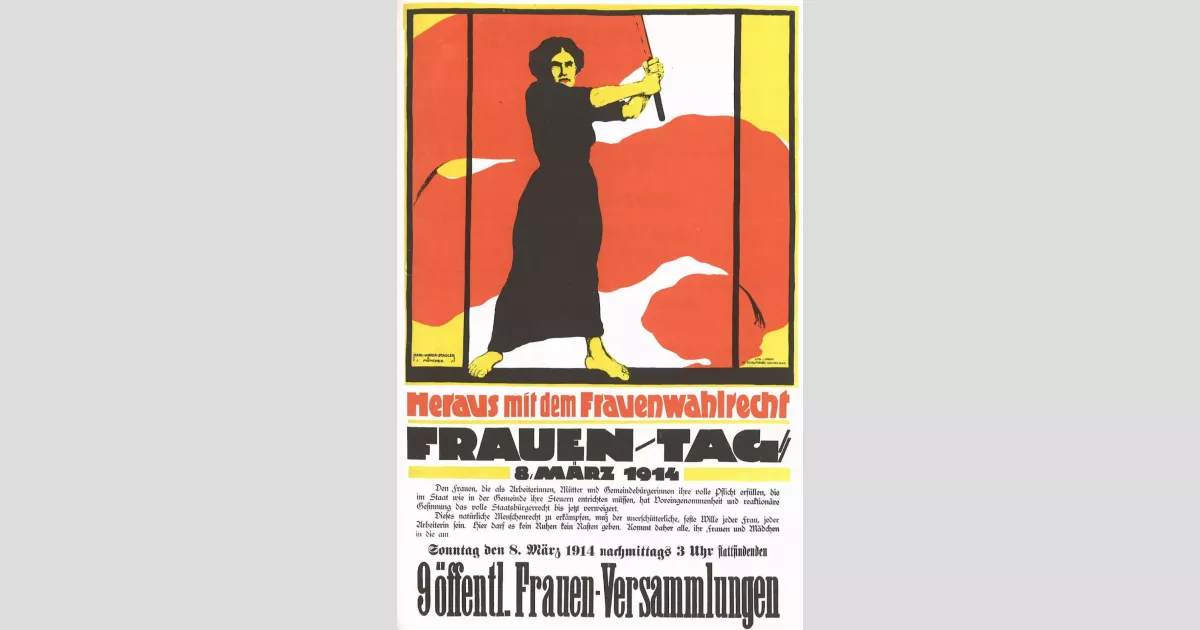
International Women's Day (IWD), observed annually on March 8th, commemorates the historical struggle for women's rights and equality. Originating from early 20th-century labor movements advocating for female suffrage in Europe and North America, IWD serves as a focal point for addressing critical issues impacting women globally. These include gender equality, reproductive rights, and combating violence and abuse against women. The day highlights the ongoing fight for women's liberation and celebrates the achievements and contributions of women throughout history.
2 hours ago : International Women's Day 2026: Justice, equality, and values-driven marketing take center stage.
International Women's Day 2026 focuses on justice for women and girls, highlighting the rise of values-driven marketing and the pursuit of gender equality. It is critical to close these gaps.


February 1909: Woman's Day Organized in New York City
In February 1909, the Socialist Party of America organized a "Woman's Day" in New York City, marking one of the earliest reported events of its kind.
February 1909: First Woman's Day in New York City
On 28 February 1909, the earliest reported Women's Day event, called "Woman's Day", was held in New York City, organized by the Socialist Party of America.
August 1910: International Socialist Women's Conference in Copenhagen
In August 1910, at the International Socialist Women's Conference in Copenhagen, the establishment of an annual "Women's Day" was proposed to promote equal rights, including women's suffrage.
1910: Working Women's Day Proposed
In 1910, Clara Zetkin proposed the celebration of "Working Women's Day" at the International Socialist Women's Conference in Copenhagen, though no specific date was set at that time.
March 1911: First International Women's Day Marked Across Europe
On 19 March 1911, the first International Women's Day was observed by over a million people in Austria-Hungary, Denmark, Germany, and Switzerland, with women demanding the right to vote, hold public office, and protesting against employment sex discrimination.
1913: Russia Observes International Women's Day for the First Time
In 1913, Russia observed International Women's Day for the first time on the last Saturday in February according to the Julian calendar, which corresponds to 8 March in the Gregorian calendar.
1914: International Women's Day Held on 8 March in Germany
In 1914, International Women's Day was held on 8 March for the first time in Germany, with observances dedicated to women's right to vote. Concurrently, there was a march in London in support of women's suffrage, during which Sylvia Pankhurst was arrested.
March 8, 1917: Petrograd Women's Demonstrations
On March 8, 1917, Petrograd women participated in demonstrations that led to the overthrow of the monarchy.
March 1917: Women Textile Workers' Demonstration in Petrograd
On 8 March 1917, in Petrograd, women textile workers initiated a demonstration demanding "Bread and Peace", marking the start of the February Revolution, which led to the abdication of Tsar Nicholas II and the granting of voting rights to women.
1917: Women's Role in the Russian Revolution
In 1917, the role of women in the Russian Revolution was recognized.
1917: Revolutionary Changes in Russia
In 1917, the start of revolutionary changes in Russia were marked.
1918: German Women Win the Right to Vote
In 1918, German women won the right to vote, following years of advocacy and activism, including observances of International Women's Day.
March 1919: Communist International Adopts Resolution on Working Women
On 6 March 1919, the first congress of the Communist International adopted a brief "Resolution on the Role of Working Women" submitted by Alexandra Kollontai, though it did not mention 8 March or International Women's Day.
1921: International Women's Day Date Fixed
In 1921, during the third world congress of the Communist International, the date of International Women's Day was officially fixed as March 8 in memory of the Petrograd women's demonstrations of March 8, 1917.
1922: Chinese Communists Observe International Women's Day
In 1922, Chinese communists began observing International Women's Day, which later gained traction across the broader political spectrum.
1922: Lenin Declares International Women's Day
In 1922, Vladimir Lenin officially declared 8 March as International Women's Day to commemorate women's role in the 1917 Russian Revolution.
1927: Hujum Initiated by Stalin
In 1927, Joseph Stalin initiated Hujum on International Women's Day, a series of policies and actions aimed at eliminating gender inequality, particularly the veiling and seclusion of women in Central Asia.
1927: Guangzhou Women's March
In 1927, a march of 25,000 women and male supporters took place in Guangzhou, including representatives from various organizations, demonstrating widespread support for women's rights.
1928: First International Women's Day Observed in Australia
In 1928, Australia first observed International Women's Day with a rally in Sydney's Domain organized by the Militant Women's Group of the Communist Party, advocating for various labor rights and equal pay.
1931: First International Women's Day Marches in Sydney and Melbourne
In 1931, the first International Women's Day marches took place in Sydney and Melbourne, Australia, with women advocating for their rights and equality.
1936: Women's March in Madrid Led by Dolores Ibárruri
In 1936, Communist leader Dolores Ibárruri led a women's march in Madrid on the eve of the Spanish Civil War, demonstrating the growing political activism of women.
1938: Major International Women's Day Meeting in Perth
In 1938, a significant International Women's Day meeting was held in Perth, Australia, attended by women from various organizations advocating for peace, equality, and social justice.
1945: Women's International Democratic Federation Founding Conference
In 1945, the Women's International Democratic Federation founding conference was held in Paris, leading to the creation of organizations like the Congress of American Women.
1946: Mimosa Chosen as Symbol in Italy
In 1946, communist politician Teresa Mattei chose the mimosa as the symbol of International Women's Day in Italy, due to the scarcity and expense of the French symbols, violets and lilies of the valley.
1946: Congress of American Women Founded
On International Women's Day in 1946, the Congress of American Women was founded in New York, affiliating with the Women's International Democratic Federation in Paris.
1948: Congress of American Women Attacked as Communist Front
In 1948, the House Un-American Activities Committee attacked the Congress of American Women as a communist front organization, leading to its forced registration as a "subversive" organization.
October 1949: Founding of the People's Republic of China
Following the founding of the People's Republic of China on 1 October 1949, International Women's Day was officially recognized, and women were granted a half-day off on 8 March.
1950: Dissolution of the Congress of American Women
In 1950, the Congress of American Women was dissolved after being labeled a "subversive" organization and facing anti-communist attacks.
1956: Women's League Rallies in Singapore
In 1956, the Women's League within the People's Action Party in Singapore organized four rallies across Singapore to recognize International Women's Day, attracting over 2,000 people.
1958: First International Women's Day Observance in Trinidad and Tobago
In 1958, Christina F. Lewis organized the first International Women's Day observance in Trinidad and Tobago, marking an expansion of the holiday's reach.
May 1965: International Women's Day Declared Public Holiday in Soviet Union
On 8 May 1965, International Women's Day (8 March) was declared a non-working public holiday in the Soviet Union, honoring Soviet women's achievements and contributions.
1965: First International Women's Day Observance in Afghanistan
In 1965, Anahita Ratebzad and other members of the Democratic Organisation of Afghan Women (DOAW) organized the first observance of International Women's Day in Afghanistan with a protest march in Kabul.
1967: International Women's Day Taken Up by Second-Wave Feminists
Around 1967, International Women's Day was embraced by second-wave feminists, re-emerging as a day of activism focused on equal rights, reproductive rights, and the prevention of violence against women.
1968: Women's Liberation Movement
From 1968, The Women's History Research Center collected resources and records of the women's liberation movement.
1969: March in Berkeley, California
In 1969, Laura X organized a march in Berkeley, California, on International Women's Day, leading to the establishment of The Women's History Research Center.
1972: Large International Women's Day Marches Begin in Australia
In 1972, large International Women's Day marches commenced in Australia, marking a significant increase in activism and public demonstration for women's rights.
1974: Women's History Research Center Archive
By 1974, The Women's History Research Center had collected nearly one million documents on microfilm.
1975: UN Celebrates International Women's Day
In 1975, the United Nations began celebrating International Women's Day, after proclaiming it the International Women's Year.
1977: UN General Assembly Invites Member States to Proclaim UN Day for Women's Rights and International Peace
In 1977, the United Nations General Assembly invited member states to proclaim any day of the year as United Nations Day for Women's Rights and International Peace, according to their traditions. 8 March has been traditionally recognised as the day for International Women's Days by the UN for women's rights and world peace.
1977: United Nations Promotes International Women's Day
In 1977, the United Nations promoted International Women's Day, increasing its global recognition and observance.
1978: Women's Work Committee in Palestine Announced
In 1978, on International Women's Day, the Women's Work Committee in Palestine was announced, representing an association to combine national liberation and women's liberation. It launched programs promoting literacy, health education, embroidery classes, and daycare centers for working-class women.
March 1979: Women's March in Tehran against Mandatory Hijab
In March 1979, a women's march in Tehran, Iran, initially for International Women's Day, transformed into protests against changes in women's rights during the Iranian revolution, including mandatory hijab. These protests lasted six days, leading to a temporary retraction of the decree of mandatory veiling, though it was later enforced.
March 1984: First International Women's Day Demonstrations in Argentina Since End of Military Regime
In March 1984, the first International Women's Day demonstrations since the end of Argentina's military regime took place in the Congressional Plaza. Organized by the Multisectorial de la Mujer, the event featured controversial banners, including one by María Elena Oddone advocating "No to motherhood, yes to pleasure," which sparked criticism and debate within the feminist movement.
1994: Introduction of International Women's Day Bill in US Congress
In 1994, the H. J. Res. 316 bill was introduced by Representative Maxine Waters in the US Congress, at Beata Pozniak's suggestion, to recognize 8 March as International Women's Day.
1995: Plaque Erected Beside The Suffrage Oak
In 1995, on International Women's Day, the Women's Committee of Glasgow City Council erected a plaque beside The Suffrage Oak which reads, 'This oak tree was planted by Women's Suffrage Organisations in Glasgow on 20 April 1918 to commemorate the granting of votes to women.'
1996: First Publication of Gába Magazine
In 1996, Gába, a bilingual Sámi magazine, was published for the first time on International Women's Day by the Sámi women's forum Sami Nisson Forum. The magazine focused on the everyday life of the Sámi from a woman's perspective.
1999: Institution of Stree Shakti Puraskar
In 1999, the Stree Shakti Puraskar (later renamed Nari Shakti Puraskar) was instituted as an award to honor women in India.
2001: Establishment of internationalwomensday.com
In 2001, the website internationalwomensday.com was established. Managed by a British marketing firm with corporate sponsorship, it promoted hashtags as themes for the day, sometimes disconnected from the UN theme, leading to criticism of commercialization.
2003: International Women's Day Rally in Tehran
In 2003, a rally was held in Tehran, Iran, for International Women's Day.
2003: Benefit Concert for Afghan Women Refugees
In 2003, on International Women's Day, Marcheline Bertrand and John Trudell produced a benefit concert for Afghan women refugees in conjunction with the United Nations High Commissioner for Refugees.
2004: Re-establishment of International Women's Day in Czech Republic
In 2004, International Women's Day was re-established as an official "important day" by the Parliament of the Czech Republic, although it has provoked some controversy due to its association with the nation's Communist past.
March 2006: Vandalism of The Little Mermaid Statue in Copenhagen
On March 8, 2006, in Copenhagen, The Little Mermaid statue was vandalized with a dildo attached to its hand and green paint, along with the date March 8 written on it, potentially linked to International Women's Day.
March 2007: Violence at Tehran Rally
On 4 March 2007, violence erupted in Tehran, Iran, when police beat hundreds of men and women planning a rally for International Women's Day. Dozens of women were arrested, and some were released after days of solitary confinement and interrogation.
2008: Wajeha al-Huwaider's Driving Protest in Saudi Arabia
In 2008, on International Women's Day, Wajeha al-Huwaider filmed herself driving in Saudi Arabia in protest of the ban on women driving. The film attracted international media attention.
2009: Sara Azmeh Rasmussen Burns Veil in Protest
In 2009, on International Women's Day, Sara Azmeh Rasmussen set fire to a veil in Norway, gaining international attention but also receiving death threats and hate emails.
2010: Launch of Women's WorldWide Web (W4)
In 2010, on International Women's Day, Lindsey Nefesh-Clarke officially launched Women's WorldWide Web (W4), a European crowdfunding platform dedicated to women's empowerment.
2010: ICRC Highlights Hardships of Displaced Women
In 2010, on International Women's Day, the International Committee of the Red Cross (ICRC) highlighted the hardships displaced women endure due to armed conflicts, noting that they constitute 70-80% of internally displaced persons.
March 8, 2011: Events Commemorating 100th Anniversary of International Women's Day
On March 8, 2011, events took place in over 100 countries to commemorate the 100th anniversary of International Women's Day.
March 2011: US Proclaims Women's History Month
In March 2011, President Barack Obama proclaimed March as "Women's History Month" in the United States and Secretary of State Hillary Clinton launched the "100 Women Initiative: Empowering Women and Girls through International Exchanges". The Red Cross called for efforts to prevent sexual violence against women in conflict zones.
2011: Australia Issues Commemorative Coin and Launches Women Chamber of Commerce
In 2011, Australia issued an International Women's Day 100th anniversary commemorative 20-cent coin. Also, the Australian Women Chamber of Commerce & Industry was launched on 2011's International Women's Day.
2011: Formation of National Network to Combat Violence Against Women in Iraq
In 2011, on International Women's Day, a coalition of 17 Iraqi women's rights groups formed the National Network to Combat Violence Against Women in Iraq.
2011: Founding of the Suffrage Science Award
In 2011, on the 100th anniversary of International Women's Day, the Suffrage Science award, a prize for women in science, engineering, and computing, was founded by the MRC London Institute of Medical Sciences (LMS).
October 2012: Attack on Malala Yousafzai
In October 2012, the brutal attack on Malala Yousafzai highlighted the issue of violence against women and its impact on girls' education, prompting increased focus on ending violence against women.
2012: Opening of Sahar Gul Internet Cafe in Kabul
In 2012, on International Women's Day, Kabul's first internet cafe for women, named the Sahar Gul internet cafe, was opened.
2012: ICRC Calls for Action to Help Mothers and Wives of Missing People
In 2012, on International Women's Day, the ICRC called for more action to help the mothers and wives of people who have gone missing during armed conflict. The vast majority of people who go missing in connection with conflict are men.
2012: Alesha Dixon Launches Avon's Pass It On Campaign
On International Women's Day in 2012, Alesha Dixon launched Avon's Pass It On campaign to highlight domestic abuse issues in the United Kingdom by encouraging the purchase of a necklace. Proceeds from the "Pass It On" necklace purchases were donated to Refuge and Women's Aid.
2013: UN Focuses on Ending Violence Against Women
In 2013, following the attack on Malala Yousafzai, the UN focused its attention on ending violence against women and made this the central theme for International Women's Day. UNESCO also collaborated with governments to support women's rights in providing quality education in a safe environment.
2013: Inauguration of Bhagat Phool Singh Government Medical College for Women
In 2013, on International Women's Day, Bhagat Phool Singh Government Medical College for Women was inaugurated. It is the first women's Government Medical College of independent India.
2013: Bobbi Brown Cosmetics Launches Pretty Powerful Campaign
In 2013, on International Women's Day, Bobbi Brown Cosmetics launched the Pretty Powerful Campaign for Women & Girls, supporting organizations that empower women through job skills training programs and girls through education.
2014: International Women's Collaboration Brew Day
Since 2014, International Women's Collaboration Brew Day has been an annual event on International Women's Day. It gathers women brewers around the world to brew the same beer, with proceeds donated to charity, raising awareness of women in the brewing industry and networking women interested in brewing.
April 2015: Release of the Feminist Five
In April 2015, the Feminist Five, who were detained for planning to hand out anti-sexual harassment stickers, were released on bail after 37 days due to international and domestic backlash.
2015: Amnesty International Australia Collaborates with Tinder
In 2015, for International Women's Day, Amnesty International Australia collaborated with the dating app Tinder to raise awareness of women's rights through slogans.
2015: Renaming of British Ambassador's Residence
In 2015, the British Ambassador's residence in Belgrade was renamed "Elsie Inglis House" on International Women's Day, honoring Elsie Inglis, a doctor and campaigner for women's suffrage.
2015: Renaming and Reorganization of Nari Shakti Puraskar
In 2015, the Stree Shakti Puraskar was renamed and reorganized as the Nari Shakti Puraskar, the highest civilian honor for women in India.
2015: Launch of The Female Lead
On International Women's Day in 2015, The Female Lead, an educational charity, was launched in the United Kingdom to increase the visibility of women's success stories.
2015: Formation of the Women's Classical Committee
On International Women's Day in 2015, the Women's Classical Committee was formed in London to support women in Classics and promote feminist perspectives.
March 2016: Controversy surrounding Kanhaiya Kumar's speech
In March 2016, during an International Women's Day event in India, Kanhaiya Kumar's remarks about the rape of Kashmiri women by Indian Army personnel led to criticism and legal complaints against him.
2016: Relaunch of One Campaign's Poverty is Sexist campaign
On International Women's Day 2016, One Campaign relaunched their Poverty is Sexist campaign with updated figures revealing that half a billion women couldn't read and girls accounted for 74% of new HIV infections among adolescents in Africa.
March 2017: Jakarta Women's March
On March 4, 2017 (in commemoration of International Women's Day on March 8), the first Jakarta Women's March took place, where organizers presented eight demands to the government, including tolerance, health rights, and an end to violence against women.
2017: International Women's Strike movement
In 2017, the International Women's Strike, a global movement, was coordinated across over 50 countries on International Women's Day.
2017: Founding of SahibaSisters Foundation
On International Women's Day in 2017, Tanzania's first feminist activist institute, the SahibaSisters Foundation, was founded.
2017: Symbolic remains moved to National Pantheon of Venezuela
On International Women's Day in 2017, the Venezuelan government transferred the symbolic remains of Apacuana, Hipólita, and Matea to the National Pantheon of Venezuela.
2017: First Jakarta Women's March
The first Jakarta Women's March was held in 2017, in conjunction with International Women's Day. Protestors took to the streets to demand that the government put a stop to systematic violence against women and pass the sexual assault eradication bill.
March 8, 2018: Introduction of 'Overlooked No More' in The New York Times
On March 8, 2018, for International Women's Day, The New York Times introduced "Overlooked No More", a feature honoring remarkable women whose deaths had been overlooked by the newspaper's obituary section since 1851.
March 2018: First Aurat March in Pakistan
In March 2018, the first Aurat March was held in Karachi, Pakistan, by women's collectives in parallel with the Pakistani #MeToo movement on International Women's Day, marking the beginning of an annual socio-political demonstration.
2018: McDonald's inverts arches for International Women's Day
In 2018, McDonald's flipped its arches upside down on social media to form a "W" in celebration of International Women's Day, prompting some backlash.
2018: Sex/Work Strike
In 2018, the Sex/Work Strike began as part of the International Women's Strike on International Women's Day with the aim of decriminalization of sex work. Writer Molly Smith participated.
2018: Protest against domestic violence in Pristina
In Pristina, Kosovo, on International Women's Day 2018, billboards were erected to protest the deaths of two women as a result of domestic violence.
2018: Founding of Women Democratic Front
On International Women's Day in 2018, the Women Democratic Front (WDF), an independent socialist-feminist organization in Pakistan, was founded.
March 2019: Erection of an Antimonumenta in Mexico City
In March 2019, an Antimonumenta was erected on Juárez Avenue in Mexico City during the annual Mexican International Women's Day march, protesting gender violence.
2019: Berlin recognizes International Women's Day as a public holiday
In 2019, Berlin became the first German state to recognize International Women's Day as a public holiday, with parliament approving it in January.
2019: McDonald's inverts arches for International Women's Day
In 2019, McDonald's inverted its arches on social media again to form a "W" in celebration of International Women's Day, prompting some backlash.
2019: Women's protests in Tehran
In Tehran, Iran on International Women's Day 2019, groups of women protested the oppression of women; some unveiled themselves and handed out flowers.
2019: Protest against Burning Sun scandal
On International Women's Day in 2019, the Burning Sun scandal led to a street protest in Gangnam, South Korea, against the Burning Sun and other nightclubs.
2020: Women's protests in Mexico
In 2020, on International Women's Day, women protested in Mexico, demanding accountability for gender violence. The following day, a "Day Without Women" protest took place, simulating a world without women.
2020: Jakarta Women's March
In 2020, the Jakarta Women's March took place on International Women's Day with over 60 civil rights organizations participating, demanding an end to violence against women and the passage of the sexual assault eradication bill.
2020: Founding of The Women's Party in South Korea
On International Women's Day in 2020, The Women's Party, a South Korean single-issue political party advocating for feminism, was founded.
2020: Launch of Witches of Scotland campaign
On International Women's Day in 2020, the Witches of Scotland campaign was launched, seeking legal pardons and justice for those convicted of witchcraft in Scotland.
2021: Vandalization of Concepción Feminist Mural in Spain
In the early hours of International Women's Day 2021, the Concepción Feminist Mural in Spain was vandalized by extreme right-wing groups, erasing its message and defacing the images of 15 women. The Madrid City Council condemned the attack and pledged to restore the mural.
2021: Criticism of Dave Sharma's gesture
On International Women's Day 2021, Australian politician Dave Sharma was criticized for handing out flowers to women amid scrutiny over the government's handling of sexual misconduct allegations.
2021: Protest in Guatemala City
On International Women's Day 2021, a thousand women and men marched in Guatemala City demanding an end to violence against women.
2021: Women's March in San Salvador
On International Women's Day in 2021, 5,000 women marched in San Salvador demanding the decriminalization of abortion and an end to violence against women.
2021: Burger King's Controversial Tweet
On International Women's Day in 2021, Burger King UK tweeted "Women belong in the kitchen," sparking widespread criticism. The company followed up with a statement about changing the gender ratio in the restaurant industry, but eventually deleted the original tweet and issued an apology after severe backlash.
2021: Installation of Antimonumenta in Morelia, Mexico
On International Women's Day in 2021, an Antimonumenta was installed in Morelia, Mexico, during a march protesting gender violence. The sculpture, symbolizing the demand for justice for women, was destroyed shortly after, but a replica was installed the following month.
2021: Uyghur Women Protest
On International Women's Day in 2021, several hundred Uyghur women protested the abuse of Uyghurs by the Chinese government.
2021: Women Divers Hall of Fame Announces Research Grant
On International Women's Day in 2021, the Women Divers Hall of Fame announced the launch of a new research grant in the name of Simone Melchior-Cousteau.
March 2022: Freeman Mbowe's Release and Appearance at Women's Day Event
In March 2022, following his release from a terrorism case, Freeman Mbowe's first public appearance was at the International Women's Day event in Iringa. This led to critics accusing President Samia Suluhu of releasing Mbowe on condition of support for Western feminist policies.
March 2022: CEO's Sexist Remarks at BC Tourism Conference
On 9 March 2022, the CEO of Fairmont Hot Springs resort made sexist remarks at the BC Tourism and Hospitality Conference, telling women to "go clean some rooms and do some dishes" after being asked to stand for International Women's Day. He issued an "apology" a week later.
2022: Feminist Anti-War Resistance Flower Laying
In 2022 on International Women's Day, Feminist Anti-War Resistance organized the laying of flowers – chrysanthemums and tulips bound with blue and yellow ribbons – by women at war monuments.
2022: International Women's Day Becomes Public Holiday in Germany
In 2022, the state parliament of Mecklenburg-Western Pomerania in Germany voted to make International Women's Day a public holiday.
2022: Pardon and apology for witchcraft convictions
On International Women's Day in 2022, a pardon and an apology was made for the people convicted of witchcraft in Scotland.
2023: Rally in Japan for Civil Code Reform
In Japan in 2023, a rally recognizing International Women's Day included a statement delivered to lawmakers by women's rights groups. The statement advocated for changing the Japanese civil code regarding married couples' last names.
March 2024: Tesla Factory Sabotage by Vulkangruppe
In March 2024, the Vulkangruppe, a German radical environmentalism group, sabotaged a Tesla car manufacturing site in Berlin, describing it as a "present for March 8" due to its "anti-patriarchal motives", an allusion to ecofeminist principles.
2024: France Enshrines Abortion Rights in Constitution
On International Women's Day in 2024, France became the first nation to guarantee the right to an abortion in its constitution, in a ceremony presided over by President Emmanuel Macron.
2024: Referendums on Constitutional Amendments in Ireland
On International Women's Day in 2024, the government of Ireland held two referendums on proposed amendments to the Constitution of Ireland, regarding the definition of family and care within the family. However, both referendums were defeated.
Mentioned in this timeline
Malala Yousafzai is a Pakistani activist advocating for female education...
Barack Obama the th U S President - was the...

McDonald's is an American multinational fast food restaurant chain As...

Burger King founded in as Insta-Burger King is a global...
Maxine Waters is an American politician who has served as...
California is a U S state on the Pacific Coast...
Trending

14 minutes ago Robby Fabbri Joins Minnesota Wild After Waiver Claim From St. Louis.

14 minutes ago Dave Mustaine Reflects on Metallica's Impact and Megadeth's Success; Lomenzo on 'Ride the Lightning'

15 minutes ago Commanders Release Marshon Lattimore: $18.5M Saved, Four-Time Pro Bowler Released.

1 hour ago Giannis Antetokounmpo Expected to Return Against Celtics After Injury, Bucks Upgrade Status

1 hour ago Pisa vs Bologna: A Fierce Serie A Battle and Hiljemark's Motivational Charge

2 hours ago Taylor & Travis: Wedding date predictions and planning updates spark excitement!
Popular

Jesse Jackson is an American civil rights activist politician and...

Hillary Diane Rodham Clinton is a prominent American politician lawyer...

Jim Carrey is a Canadian-American actor and comedian celebrated for...

XXXTentacion born Jahseh Dwayne Ricardo Onfroy was a controversial yet...

Kashyap Pramod Patel is an American lawyer who became the...
Barack Obama the th U S President - was the...