


Low-cost carriers (LCCs), also known as budget or discount airlines, prioritize minimizing operating costs, resulting in cheaper fares. This is achieved by sacrificing traditional airline luxuries and unbundling services. To compensate for reduced ticket revenue, LCCs often charge extra fees for services such as baggage, seat selection, and onboard refreshments. The business model focuses on high aircraft utilization, operating from secondary airports, and offering a no-frills experience to attract price-sensitive travelers.
May 1949: Pacific Southwest Airlines Start
In May 1949, Pacific Southwest Airlines, the world's first low-cost airline, commenced intrastate flights connecting Southern and Northern California.


1964: Loftleiðir Offers Cheaper Transatlantic Fares
In 1964, Icelandic airline Loftleiðir, often referred to as "the Hippie Airline", became the first airline to offer cheaper transatlantic fares.
1971: Southwest Airlines Founded
In 1971, Herb Kelleher, having studied the success of Pacific Southwest Airlines (PSA), established Southwest Airlines, closely emulating PSA's culture.
1978: CASM Advantage Realized by New US Airlines
After 1978, U.S. airline carriers such as Midway Airlines and America West Airlines recognized a cost of available seat mile (CASM) advantage over traditional legacy airlines. This CASM advantage was attributed to lower labor costs, less complex aircraft fleets, and simpler route networks.
1984: Midwest Express Founded
In 1984, Midwest Express (later Midwest Airlines) was founded based on this operating model.
2000: Legend Airlines Ceases Operations
In late 2000, Legend Airlines ceased operations.
2002: Rise of LCC in UK
Between 2002 and 2017, the low-cost carrier (LCC) share of international seat capacity rose significantly in the UK, from 23% to 57%.
2004: Aer Lingus and New Transatlantic Options
In 2004, Aer Lingus maintained full service on transatlantic flights while lowering prices to compete with Ryanair on short-haul routes. Late in 2004, Oasis Hong Kong Airlines offered flights from London to Hong Kong for £199, and Canadian Zoom Airlines started selling transatlantic flights between the UK and Canada for £89.
2005: Emirates Envisions Long-Haul Low-Cost
In 2005, Emirates' Tim Clark considered long-haul low-cost flights inevitable, envisioning operations using all-economy Airbus A380s with 760 seats or a hypothetical stretched A380 with 870 seats.
April 2006: Analysis of Low-Cost Long-Haul Potential
In April 2006, Airline Business magazine analyzed the potential for low-cost long-haul service and identified several Asian carriers, including AirAsia, as being closest to making the model work.
August 2006: Zoom Announces UK Subsidiary
In August 2006, Zoom Airlines announced a UK subsidiary to offer low-cost long-haul flights to the United States and India.
February 2007: OFT's Action Against Misleading Pricing
In February 2007, the United Kingdom's Office of Fair Trading (OFT) gave all carriers and travel companies three months to include all fixed non-optional costs in their basic advertised prices due to misleading pricing approaches.
June 2007: Oasis Hong Kong Airlines Starts Route to Vancouver
From June 28, 2007, Oasis Hong Kong Airlines started a second long-haul route to Vancouver, British Columbia.
November 2007: AirAsia X Inaugural Flight
On November 2, 2007, AirAsia X, a subsidiary of AirAsia and Virgin Group, flew its inaugural flight from Kuala Lumpur, Malaysia, to Gold Coast, Australia.
April 2008: Oasis Hong Kong Airlines Ceases Operations
On April 9, 2008, Oasis Hong Kong Airlines ceased operations after incurring over a billion Hong Kong dollars in losses.
August 2008: Zoom Airlines Suspends Operations
On August 28, 2008, Zoom Airlines suspended its operations due to financial problems induced by high fuel prices.
2008: Intra-Regional Seat Capacity
By 2018, LCCs accounted for 33% of intra-regional seat capacity with 1.564 billion, a significant increase from 25% in 2008 with 753 million seats.
2009: Aircraft fleet LCC Growth
By early 2019, the number of LCC aircraft reached 6,000 doubled from 2,900 aircraft at the end of 2009.
2009: Cebu Pacific Plans US and Middle East Routes
In late 2007 Cebu Pacific announced non-stop flights to the US west coast and other US cities starting from mid-2009 and intends to launch low-cost services to the Middle East.
2010: Midwest Airlines Absorbed into Frontier Airlines
In 2010, Midwest Airlines was absorbed into Frontier Airlines.
January 2012: AirAsia Announces Suspension of Services to Europe
On January 12, 2012, AirAsia announced that it would be suspending services to Europe on April 1, 2012.
April 2012: AirAsia Suspends Services to Europe
On April 1, 2012, AirAsia suspended its services to Europe.
2012: Low-cost Airlines Enter Japanese Market
In 2012, low-cost airlines made significant inroads into the Japanese market with the launch of Peach, Jetstar Japan, and AirAsia Japan, each financially supported by a domestic legacy airline and foreign investors.
2012: LCC Market Share Exceeds Legacy Carriers in Europe
In 2012, low-cost carriers (LCCs) market share in Europe (44.8%) surpassed that of legacy carriers (42.4%).
May 2013: Norwegian Air Shuttle Starts Long-Haul Operations
In May 2013, Norwegian Air Shuttle commenced long-haul low-cost operations under its Norwegian Long Haul arm, initially flying to Bangkok and New York from Scandinavia using leased Airbus A340 aircraft.
2013: LCC unit costs in Japan
By mid-2013, new low-cost carriers (LCCs) in Japan were operating at a unit cost of approximately 8 yen per seat-kilometer, compared to 10–11 yen per seat-kilometer for domestic legacy airlines.
2013: Cebu Pacific Begins Flights to Dubai
In 2013, Cebu Pacific launched flights to Dubai, marking its first long-haul destination.
2013: ch-aviation study on LCC fleet strategy
In 2013, ch-aviation published a study detailing how major Low-cost carriers (LCCs) secure substantial discounts by ordering aircraft in large quantities. The study stated that this strategy allows LCCs to sell aircraft shortly after delivery at prices that offset operating costs.
March 2017: International Airlines Group Establishes Level
In March 2017, International Airlines Group established Level, a long-haul low-cost virtual airline based in Barcelona Airport and serving destinations in North and South America.
September 2017: Growth in Transatlantic Long-Haul Low-Cost Market
In September 2017, the long-haul low-cost carriers on the transatlantic flights market offered 545,000 seats over 60 city pairs, marking a 66% growth over the previous year.
2017: LCC Growth in International Seat Capacity
By 2017, low-cost carrier's (LCC) share of international seat capacity had grown significantly in Italy (from 10% to 55%) and Spain (from 9% to 56%) since 2002. However, there was still room for growth in domestic seat capacity in France (19%) and Germany (25%) compared to the UK (66%), Spain (48%), and Italy (47%).
2017: Low-Cost Carrier Market Share
By 2017, low-cost carriers had achieved market share of 57.2% in South Asia and 52.6% in Southeast Asia, with lower shares in Europe (37.9%) and North America (32.7%).
October 2018: Demise of Primera Air
The demise of Primera Air in October 2018, and its $99 transatlantic flights, illustrates the difficulties of the long-haul low-cost model.
2018: LCC Seat Capacity Reaches 1.7 Billion
In 2018, seat capacity on Low-Cost Carriers (LCCs) reached nearly 1.7 billion. LCCs accounted for 33% of intra-regional seat capacity with 1.564 billion, up from 25% in 2008 with 753 million.
2019: US World Airways Relaunch
As of 2019, US World Airways was expected to be relaunched.
2019: Growth of Low-Cost Carriers
By early 2019, there were over 100 Low-Cost Carriers (LCCs) operating 6,000 aircraft, a significant increase from the 2,900 aircraft at the end of 2009.
January 2021: Norwegian Announces Cessation of Long-Haul Operations
In January 2021, Norwegian Air Shuttle announced the immediate cessation of its long-haul operations, along with a large-scale reduction of its fleet of Boeing 737 aircraft and operations.
2021: Norse Atlantic Airways Founded
Norse Atlantic Airways was founded in 2021.
2022: Norse Atlantic Airways Commences Operations
In 2022, Norse Atlantic Airways commenced operations, operating transatlantic flights.
2023: Norse Atlantic Airways Flights to Thailand
In 2023, Norse Atlantic Airways began flights to Thailand.
June 2024: HiSky Starts Long Haul Operations
In June 2024, HiSky initiated long-haul operations between Bucharest-Otopeni and New York JFK.
September 2024: Cebu Pacific's Flight Operations as of September 2024
As of September 2024, Cebu Pacific operates flights to Dubai daily, to Sydney four times a week, and Melbourne thrice weekly.
May 2, 2026: Spirit Airlines Shutdown
On May 2, 2026, Spirit Airlines, then the largest Ultra Low-Cost Carrier (ULCC) in America, ceased operations. This shutdown occurred amid rising fuel costs resulting from the 2026 Iran war, following unsuccessful negotiations with the United States government for a bailout.
2033: Projected Market Size for Low-Cost Airlines
The low-cost airline sector is expected to grow significantly, with the market projected to increase from an estimated value of US$221.3 billion to US$430.5 billion by 2033.
Mentioned in this timeline
The United States of America is a federal republic primarily...

California is a U S state on the Pacific Coast...
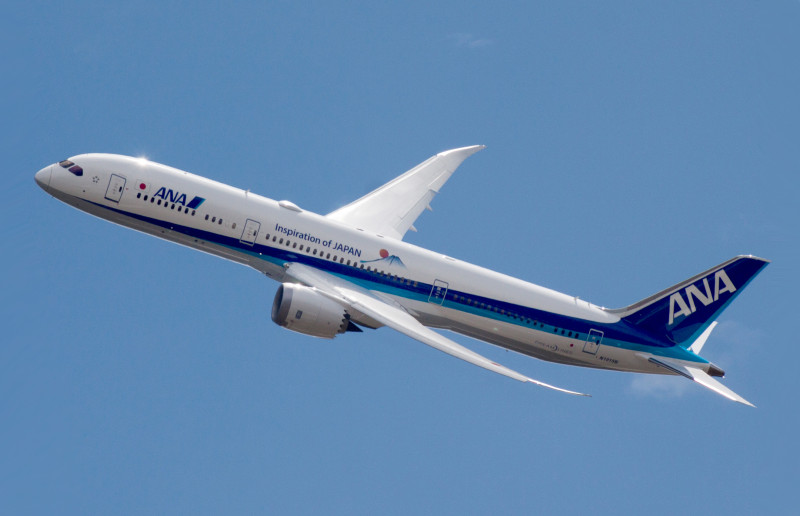
The Boeing Dreamliner is an American wide-body airliner developed by...
Southwest Airlines is a major U S airline headquartered in...

India officially the Republic of India is a South Asian...

The Boeing Company is a multinational corporation and one of...
Trending

3 hours ago Erin Andrews Pulled Over by Airport Security Following Rams and Eagles Game
4 hours ago Oregon Quarterback Dylan Raiola Benched Following Performance Struggles Against UCLA

5 hours ago Ryan Day Supports Son RJ Day at High School Senior Night

6 hours ago Vivek Ramaswamy's Nuclear Startup Atlas Atomics Reaches $1.9 Billion Valuation

6 hours ago José Mourinho Defends Kylian Mbappé Against Ridiculous Criticism at Real Madrid
6 hours ago Oregon QB Dante Moore Ruled Out Against UCLA; Dylan Raiola Named Starter
Popular

Ken Paxton is an American politician and lawyer serving as...

Cristiano Ronaldo widely considered one of the greatest footballers captains...

Michael Joseph Jackson the King of Pop was a highly...

Elon Musk is a visionary entrepreneur and engineer known for...

Shakira Isabel Mebarak Ripoll the Queen of Latin Music is...

Bernie Sanders is a prominent American politician and the senior...