History of North Korea national football team in Timeline


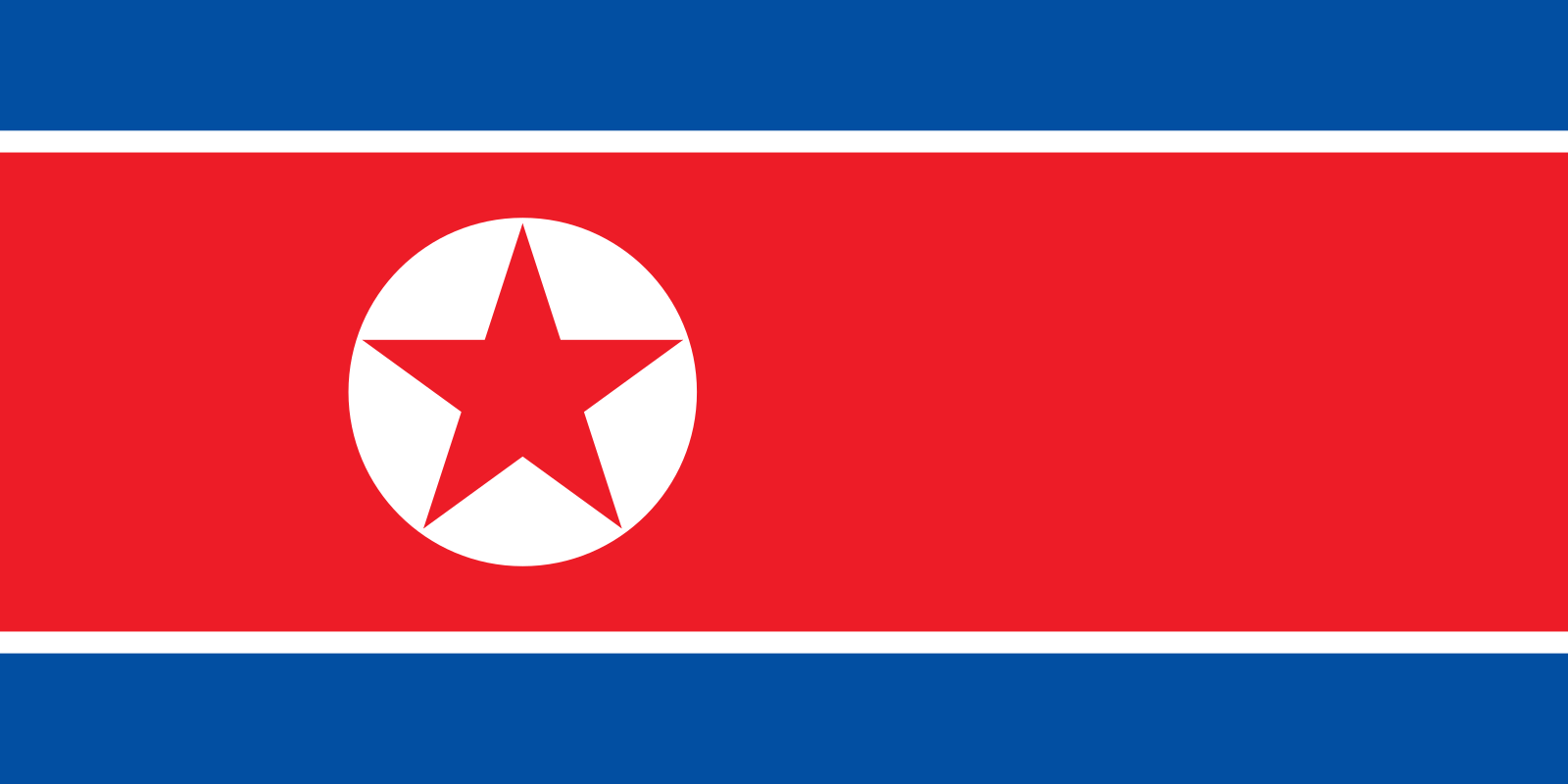
The North Korea national football team represents North Korea in men's international football. It is governed by the DPR Korea Football Association. The team is a member of both FIFA and the Asian Football Confederation (AFC).
1945: Establishment of the North Korea Football Association
The North Korea Football Association was founded in 1945.


1954: AFC Membership
The North Korea Football Association became a member of the Asian Football Confederation (AFC) in 1954 during the confederation's inaugural year.
1958: FIFA Affiliation
The North Korea Football Association became affiliated with FIFA in 1958.
March 1964: First Official Match
The North Korean national football team played their first official match on March 22, 1964, in Rangoon against Burma as part of the 1964 Olympic qualifiers. The match ended in a goalless draw.
1965: Participation in GANEFO and World Cup Qualification
In 1965, the North Korean national team participated in the Games of the New Emerging Forces (GANEFO) and entered World Cup qualification for the first time.
July 1966: World Cup Qualification and Diplomatic Challenges
In July 1966, North Korea's qualification for the World Cup presented diplomatic problems for the host nation, the United Kingdom, due to the lack of recognition of the North Korean government since the Korean War. As a result, there were challenges regarding the display of the North Korean flag and the playing of their national anthem.
1966: Limited Participation in International Competitions
Following their World Cup success in 1966, North Korea's involvement in qualifying campaigns for continental and international tournaments became infrequent.
1966: World Cup Debut and Quarter-Final Appearance
In 1966, North Korea made their World Cup debut, reaching the quarter-finals and beating Italy in the group stage. This marked the first time a men's Asian team had advanced past the group stage.
1966: World Cup Group Stage and Quarter-Final Performance
In the 1966 FIFA World Cup, North Korea was drawn into Group 4 with the USSR, Italy, and Chile. They lost their first game against the Soviets but secured a 1-1 draw against Chile, with Pak Seung-zin scoring North Korea's first-ever World Cup goal. They went on to defeat the reigning World Cup champions Italy, marking the first time an Asian team reached the quarter-finals of a World Cup. The team faced Portugal in the quarter-finals, taking a 3-0 lead but ultimately losing 5-3. Despite the loss, the North Korean players were celebrated as heroes upon their return home.
1966: No Events in 1966
No significant events related to North Korea's national football team occurred in 1966.
1966: Release of "The Game of Their Lives" Documentary
Thirty-five years after the 1966 World Cup, British director Dan Gordon produced "The Game of Their Lives," a documentary about the North Korean team's performance. The film, which featured interviews with surviving players, was screened in both North and South Korea and received the award for Best Sports Documentary from the Royal Television Society.
1968: Withdrawal from Olympic and AFC Asian Cup Qualifiers
North Korea opted out of the 1968 Olympic qualifiers and decided not to participate in the 1968 AFC Asian Cup qualification.
1970: Withdrawal from World Cup Qualifiers
North Korea declined to participate in the 1970 World Cup qualifiers because of their refusal to play against Israel in the second round of playoffs.
1971: First Match Against an African Team
Between their 1966 World Cup quarter-final appearance and 1971, North Korea only played one friendly match, which was against Algeria. They lost 3-1 in Algiers, marking their first encounter with an African team.
1972: Participation in Olympic Qualifiers
In 1972, North Korea played their first official game since 1966 as part of the 1972 Olympic qualifiers. They won against Syria and Iraq but lost to Iran in a play-off match after two draws in the initial legs. They chose not to enter the 1972 AFC Asian Cup qualifiers.
May 1973: 1974 World Cup Qualifiers
In May 1973, North Korea participated in the initial phase of the 1974 World Cup qualifiers in Tehran. They finished third in Group 2, behind Iran and Syria.
1974: Participation in World Cup Qualifiers
North Korea participated in the 1974 World Cup qualifiers.
1976: First Participation in Asian Cup Qualification and Subsequent Withdrawal
North Korea participated in Asian Cup qualification for the first time in 1976. After finishing first in their group and winning against Hong Kong in the semi-finals, they secured a spot in the tournament. However, they ultimately withdrew, missing their chance to participate in the continental competition.
1978: Withdrawal from World Cup Qualifiers
North Korea's participation in the 1978 World Cup qualifiers ended prematurely with a withdrawal for diplomatic reasons, which stemmed from being placed in the same qualifying group as South Korea.
1980: Second Place in the AFC Asian Cup and Semifinal Loss to South Korea
In 1980, North Korea participated in the AFC Asian Cup, finishing second in their group behind Iran. In the semifinals, they faced South Korea in a significant sporting and political event. Despite scoring early, North Korea conceded two goals in the final minutes and lost the match. They ended the tournament with a 3-0 loss against Iran in the third-place playoff.
1980: Unsuccessful Olympic Qualifying Campaign
In 1980, North Korea's Olympic qualifying campaign was unsuccessful as they finished fourth in Group 3 of the preliminary tournament, behind Iran, Singapore, and China.
1980: Start of 1982 World Cup Qualification Campaign
In 1980, North Korea, managed by former international Han Bong-zin, began their qualifying campaign for the 1982 World Cup.
1980: Fourth Place Finish in the AFC Asian Cup
North Korea finished fourth in the 1980 AFC Asian Cup, marking their first qualification for the tournament.
1982: North Korea Participates in the Asian Games
In 1982, North Korea participated in the Asian Games, progressing to the semi-finals where they lost to Kuwait.
1984: Two-Year Suspension and Boycott of Olympic Qualifiers
In 1984, North Korea faced a two-year suspension due to their players attacking the referee during the 1982 Asian Games. Consequently, they were disqualified from the 1984 AFC Asian Cup qualifiers and boycotted the 1984 Olympic qualifiers.
1986: Return to World Cup Qualifiers
In 1986, North Korea returned to World Cup qualifiers after a four-year absence, competing in Group 4 alongside Japan and Singapore.
1988: North Korea Boycotts the 1988 Olympic Games
In 1988, North Korea boycotted the Olympic Games after their request to participate was refused by the International Olympic Committee. They also failed to qualify for the 1988 AFC Asian Cup, finishing third in their qualifying group.
1990: Inaugural Dynasty Cup and World Cup Qualifiers
In 1990, North Korea participated in the first-ever Dynasty Cup, finishing third. They also took part in the 1990 World Cup qualifiers, topping their first-round group but finishing last in the final round.
1990: No Events in 1990
No significant events related to North Korea's national football team occurred in 1990.
1990: First Match Against South Korea in Pyongyang
The 2022 World Cup qualifiers featured the first match between North Korea and South Korea in Pyongyang since a friendly in 1990.
1991: Pál Csernai Becomes First Foreign Manager
Hungarian Pál Csernai was appointed as North Korea's first foreign manager in 1991.
1992: No Events in 1992
No significant events related to North Korea's national football team occurred in 1992.
1992: Olympic Qualification Attempt and Dynasty Cup Participation
North Korea attempted to qualify for the 1992 Olympic Games after two consecutive withdrawals, but finished second in their group. They also participated in the 1992 Dynasty Cup, once again finishing third.
1992: Qualification for the Asian Cup and Early Exit
North Korea qualified for the 1992 AFC Asian Cup under Csernai's leadership, marking their second appearance in the tournament. However, their campaign ended in the first round without a win.
1992: AFC Asian Cup Qualification
North Korea qualified for the 1992 AFC Asian Cup.
1992: Undefeated Run in 1994 World Cup Qualifiers
North Korea went undefeated in the first round of the 1994 World Cup qualifiers, securing a spot in the next round.
1994: Csernai Departs, North Korea Withdraws from Competitions
Pál Csernai left his position as manager in 1994. North Korea withdrew from international football for over four years, coinciding with the North Korean famine (1994–1998) and the official mourning period following the death of President Kim Il Sung.
1998: End of Four-Year Hiatus
The four-year period of North Korea's withdrawal from international football ended in 1998.
2000: Return to Asian Cup Qualification and Olympic Qualification Attempt
North Korea returned to official games in 2000, qualifying for the AFC Asian Cup but failing to qualify for the Olympic Games.
2002: Withdrawal from World Cup and EAFC Qualifiers
North Korea withdrew from the 2002 World Cup and the 2003 EAFC qualifiers.
2003: No Events in 2003
No significant events related to North Korea's national football team occurred in 2003.
2003: Start of 2004 Asian Cup Qualification Campaign
North Korea, under coach Yun Jong-su, started their qualifying campaign for the 2004 AFC Asian Cup.
2004: Incidents During Asian Cup Qualifiers
North Korea experienced two incidents during the 2004 AFC Asian Cup qualifiers, involving smoke bombs and visa issues, leading to a suspension from Asian competitions.
2005: Return to World Cup and East Asian Football Championship Qualifiers
North Korea returned to the World Cup qualifiers after twelve years and participated in the East Asian Football Championship qualifiers, where they achieved their biggest victory (21-0 against Guam) and finished third in the final round.
2006: World Cup Qualifying Controversy
During the 2006 World Cup Qualifiers, controversy arose due to riots by North Korean supporters after the team's failure to qualify, interfering with the safe exit of opposing teams from the stadium.
2006: Elimination from World Cup Qualifiers
North Korea was eliminated from the 2006 World Cup qualifiers in the final round.
2007: Exclusion from Asian Cup Qualifiers
Due to their suspension, North Korea was unable to participate in the 2007 AFC Asian Cup qualifiers.
2007: Suspension from Asian Competitions
North Korea served a suspension from all competitions in Asia in 2007, imposed by the AFC due to incidents during the 2004 Asian Cup qualifiers.
2007: First Miss Out from AFC Asian Cup since 2007
North Korea's withdrawal from the 2022 World Cup qualifiers means they would not play in the 2023 AFC Asian Cup, marking their first absence from the tournament since 2007.
2008: Third Place Finish in AFC Challenge Cup
In 2008, North Korea participated in the AFC Challenge Cup, a tournament for developing nations, finishing third after a semi-final loss to Tajikistan and a victory against Myanmar in the third-place match.
2008: First EAFF East Asian Cup Finals Since 2008
In 2015, North Korea qualified for the EAFF East Asian Cup finals for the first time since 2008.
2008: East Asian Football Championship Participation
North Korea qualified for and participated in the 2008 East Asian Football Championship, finishing last in the four-team final round.
2009: Preparation Camp in France
In 2009, the North Korean national football team held a preparation camp in France, their first European appearance in 44 years. They played friendly matches against FC Nantes and Congo, both ending in draws.
2009: Qualification for the 2010 World Cup
In 2009, the North Korean national team qualified for the 2010 FIFA World Cup, marking their second appearance in the tournament.
2010: AFC Challenge Cup Victory
In 2010, North Korea won the AFC Challenge Cup for the first time. They defeated Turkmenistan in the final after a penalty shootout. This victory secured their spot in the 2011 AFC Asian Cup.
2010: Second World Cup Appearance
North Korea participated in the 2010 FIFA World Cup, their second appearance in the tournament.
2010: World Cup Performance
North Korea participated in the 2010 FIFA World Cup, where they faced Brazil, Portugal, and Côte d'Ivoire. They lost all three matches, including a 7-0 defeat against Portugal, their heaviest loss ever.
2010: World Cup Qualification and Diplomatic Incidents
North Korea qualified for the 2010 World Cup after finishing second in their qualifying group, securing their first appearance since 1966. Diplomatic incidents with South Korea led to matches being relocated to China.
2011: Return to AFC Asian Cup
In 2011, North Korea returned to the AFC Asian Cup after a ten-year absence.
2011: No Events in 2011
No significant events related to North Korea's national football team occurred in 2011.
2011: AFC Asian Cup Group Stage
North Korea participated in the 2011 AFC Asian Cup and ended their campaign in the group stage after drawing with the United Arab Emirates and losing to Iran and Iraq.
March 2012: Second Consecutive AFC Challenge Cup Title
In March 2012, North Korea defended their AFC Challenge Cup title, defeating Turkmenistan in the final. This victory guaranteed their participation in the 2015 AFC Asian Cup.
November 2013: End of Unbeaten Streak
In November 2013, North Korea's unbeaten streak ended with a 2-1 loss to Kuwait.
2014: Two-Year Unbeaten Streak
After a home defeat against Uzbekistan in the 2014 World Cup qualifiers, North Korea went on a two-year unbeaten run.
2014: Choeusu Becomes Kit Provider
In 2014, North Korean sports company Choeusu became the official kit provider for the North Korean national teams. This marked a period of domestic sponsorship for the team's attire.
2014: World Cup Qualification Campaign
North Korea competed in the 2014 World Cup qualifiers but failed to advance past the third round. They finished third in their group behind Japan and Uzbekistan.
2015: AFC Asian Cup Group Stage Exit and Coaching Change
In 2015, North Korea exited the AFC Asian Cup in the group stage, losing all three matches. Yun Jong-su was relieved of his duties following a suspension by the AFC for unsportsmanlike behavior during the Asian Games final against South Korea. Despite the disappointing tournament, North Korea managed to win several friendly matches and finished on the podium of the 2015 EAFF East Asian Cup, including a victory against Japan.
2015: Second Consecutive AFC Asian Cup Qualification
In 2015, North Korea qualified for the AFC Asian Cup for the second consecutive time, marking a first in their history.
2015: AFC Asian Cup Qualification
North Korea qualified for the 2015 AFC Asian Cup.
February 2017: Match Postponements and Diplomatic Tensions
In February 2017, the AFC postponed North Korea's home match against Malaysia three times at the request of the Malaysian Federation due to diplomatic tensions arising from the assassination of Kim Jong-nam. The matches eventually took place on neutral ground in Thailand, where North Korea secured two victories.
2017: EAFF E-1 Football Championship
In the 2017 EAFF E-1 Football Championship, North Korea failed to win a single match, finishing last in the final round after losing to Japan and South Korea and drawing with China.
2018: World Cup Qualification Failure and Coaching Change
In the 2018 World Cup qualifiers, North Korea won their first three matches but ultimately failed to reach the third round after a late defeat against the Philippines. They finished second in their group but missed out on qualification as one of the best runners-up. Kim Chang-bok was subsequently dismissed and replaced by Jørn Andersen, marking the second time a European coach managed the North Korean national team.
2019: AFC Asian Cup Qualification
Due to their early elimination in the World Cup qualifiers, North Korea had to enter the third qualifying round for the 2019 AFC Asian Cup.
2019: Disappointing AFC Asian Cup Performance
In the 2019 AFC Asian Cup, North Korea suffered heavy defeats against Saudi Arabia (0-4), Qatar (6-0), and Lebanon (1-4), finishing with the worst record of all participating teams.
January 2021: North Korea's All-Time International Football Record
As of January 1, 2021, a comprehensive record of North Korea's performance in international football was available. This record provides a historical overview of the team's wins, losses, and draws in international matches.
2022: World Cup Qualifiers and Withdrawal
North Korea began their 2022 World Cup qualifying campaign with victories over Lebanon and Sri Lanka, followed by a historic scoreless draw against South Korea in Pyongyang, the first qualifier played between the two Koreas in the city. They then lost to Turkmenistan, marking their first-ever defeat against that opponent, but recovered with another win over Lebanon. However, North Korea withdrew from the qualifiers due to concerns related to the COVID-19 pandemic, resulting in the nullification of all their results and their absence from the 2023 AFC Asian Cup.
August 2023: North Korea Aims for Sporting Comeback
In August 2023, North Korea announced its intention to return to international sporting competitions, including football. Their goal was to participate in the 2026 FIFA World Cup qualifiers, aiming to improve their football standing after a period of isolation due to the pandemic.
2023: Withdrawal from 2023 AFC Asian Cup
North Korea's withdrawal from the 2022 World Cup qualifiers led to their exclusion from the 2023 AFC Asian Cup, marking their first absence from the tournament since 2007.
January 2024: New Kit Sponsorship for North Korean Football
In January 2024, the Chinese sports brand Inlang took over as the official kit sponsor for the North Korean national football teams. This followed a period from 2014 to January 2024 when the North Korean company Choeusu provided the kits.
2026: North Korea's Potential World Cup Qualification Journey
If North Korea rejoins the 2026 FIFA World Cup qualification, they are expected to face Japan, Syria, and Myanmar in Group B of the second round. This placement sets the stage for potential matches against these nations.
Mentioned in this timeline
Saudi Arabia officially the Kingdom of Saudi Arabia KSA is...

Qatar is a country located on the Qatar Peninsula in...
Hong Kong is a densely populated special administrative region of...
Myanmar also known as Burma is a Southeast Asian country...
China officially the People's Republic of China PRC is located...
Iraq officially the Republic of Iraq is a country in...
Trending

Paul Pierce is a retired American professional basketball player who spent seasons in the NBA He is best known for...

4 hours ago Meghan Markle Set to Co-Host Junior MasterChef Australia

4 hours ago SpaceX Restricts Starlink Access in Ukraine Amid Geopolitical Controversy
5 hours ago Tennis Prediction Markets for Upcoming Professional Matches
6 hours ago Multiple Earthquakes Reported Across California Regions

1 day ago New Netflix Docuseries Explores Life and Legacy of Matthew Perry
Popular

Ilhan Omar is a prominent American politician currently serving as...

Ken Paxton is an American politician and lawyer serving as...

Elon Musk is a visionary entrepreneur and engineer known for...

William Franklin Graham III known as Franklin Graham is an...

Barack Obama the th U S President - was the...

Kathy Hochul is an American politician and lawyer who has...