History of H-1B visa in Timeline

Share: FB Share X Share Reddit Share Reddit Share
H-1B visa

The H-1B visa is a non-immigrant visa in the U.S. allowing employers to hire foreign workers in specialty occupations, fashion models, or those working on Department of Defense projects. The USCIS, under DHS, regulates and implements the visa program. Foreign nationals can hold H-1B status within the U.S. and may or may not possess a physical H-1B visa stamp.

2 hours ago : JD Vance Criticizes H-1B Visa, Calls for Loyalty Test on Green Cards

JD Vance raised concerns about H-1B visa fraud and suggested a loyalty test for green card applicants. He cited his academic in-laws and defended Trump's visa policies. Vance's statements sparked debate regarding immigration and visa regulations.

June 27, 1952: Congress Passes Immigration and Nationality Act

On June 27, 1952, Congress passed the Immigration and Nationality Act, codifying U.S. immigration law and introducing a system of selective immigration, including the establishment of the H-1 visa for temporary workers with "distinguished merit and ability."

1989: Minimum Wage for H-1B Holders Established

In 1989, the minimum wage for an H-1B holder was established at $60,000 (USD), which remained unchanged until 2017 when Congress considered increasing it.

November 20, 1990: Immigration Act of 1990 Signed into Law

On November 20, 1990, President George H. W. Bush signed the Immigration Act of 1990 into law, splitting the H-1 visa into the H-1A visa for nurses and the H-1B visa for workers in specialty occupations, establishing a quota of 65,000 H-1B visas per fiscal year.

1991: Increase in H-1B Visas Issued

Between 1991 and 2022, the number of H-1B visas issued quadrupled, marking a significant increase in the program's utilization.

October 21, 1998: American Competitiveness and Workforce Improvement Act Signed

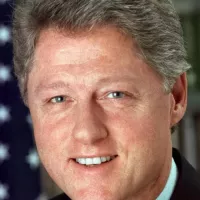
On October 21, 1998, President Bill Clinton signed the American Competitiveness and Workforce Improvement Act into law, requiring an additional $500 payment for H-1B applications to retrain U.S. workers and increasing the H-1B visa quota for fiscal years 1999 and 2000.

1999: H-1B Visa Quota Increased to 115,000

In 1999, the quota of H-1B visas was increased from 65,000 to 115,000 for fiscal years 1999 and 2000 only, as part of the American Competitiveness and Workforce Improvement Act.

October 17, 2000: American Competitiveness in the 21st Century Act Signed

On October 17, 2000, President Bill Clinton signed the American Competitiveness in the 21st Century Act into law, increasing the retraining fee to $1,000 and the quota to 195,000 H-1B visas in fiscal years 2001, 2002, and 2003 only.

December 22, 2000: Memorandum clarifies computer programming positions as specialty occupations for H-1B

A memorandum from December 22, 2000, stated that because most computer-programming positions required a bachelor's degree, computer programming was considered a specialty occupation that qualified for an H-1B visa.

2000: Exemptions Added to Increase H-1B Visa Length of Stay

In 2000, some exemptions were added to the H-1B visa program to increase the length of stay for some visa holders, as the typical duration of stay for an H-1B visa holder is typically six years.

2000: H-4 Visa Holders' Eligibility to Work Expanded

In 2000, the American Competitiveness in the 21st Century Act expanded eligibility for H-1B holders' spouses in H-4 status to work in the U.S. under certain conditions, provided they have an approved "Immigration Petition for Alien Worker" form or have been given H-1B status under sections 106(a) and (b) of the Act.

2000: H-1B Visa Quota Increased to 115,000

In 2000, the quota of H-1B visas remained at 115,000 for fiscal year 2000 only, as part of the American Competitiveness and Workforce Improvement Act.

2000: GAO report finds lack of effectiveness

The United States General Accounting Office (GAO) found in a 2000 report controls on the H-1B program lacked effectiveness. The GAO report's recommendations were subsequently implemented.

2001: H-1B Visa Quota Increased to 195,000

In 2001, the H-1B visa quota was increased to 195,000 for fiscal years 2001, 2002, and 2003 only, due to the American Competitiveness in the 21st Century Act.

2002: H-1B Visa Quota at 195,000

In 2002, the H-1B visa quota remained at 195,000 for fiscal years 2001, 2002, and 2003 only, due to the American Competitiveness in the 21st Century Act.

2002: H-1B visa program as government labor-subsidy for corporations

In a 2002 article in Computerworld, Paul Donnelly cited Milton Friedman as stating that the H-1B program acts as a subsidy for corporations. Others holding this view include Norman Matloff, who testified to the U.S. House Judiciary Committee Subcommittee on Immigration on the H-1B subject.

2003: H-1B Visa Quota at 195,000

In 2003, the H-1B visa quota remained at 195,000 for fiscal years 2001, 2002, and 2003 only, due to the American Competitiveness in the 21st Century Act.

2003: Establishment of H-1B1 Visa Through Free Trade Agreements

In 2003, the SingaporeUnited States Free Trade Agreement and the Chile–United States Free Trade Agreement led to the establishment of a new H-1B1 visa, available solely for citizens of Singapore or Chile, with indefinite renewal and a separate quota of 6,000 per fiscal year, though it is not a dual-intent visa.

December 6, 2004: President Bush Signs Consolidated Appropriations Act, 2005

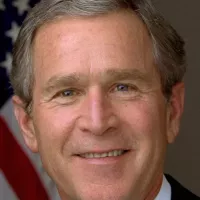
On December 6, 2004, President George W. Bush signed the Consolidated Appropriations Act, 2005, which included the H-1B Visa Reform Act of 2004.

2005: H-1B Visa Reform Act Implemented

In 2005, as part of the Consolidated Appropriations Act, the H-1B Visa Reform Act increased the retraining fee to $1,500 for employers with 26 or more employees and reduced it to $750 for smaller employers, while also introducing a new $500 anti-fraud fee.

2005: Violence Against Women and Department of Justice Reauthorization Act allows work authorization for H-4 visa holders

In 2005, the Violence Against Women and Department of Justice Reauthorization Act allowed work authorization for victims of domestic violence who are in H-4 status.

2005: LCAs have loopholes.

In FY 2005, only about 800 LCAs of over 300,000 submitted were rejected. According to attorney John Miano, the H-1B prevailing wage requirement is "rife" with loopholes.

2006: Melania Trump Becomes a U.S. Citizen

In 2006, Melania Trump, who was previously an H-1B visa holder limited to one-year increments due to her Slovenian citizenship, became a U.S. citizen.

2006: Rutgers University Professor's conclusion about stem workers

Studies from Rutgers University professor Hal Salzman, and co-authors B. Lindsay Lowell and Daniel Kuehn, have concluded the U.S. has been employing only 30% to 50% of its newly degreed, able and willing STEM workers to work in STEM fields.

2007: Bill Gates testifies on behalf of expanded visa program

In 2007 Microsoft chairman Bill Gates testified on behalf of the expanded visa program on Capitol Hill: "warning of dangers to the U.S. economy if employers can't import skilled workers to fill job gaps."

2007: Introduction of The H-1B and L-1 Visa Fraud & Prevention Act

In 2007, Senators Dick Durbin and Charles Grassley introduced "The H-1B and L-1 Visa Fraud & Prevention Act," aimed at addressing fraud and abuse within the H-1B visa program and preventing the displacement of American workers.

April 2, 2008: Homeland Security Announces STEM OPT Extension

On April 2, 2008, Homeland Security Secretary Michael Chertoff announced a 17-month extension to Optional Practical Training for STEM students, allowing them to work in the U.S. for up to 29 months on a student visa as part of the H-1B Cap-Gap Regulations.

September 2008: USCIS Report on H-1B Benefit Fraud & Compliance

According to the USCIS's H-1B Benefit Fraud & Compliance Assessment of September 2008, 21% of H-1B visas granted originated from applications that were fraudulent or had technical violations.

2008: Federalization of Immigration in Northern Mariana Islands

In 2008, The Consolidated Natural Resources Act federalized immigration in the U.S. territory of the Commonwealth of the Northern Mariana Islands, and stipulated during a transition period numerical limitations would not apply to otherwise qualified workers in the H visa category in the U.S. territories of Guam and the Northern Mariana Islands.

2008: USCIS Updated and Issued New Rules Regarding the H-1B Visa

Since 2008, USCIS has updated and issued new rules regarding the H-1B visa.

February 17, 2009: Employ American Workers Act Signed into Law

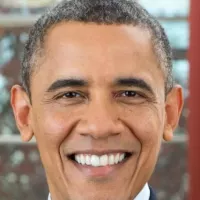
On February 17, 2009, President Barack Obama signed the Employ American Workers Act into law as part of the American Recovery and Reinvestment Act. Employers receiving funds under TARP or the Federal Reserve Act Section 13 were required to attest that hiring H-1B workers would not displace U.S. workers.

2009: Durbin Speaks on H-1B Visa Program

In 2009, Senator Dick Durbin spoke about the H-1B visa program, stating that it should complement the U.S. workforce and not replace it, highlighting concerns about fraud, abuse, and outsourcing that deprives qualified American workers of their jobs.

2009: Arrests for Nationwide H-1B Visa Scam

In 2009, federal authorities arrested people for a nationwide H-1B visa scam involving false statements and documents in H-1B visa petitions.

2009: USCIS makes information on H-1B visa petitions dating back to fiscal year 2009 publicly available

In 2019, USCIS launched the H-1B Employer Data Hub, providing public access to information on H-1B visa petitions dating back to fiscal year 2009.

2009: Lower H-1B Visa Applications Due to Worldwide Recession

In FY 2009, due to the worldwide recession, applications for H-1B visas by offshore outsourcing firms were significantly lower than in previous years, yet 110,367 H-1B visas were issued.

January 8, 2010: USCIS Clarifies Employer-Employee Relationship for H-1B Visa

On January 8, 2010, USCIS issued a memorandum clarifying that a valid employer-employee relationship must exist between an H-1B employer and visa-holding employee, although the memo was ultimately not implemented. The memo stated that employers must demonstrate control over when, where, and how the employee performs their work to maintain compliance.

2012: STEM education funding and job markets conference announcement

In 2012, an IEEE announcement of a conference on STEM education funding and job markets stated: "only about half of those with under-graduate STEM degrees actually work in the STEM-related fields after college, and after 10 years, only some 8% still do."

2013: Northeast Utilities Layoffs and H-1B Replacements

In 2013, Northeast Utilities laid off 350 tech workers, many of whom trained their replacements who were hired on H-1B visas to do their jobs.

2013: Passage of the United States Trafficking Victims Protection Reauthorization Act

In 2013, the United States Trafficking Victims Protection Reauthorization Act was passed to protect the rights of foreign workers in the U.S.

October 2014: Walt Disney World IT Worker Layoffs and H-1B Replacements

In October 2014, Walt Disney World laid off 250 IT workers, some of whom were tasked with training their H-1B visa holder replacements.

2014: H-1B workers paid less than U.S. workers

In 2014, The Department of Homeland Security annual report indicates that H-1B workers in computer science are paid a mean salary of $75,000 annually, almost $25,000 below the average annual income for software developers and studies have found H-1B workers are paid significantly less than U.S. workers.

2014: Report on Unfair Treatment of H-1B Visa Workers

In 2014, a report highlighted that some workers on H-1B visas experienced poor, unfair, and illegal treatment by brokers who placed them in U.S. jobs.

2014: University of Massachusetts Program for Entrepreneurs

In 2014, the University of Massachusetts initiated a program enabling entrepreneurs to establish U.S. companies while meeting visa requirements through teaching and mentoring roles on campus.

2014: Top H-1B Employers and Offshore Job Shipping

In 2014, the top 10 H-1B employers, including Tata Consultancy, Cognizant, Infosys, Wipro, Accenture, HCL America, and IBM, used the program to ship jobs offshore.

2015: Reports of companies replacing American workers with H-1B visa holders

In 2015, reports surfaced of major companies like Disney and Southern California Edison replacing American workers with H-1B visa holders, sometimes requiring displaced employees to train their replacements. The New York Times editorial board criticized the program for exploiting both foreign and domestic workers.

2015: Senate Judiciary Committee holds hearings on H-1B program's impact on U.S. workers

In 2015, the Senate Judiciary Committee, led by Senators Chuck Grassley and Jeff Sessions, held hearings to examine how the H-1B program affected U.S. workers. Witnesses testified that companies weren't required to prioritize American workers, leading to the import of cheaper foreign labor.

2015: USCIS issues final guidance on H-1B worker worksite changes

In 2015, the USCIS issued final guidance stating that if an H-1B worker's worksite location changes to a different metropolitan area, it constitutes a material change requiring the employer to certify a new Labor Condition Application (LCA) to the DHS. Temporary worksite changes do not require a new LCA. Additionally, if an amended H-1B petition is disapproved but the original petition remains valid, the H-1B worker retains their status as long as they return to work at the original worksite.

2015: India Welcomes Changes and Requirements to H-1B Visa

Since 2015, India has generally welcomed changes and requirements to the H-1B visa program.

December 5, 2016: USCIS issues memorandum on H-1B admissions

On December 5, 2016, the USCIS issued a memorandum providing guidance on periods of admissions for individuals in H-1B status, stating that time spent as an H-4 or L-2 dependent does not reduce the maximum allowable stay for individuals in H-1B status.

2016: H-1B Visa Reforms Discussed During Presidential Election

During the 2016 Presidential election, reforms to the H-1B visa program were discussed by both major candidates, leading to criticism from the Indian press and concerns about the impact on Indian IT companies.

2016: H-1B visa program a contentious issue in the 2016 presidential election

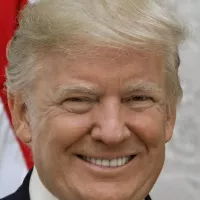
In 2016, the H-1B visa program was a contentious issue in the presidential election. Donald Trump pledged to overhaul the system, arguing that it displaced American IT workers and suppressed wages, proposing to raise the prevailing wage for H-1B workers.

2016: Senate Judiciary Committee holds hearings on H-1B program's impact on U.S. workers

In 2016, the Senate Judiciary Committee, led by Senators Chuck Grassley and Jeff Sessions, held hearings to examine how the H-1B program affected U.S. workers. Witnesses testified that companies weren't required to prioritize American workers, leading to the import of cheaper foreign labor.

2016: Rutgers University Professor's conclusion about stem workers

Studies from Rutgers University professor Hal Salzman, and co-authors B. Lindsay Lowell and Daniel Kuehn, have concluded the U.S. has been employing only 30% to 50% of its newly degreed, able and willing STEM workers to work in STEM fields. In his Senate Judiciary testimony, he stated between 2006 and 2016, the IT industry, the predominant user of the H-1B visa, laid off on average 97,000 workers per year, more than the number of 74,000 H-1B workers brought for the IT industry.

February 17, 2017: USCIS implements process for H-4 nonimmigrants who are victims of domestic violence

On February 17, 2017, the USCIS implemented a process for certain H-4 nonimmigrants who are victims of domestic violence to apply for work authorization under the category ‘‘(c)(31)’’, similar to VAWA self-petitioners.

March 2017: Lawsuit Challenging H-1B Visa Lottery System Dismissed

In March 2017, a federal judge in Oregon dismissed a lawsuit challenging the H-1B visa lottery system, granting summary judgment in favor of USCIS and acknowledging USCIS's discretion in implementing this system.

March 31, 2017: USCIS memorandum changes computer programming as a specialty occupation

On March 31, 2017, the USCIS released a memorandum stating that computer programming would no longer be automatically considered a specialty occupation, partly because a bachelor's degree was no longer typically required for these positions. An H-1B visa application for a computer programmer must sufficiently describe the duties, and the level of experience and responsibilities of the position to demonstrate how the position is senior, complex, specialized, or unique rather than an entry-level position to qualify for an H-1B visa. The Department of Justice also warned employers not to discriminate against U.S. workers by showing a preference for hiring H-1B workers.

April 18, 2017: President Trump signs 'Buy American, Hire American' executive order

On April 18, 2017, President Donald Trump signed an executive order directing federal agencies to implement a "Buy American, Hire American" strategy. The executive order instructed federal agencies to review and propose reforms to the H-1B visa system, favoring higher-skilled, higher-paid applicants, with reports and recommendations on what the administration can legally do. Trump stated the executive order would "end the theft of American prosperity" brought on by low-wage immigrant labor.

November 18, 2017: USCIS releases rule affecting H-1B status after employment ends

On November 18, 2017, the United States Citizenship and Immigration Services (USCIS) released a rule impacting individuals in H-1B status whose employment ends. These individuals are granted a 60-day grace period to either leave the United States or change to another legal status allowing them to remain.

2017: President Trump's Concerns and Proposed Immigration Restructuring

In 2017, President Donald Trump voiced concerns regarding the use of the H-1B visa as a pathway to permanent residency. He proposed restructuring the immigration system, including the introduction of a points-based system. Some individuals sought alternative routes to permanent residency, such as the EB-5 visa program, and advocacy groups launched public awareness campaigns.

2017: USCIS Implemented Grace Period for H-1B Visa Holders

In 2017, USCIS implemented a grace period of up to 60 days following employment termination for H-1B visa holders, allowing them to seek new employment or file for a change of status while remaining in the United States.

2017: U.S. Congress Considers Doubling Minimum Wage for H-1B Holders

In 2017, the U.S. Congress considered more-than doubling the minimum wage for an H-1B holder from the $60,000 (USD) established in 1989 and unchanged since then through The High Skilled Integrity and Fairness Act, which would raise H-1B holders' minimum salaries to $130,000.

January 9, 2018: USCIS clarifies policy on H-1B visa holders during green card process

On January 9, 2018, the USCIS clarified that it was not considering any proposal that would force H-1B visa holders to leave the U.S. during the green-card process. The USCIS stated that employers could request extensions in one-year increments under section 106(a)–(b) of the American Competitiveness in the 21st Century Act instead.

June 28, 2018: USCIS announcement on visa extension rejections and deportation

On June 28, 2018, the USCIS announced that when a person's request for a visa extension is rejected, the person will be deported from the country. The Trump administration later stated it was not considering any proposal that would force H-1B visa holders to leave the country.

September 30, 2019: USCIS releases updated estimate of H-1B visa holders in the U.S.

On September 30, 2019, the USCIS Office of Policy and Strategy released an updated estimate stating that 583,420 individuals were authorized to work on an H-1B visa.

2019: USCIS Estimated H-1B Visa Holders in the U.S.

In 2019, the USCIS estimated that there were 583,420 foreign nationals in the United States on H-1B visas.

April 22, 2020: President Trump temporarily suspends entry of people with non-immigrant visas, including H-1B visas.

On April 22, 2020, President Trump signed a presidential proclamation that temporarily suspended the entry of people with non-immigrant visas, including H-1B visas.

June 22, 2020: President Trump extends suspension for H-1B visa holders until December 31, 2020.

On June 22, 2020, President Trump extended the suspension for H-1B visa holders until December 31, 2020.

October 28, 2020: USCIS promulgates new rule to reform H-1B lottery

On October 28, 2020, the USCIS promulgated a new rule to reform the H-1B lottery by prioritizing workers with the highest wage.

December 31, 2020: President Trump extends the suspension of entry until March 31, 2021

On December 31, 2020, Trump issued a presidential proclamation extending the suspension of entry until March 31, 2021, because they would pose "a risk of displacing and disadvantaging United States workers during the economic recovery following the COVID-19 outbreak."

March 31, 2021: Suspension of entry extended until March 31, 2021

On March 31, 2021, President Trump's presidential proclamation extended the suspension of entry until March 31, 2021.

April 1, 2021: President Biden allows suspension to expire

On April 1, 2021, President Joe Biden allowed the suspension to expire on March 31, 2021, which allowed H-1B visa holders to enter the U.S. beginning on April 1, 2021.

2021: Facebook settles claim with Department of Justice

In 2021, settled a claim with the Department of Justice that it discriminated against U.S. workers in favor of temporary visa holders. The company paid a $4.75-million civil penalty and set aside $9.5 million for eligible victims.

2021: USCIS launches electronic registration system for H-1B lottery

In 2021, USCIS launched its first electronic registration system for the H-1B lottery.

2021: Indian Outsourcing Firms as Leading H-1B Visa Users

In 2021, a study revealed that half of the top-thirty employers of H-1B visa holders were Indian outsourcing firms.

2022: Tech Layoffs and Continued H-1B Hiring

During the 2022 tech layoffs, companies laid off their U.S. workforce while continuing to bring in more H-1B workers. The top-30 H-1B employers in 2022 laid off at least 85,000 workers, while bringing in 34,000 H-1B workers.

2022: H-1B Visas Approved

In 2022, 265,777 H-1B visas were approved, making it the second-largest category of visa in terms of the number of foreign workers.

2022: Howard University professor finds no STEM shortage

In 2022, Howard University public-policy professor Ron Hira found there was no shortage in STEM due to stagnant wages in IT and a 7% decline in real wages for engineers, calling the IT talent shortage "imaginary."

2022: Studies examine economic impacts of H-1B visas

In 2022, studies have shown H-1B visas can lead to lower wages for competing workers, but that H-1B visas have had welfare-improving effects for Americans, leading to significant overall wage gains, lower consumer prices, greater innovation, and greater total factor productivity growth. A study in the Journal of Political Economy found that firms who received H-1B visas do not necessarily innovate or grow more quickly, nor patent more than firms that do not.

2023: H-1B Lottery System Issues

In 2023, there were 781,000 lottery entries for 85,000 visas. This was partly the result of different companies submitting the same applicant multiple times. USCIS said there is a high prevalence of fraud with the new electronic registration system.

April 1, 2024: End of Limited Domestic Visa Renewal Pilot Program

April 1, 2024, marks the end date of the Department of State’s Domestic Visa Renewal Pilot Program which started on January 29, which simplified the H-1B visa renewal process for select H-1B visa holders who had previously received their visas from specific consulates in Canada or India to renew them within the U.S..

2024: H-1B Visa Lottery Results for Fiscal Year 2024

During the 2024 fiscal-year lottery, there were 758,994 eligible electronic registrations and 110,791 people selected for an H-1B visa.

September 2025: Trump administration imposed a $100,000 fee for filing for an H-1B visa

In September 2025, the Trump administration imposed a $100,000 fee for filing for an H-1B visa starting September 2025 with exemptions for change of status, including those who are currently in US on F1 OPT.

September 19, 2025: President Trump signs a proclamation that required a one-time $100,000 fee

On September 19, 2025, President Donald Trump signed a proclamation that required a one-time $100,000 fee when an employer applies for an H-1B visa for a worker between September 21, 2025, and September 21, 2026. The new fee is in addition to the application fees that were already in effect. The $100,000 fee is required for initial visa application for a worker but not for H-1B visa renewals.

September 21, 2025: H-1B Visa Registration Fee Set at $100,000

As of September 21, 2025, the registration fee for an H-1B visa is $100,000 per beneficiary. This fee is non-refundable and must be paid at the time of registration, with employers providing basic information about their company and each prospective beneficiary.

2025: Amazon top recipient of H-1B visas

In 2025, Amazon was the top recipient of H-1B visas with over 10,000 visas approved. Microsoft, Meta, Apple, Tata and Google also received a substantial number of H-1B visas.

2025: Department of Labor Launches Project Firewall

In 2025, the Department of Labor launched Project Firewall, a targeted H-1B enforcement program for investigating employers suspected of program abuse.

February 27, 2026: USCIS Implements Wage-Based H-1B Visa Selection System

Effective February 27, 2026, USCIS will select H-1B visa applicants using a system that favors highly paid workers, classifying workers into four levels based on offered wage and location, and entering the highest level into the lottery four times, the next highest level will be entered three times, the next highest level will be entered into the lottery two times, and the lowest level will be entered once.

September 21, 2026: Fee required for H-1B visa applications for workers between September 21, 2025, and September 21, 2026.

In 2025, President Donald Trump signed a proclamation that required a one-time $100,000 fee when an employer applies for an H-1B visa for a worker between September 21, 2025, and September 21, 2026.

December 31, 2029: Exemption from H-1B Cap for Workers in Northern Mariana Islands and Guam Expires

December 31, 2029 is the date the cap exemption ends for prospective H-1B workers seeking employment in the U.S. territories of the Northern Mariana Islands and Guam.