History of Jesse Jackson in Timeline


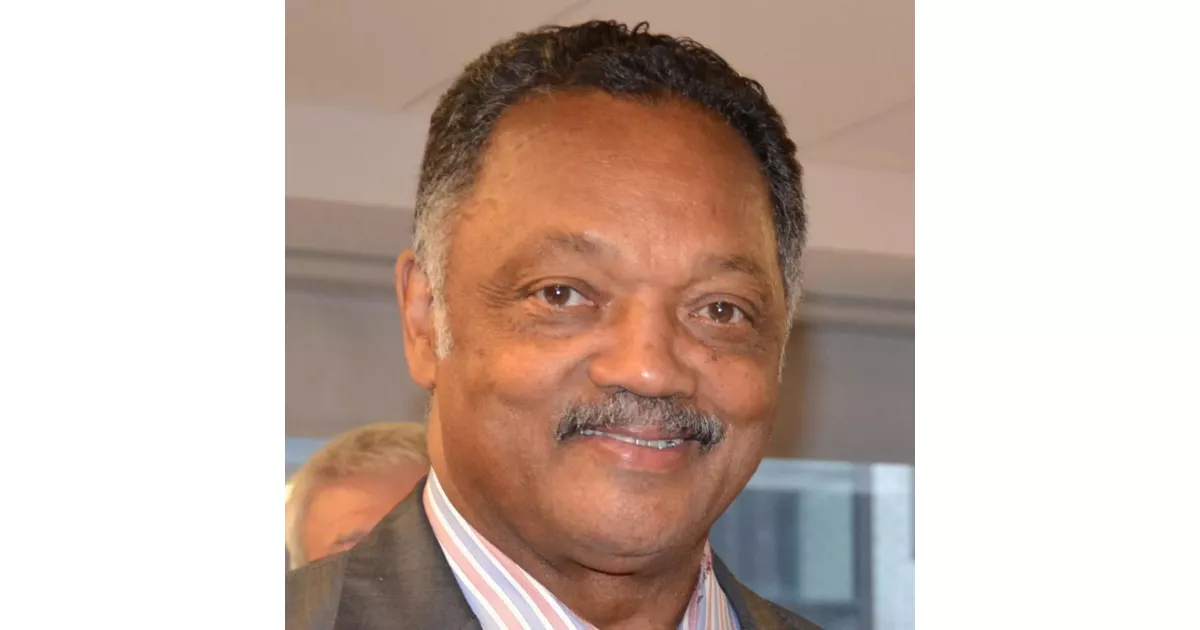
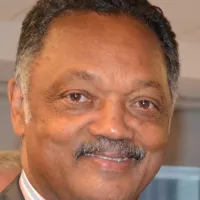
Jesse Jackson is an American civil rights activist, politician, and Baptist minister. He rose to prominence as a protégé of Martin Luther King Jr. and has remained a leading figure in the civil rights movement for over seven decades. He served as a shadow delegate and senator for the District of Columbia from 1991 to 1997. He is the father of U.S. Representative Jonathan Jackson and former U.S. Representative Jesse Jackson Jr.
October 8, 1941: Jesse Jackson Born
On October 8, 1941, Jesse Louis Jackson, was born in Greenville, South Carolina. He is an American civil rights activist, politician, and ordained Baptist minister.


1955: Montgomery Bus Boycott Impact
In 1955, Jesse Jackson accepted Jim Crow segregation laws until the Montgomery bus boycott.
1959: High School Graduation
In 1959, Jesse Jackson graduated from high school and rejected a contract from a minor league professional baseball team to attend the University of Illinois on a football scholarship.
July 16, 1960: Sit-in at Greenville Public Library
On July 16, 1960, Jesse Jackson participated in a sit-in at the Greenville Public Library, resulting in his arrest for "disorderly conduct."
1960: Academic Probation Allegation
In 1960, it was suggested that Jesse Jackson left the University of Illinois because he was placed on academic probation.
December 31, 1962: Marriage to Jacqueline Lavinia Brown
On December 31, 1962, Jesse Jackson married Jacqueline Lavinia Brown.
1964: Graduation with B.S. in sociology
In 1964, Jesse Jackson graduated from A&T with a B.S. in sociology.
1965: Participation in Selma to Montgomery Marches
In 1965, Jesse Jackson participated in the Selma to Montgomery marches, organized by James Bevel, Martin Luther King Jr., and other civil rights leaders in Alabama.
1966: Dropped out of Seminary
In 1966, Jesse Jackson dropped out of the Chicago Theological Seminary to focus on the civil rights movement.
1966: Head of Chicago Branch of Operation Breadbasket
In 1966, Jesse Jackson was selected to head the Chicago branch of the SCLC's Operation Breadbasket.
1967: Promotion to National Director of Operation Breadbasket
In 1967, Jesse Jackson was promoted to national director of the SCLC's Operation Breadbasket.
April 4, 1968: Assassination of Martin Luther King Jr.
On April 4, 1968, Martin Luther King Jr. was assassinated. Jesse Jackson was present and gave conflicting accounts of the event.
1968: Ordained a Minister
In 1968, Jesse Jackson was ordained a minister.
1969: Viewed as King's Successor
In 1969, Jesse Jackson was viewed by several black leaders as Martin Luther King Jr.'s successor and was seen as preaching racial reconciliation.
October 1971: Black Expo in Chicago
In October 1971, Jesse Jackson organized the Black Expo in Chicago to promote black capitalism and grass roots political power.
December 1971: Falling out with Abernathy
In December 1971, Jesse Jackson had a falling out with Ralph Abernathy, leading to his suspension as leader of Operation Breadbasket and his subsequent resignation from the SCLC.
December 25, 1971: Operation PUSH
On December 25, 1971, People United to Save Humanity (Operation PUSH) officially began operations.
1978: Call for Closer Relationship with the Republican Party
In 1978, Jesse Jackson called for a closer relationship between blacks and the Republican Party.
1978: Meeting with James Earl Ray
In 1978, Jesse Jackson met with James Earl Ray, the convicted assassin of Martin Luther King Jr., and stated that Ray was involved in the assassination but did not act alone.
May 1983: Addressed the Alabama Legislature
In May 1983, Jesse Jackson became the first African-American man since Reconstruction to address a joint session of the Alabama Legislature. He stated it was "about time we forgot about black and white and started talking about employed and unemployed".
November 3, 1983: Announced candidacy for president
On November 3, 1983, Jesse Jackson announced his campaign for president of the United States in the 1984 election, becoming the second African American to mount a nationwide campaign for president as a Democrat.
1983: Boycott against Anheuser-Busch
In 1983, Jesse Jackson and Operation PUSH led a boycott against beer giant Anheuser-Busch.
1983: Release of American Pilot in Syria
In 1983, Jesse Jackson traveled to Syria to secure the release of a captured American pilot, Navy Lt. Robert Goodman.
January 4, 1984: Reagan Welcomes Jackson and Goodman
On January 4, 1984, President Reagan welcomed Jesse Jackson and Robert Goodman to the White House after Jackson secured Goodman's release from Syria.
March 1984: Jackson's support in 1984 Washington Post-ABC News poll
In March 1984, a Washington Post-ABC News poll found Jesse Jackson in third place with 20 percent support, behind Walter Mondale and Gary Hart. Jackson received three quarters of the black vote in the Democratic primary.
June 1984: Negotiated Release of Americans in Cuba
In June 1984, Jesse Jackson negotiated the release of 22 Americans being held in Cuba.
1984: Efforts to Improve Relationship with Jewish Community
According to a 1987 New York Times article, Jesse Jackson started making efforts to improve his relationship with the Jewish community after the controversies he was involved in 1984.
1984: Addressed the Democratic National Convention
In 1984, Jesse Jackson addressed the Democratic National Convention, offering an apology for comments considered derogatory to Jews and affirming his loyalty to the party. He called for unity among all groups.
1984: Request to Halt Execution
In 1984, Jesse Jackson and Coretta Scott King requested Florida governor Bob Graham to halt the execution of James Dupree Henry.
1984: Controversial Remarks and Apology
In 1984, Jesse Jackson faced criticism for using derogatory terms for Jews in remarks to a reporter. The situation was exacerbated by Louis Farrakhan's warning to Jews. Jackson publicly apologized but did not denounce Farrakhan's statement, leading to a lasting rift with the Jewish community.
1984: Presidential Campaign
In 1984, Jesse Jackson launched his first presidential campaign, finishing in third place for the Democratic nomination behind Walter Mondale and Gary Hart.
1984: Organization of the Rainbow Coalition
In 1984, Jesse Jackson organized the Rainbow Coalition and resigned as president of Operation PUSH to run for president of the United States.
1984: Jackson's Credibility as a Candidate
In 1984, Jesse Jackson was better financed and better organized than in his previous campaign. The Washington Post noted that his support among white voters allowed him to claim he was more than a one-race candidate. His support "continued to flow predominantly from black districts".
1984: Anniversary of Jackson's Presidential Campaign
In November 2009, the Congressional Black Caucus honored Jesse Jackson for the 25th anniversary of his 1984 presidential campaign.
1984: Ran for President of the United States
In the 1984 election, Jesse Jackson ran for president of the United States, his candidacy divided support among black politicians. Jackson received the support of former Mayor of Atlanta Maynard Jackson, and Mayor of Newark Kenneth A. Gibson. In December, he was endorsed by National Baptist Convention, USA, Inc. chairman T. J. Jemison, and lost the endorsement of the Alabama Democratic Conference to Walter Mondale.
January 1985: Led procession in Washington D.C.
In January 1985, Jesse Jackson led supporters in a procession through Washington to the Washington Monument, stressing the need to support the poor.
June 1986: Called for War on Drugs
In June 1986, after basketball player Len Bias died from cardiac arrest stemming from "cocaine intoxication", Jesse Jackson and Representative Charles Rangel called for Reagan to announce a nationwide war on drugs and seek increased funding of federal anti-drug education programs in public schools.
1986: Speculation of a Presidential Run
By early 1986, speculation began that Jesse Jackson would mount a second presidential run in 1988.
March 1987: Formed an exploratory committee
In March 1987, Jesse Jackson formed an exploratory committee for a potential presidential run in 1988, after Gary Hart.
April 1987: Campaigning in Iowa
In April 1987, Jesse Jackson spent six days in Iowa and moved his office to the rural part of the state, highlighting the impact of Reagan's economic policies on farmers and businessmen.
October 11, 1987: Announced Candidacy in 1988 Presidential Election
On October 11, 1987, Jesse Jackson announced his candidacy in the 1988 presidential election. At the time of his announcement, polling showed that he led in nine of the 12 Southern states that would hold primaries or caucuses in March and led the Democratic field at 27 percent.
November 1987: Analysts' Views on Nomination Chances
In November 1987, according to a New York Times article, most political analysts gave Jesse Jackson little chance of being nominated, partly because he is black and partly because of his unretrenched liberalism.
1987: Involvement in Chicago Mayoral Election
During the 1987 Chicago mayoral election, Jesse Jackson led an effort to prevent the campaign's deterioration and avoid "dissension and splintering of the Democratic vote".
1987: Praised by Donald Rheem
In 1987, Donald Rheem praised Jesse Jackson as "one of the most successful black leaders in American history," highlighting his public service and advocacy for voter registration and economic development.
1987: Improving Jewish Community Relations
In 1987, Jackson began working to improve his relationship with the Jewish community following the controversy in 1984.
1987: Campaign Platform
In 1987, Jesse Jackson's campaign platform included a call for a single-payer system of universal health care; higher taxes on the wealthy and defense spending cuts intended to reduce federal budget deficits and increase education, housing, welfare, and childcare spending; ratifying the Equal Rights Amendment; reducing the supply and flow of drugs into communities.
1987: Clean Transcript Report
In 1987, the president of the University of Illinois reported that Jesse Jackson's 1960 freshman year transcript was clean.
1987: Operation PUSH's Debt
In early 1987, the continued existence of Operation PUSH was imperiled by debt.
1988: Presidential Run
By early 1986, speculation began that Jesse Jackson would mount a second presidential run in 1988. In March 1987, he formed an exploratory committee, making him the second potential candidate to do so, after Gary Hart. By April 1987, after previously having spent "all of half a day" in Iowa, Jackson had spent six days there throughout the year and moved his office to the rural part of the state instead of Des Moines. He stressed that farmers and businessmen were akin to unemployed blacks in being negatively affected by the Reagan administration's economic policies. In July, Jackson met with former Governor of Alabama George Wallace for half an hour, calling the former segregationist "one of the most forward of any governor across the South in terms of the sharing of appointments with blacks and whites and women, and the tone of the administration had changed". The meeting was seen as Jackson testing support for a presidential bid. In September, Jackson attended a presidential candidates forum; he embraced the Congressional Black Caucus's positions on education, employment, and defense, and was greeted with chants of "Run Jesse Run" and "Win Jesse Win".
1988: 1988 Democratic Party nomination
In 1988, Jackson's political opponents used the debt of Operation PUSH during his race for the 1988 Democratic Party nomination.
1988: Exceeding Expectations in the Presidential Race
In 1988, Jesse Jackson exceeded expectations in the presidential race, more than doubling his previous results, which prompted R. W. Apple of The New York Times to call it "the Year of Jackson".
1988: Democratic Primaries and Dukakis Meeting
In 1988, by the end of the Democratic primaries, Jesse Jackson received 6.9 million votes and won 11 contests. The day after the last primaries, Jackson met with Dukakis to discuss his platform, including voter registration and delegate allocation rules. Jackson felt he deserved consideration as a running mate, but Dukakis didn't give him any special consideration. Later, Dukakis picked Senator Lloyd Bentsen as his running mate, and this led Jackson to suggest Jimmy Carter mediate their conflict.
1988: Consideration for Mayoral Race
In 1988, following the arrest of Marion Barry, Jackson was under pressure to enter the mayoral race to replace him. Jackson did not run for the position.
1989: Criticism of Regier Paper
In 2002, Jesse Jackson joined Democrats in criticizing a 1989 paper co-chaired by Jerry Regier, nominated for the Department of Children and Families, that endorsed spanking to the point of bruises and welts and opposed married women having careers.
1990: Joint Center Anniversary Dinner
In 1990, Jesse Jackson attended a dinner honoring the 20th anniversary of The Joint Center for Political and Economic Studies, where President Bush spoke and teased Jackson.
1990: Election to the United States Senate
In 1990, Jesse Jackson was elected to the United States Senate for the District of Columbia.
November 1991: Decision Not to Enter 1992 Presidential Primaries
In November 1991, Jesse Jackson told Ron Brown that he would not enter the 1992 Democratic Party presidential primaries. Jackson then formally declared he would not mount a third presidential bid and called for the creation of "new democratic majority".
1991: Shadow Senator for the District of Columbia
In 1991, Jackson ran for office as "shadow senator" for the District of Columbia when the position was created, serving until 1997.
1991: Shadow Delegate and Senator for the District of Columbia
In 1991, Jesse Jackson served as a shadow delegate for the District of Columbia.
January 1992: Hosting CNN's "Both Sides with Jesse Jackson"
In January 1992, Jesse Jackson began hosting a CNN talk show, "Both Sides with Jesse Jackson". The program featured guests representing opposite sides of a single issue.
April 26, 1992: Meeting with Bill Clinton
On April 26, 1992, Jesse Jackson and Bill Clinton had a 40-minute meeting and announced that they were both committed to defeating George Bush in the general election.
1992: Host of Both Sides with Jesse Jackson on CNN
In 1992, Jesse Jackson began hosting "Both Sides with Jesse Jackson" on CNN.
August 29, 1993: Commemoration of the March on Washington
On August 29, 1993, Jesse Jackson joined gatherers at the Lincoln Memorial to commemorate the 30th anniversary of the March on Washington for Jobs and Freedom.
September 1996: Visit to Tupac Shakur in the Hospital
In September 1996, Jesse Jackson visited rapper Tupac Shakur in the hospital after he was wounded in a drive-by shooting. Jackson commented on the violent culture, which was criticized by SFGATE.
1996: Introduction to August Busch IV
In 1996, August Busch IV, Anheuser-Busch's CEO, was introduced to Yusef Jackson, Jesse's son.
1996: Clinton Support and Ambassador Opportunity
In 1996, Jesse Jackson became a key ally in gaining African-American support for Bill Clinton. He declined the opportunity to become the United States Ambassador to South Africa, helping his son run for the House instead.
1996: Merger of Operation PUSH and Rainbow Coalition
In 1996, the Operation PUSH and Rainbow Coalition organizations were merged.
1997: Backing Al Sharpton for Mayor of New York City
In 1997, Jackson backed Al Sharpton in his bid for mayor of New York City, criticizing Alan Hevesi for refusing to support Sharpton in the event that he won the primary.
1997: End of Shadow Senator Role
In 1997, Jesse Jackson did not run for reelection as "shadow senator" for the District of Columbia.
1997: Special envoy to Kenya
In 1997, Jesse Jackson traveled to Kenya as United States President Bill Clinton's special envoy for democracy to promote free and fair elections, meeting with Kenyan President Daniel arap Moi.
1997: End of term as shadow delegate and senator
In 1997, Jesse Jackson's tenure as a shadow delegate and senator for the District of Columbia concluded.
1998: Clinton-Lewinsky Affair and Impeachment
In 1998, Jesse Jackson voiced his opposition to President Clinton's impeachment, stating that "the punishment of impeachment does not correspond to the nature of Mr. Clinton's lack of candor."
1998: Yusef and Jonathan chosen to head River North Sales
In 1998, Yusef and Jonathan Jackson were chosen by Anheuser-Busch to head River North Sales, a Chicago beer distribution company, leading to controversy.
March 1999: Jackson announces he will not run for president
In March 1999, Jesse Jackson announced he would not be a candidate in the 2000 presidential election, stating his intent to continue championing the causes of education and health care reform and highlighting the "ongoing shame of our nation—the explosive growth of the prison-industrial complex."
April 1999: Negotiated release of U.S. POWs in Belgrade
In April 1999, during the Kosovo War and NATO's bombing of Yugoslavia, Jesse Jackson traveled to Belgrade to negotiate the release of three U.S. POWs captured on the Macedonian border. He met with then-Yugoslav president Slobodan Milošević, who agreed to release the men. The Clinton administration did not sanction Jackson's negotiation.
May 1999: Birth of daughter Ashley
In May 1999, Ashley, the daughter of Jesse Jackson and staffer Karin Stanford, was born.
August 1999: Rainbow Push Coalition payment to Karin Stanford
In August 1999, the Rainbow Push Coalition paid Karin Stanford $15,000 for moving expenses and $21,000 for contracting work.
November 18, 1999: Decatur High School Expulsions
On November 18, 1999, after seven Decatur, Illinois, high school students were expelled for a brawl, Jesse Jackson argued that the expulsions were unfair and racially biased, calling for the school board to reverse its decision.
March 1, 2000: Jackson endorses Al Gore for President
On March 1, 2000, Jesse Jackson endorsed Vice President Al Gore for president, citing Gore's experience as a former congressman, senator, and vice president.
March 2000: Criticism of Giuliani's Handling of Dorismond Shooting
In March 2000, Jackson criticized Giuliani's handling of the Patrick Dorismond shooting, sparking a response from Giuliani's mayoral spokesman.
August 2000: Awarded Presidential Medal of Freedom
In August 2000, Jesse Jackson was awarded the Presidential Medal of Freedom by Bill Clinton, which is the nation's highest honor bestowed on civilians.
2000: Support for Joe Lieberman
In 2000, Jesse Jackson spoke in support of Joe Lieberman, a Jewish U.S. senator and vice-presidential nominee, at the Democratic National Convention.
2000: Awarded Master of Divinity
In 2000, Jesse Jackson was awarded a Master of Divinity degree by Chicago Theological Seminary.
2000: End of CNN Show
In 2000, Jesse Jackson's show "Both Sides with Jesse Jackson" on CNN came to an end.
2000: Clash with Jeb Bush after the 2000 recount
In 2000, the recount was not the last time Jackson clashed with Governor of Florida Jeb Bush
2000: Jackson calls for voters to turn away from supporting Bush
In February 2004, Jackson delivered an address at the John F. Kennedy School of Government, where he called for southern voters to turn away from the fears and despair that led to their support of Bush in 2000.
January 2001: Affair Revealed
In January 2001, it was revealed that Jesse Jackson had an affair with a staffer, Karin Stanford, which resulted in the birth of a daughter, Ashley, in May 1999. This controversy led to a temporary withdrawal from activism and the cancellation of CNN's 'Both Sides with Jesse Jackson'.
January 20, 2001: Jackson requests pardons from Bill Clinton
On January 20, 2001, Bill Clinton's final day in office, Jesse Jackson had requested pardons for Congressman Mel Reynolds, John Bustamante, and Dorothy Rivers, and a pardon for his half-brother Noah Robinson who had been convicted of murdering Leroy Barber and sentenced to life imprisonment, but Clinton did not pardon Robinson.
2002: Jackson criticizes Jeb Bush's appointee
In 2002, Jackson criticized Governor of Florida Jeb Bush's nomination of Jerry Regier for the Department of Children and Families, citing Regier's support for controversial views on corporal punishment and women's roles.
2002: Jackson Targeted by White Supremacist Terror Plot and Lawsuit
In 2002, Jesse Jackson said there was "a new America" and the world was abandoning the Jeffersonian democracy that coexisted with slavery in favor of "King democracy". Also that year, Jackson was the target of a white supremacist terror plot and was sued by African Americans Against Exploitation Inc.
2002: Harry Edwards Article on ESPN.com
In 2002, sociologist Harry Edwards wrote an article on ESPN.com, about Jackson's time at the University of Illinois.
February 15, 2003: Spoke at Anti-War Demonstration in London
On February 15, 2003, Jesse Jackson spoke in front of an estimated one million people in Hyde Park, London at the culmination of the anti-war demonstration against the imminent invasion of Iraq by the U.S. and the United Kingdom.
September 1, 2003: Jackson Arrested at Yale University Protest
On September 1, 2003, Jesse Jackson was arrested for blocking traffic at Yale University while showing solidarity with striking workers.
February 2004: Jackson addresses JFK School
In February 2004, Jesse Jackson delivered an address at the John F. Kennedy School of Government, calling for southern voters to turn away from the fears and despair that led to their support of Bush in 2000 and urging those feeling powerless to get involved.
June 2004: Jackson rebukes Bush on voting rolls
In June 2004, Jesse Jackson rebuked Jeb Bush for requesting counties purge felons from voting rolls, calling it "a typical South (tactic), denying the right to vote based on race and class."
November 2004: Encouraged cross-community relations in Northern Ireland
In November 2004, Jesse Jackson visited senior politicians and community activists in Northern Ireland to encourage better cross-community relations, rebuild the peace process, and restore the governmental institutions of the Belfast Agreement.
August 2005: Met with Hugo Chávez in Venezuela
In August 2005, Jesse Jackson traveled to Venezuela to meet Venezuelan President Hugo Chávez, following controversial remarks by televangelist Pat Robertson. Jackson condemned Robertson's remarks. After meeting with Chávez and addressing the Venezuelan Parliament, Jackson said there was no evidence that Venezuela posed a threat to the U.S.
2005: Part of United Kingdom's Operation Black Vote
In 2005, Jesse Jackson was enlisted as part of the United Kingdom's Operation Black Vote, a campaign to encourage more of Britain's ethnic minorities to vote in political elections ahead of the 2005 General Election.
2005: FEC fines Jackson and DNC
In 2005, the Federal Election Commission ruled that Jesse Jackson and the Democratic National Committee had violated electoral law and fined them $200,000.
2005: Jackson supports Terri Schiavo's parents
In early 2005 Jesse Jackson visited Terri Schiavo's parents and supported their unsuccessful bid to keep her alive.
March 2006: Jackson offers to pay tuition for Duke Lacrosse accuser
In March 2006, Jesse Jackson stated that his Rainbow/PUSH Coalition would pay for the rest of the college tuition of the African-American woman who accused three white members of the Duke University men's lacrosse team of raping her.
November 2006: Jackson plays key role in Michael Richards scandal
In November 2006, Jesse Jackson took a key role in the scandal caused by Michael Richards's onstage racist tirade at the Laugh Factory. Richards called Jackson a few days after the incident to apologize; Jackson accepted Richards' apology and met with him publicly as a means of resolving the situation. Jackson also joined Black leaders in a call for the elimination of the "N-word" throughout the entertainment industry.
March 2007: Jackson supports Barack Obama's presidential bid
In March 2007, Jesse Jackson declared his support for then-Senator Barack Obama in the 2008 Democratic Party presidential primaries.
June 23, 2007: Jackson Arrested at Gun Store Protest
On June 23, 2007, Jesse Jackson was arrested in Riverdale, Chicago, for protesting at a gun store alleged to be selling firearms to gang members and contributing to community decay.
July 6, 2008: Jackson Criticizes Obama
On July 6, 2008, during an interview with Fox News, a microphone picked up Jesse Jackson whispering to fellow guest Reed Tuckson: "See, Barack's been, ahh, talking down to black people on this faith-based... I want to cut his nuts off." Jackson was expressing his disappointment in Obama's Father's Day speech chastising absent Black fathers.
September 2008: Hospitalization for gastroenteritis
In September 2008, Jesse Jackson was hospitalized at Northwestern Memorial Hospital due to dehydration and stomach pains, and was diagnosed with viral gastroenteritis.
2008: Legacy of Presidential Campaigns
In 2008, Jesse Jackson's presidential campaigns were recognized as historic, credited with increasing black voter turnout and paving the way for Barack Obama's campaign. Donna Brazile praised Jackson for enabling a new generation of African Americans to serve through his campaign.
August 2009: Crowned Prince Côte Nana
In August 2009, Jesse Jackson was crowned Prince Côte Nana by Amon N'Douffou V, King of Krindjabo, who rules more than a million Agni tribespeople, succeeding Michael Jackson's title as High Prince of the Agni people of Côte d'Ivoire.
November 2009: Jackson comments on Obama's health care reform proposal
In November 2009, Jesse Jackson commented on Obama's health care reform proposal, stating, "You can't vote against health care and call yourself a black man."
2009: Speaker for the International Peace Foundation
In 2009, Jesse Jackson served as a speaker for the International Peace Foundation on "Building a culture of peace and development in a globalized world". He visited multiple locations in Malaysia and Thailand.
2010: Alabama Gubernatorial Election
In November 2009, the Congressional Black Caucus honored Jackson for the 25th anniversary of his 1984 presidential campaign and political observers said that Jackson's criticism could benefit Artur Davis, who was then a candidate in the 2010 Alabama gubernatorial election and positioning himself as a moderate Democrat.
2011: Obama's antipathy for Jackson
In 2011, Wayne Barrett wrote that Obama's embrace of Sharpton had "as much to do with the president's antipathy for three other black leaders—Jesse Jackson, Dr. Cornel West and Tavis Smiley—as it does with any genuine White House enthusiasm for the controversial New York preacher."
February 2012: Jackson Joins Martin's Parents in Demanding Arrest
Following the shooting of Trayvon Martin in February 2012, Jesse Jackson joined Martin's parents as they demanded the arrest of his killer, George Zimmerman, and called for repealing stand-your-ground laws to discourage "vigilante" behavior.
2012: Jackson commends Obama on gay marriage support
In 2012, Jesse Jackson commended Obama's decision to support gay marriage, comparing it to the fight against slavery and anti-miscegenation laws.
July 2013: Jackson Meets with Marissa Alexander
In July 2013, Jesse Jackson met with Marissa Alexander and called for Angela Corey to use her influence to get Alexander's 20-year sentence reduced.
2013: Attended Hugo Chávez's Funeral
In 2013, Jesse Jackson attended Hugo Chávez's funeral. Jackson told Wolf Blitzer that "democracies mature" and incorrectly said that the first 15 U.S. presidents owned slaves. He ended by saying that the U.S. had come "a mighty long way" since then.
January 2015: Jackson discusses gentrification at Stanford
In January 2015, Jesse Jackson participated in a panel discussion at Stanford University, calling for Palo Alto residents to combat gentrification and met with Silicon Valley leaders.
January 2015: Alexander Released From Jail
In January 2015, Marissa Alexander was released from a Jacksonville jail under a plea deal that capped her sentence at the three years she had already served.
2016: Jackson Endorses Hillary Clinton After Remaining Neutral in Primary
In 2016, Jesse Jackson declined to endorse either Hillary Clinton or Bernie Sanders in the Democratic presidential primary but endorsed Clinton after she secured the nomination.
November 2017: Diagnosis of Parkinson's disease
In November 2017, Jesse Jackson was diagnosed with Parkinson's disease.
2017: Parkinson's diagnosis
In 2017, Jesse Jackson was diagnosed with Parkinson's disease.
January 2018: Jackson criticizes Trump
In January 2018, Jesse Jackson delivered a sermon in Fort Washington, Maryland, accusing Trump of being misleading and lacking understanding of the situation of many Americans.
February 2019: Response to Jussie Smollett attack
In February 2019, Jesse Jackson responded to the reported hate crime assault on Jussie Smollett, calling it a "barbaric lynching." He criticized Trump for allegedly emboldening bigots and later requested leniency for Smollett after he was charged with falsifying the attack.
June 2019: Comments on Biden's stance on school busing
In June 2019, as Joe Biden prepared to speak at Rainbow PUSH, Jesse Jackson expressed his reservations about Biden's prior support for segregated school busing, stating that he believed Biden had changed his views on the matter.
March 8, 2020: Endorsement of Bernie Sanders
On March 8, 2020, Jesse Jackson endorsed Bernie Sanders, who is Jewish, for president.
March 2020: Endorsement of Bernie Sanders
In March 2020, Jesse Jackson endorsed Bernie Sanders for president in the primary. He said Sanders made several commitments to him, and it was reported that Jackson requested Sanders pick an African-American woman as his running mate.
June 2020: Reaction to Breonna Taylor Killing
In June 2020, following the killing of Breonna Taylor, Jesse Jackson praised Louisville Mayor Greg Fischer for initiating a review of police conduct and policies. He also criticized Senator Rand Paul for delaying a bill aimed at classifying lynching as a hate crime.
April 2021: Reaction to Derek Chauvin verdict
In April 2021, after Derek Chauvin was convicted of George Floyd's murder, Jesse Jackson attended a press conference with the Floyd family. He urged people to "learn to live together as brothers and sisters and not die apart."
August 3, 2021: Arrest for protesting for voting rights
On August 3, 2021, Jesse Jackson was arrested with others while protesting for Congress to end the filibuster, protect voting rights, and raise the federal minimum wage to $15 per hour.
August 2021: Hospitalization with COVID-19
In August 2021, Jesse Jackson and his wife were hospitalized at Northwestern Memorial Hospital in Chicago after testing positive for COVID-19.
December 2021: Elected Honorary Fellow of Homerton College
In December 2021, Jesse Jackson was elected as an Honorary Fellow of Homerton College, Cambridge.
2021: Appointed Commander of the Legion of Honor
In 2021, Jesse Jackson was appointed Commander of the Legion of Honor, France's highest order of merit, by French president Emmanuel Macron, for his work in civil rights.
2021: Hospitalizations
In 2021, Jesse Jackson was hospitalized twice, once after testing positive for COVID-19 and again after a head injury.
July 2023: Announcement of stepping down as leader of Rainbow/PUSH
In July 2023, Jesse Jackson announced his decision to step down as the leader of Rainbow/PUSH due to his advanced age and health complications, including Parkinson's disease and previous hospitalizations in 2021.
2024: Value of the fine in 2024
In 2005, the Federal Election Commission ruled that Jackson and the Democratic National Committee had violated electoral law and fined them $200,000 (equivalent to $307,800 in 2024).
2024: Neurodegenerative condition
Since 2024, Jesse Jackson's medical condition is reported to have been neurodegenerative.
April 2025: Diagnosed with Progressive Supranuclear Palsy
In April 2025, it was revealed that Jesse Jackson was diagnosed with Progressive Supranuclear Palsy (PSP).
November 12, 2025: Hospitalization in Chicago
On November 12, 2025, Jesse Jackson was hospitalized in Chicago after experiencing a high pulse and a "rattle in his chest".
November 13, 2025: Hospitalized again
On November 13, 2025, Jesse Jackson was hospitalized again at Northwestern Memorial Hospital, for a matter related to a "rare neurological disorder".
Mentioned in this timeline
Donald John Trump is an American politician media personality and...
Bernie Sanders is a prominent American politician currently serving as...
Bill Clinton served as the nd U S President from...
Barack Obama the th U S President - was the...

Tupac Shakur also known as Pac and Makaveli was a...
Hillary Diane Rodham Clinton is a prominent American politician lawyer...
Trending

38 minutes ago Keyonte George questionable for Warriors game due to illness, Collier out.
39 minutes ago Jared McCain finds success with Thunder after 76ers 'breakup,' unleashing his skill set.
39 minutes ago De'Anthony Melton's Status: Injury Report Updates Before Warriors vs. Thunder Game

39 minutes ago Raiders sign Matt Gay, replacing Daniel Carlson in free agency.

40 minutes ago Nick Shirley to speak at CPAC 2026, alleges California voter fraud.

40 minutes ago Leo Chenal: Potential Free Agency Move and New Roles Explored by NFL Teams
Popular
Jesse Jackson is an American civil rights activist politician and...

Ken Paxton is an American politician and lawyer serving as...
Markwayne Mullin is an American politician and businessman serving as...
Corey Lewandowski is an American political operative lobbyist commentator and...
Hillary Diane Rodham Clinton is a prominent American politician lawyer...
Kristi Lynn Arnold Noem is an American politician She was...