Rise to Success: Career Highlights of Neil Sedaka


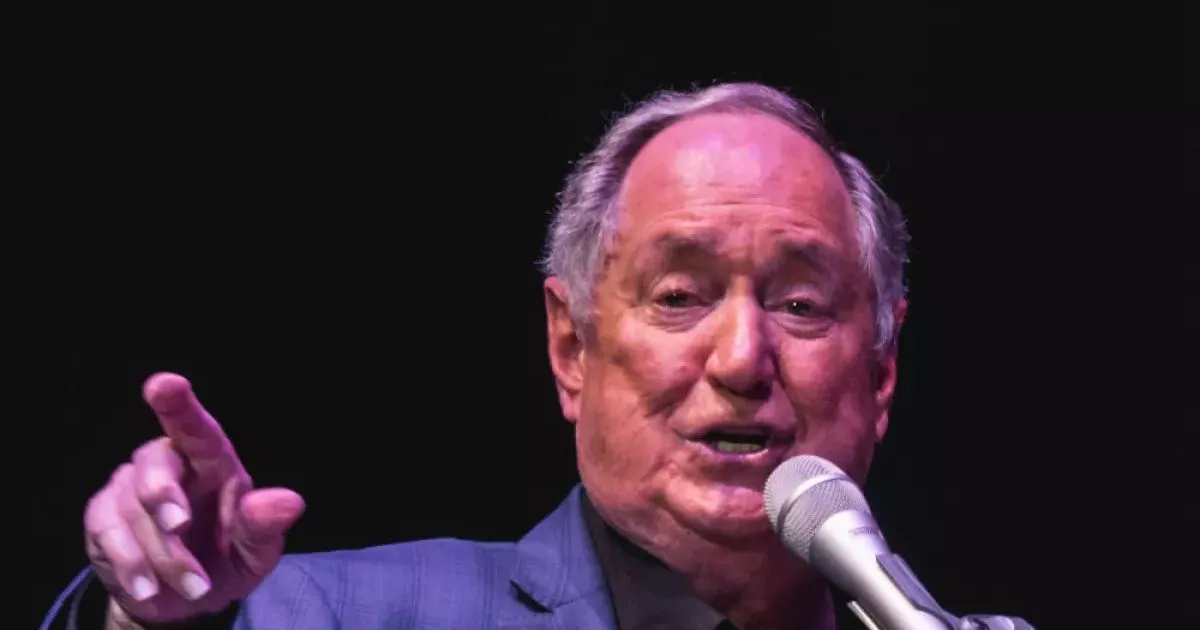
From career breakthroughs to professional milestones, explore how Neil Sedaka made an impact.
Neil Sedaka is an American singer, songwriter, and pianist whose career began in 1957. He has achieved worldwide success, selling millions of records. A prolific writer, Sedaka has penned or co-written over 500 songs for himself and other artists. He is well known for his collaborations with lyricists Howard "Howie" Greenfield and Phil Cody.
1947: Sedaka earns piano scholarship
In 1947, Sedaka successfully auditioned for a piano scholarship to the Juilliard School of Music's Preparatory Division for Children.


1957: Sedaka leaves the Linc-Tones
In 1957, Neil Sedaka launched his solo career and left the group called the Linc-Tones.
1957: Beginning of Neil Sedaka's music career
In 1957, Neil Sedaka's music career began, leading to worldwide record sales and the writing or co-writing of over 500 songs.
1958: Establishing himself as singer
After establishing himself in 1958, Neil Sedaka wrote many more hits from 1960 to 1962.
1958: Release of "The Diary"
In 1958, Neil Sedaka's debut single, "The Diary", hit the Top 15 on the Billboard Hot 100, peaking at No. 14.
1958: Connie Francis releases "Who's Sorry Now?"
In 1958, after Connie Francis released her single "Who's Sorry Now?", she began searching for a new hit and was introduced to Sedaka and Greenfield.
1959: "Oh! Carol" becomes a Top 10 hit
In 1959, "Oh! Carol" became Sedaka's first domestic Top 10 hit, reaching No. 9 on the Hot 100.
1959: "One-Way Ticket to the Blues" reaches No. 1 in Japan
In 1959, Neil Sedaka's "One-Way Ticket to the Blues" reached No. 1 on the Japanese pop charts.
1959: Sedaka plays piano on "Dream Lover"
In 1959, Sedaka played piano on "Dream Lover", a hit song by Bobby Darin.
1959: Release of "Oh! Carol"
In 1959, Sedaka released "Oh! Carol", which became a hit single.
1960: Release of several top hits
In 1960, Neil Sedaka released hit songs such as "Stairway to Heaven", "You Mean Everything to Me", and "Run, Samson, Run".
1960: "Oh! Carol" becomes popular in Italy
In 1960, Neil Sedaka's "Oh! Carol" reached number 1 in Italy, demonstrating his popularity in the country.
1961: Sedaka begins recording in Italian
In 1961, Sedaka began recording some of his hits in Italian, starting with "Esagerata" and "Un giorno inutile".
1961: Release of "Happy Birthday Sweet Sixteen"
In 1961, Sedaka released "Happy Birthday Sweet Sixteen", another hit single of his career.
1961: "What Am I Gonna Do?" released
In 1961, Sedaka's song "What Am I Gonna Do?" was released as the B-side of "Going Home to Mary Lou" and appeared on his album Neil Sedaka Sings "Little Devil" and His Other Hits.
1962: Release of original "Breaking Up Is Hard to Do"
In 1962, Neil Sedaka released the original version of "Breaking Up Is Hard to Do".
1962: Release of "Breaking Up Is Hard to Do" and "Next Door to an Angel"
In 1962, Neil Sedaka released the songs "Breaking Up Is Hard to Do" and "Next Door to an Angel", both of which became hits.
1962: "Breaking Up Is Hard To Do" reaches No. 1
In 1962, Neil Sedaka's song "Breaking Up Is Hard To Do" reached No. 1 and "Next Door to an Angel" reached No. 5.
April 1963: "La terza luna" reaches No. 1 in Italy
In April 1963, Neil Sedaka's "La terza luna" reached No. 1 on the Italian pop charts.
1963: Cinebox video of "The Dreamer"
In 1963, RCA produced a Cinebox video of Neil Sedaka's "The Dreamer".
1963: Moderate success of singles
In 1963, Sedaka's singles "Alice In Wonderland", "Let's Go Steady Again", "The Dreamer", and "Bad Girl" had only moderate success.
1964: RCA refuses to release "It Hurts to Be in Love"
In 1964, RCA Victor refused to release Sedaka's recording of "It Hurts to Be in Love" because it was not recorded at their own studios, and the song was later a hit for Gene Pitney.
1964: Decline in Sedaka's career due to the Beatles
In 1964, The Beatles' arrival led to a sharp decline in Sedaka's career, due to the British Invasion.
1964: Beginning of slowdown in sales and radio play
Neil Sedaka's music sales and radio play began to slow down in 1964 with the arrival of The Beatles and the British Invasion.
1965: Release of singles
In 1965, Neil Sedaka released the singles "The World through a Tear" and "The Answer to My Prayer".
1966: Only three singles cracked the Hot 100
From 1964 to 1966, Neil Sedaka had only three singles that cracked the Hot 100.
1966: RCA doesn't renew Sedaka's contract
In 1966, RCA Victor decided not to renew Sedaka's contract, leading him to retire as a performing artist.
1966: Disqualification from Tchaikovsky Competition
In 1966, despite his classical roots, Neil Sedaka was disqualified from entering the Tchaikovsky classical piano competition in Moscow due to his pop star status.
1968: Appearance in Playgirl Killer
In 1968, Neil Sedaka made an appearance in the movie Playgirl Killer, where he performed the song "The Waterbug".
1968: Hits Written by Sedaka
In 1968, Neil Sedaka wrote hits such as The Cyrkle's version of "We Had a Good Thing Goin'", The Cyrkle's version of "Workin' On a Groovy Thing", and a Top 40 R&B hit for Patti Drew.
1969: Hits Written by Sedaka
In 1969, Neil Sedaka wrote a Top 20 pop hit for The 5th Dimension. He also wrote "Make the Music Play" which was included on Frankie Valli's charting album Timeless.
1970: "Wheeling, West Virginia" Reaches No. 20 in Australia
In early 1970, Neil Sedaka's song "Wheeling, West Virginia" reached No. 20 in Australia.
1971: "Amarillo" song placed with Tony Christie
In 1971, Harvey Lisberg placed the Neil Sedaka/Greenfield composition "(Is This the Way to) Amarillo?" with Tony Christie, who recorded and released it. The song reached the Top 20 on the UK Singles Chart.
1971: Release of "Emergence" Album and Move to UK
In 1971, Neil Sedaka reunited with RCA and released the Emergence album, which included singles such as "I'm A Song (Sing Me)", "Silent Movies", "Superbird", and "Rosemary Blue". After the album failed to achieve commercial success in the U.S., Sedaka moved to the UK.
1972: British Tour and Recording of "Solitaire" Album
In 1972, Neil Sedaka embarked on a successful British tour with Cissy Houston and recorded the Solitaire album with future members of 10cc. The album included the title track "Solitaire", which was successfully covered by Andy Williams and The Carpenters, and two UK Top 40 singles, including "Beautiful You", Sedaka's first US chart appearance in ten years. He also began a songwriting partnership with Phil Cody.
1972: Writing Lyrics for ABBA's "Ring Ring"
In late 1972, Stig Anderson approached Neil Sedaka to write the lyrics for a single by a new Swedish pop quartet known as Björn & Benny, Agnetha & Anni-Frid, later known as ABBA. Sedaka agreed, and co-wrote the English lyrics for "Ring Ring" with Phil Cody.
February 10, 1973: "Ring Ring" at Swedish Eurovision Selections
On February 10, 1973, the song "Ring Ring", with lyrics co-written by Neil Sedaka and Phil Cody, was entered into the Swedish Eurovision selections but placed third.
1973: Meeting with Elton John and Signing with Rocket Record Company
In 1973, Neil Sedaka met Elton John at a party in London. John suggested Sedaka sign with his Rocket Record Company, and Sedaka accepted. They discussed plans to relaunch Sedaka's career in the United States.
1974: Release of "Sedaka's Back" Album
In 1974, Neil Sedaka returned to the U.S. album charts with the release of Sedaka's Back, a compilation of songs from three albums he had recorded in the UK.
1974: Release of "Laughter in the Rain" Album
In 1974, Neil Sedaka's first album of new material with Polydor was Laughter in the Rain.
1974: Sedaka's first Top 40 hit since 1963
In 1974, after a dry spell since 1963, Sedaka had his first Top 40 hit in the U.S.
February 1, 1975: "Laughter in the Rain" Tops Billboard Hot 100
On February 1, 1975, Neil Sedaka's "Laughter in the Rain" topped the Billboard Hot 100 singles chart, reestablishing his popularity in America.
1975: Success of "Love Will Keep Us Together"
In 1975, "Love Will Keep Us Together", co-written by Neil Sedaka and Howard Greenfield, became a No. 1 hit for Captain & Tennille and was the biggest hit of the year. Toni Tennille paid tribute to Sedaka's comeback with her ad lib of "Sedaka is back" in the outro.
1975: Billboard success with "Laughter in the Rain" and "Bad Blood"
In 1975, Neil Sedaka achieved number one status on the US Billboard Hot 100 with "Laughter in the Rain" and "Bad Blood", solidifying his career revival.
1975: Chart Success with "The Hungry Years" Album and "Bad Blood" Single
In late 1975, Neil Sedaka achieved chart success with the release of his second Rocket Records album, The Hungry Years. The first single, "Bad Blood", hit No. 1 on the Billboard 100 and was certified Gold by the RIAA. Elton John provided uncredited backing vocals for "Bad Blood".
1976: Release of "Steppin' Out" Album
In 1976, Neil Sedaka released Steppin' Out, his third and final album with Elton John's label The Rocket Record Company. The first single, "Love in the Shadows," peaked at No. 16 on the Hot 100. The second single was the album's title track, once again featuring Elton John on uncredited backing vocals, and while it cracked the Top 40 (peaking at No. 36), it also marked the beginning of a slowdown in Sedaka's music sales and radio play.
1976: Success of reinterpreted version of "Breaking Up Is Hard to Do"
In early 1976, Neil Sedaka's ballad version of "Breaking Up Is Hard to Do" hit No. 8 on the Hot 100 and No. 1 on Billboard's Adult Contemporary chart, making him the only artist to have two versions of the same song reach the Billboard Top 10.
1977: "Amarillo" released in the U.S.
In 1977, Neil Sedaka released a shortened version of the song "Amarillo" in the U.S., but it peaked just shy of the Top 40.
1977: "All the Words in the World" released on album
In 1977, at the height of Sedaka's return to popularity, "All the Words in the World" was released on the album Neil Sedaka: The '50s and '60s.
1980: Dara Sedaka sings on "Should've Never Let You Go"
In 1980, Neil Sedaka's daughter, Dara, sang the female part on the Sedaka Billboard Top 20 hit duet, "Should've Never Let You Go".
1980: Release of "Should've Never Let You Go"
In 1980, Neil Sedaka's duet with his daughter Dara, "Should've Never Let You Go", appeared on the In the Pocket album and became his last top-40 pop hit.
1985: Songs adapted for Mobile Suit Zeta Gundam
In 1985, songs composed by Neil Sedaka were adapted for the Japanese anime television series "Mobile Suit Zeta Gundam", including the opening and ending themes. However, due to copyright, these songs were replaced for the North American DVD releases and Japanese online releases until 2017.
1986: The Good Times album release and departure from Curb Records
In 1986, Neil Sedaka recorded "The Good Times" album on the Curb label which did not perform well. He left Curb Records in 1986.
1991: Re-recording of early hits
In 1991, Neil Sedaka re-recorded his early recordings from the late 1950s/early 1960s due to ongoing disputes with RCA Records over ownership.
1994: Voice acting in Food Rocks at Epcot
In 1994, Neil Sedaka provided the voice for Neil Moussaka, a parody of himself, in Food Rocks, an attraction at Epcot.
May 2003: Guest judge on American Idol
In May 2003, Neil Sedaka appeared as a guest judge and mentor on the second season of American Idol. Kimberley Locke sang Sedaka's song "Theme from Where the Boys Are".
2004: "Solitaire" hits No. 1
In 2004, Clay Aiken's version of Neil Sedaka's "Solitaire" hit No. 1 on the Billboard Hot Singles Sales chart, becoming the top-selling single of the year.
2005: Breaking Up Is Hard to Do musical written
In 2005, a musical comedy based on the songs of Neil Sedaka called "Breaking Up Is Hard to Do" was written by Erik Jackson and Ben H. Winters.
April 7, 2006: Filming of London concert
On April 7, 2006, Neil Sedaka filmed a concert in London. During the "extras" feature for the DVD set, Sedaka mentioned that Tony Christie had retired but Christie made a return to fame when "Amarillo" was revived.
October 2006: Induction into the Long Island Music Hall of Fame
In October 2006, Neil Sedaka was inducted into the Long Island Music Hall of Fame.
2006: End of Food Rocks at Epcot
The Food Rocks attraction at Epcot closed in 2006. Neil Sedaka provided voice acting for the parody character, Neil Moussaka, since 1994.
May 2007: The Definitive Collection release and chart success
In May 2007, Neil Sedaka's album "The Definitive Collection" debuted in the Top 25 on Billboard's Top 200 Albums chart after Sedaka signed with Razor and Tie Records. It was one of the highest-charting albums of his career.
October 26, 2007: 50th anniversary concert at Lincoln Center
On October 26, 2007, a concert performance at the Lincoln Center in New York City honored the 50th anniversary of Neil Sedaka's debut in show business. David Foster served as emcee, and guests included The Captain and Tennille, Natalie Cole, Connie Francis, Don Kirshner, and Clay Aiken.
May 17, 2008: Concert in the Philippines
On May 17, 2008, Neil Sedaka performed a concert at the Araneta Coliseum in the Philippines.
2008: Debut of "Joie de Vivre"
In 2008, Neil Sedaka debuted his new classical orchestral composition entitled "Joie de Vivre (Joy of Life)" during his Australian tour.
2010: Clay Aiken covers "Breaking Up Is Hard to Do"
In 2010, Clay Aiken covered Neil Sedaka's song "Breaking Up Is Hard to Do" on the deluxe version of his CD release, "Tried and True."
2010: Duet with Elaine Paige
In 2010, Neil Sedaka duetted with Elaine Paige on their cover of "Make It With You", from Paige's UK release "Elaine Paige and Friends".
August 2011: Release of The Sedaka Sessions album
In August 2011, LML Records released Jim Van Slyke's Neil Sedaka tribute album, "The Sedaka Sessions". Neil Sedaka recorded two duets with Jim Van Slyke for this album in early 2011.
November 15, 2013: Art Gilmore Career Achievement Award
On November 15, 2013, Pacific Pioneer Broadcasters in Los Angeles gave Neil Sedaka their Art Gilmore Career Achievement Award at a luncheon.
2014: Duet with Engelbert Humperdinck
In 2014, Neil Sedaka duetted with Engelbert Humperdinck on the title song from Sedaka's 1975 album "The Hungry Years", for Humperdinck's album "Engelbert Calling".
2014: Duet with Mary Sarah and documentary broadcast
In 2014, Neil Sedaka duetted with Mary Sarah on "Theme from Where the Boys Are". BBC Four broadcast the documentary "Neil Sedaka: King of Song".
2015: Duet with Steve Tyrell
In 2015, Neil Sedaka duetted with Steve Tyrell on his song "Laughter in the Rain", on Tyrell's album "That Lovin' Feeling".
February 1, 2016: Sold-out performance in The Villages
On February 1, 2016, Neil Sedaka performed to a sold-out audience in The Villages.
2016: Mary Sarah performs "Where the Boys Are" on The Voice
In Spring 2016, Mary Sarah, who previously duetted with Neil Sedaka on "Theme from Where the Boys Are", performed the song on NBC's The Voice for her blind audition.
2017: Copyright restrictions lifted on Mobile Suit Zeta Gundam
In 2017, copyright restrictions for the anime "Mobile Suit Zeta Gundam" were lifted for the Japanese online releases. Neil Sedaka's songs were originally adapted for the show in 1985.
April 2020: Launch of mini-concert series
In April 2020, Neil Sedaka launched a series of free mini-concerts on social media to entertain fans during the COVID-19 pandemic.
2020: Sedaka focuses on international markets
In 2020, Neil Sedaka stated that he was persuaded to focus on international markets because Elvis Presley rarely toured overseas and his publishers considered it a lower risk.
January 4, 2021: Resumption of mini-concert series
After recovering from COVID-19, on January 4, 2021, Neil Sedaka resumed his free mini-concert series on a reduced schedule. He initially paused the series in December 2020 after contracting the virus.
2022: Retirement from songwriting
In a 2025 interview, Neil Sedaka stated that he had retired from songwriting in 2022, feeling he could no longer write at his peak level.
2023: Sedaka reflects on career decline
In 2023, Neil Sedaka reflected on the impact of the British Invasion on his career, stating that after five years of hits, his popularity waned.
2024: Deal with Primary Wave
In 2024, Neil Sedaka signed a deal with Primary Wave to revive interest in his catalog, which Primary Wave began reintroducing on streaming platforms, beginning with golden anniversary re-releases of his 1970s albums.
2025: Online content creation with family
As of 2025, Neil Sedaka continues to produce short-form online content, including guest duets with his grandson Mike Sedaka and doo-wop revivalist Elliot James Reay.
2025: Return to in-person performances
In 2025, Neil Sedaka returned to in-person concert performances for a limited engagement at Vitello's, an Italian restaurant in Studio City. He stated that he had retired from songwriting in 2022.
Mentioned in this timeline
Sir Elton John is a highly successful British singer songwriter...

Elvis Presley the King of Rock and Roll was a...
The United States of America is a federal republic primarily...

The Billboard Hot is the premier music chart in the...
ABBA was a highly successful Swedish pop group formed in...
American Idol is a singing competition TV series created by...
Trending
3 hours ago Kirk Herbstreit Urges Michigan to Name Tommy Carr Starting Quarterback Against Indiana

3 hours ago Former NFL Star Antonio Brown Announces Stand-Up Comedy Debut
4 hours ago Chris Pratt Confirms Star-Lord Return to Marvel Cinematic Universe

4 hours ago Joel Embiid Returns to Action Amidst Mental Health Struggles and Defensive Goals

4 hours ago Amanda Bynes Spotted During Rare Los Angeles Outing Amid Ongoing Personal Journey
4 hours ago Robert Kraft Raises $32 Million at Blue Square Gala to Combat Hate
Popular

Ilhan Omar is a prominent American politician currently serving as...

Ken Paxton is an American politician and lawyer serving as...

Elon Musk is a visionary entrepreneur and engineer known for...

Michael Joseph Jackson the King of Pop was a highly...

Cristiano Ronaldo widely considered one of the greatest footballers captains...
Linda Ronstadt is a versatile American singer renowned for her...