Rise to Success: Career Highlights of André the Giant


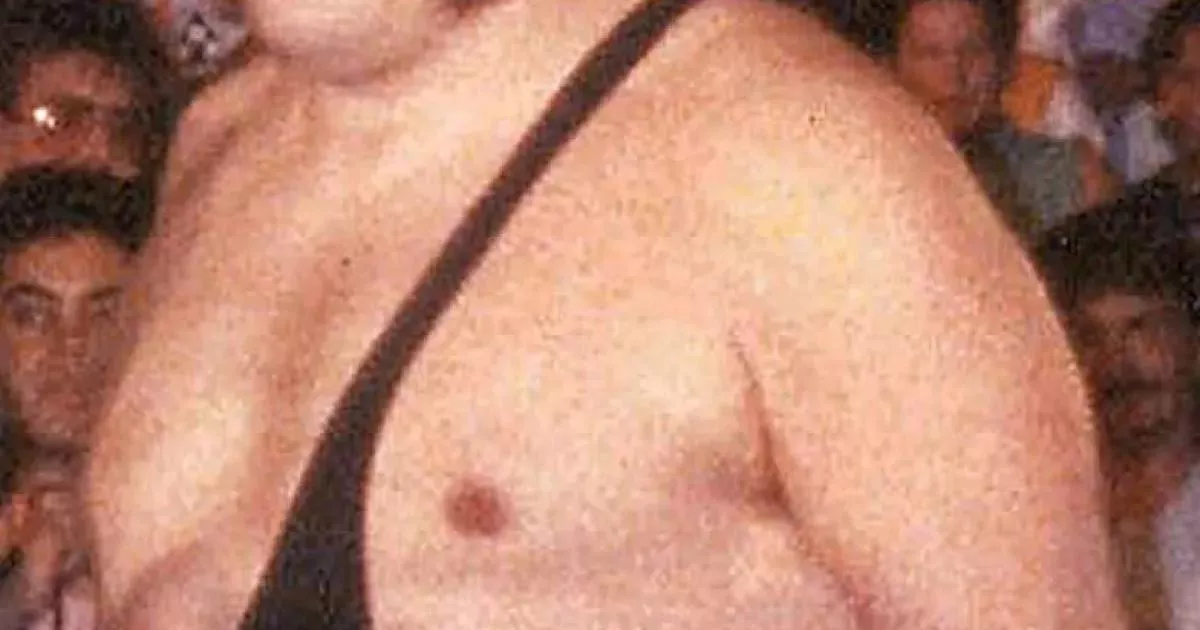
How André the Giant built a successful career. Explore key moments that defined the journey.
André the Giant, born André René Roussimoff, was a French professional wrestler and actor renowned for his immense size, a consequence of gigantism. Billed as "the Eighth Wonder of the World," he became a global wrestling icon, captivating audiences with his formidable presence and in-ring prowess. Beyond wrestling, he appeared in films and television, further solidifying his status as a pop-culture figure. His unique physique and captivating personality made him one of the most recognizable and beloved figures in the history of professional wrestling.


1966: Career Beginning
In 1966, André the Giant began his professional wrestling career.
1967: First Acting Role
In 1967, André the Giant started his acting career in a French boxing film.
1968: FFCP World Heavyweight Championship Win
In 1968, André the Giant defeated Franz van Buyten for the FFCP World Heavyweight Championship.
1970: Japanese Debut and IWA World Tag Team Championship
In 1970, André the Giant made his Japanese debut for the International Wrestling Enterprise (IWA), billed as "Monster Roussimoff". He became the IWA World Tag Team Champion alongside Michael Nador and was diagnosed with acromegaly during his time in Japan.
1971: Move to North America
In 1971, André the Giant relocated to North America to further his wrestling career.
March 1973: WWWF Debut
On 24 March 1973, André the Giant debuted in the World Wide Wrestling Federation (WWWF) as a fan favorite, defeating Frank Valois and Bull Pometti in a handicap match in Philadelphia. On 26 March 1973 he debuted in New York's Madison Square Garden, defeating Buddy Wolfe.
1973: Special Attraction in WWWF
From 1973, André the Giant was booked by World Wide Wrestling Federation (WWWF) as a roving "special attraction" who wrestled for promotions throughout the United States, as well as in Japan for New Japan Pro-Wrestling.
1973: Vincent J. McMahon Becomes Agent
In 1973, Vincent J. McMahon became André the Giant's agent and suggested changes to enhance his starpower, including portraying him as an immovable monster and setting up a travel-intensive schedule. McMahon discouraged André from performing agile maneuvers.
1975: Knockout Loss to Jerry Lawler
In 1975, André the Giant suffered a knockout loss to Jerry Lawler in Memphis.
1976: Fight Against Chuck Wepner
In 1976, at the second Showdown at Shea, André the Giant fought professional boxer Chuck Wepner in an unscripted fight that ended when André threw Wepner over the top rope and outside the ring, winning via count-out.
1977: Count Out Loss to Jerry Lawler
In 1977, André the Giant had a count out loss to Jerry Lawler in Louisville.
1978: Loss to Ronnie Garvin
In 1978, André the Giant lost to Ronnie Garvin in Knoxville.
August 1980: Hogan Slams André at Showdown at Shea
On August 9, 1980, a then-heel Hulk Hogan body-slammed a then-face André the Giant at the Showdown at Shea. At that time André weighed around 210 kg (470 lb) and was more athletic. This occurred before WWF's national expansion, making it unseen by many who watched WrestleMania III. Hogan also slammed him in a match in Hamburg, Pennsylvania, a month later.
1980: Feud with Hulk Hogan
In 1980, André the Giant feuded with Hulk Hogan, with Hogan as the villain. André pinned Hogan to win the match, and Hogan bodyslammed him at Shea Stadium's third Showdown at Shea event and in Pennsylvania.
May 1981: Feud with Killer Khan
In May 1981, during a match in Rochester, New York, Killer Khan supposedly snapped André the Giant's ankle. In reality, he had broken his ankle getting out of bed the morning before the match. This injury was worked into their feud storyline.
July 1981: Match with Killer Khan at Madison Square Garden
On 20 July 1981, André the Giant and Killer Khan battled at Madison Square Garden in a match that resulted in a double disqualification.
November 1981: Victory Over Killer Khan
On 14 November 1981, André the Giant decisively defeated Killer Khan in a "Mongolian stretcher match" at the Philadelphia Spectrum.
1982: Feud Continued in Japan
The feud between André the Giant and Hulk Hogan continued in Japan in 1982 and 1983 with their roles reversed and with Antonio Inoki also involved.
1983: Feud Continued in Japan
The feud between André the Giant and Hulk Hogan continued in Japan in 1982 and 1983 with their roles reversed and with Antonio Inoki also involved.
1984: Film Appearances
In 1984, André the Giant had an uncredited appearance in the film "Conan the Destroyer" as Dagoth and appeared in "Micki & Maude".
1984: Exclusivity Agreement with WWF
In 1984, André the Giant signed an agreement to appear exclusively for Vince McMahon's WWF, though he was still allowed to work in Japan for New Japan Pro-Wrestling (NJPW).
1984: Feud with Big John Studd
In 1984, the feud between André the Giant and Big John Studd escalated when Studd and Ken Patera knocked out André and cut off his hair during a televised tag-team match.
March 1985: Body Slam Challenge at WrestleMania I
On 31 March 1985, at the first WrestleMania, André the Giant slammed Big John Studd to win the match and a $15,000 prize. He then threw the cash to the fans before Studd's manager, Bobby "The Brain" Heenan, took the bag.
April 1986: Battle Royal Victory at WrestleMania 2
On 7 April 1986, at WrestleMania 2, André the Giant won a twenty-man battle royal featuring NFL stars and wrestlers, last eliminating Bret Hart to win the contest.
1986: Feud with Studd and King Kong Bundy and formation of The Machines
In 1986, André the Giant continued his feud with Studd and King Kong Bundy after WrestleMania 2. He requested a leave of absence due to health issues from acromegaly and a tour of Japan. A storyline was created where Bobby Heenan challenged André and a partner to face Studd and Bundy. When André didn't appear, he was suspended by WWF president Jack Tunney. Upon his return in the summer of 1986, André wrestled under a mask as "Giant Machine" in The Machines stable, with the gimmick copied from "Super Strong Machine". Heenan, Studd, and Bundy complained, and Tunney stated that if it was proven André was the Giant Machine, he would be fired. Eventually, the Giant Machine disappeared, and André was reinstated. Heenan approved of the reinstatement, foreshadowing André's heel turn.
1986: Submission Loss to Antonio Inoki
In 1986, André the Giant suffered a submission loss to Antonio Inoki in Japan.
February 1987: Heel turn begins on Piper's Pit
In early February 1987, André the Giant began his heel turn by agreeing to be the counter to Hulk Hogan. On Piper's Pit in February 1987, Hogan received a trophy for being WWF World Heavyweight Champion for three years, and André congratulated him. The following week on Piper's Pit, André received a smaller trophy for being undefeated. Annoyed, André walked out during Hogan's speech, and a confrontation was scheduled. On February 7, 1987, André appeared with Bobby Heenan on Piper's Pit.
February 1987: Battle Royal on Saturday Night's Main Event X
On February 21, 1987 (aired March 14) edition of Saturday Night's Main Event X, André the Giant and Hulk Hogan participated in a 20-man battle royal. Although Hercules won, André claimed a psychological victory over Hogan by throwing him over the top rope. This was taped two weeks before WrestleMania III to build the feud between André and Hogan.
December 1987: Survivor Series and SNME Build-up
During the summer of 1987, the feud between André the Giant and Hulk Hogan continued. At the inaugural Survivor Series, Hogan dominated André during their one minute of battling until Hogan was tripped by his partners, Bundy and One Man Gang, and was counted out. André was the sole survivor, pinning Bam Bam Bigelow, before Hogan returned to attack him. After Hogan won a match against Bundy on Saturday Night's Main Event, André choked Hogan until Hacksaw Jim Duggan broke a piece of wood over André's back, after which Hogan was pulled to safety. In December 1987, André lost to Wanz by countout in Germany.
1987: WrestleMania III Main Event
In 1987, André the Giant and Hulk Hogan headlined WrestleMania III, marking a significant event in André's career.
1987: Role in 'The Princess Bride'
In 1987, André the Giant appeared as Fezzik, the giant, in the film "The Princess Bride", gaining recognition outside of wrestling.
1987: André the Giant's Heel Turn
In 1987, André the Giant turned heel to counter Hulk Hogan. The shift began with trophy presentations on Piper's Pit and culminated in André aligning with Bobby Heenan.
February 1988: André wins the WWF World Heavyweight Championship
In February 1988, after Ted DiBiase failed to persuade Hulk Hogan to sell him the WWF World Heavyweight Championship, DiBiase turned to André the Giant. On February 5, 1988, on The Main Event, André, acting as DiBiase's hired gun, defeated Hogan for the WWF World Heavyweight Championship in a controversial match where a replacement referee, Earl Hebner, made a fast three-count while Hogan's shoulder was off the mat.
July 1988: Steel cage match at WrestleFest
In July 1988, After a double disqualification at WrestleMania IV, André the Giant and Hulk Hogan's feud continued. On July 31, 1988, at WrestleFest in Milwaukee, Hulk Hogan won a steel cage match against André.
1988: WWF Heavyweight Championship Win
In 1988, André the Giant defeated Hulk Hogan to win the WWF Heavyweight Championship, his sole world heavyweight championship, on the first episode of The Main Event.
October 1989: Feud with The Ultimate Warrior
In October 1989, André the Giant feuded with then-WWF Intercontinental Champion The Ultimate Warrior. André wore face paint similar to The Warrior and called himself "The Ultimate Giant" when he appeared on The Brother Love Show. André was regularly squashed by The Ultimate Warrior in an attempt to showcase the Warrior as a rising star.
December 1989: Colossal Connection wins WWF Tag Team Championship
In December 1989, André the Giant teamed with Haku to form the Colossal Connection, managed by Bobby Heenan. On December 13, 1989, The Colossal Connection defeated Demolition to win the WWF Tag Team Championship at a television taping.
1989: Feud with Big John Studd reprised
In 1989, André the Giant and Big John Studd reprised their feud, starting at WrestleMania V, where Studd was the referee in André's match with Roberts. This time, Studd was a face, and André was the heel.
March 3, 1990: André's last singles match
On March 3, 1990, André the Giant wrestled his last single match, losing to The Ultimate Warrior at a house show in New Orleans, Louisiana.
April 1990: Colossal Connection loses WWF Tag Team Championship; André turns face
On April 1, 1990, at WrestleMania VI, The Colossal Connection lost the WWF Tag Team Championship to Demolition. After the match, Bobby Heenan blamed André for the loss and slapped him. André retaliated by slapping Heenan and sending Haku reeling, turning face for the first time since 1987. Due to health issues, Haku wrestled the entire match.
1990: Winding Down WWF Career
After WrestleMania VI in 1990, André the Giant's WWF career started to wind down, and he wrestled primarily for All Japan Pro-Wrestling.
1990: Final WWF match and Tag Team with Giant Baba
In 1990, André the Giant wrestled one more time with Haku on April 10, 1990, in Honolulu, losing via count-out. André and Haku then fought each other, ending the Colossal Connection. André's final WWF match of 1990 was on April 13, 1990, in Tokyo, Japan, where he teamed with Giant Baba to defeat Demolition in a non-title match.
1990: Joined All Japan Pro Wrestling
In 1990, after WrestleMania VI, André the Giant joined All Japan Pro Wrestling (AJPW) and Mexico's Universal Wrestling Association (UWA), performing as "André el Gigante". He toured with AJPW three times a year.
March 1991: Return to WWF and Super-Stars & Stripes Forever
In March 1991, André the Giant made his on-air return at the WWF's Super-Stars & Stripes Forever USA Network special, shaking hands with Big Boss Man after an altercation with Mr. Perfect.
October 1991: Final WWF Appearance
In October 9, 1991, André the Giant made his final WWF appearance at a house show in Paris, France, in Davey Boy Smith's corner, where Smith used André's crutch to defeat Earthquake.
1991: Guest Appearances for UWF
In 1991, André the Giant made guest appearances for Herb Abrams' Universal Wrestling Federation, feuding with Big John Studd, though he never had a match in the promotion.
December 1992: Final Match of his Career
In December 1992, André the Giant concluded his final tour with AJPW. On December 4, 1992, he wrestled the final match of his career, teaming with Giant Baba and Rusher Kimura to defeat Haruka Eigen, Masanobu Fuchi, and Motoshi Okuma.
1994: Release of 'Trading Mom'
In 1994, a year after his death, André the Giant's last film, "Trading Mom", was released, in which he had a cameo role as a circus giant.
2025: Equivalent Salary in 2025
In 1974, André the Giant earned approximately $400,000 annually, which is equivalent to $2,611,000 in 2025.
Mentioned in this timeline
The United States of America is a federal republic primarily...
World Wrestling Entertainment WWE is the global leader in professional...
Vincent Kennedy McMahon is an American businessman and former professional...
Hulk Hogan born Terry Gene Bollea is a celebrated American...
David Letterman is an American television icon renowned for his...
Germany officially the Federal Republic of Germany is located in...
Trending
4 hours ago Maxx Crosby and Kirk Cousins Clash Over Bizarre Panda Fighting Debate
4 hours ago Timothy Simons Discusses Nobody Wants This Season 3 and Future Storytelling
4 hours ago Jennifer Lopez Reported to be Casually Dating Actor Brett Goldstein
4 hours ago Valentin Vacherot and ATP Basel Tennis Predictions Preview
4 hours ago Active Tennis Betting Markets for Professional Matches
4 hours ago Henrique Rocha Makes History Entering ATP Top 100
Popular

Ilhan Omar is a prominent American politician currently serving as...
Ken Paxton is an American politician and lawyer serving as...
Elon Musk is a visionary entrepreneur and engineer known for...
Barack Obama the th U S President - was the...
Greg Abbott is the current and th Governor of Texas...
Michael Joseph Jackson the King of Pop was a highly...