


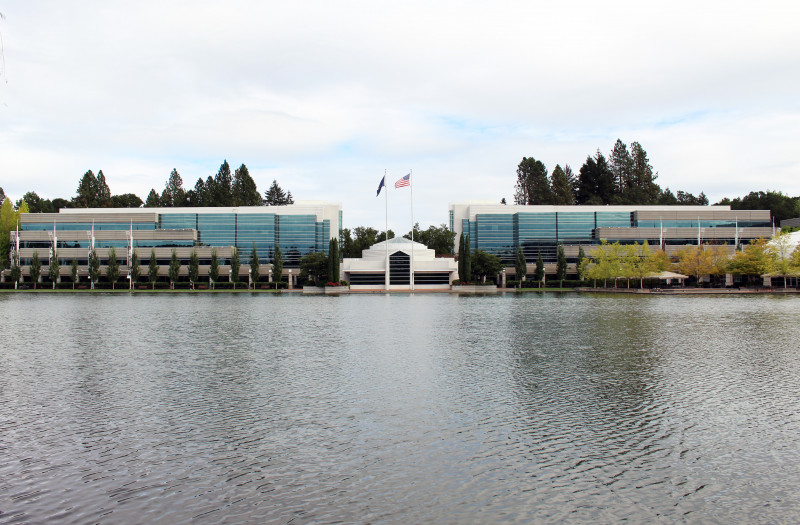
Nike, Inc., headquartered near Beaverton, Oregon, is the world's largest supplier of athletic footwear and apparel. The company is also a significant manufacturer of sports equipment. Nike's revenue exceeded US$46 billion in fiscal year 2022, highlighting its dominant position in the global athletic market.
1960: Otis Davis wins Olympic gold
In 1960, Otis Davis won Olympic gold. According to Davis, Bill Bowerman made the first pair of Nike shoes for him. There was no support and they were too tight. But I saw Bowerman made them from the waffle iron, and they were mine


January 25, 1964: Blue Ribbon Sports Founded
On January 25, 1964, Bill Bowerman and Phil Knight founded "Blue Ribbon Sports", which would later become Nike, Inc.
1965: Sales Reached $20,000
By 1965, Blue Ribbon Sports (BRS) sales had reached $20,000.
1966: First Retail Store Opened
In 1966, Blue Ribbon Sports (BRS) opened its first retail store at 3107 Pico Boulevard in Santa Monica, California.
1967: Expanded Retail and Distribution Operations on the East Coast
In 1967, due to increasing sales, Blue Ribbon Sports (BRS) expanded retail and distribution operations on the East Coast, in Wellesley, Massachusetts.
May 30, 1971: Blue Ribbon Sports Officially Becomes Nike, Inc.
On May 30, 1971, Blue Ribbon Sports officially became Nike, Inc., named after the Greek goddess of victory, Nike.
June 18, 1971: First Use of the Swoosh Logo
On June 18, 1971, the Swoosh logo, designed by Carolyn Davidson, was first used by Nike.
1971: Bowerman Creates New Sole for Track Shoes
In 1971, Bill Bowerman experimented with his wife's waffle iron to create a new sole for track shoes that would be lightweight and increase the runner's speed.
1972: Nike "Moon Shoes" Designed by Bill Bowerman
In 1972, Bill Bowerman designed the Nike "Moon Shoes" for runners participating in the Olympics trials.
1976: Hired First Advertising Agency
In 1976, Nike hired John Brown and Partners, based in Seattle, as its first advertising agency.
1979: First Uniforms for Professional Sports Team
In 1979, Nike manufactured its first uniforms for a professional sports team, the Portland Timbers of the North American Soccer League.
1980: Nike Goes Public
By 1980, Nike had attained a 50% market share in the US athletic shoe market, and the company went public in December of that year.
1981: Release of Minor Threat's Self-Titled Album
In 1981, Minor Threat released their self-titled album, whose cover art was later appropriated by Nike in 2005.
1982: First National Television Ads
In 1982, Nike aired its first three national television ads during the New York Marathon broadcast, created by Wieden+Kennedy (W+K).
1984: Michael Jordan supposedly wears a pair of Converse shoes in the Olympics
In 1984, Michael Jordan supposedly wore a pair of Converse shoes at the basketball final of the Olympics that year.
1984: Signing of Michael Jordan
In 1984, Nike signed basketball player Michael Jordan, which significantly boosted the company's publicity and sales.
1987: Release of Nike Air Max
In 1987, Nike Air Max, a line of shoes, was first released by Nike, Inc.
1987: Controversy Over Beatles' "Revolution" in Commercial
In 1987, Nike was criticized for using the Beatles' song "Revolution" in a commercial without the approval of Apple Records, the Beatles' recording company.
March 1988: Discontinuation of "Revolution" Ad
In March 1988, Nike stopped airing ads featuring "Revolution".
July 1, 1988: "Just Do It" Ad Campaign Debuts
On July 1, 1988, Nike's first "Just Do It" advertisement, featuring Walt Stack, debuted. The slogan was coined by Dan Wieden of Wieden+Kennedy.
1988: Acquisition of Cole Haan
In 1988, Nike's first acquisition was the upscale footwear company Cole Haan.
1990: Protests against Nike's use of sweatshops
Beginning in 1990, numerous protests occurred in major cities such as Los Angeles, Washington, DC, and Boston to publicly denounce Nike's use of child labor and sweatshops.
1990: New World Headquarters and First Niketown Store
In 1990, Nike moved into its eight-building World Headquarters campus in Beaverton, Oregon, and the first Niketown retail store opened in downtown Portland in November.
1990: Opening of Child Care Facility Named After Joe Paterno
In 1990, Nike opened its first child care facility, named after Joe Paterno.
1992: Sulfur hexafluoride used in "Air"-branded shoes
From 1992, sulfur hexafluoride, a potent greenhouse gas, was used in the cushion bags of all "Air"-branded shoes.
1992: Debut of Air Huarache
In 1992, the Air Huarache product line debuted.
1993: Nike's Reuse-A-Shoe Program Launched
In 1993, Nike launched the Reuse-A-Shoe program, its longest-running program that benefits the environment and community by collecting and recycling old athletic shoes to create sports surfaces.
1994: Cannes Advertiser of the Year Award
In 1994, Nike was named Advertiser of the Year at the Cannes Advertising Festival, the first company to receive the honor twice.
1997: Peak Use of Sulfur Hexafluoride
In 1997, 277 tons of sulfur hexafluoride was used in Nike's "Air"-branded shoes.
January 1, 2000: Emmy Award for "The Morning After" Commercial
On January 1, 2000, Nike won an Emmy Award for "The Morning After," a commercial satirizing the Y2K problem.
2000: Official Ball Supplier for the Premier League
Since the 2000–01 season, Nike has been the official ball supplier for the Premier League.
2001: BBC Documentary on Child Labor in Nike Factory
In 2001, a BBC documentary revealed instances of child labor and poor working conditions in a Cambodian factory used by Nike, focusing on six girls working seven days a week, often 16 hours a day.
2002: Acquisition of Hurley International
In 2002, Nike bought surf apparel company Hurley International from founder Bob Hurley.
2002: Emmy Award for "Move" Commercial
In 2002, Nike earned an Emmy Award for the "Move" commercial, which featured famous and everyday athletes in athletic pursuits.
2003: Acquisition of Converse
In 2003, Nike paid US$309 million to acquire sneaker company Converse.
2003: Cannes Advertiser of the Year Award
In 2003, Nike was named Advertiser of the Year at the Cannes Advertising Festival, the first company to receive the honor twice.
2004: Nike launched the SPARQ Training Program/Division.
In 2004, Nike launched the SPARQ Training Program/Division.
June 2005: Criticism for Appropriation of Minor Threat Imagery
In June 2005, Nike faced criticism from Ian MacKaye for appropriating imagery from Minor Threat's 1981 album cover in a flyer promoting Nike Skateboarding's East Coast demo tour.
2005: Official Kit Sponsor for the Indian Cricket Team
From 2005 to 2020, Nike was the official kit sponsor for the Indian cricket team.
2005: Oregon Senate Bill 887
In 2005, Oregon Senate Bill 887 was passed, barring Beaverton from forcibly annexing the land occupied by Nike and Columbia Sportswear for 35 years.
2006: Adidas was the uniform provider for the NBA
Adidas provided the uniforms for the NBA from 2006 until Nike took over in 2017.
2006: Introduction of the Air Zoom Vomero running shoe
In 2006, the Air Zoom Vomero running shoe, introduced and featured a combination of innovations including a full-length air cushioned sole, an external heel counter, a crashpad in the heel for shock absorption, and Fit Frame technology for a stable fit.
2006: Sulfur hexafluoride used in "Air"-branded shoes
Until 2006, sulfur hexafluoride, a potent greenhouse gas, was used in the cushion bags of all "Air"-branded shoes.
2007: Nike Ranked Among Top Climate-Friendly Companies
In 2007, Clean Air-Cool Planet ranked Nike among the top three companies in a survey of climate-friendly companies.
2007: Acquisition of Umbro
In 2007, Nike acquired soccer uniform maker Umbro.
2007: Sold Starter
In 2007, Nike sold Starter as part of its refocus on its business lines.
February 2008: Nike's Trash Talk Shoe
In February 2008, Nike produced 5,000 pairs of the Trash Talk Shoe, a performance basketball shoe constructed from factory waste, worn by Steve Nash in a commercial for Earth Day 2008.
2008: Introduction of the Air Jordan XX3
In 2008, Nike introduced the Air Jordan XX3, a high-performance basketball shoe designed with the environment in mind.
2008: Sold Bauer Hockey
In 2008, Nike sold Bauer Hockey as part of its refocus on its business lines.
2008: LAZR swimsuit controversy
In 2008, The Nike Vaporfly controversy was compared to the 2008 LAZR swimsuit controversy.
2008: Toxic Chemicals in Footwear Factories
In 2008, a UNC project found workers exposed to toxic chemicals in footwear factories in Thailand, with dermal exposure being a significant issue.
2010: Nike's Royalties
In 2010, Nike's royalties briefly mentioned amounted to $3.86 billion.
July 2011: Nike Factories Still Not Meeting Standards
As of July 2011, Nike stated that two-thirds of its factories producing Converse products still did not meet the company's standards for worker treatment.
July 2011: Greenpeace Report on Yangtze River Water Pollution
In July 2011, Greenpeace published a report on water pollution in the Yangtze River linked to a textile factory of Nike supplier Youngor Group.
2011: Kaepernick and Nike agreement
In 2011, Kaepernick and Nike initially agreed to a contract.
2011: Nike's Royalties
In 2011, Nike's royalties briefly mentioned amounted to $3.86 billion.
July 12, 2012: Removal of Joe Paterno's Name from Child Development Center
After the Freeh Report was released on July 12, 2012, Nike CEO Mark Parker announced that Joe Paterno's name would be immediately removed from the child development center.
2012: Commercial Partnership with Asian Football Confederation
In 2012, Nike entered into a commercial partnership with the Asian Football Confederation.
2012: Sold Umbro
In 2012, Nike sold Umbro as part of its refocus on its business lines.
2012: Partner of the (PRODUCT) Campaign
In 2012, Nike was listed as a partner of the (PRODUCT) campaign, focused on preventing HIV transmission from mother to child.
2012: Nike's Royalties
In 2012, Nike's royalties briefly mentioned amounted to $3.86 billion.
January 2013: Sponsorship Deal with Rory McIlroy
In January 2013, Nike signed Rory McIlroy to a 10-year sponsorship deal worth $250 million.
February 21, 2013: Suspension of Contract with Oscar Pistorius
On February 21, 2013, Nike suspended its contract with Oscar Pistorius after he was charged with premeditated murder.
December 19, 2013: Nike's Quarterly Profit Rose
On December 19, 2013, Nike's quarterly profit rose due to a 13 percent increase in global orders for merchandise since April of that year. Future orders of shoes or clothes for delivery between December and April, rose to $10.4 billion. Nike shares (NKE) rose 0.6 percent to $78.75 in extended trading.
2013: Sold Cole Haan
In 2013, Nike sold Cole Haan as part of its refocus on its business lines.
2013: Nike Joins Dow Jones Industrial Average
In 2013, Nike was made a member of the Dow Jones Industrial Average, replacing Alcoa.
April 2014: Strike at Yue Yuen Industrial Holdings Dongguan shoe factory
In April 2014, one of the biggest strikes in mainland China took place at the Yue Yuen Industrial Holdings Dongguan shoe factory, which produces for Nike, because they were underpaying an employee by 250 yuan (40.82 US Dollars) per month.
August 2014: Non-Renewal of Kit Supply Deal with Manchester United
In August 2014, Nike announced it would not renew its kit supply deal with Manchester United after the 2014–15 season due to rising costs.
2014: Tax Break Expiration
In 2014, the tax break was to expire, so another reorganization transferred the intellectual property from the Bermudan company to a Dutch commanditaire vennootschap or limited partnership, Nike Innovate CV.
June 2015: 8-Year Deal with the NBA
In June 2015, Nike signed an 8-year deal with the NBA to become the official uniform supplier for the league, beginning with the 2017–18 season, replacing Adidas.
November 2015: Share Buyback and Stock Split Announced
In November 2015, Nike announced it would initiate a $12 billion share buyback, as well as a two-for-one stock split, with shares to begin trading at the decreased price on December 24.
2015: Base Year for Emissions Reduction Target
2015 is the base year for Nike's plan to reduce emissions 65% by 2030.
2015: Increase in Corporate Jet Emissions
From 2015 to 2023, emissions from Nike's corporate jets increased by 20%.
2015: Deal with the NBA
In 2015, Nike consolidated its position in basketball when it was announced that the company would sign an 8-year deal with the NBA, taking over from Adidas.
2015: Nike Mag Limited Release
In 2015, Nike introduced the Nike Mag, a self-lacing shoe replicating those in Back to the Future Part II. It had a preliminary limited release available only by auction, with proceeds going to the Michael J. Fox Foundation.
2015: Adidas Becomes Manchester United's Kit Manufacturer
Since the start of the 2015–16 season, Adidas has manufactured Manchester United's kit as part of a world-record 10-year deal.
June 30, 2016: Phil Knight Steps Down
On June 30, 2016, Phil Knight officially stepped down from all duties with Nike.
July 2016: Greenpeace Follow-Up Report on Hazardous Chemicals
In July 2016, Greenpeace released a follow-up report stating that Nike had not taken enough responsibility for eliminating hazardous chemicals, especially perfluorinated compounds.
2016: Use of Water Free Dyeing Materials
In 2016, Nike began using water-free dyeing materials in its Southeast Asian factories to reduce water consumption.
2016: Nike Exits the Golf Equipment Business
In 2016, Nike exited the golf equipment business due to a decline in sales.
2016: Nike Mag Repeat Release
In 2016, Nike repeated the limited release of the Nike Mag, a self-lacing shoe replicating those in Back to the Future Part II. It was available only by auction, with proceeds going to the Michael J. Fox Foundation.
2016: Brand Relevance for Gen-Z in China
In 2016, a study reflected that Nike was the 3rd most relevant brand for Gen-Z in China.
March 2017: Nike Launches Plus-Size Clothing Line
In March 2017, Nike launched a plus-size clothing line featuring sizes 1X through 3X on over 200 products.
November 5, 2017: Nike Named in Paradise Papers for Tax Avoidance
On November 5, 2017, the Paradise Papers revealed that Nike is among the corporations that used offshore companies to avoid taxes.
2017: Nike's Carbon Dioxide Contribution
According to a 2017 study, Nike contributed 3,002,529 metric tons of carbon dioxide combined from various sectors within the company.
2017: Nike Vaporfly Criticism
Around 2017, criticisms emerged regarding technology in the Nike Vaporfly running shoes, leading to concerns about unfair advantages and technology doping.
2017: Nike Becomes Official Uniform Supplier for the NBA
In 2017, Nike became the official uniform supplier for the NBA.
2017: Previous record price for sneakers
In 2017, a pair of signed Converse shoes said to have been worn by Michael Jordan during the 1984 basketball final of the Olympics sold for $190,373 in California, setting the previous record for sneakers.
2017: Reuse-A-Shoe Program Numbers
In 2017, it was estimated that 28,000,000 shoes were collected since its start in 1993 for Nike's Reuse-A-Shoe program.
2017: Release of Nike Vaporfly
In 2017, the Nike Vaporfly first came out and their popularity, along with its performance, prompted a new series of running shoes.
2017: Nike Brand Value
In 2017, the Nike brand was valued at $29.6 billion.
2017: Franchise teams wear Nike jerseys and shorts with the Swoosh logo.
Starting with the 2017/18 season, all NBA franchise team members had to wear jerseys and shorts with the Swoosh logo.
March 15, 2018: Trevor Edwards Relinquishes Position
On March 15, 2018, Nike CEO Mark Parker announced that Trevor Edwards, a top Nike executive, was relinquishing his position as Nike's brand president and would retire in August.
March 2018: Acquisition of Zodiac
In March 2018, Nike acquired Zodiac, a consumer data analytics company.
June 2018: $15 Billion Share Buyback Announced
In June 2018, Nike announced it would initiate a $15 billion share buyback over four years, to begin in 2019 upon completion of the previous buyback program.
September 2018: Nike Signs Colin Kaepernick to Advertising Campaign
In September 2018, Nike announced it had signed Colin Kaepernick to a long-term advertising campaign, leading to both praise and backlash, with some people burning Nike products in protest.
October 2018: Market Capitalization Valued at Over US$114.5 Billion
In October 2018, Nike's shares traded at over $72 per share, and its market capitalization was valued at over US$114.5 billion.
2018: Nike Vaporfly Criticism
Around 2018, criticisms emerged regarding technology in the Nike Vaporfly running shoes, leading to concerns about unfair advantages and technology doping.
2018: Nike's Fortune 500 Ranking
In 2018, Nike ranked 89th in the Fortune 500 list of the largest United States corporations by total revenue.
2018: Spending on Marketing and Endorsement Contracts
In 2018, Nike spent $11.5 billion, nearly a third of its sales, on marketing and endorsement contracts.
July 2019: Nike Withdraws Air Max 1 Quick Strike Fourth of July trainers
In July 2019, Nike released a shoe featuring a Betsy Ross flag called the Air Max 1 Quick Strike Fourth of July trainers, but withdrew the model after Colin Kaepernick voiced concerns about the flag's association with slavery.
July 23, 2019: Nike "Moon Shoes" Sold at Auction for Record Price
On July 23, 2019, a pair of Nike Inc. running shoes, the "Moon Shoes", sold for $437,500 at a Sotheby's auction. The shoes were designed by Bill Bowerman for the 1972 Olympics trials.
August 2019: Acquisition of Celect
In August 2019, Nike acquired Celect, a Boston-based predictive analytics company.
October 2019: John Donahoe Announced as Next CEO
In October 2019, John Donahoe was announced as the next CEO of Nike.
November 2019: Stopped Selling Directly Through Amazon
In November 2019, Nike stopped selling directly through Amazon, focusing more on direct relationships with customers.
2019: "Move to Zero" Program Launch
In 2019, Nike launched the "Move to Zero" program to achieve zero waste and zero carbon in its supply chain and product lifecycle, with collections containing at least 60% organic and recycled materials.
2019: $15 Billion Share Buyback to Begin
In 2019, Nike's $15 billion share buyback program was set to begin, following the completion of the previous buyback program.
2019: Mike Pence Criticizes Nike
In 2019, US Vice President Mike Pence criticized Nike for siding with the Chinese Communist Party and allegedly removing Houston Rockets merchandise from its stores in China after a tweet supporting the 2019 Hong Kong protests.
January 13, 2020: John Donahoe Succeeded Parker as CEO
On January 13, 2020, John Donahoe succeeded Mark Parker as the CEO of Nike.
January 31, 2020: World Athletics Issues New Shoe Guidelines
On January 31, 2020, World Athletics issued new guidelines concerning shoes for the Tokyo 2020 Olympics, following criticisms of Nike Vaporfly running shoes and concerns about technology doping.
February 2020: Nike Stores Closed in Greater China Due to COVID-19
In February 2020, Nike reported that roughly 75% of Nike stores in Greater China had closed due to the COVID-19 outbreak.
March 2020: Drop in Chinese Sales
In March 2020, Nike reported a 5% drop in Chinese sales associated with stores' closure due to COVID-19. However, the company's online sales grew by 36% during Q1 of 2020 and the sales of personal training apps grew by 80% in China.
April 30, 2020: New Shoe Guidelines
Starting April 30, 2020, a new guideline was established where any shoe must have been available for purchase by any athlete on the open retail market for four months before it can be used in competition.
June 30, 2020: Nike's CO2e Emissions Report
Nike reported total CO2e emissions for the twelve months ending June 30, 2020, at 317 Kt, a year-over-year increase, and announced plans to reduce emissions by 65% by 2030 from a 2015 base year.
2020: Nike Owns Only Converse Inc.
As of 2020, Nike owns only one subsidiary: Converse Inc.
2020: Jumpman Logo on NBA Statement Uniforms
Beginning with the 2020–21 season, the Jumpman logo replaced the Nike swoosh on the NBA's alternate "Statement" uniforms.
2020: End of Indian Cricket Team Sponsorship
From 2005 to 2020, Nike was the official kit sponsor for the Indian cricket team.
2020: Agreement to Stop Discharging Hazardous Chemicals
In 2020 Nike and other brands agreed to stop discharging hazardous chemicals by 2020.
2020: Nike Brand Value in Excess of $32 Billion
In 2020, the Nike brand alone was valued in excess of $32 billion, making it the most valuable brand among sports businesses.
2020: Nike sponsors Liverpool
Since the 2020-21 season, Nike has sponsored Liverpool.
February 2021: Acquisition of Datalogue
In February 2021, Nike acquired Datalogue, a New York-based company focused on digital sales and machine learning technology.
December 2021: Purchase of RTFKT Studios
In December 2021, Nike purchased RTFKT Studios, a virtual shoe company that makes NFTs.
December 2021: Criminal complaint filed against Nike
In December 2021, the European Center for Constitutional and Human Rights filed a criminal complaint in a Dutch court against Nike and other brands, alleging they benefited from forced Uyghur labor in Xinjiang.
2021: Collaboration with Newlight Technologies
In 2021, Nike announced a collaboration with Newlight Technologies to explore eco-friendly materials for sneakers, specifically mentioning Newlight's AirCarbon bioplastic as a replacement for leather and plastic.
April 2022: Dunk Genesis Cryptokicks NFT Sale
In April 2022, a design by Takashi Murakami from the Dunk Genesis Cryptokicks collection (over 20,000 NFTs) was sold for $134,000.
2022: Revenue in excess of US$46 billion
In 2022, Nike, Inc. had a revenue in excess of US$46 billion.
January 2023: Most Popular Sportswear Brand in the US
In January 2023, a study concluded that Nike was the most popular sportswear brand in the US.
July 2023: Most Inclusive Brand
In July 2023, a study found that Americans consider Nike as one of the most inclusive brands.
July 2023: Canadian Ombudsperson Investigation into Nike
In July 2023, the Canadian Ombudsperson for Responsible Enterprise opened an investigation into Nike to probe allegations of forced Uyghur labor in its supply chain.
2023: Increase in Corporate Jet Emissions
From 2015 to 2023, emissions from Nike's corporate jets increased by 20%.
2023: Presenting Sponsor of Reviving Baseball in Inner Cities
In 2023, Nike became the presenting sponsor of Reviving Baseball in Inner Cities, encouraging youth in underserved communities to participate in baseball and softball.
2023: Nike Pledges to Eliminate Kangaroo Leather
In 2023, Nike pledged to eliminate the use of kangaroo leather in favor of a synthetic alternative, in response to animal activists' concerns about unethical killing of kangaroos.
2023: Nike to Cease Using Kangaroo Skins
In 2023, Nike told ESPN that it would cease using kangaroo skins in its products by the end of that year and debut "a new Nike-only, proprietary synthetic upper, [with] a new material that is a better performance solution and replaces the use of kangaroo leather."
2023: Nike to Phase Out Mulesed Wool
In 2023, following criticism from animal rights groups, Nike declared its intent to phase out the use of wool sourced from lambs subjected to mulesing.
2023: Preferred Brand for Millennials with Health Concerns
Roth MKM's 2023 Millennial survey reported in March that millennials with health and wellness concerns ranked brands like Nike as their preferred brands for purchases in the aftermath of the pandemic.
October 2024: Global Extension of Partnership with NBA
In October 2024, Nike announced a 12-year global extension of its partnership with the NBA, WNBA, and NBA G League through 2037.
2024: Nike's Employee Count and Forbes Ranking
As of 2024, Nike employed 83,700 people worldwide and ranked 239th in the Forbes Global 2000 companies.
2024: Institutional Investors Major Shareholder
In early 2024, institutional investors held around 68% of all shares in Nike.
2024: End of Sponsorship of Tiger Woods
Nike sponsored Tiger Woods until 2024.
June 2025: Tariff Concerns and Production Shifts
In June 2025, Nike warned that President Trump’s new tariffs on key trading partners could add around $1 billion to its costs this year, causing the company to shift some production out of China to reduce its exposure.
January 2026: Layoffs at Distribution Centers
In January 2026, Nike laid off 775 employees primarily from distribution centres in Tennessee and Mississippi, as it looks to automate processes and boost profits.
2030: Planned Emissions Reduction Target
Nike plans to reduce emissions 65% by 2030 from a 2015 base year.
2037: End of Extended Partnership with NBA
Nike retains exclusive rights to design and manufacture uniforms for the NBA, WNBA, and NBA G League through 2037.
Mentioned in this timeline
Basketball is a team sport played on a rectangular court...
Michael Jordan widely regarded as one of basketball's greatest players...
Adidas AG is a German multinational corporation and the second-largest...
The United States of America is a federal republic primarily...
California is a U S state on the Pacific Coast...
Liverpool is a major city and metropolitan borough in Merseyside...
Trending
4 hours ago Jalen Hurts Out For Season Following Discovery Of Blood Clots
4 hours ago Dallas Mavericks Waive Veteran Center Dwight Powell from Roster

4 hours ago KJ Lacey Gains Attention Amid Struggles for Texas Quarterback Arch Manning
4 hours ago Stellantis and Leapmotor Begin B10 Electric SUV Production in European Zaragoza Facility
29 days ago Cooper Rush Steps Up for Falcons Amid Michael Penix Jr Injury Concerns
5 hours ago Caleb Wilson Embraces Michael Jordan’s Legacy as New Chicago Bulls Franchise Player
Popular
Ilhan Omar is a prominent American politician currently serving as...

Ken Paxton is an American politician and lawyer serving as...

Elon Musk is a visionary entrepreneur and engineer known for...

Michael Joseph Jackson the King of Pop was a highly...

Cristiano Ronaldo widely considered one of the greatest footballers captains...

MrBeast the professional name of Jimmy Donaldson is the most-subscribed...