Rise to Success: Career Highlights of Ro Khanna


Discover the career path of Ro Khanna, from the first major opportunity to industry-changing achievements.
Ro Khanna is a U.S. Representative for California's 17th district, serving since 2017. A Democrat, he unseated Mike Honda in 2016. Before Congress, he served as Deputy Assistant Secretary in the Department of Commerce under President Obama from 2009 to 2011. Khanna is known for his progressive views and has endorsed Bernie Sanders for president in 2016 and co-chaired Sanders' 2020 presidential campaign.
1996: Worked on Obama's Campaign
In 1996, as a student at the University of Chicago, Khanna worked for William D. Burns walking precincts during Barack Obama's first campaign for the Illinois Senate.


2000: Trump's Healthcare Stance
In 2000, in the Budget Committee, Khanna pointed out that Trump was for a single-payer healthcare system.
2004: Khanna Runs Anti-Iraq War Campaign for U.S. House
In 2004, Ro Khanna ran one of the nation's first anti-Iraq war campaigns for the United States House of Representatives, unsuccessfully challenging Tom Lantos in the Democratic primary in California's 12th congressional district.
2006: Khanna joins Planned Parenthood Mar Monte board
In 2006, Khanna joined the board of Planned Parenthood Mar Monte. He served on the board until 2013 while on leave from the Obama Administration.
August 8, 2009: Khanna Appointed Deputy Assistant Secretary
On August 8, 2009, Khanna began his service as the Deputy Assistant Secretary in the United States Department of Commerce under President Barack Obama.
2009: Khanna Appointed Deputy Assistant Secretary of Commerce
In 2009, President Barack Obama appointed Khanna as the deputy assistant secretary of the United States Department of Commerce.
2009: Development of 2009 bill for cap-and-trade legislation.
In 2009, Select Committee on Energy Independence and Global Warming proved effective in developing a bill for cap-and-trade legislation.
August 2011: Khanna Joins Wilson Sonsini Goodrich & Rosati
In August 2011, Khanna left the Department of Commerce and joined Wilson Sonsini Goodrich & Rosati, a law firm in Silicon Valley.
August 2011: Khanna Ends Term as Deputy Assistant Secretary
In August 2011, Khanna's term as the Deputy Assistant Secretary in the United States Department of Commerce under President Barack Obama ended.
2011: Peter Thiel Supported Khanna's Candidacy
In 2011, Peter Thiel supported Ro Khanna's candidacy.
2011: Khanna Raises $1.2 Million for House Run
In 2011, Ro Khanna raised $1.2 million, receiving support from prominent figures. Khanna's fundraising total for the fourth quarter of 2011 exceeded that of all but two House candidates nationwide.
2012: Visiting Lecturer at Stanford and Publication of Book
In 2012, Khanna became a visiting lecturer of economics at Stanford University and published his book, "Entrepreneurial Nation: Why Manufacturing is Still Key to America's Future."
2012: Khanna Intends to Run for House in California's 15th District
In 2012, Ro Khanna intended to run for the House in California's 15th congressional district, hoping to succeed Democrat Pete Stark. Eric Swalwell defeated Stark in 2012.
April 2, 2013: Khanna Announces Challenge to Mike Honda
On April 2, 2013, Ro Khanna announced that he would challenge Mike Honda in California's 17th congressional district in the 2014 midterm elections. Khanna assembled a campaign team of top members of Barack Obama's reelection team.
2013: Khanna leaves Planned Parenthood Mar Monte board
In 2013, Khanna left the board of Planned Parenthood Mar Monte after being on the board since 2006. He took leave from the Obama Administration during his time on the board.
2013: Peter Thiel Supported Khanna's Candidacy
In 2013, Peter Thiel supported Ro Khanna's candidacy.
March 28, 2014: Court Rules Khanna Had No Connection with Candidate Recruitment Incident
On March 28, 2014, the Sacramento County Superior Court ruled that Ro Khanna had no connection with an incident involving the alleged recruitment of candidates with similar names to split the Republican vote.
November 4, 2014: Honda Defeats Khanna in Congressional Election
On November 4, 2014, incumbent congressman Mike Honda defeated Ro Khanna in the election, with Honda receiving 69,561 votes (51.8%) to Khanna's 64,847 votes (48.2%).
2014: First Congressional Campaign and Job at Smart Utility Systems
In 2014, Khanna left Wilson Sonsini for his first campaign for California's 17th congressional district seat. After losing the general election to Mike Honda, Khanna took a job as vice president of strategic initiatives at Smart Utility Systems.
2014: Khanna to Challenge Mike Honda
In 2014, Ro Khanna announced that he would challenge Mike Honda in California's 17th congressional district in the 2014 midterm elections.
2014: First Run for Congress
In 2014, Ro Khanna first ran for California's 17th congressional district seat.
June 2015: Khanna Announces Intention to Run Again for House Seat
In June 2015, Ro Khanna announced his intention to run again for the House in California's 17th congressional district. He took no donations from PACs or corporations for his 2016 campaign.
June 7, 2016: Khanna Wins Primary for House Seat
On June 7, 2016, Ro Khanna won the primary election with 52,059 votes (39.1%) and advanced to the general election against Mike Honda. He became the Representative-elect on November 8 after defeating Honda, 61% to 39%.
November 8, 2016: Khanna Defeats Mike Honda
On November 8, 2016, Ro Khanna, a member of the Democratic Party, defeated eight-term incumbent Democratic representative Mike Honda in the general election for California's 17th congressional district.
2016: Khanna Endorses Bernie Sanders for President
During his successful campaign for Congress, Ro Khanna endorsed Bernie Sanders for president of the United States in 2016.
2016: Khanna Defeats Honda in General Election
In 2016, Khanna challenged Honda again, defeating him in the general election by a nearly 2-to-1 margin.
2016: End of Stanford Lecturing
In 2016, Khanna's time as visiting lecturer of economics at Stanford University ended.
2016: Khanna Files Amicus Brief in Fisher v. University of Texas
In 2016, Khanna, as part of a pro bono legal team, filed an amicus brief on behalf of 13 social scientists in the Supreme Court case Fisher v. University of Texas regarding race-conscious admissions policies.
2016: Vice President at Smart Utility Systems
In 2016, Ro Khanna held the position of vice president for strategic initiatives at Smart Utility Systems, an energy efficiency company located in Santa Clara. The company specializes in producing software for water conservation and reducing electricity consumption.
2016: Carter Endorses Khanna's Congressional Campaign
In 2016, former president Jimmy Carter endorsed Khanna's Congressional campaign.
2016: Comparison of US and China Investments
In December 2019, Khanna and Kerry compared the US investment in renewable energy to China. In 2016 China invested $126 billion while the US invested just over $40 billion.
2016: Thiel Supports Khanna's Candidacy
Peter Thiel supported Ro Khanna's candidacy in 2016, along with other supporters including Eric Schmidt, Marissa Mayer, Sheryl Sandberg and Sean Parker.
February 22, 2017: Khanna Holds First Town Hall as Congressman
On February 22, 2017, Ro Khanna held his first town hall as a congressman at Ohlone College.
March 2017: Khanna Visits Paintsville, Kentucky
In March 2017, Khanna visited Paintsville, Kentucky, with a bipartisan delegation to support TechHire Eastern Kentucky, a program training Kentuckians in computer technology and coding.
May 10, 2017: Khanna Joins Justice Democrats
On May 10, 2017, Ro Khanna officially joined the Justice Democrats. He is also a member of the Congressional Progressive Caucus and the Congressional Asian Pacific American Caucus.
May 2017: Khanna Stands Up for Appalachian Regional Commission
In May 2017, Khanna advocated for the Appalachian Regional Commission and Manufacturing Externship Partnership after Trump proposed zeroing out its funding in the 2018 budget. Khanna called for quadrupling the program budget.
June 1, 2017: Op-ed Against Military Intervention
On June 1, 2017, Ro Khanna co-authored an op-ed for the Los Angeles Times with Senator Rand Paul, arguing against military interventions when US security is not at risk.
September 27, 2017: Khanna Submits Bipartisan Bill to Halt U.S. Military Assistance to Saudi-Led Campaign in Yemen
On September 27, 2017, Ro Khanna, along with Representatives Thomas Massie, Mark Pocan, and Walter B. Jones Jr., introduced a bipartisan bill to halt U.S. military assistance to the Saudi-led campaign in Yemen, arguing that Congress never approved the American role in the war. Khanna emphasized the need to restore Congress's constitutional authority to declare war.
November 13, 2017: House Passes Resolution Condemning Civilian Deaths in Yemen
On November 13, 2017, the House of Representatives passed a resolution acknowledging U.S. responsibility for the humanitarian crisis in Yemen due to its support for the Saudi-led military intervention, and noting the war's contribution to the rise of al Qaeda, ISIL, and other groups. Ro Khanna co-sponsored the resolution, which passed with a bipartisan majority.
November 21, 2017: Trump Signs Khanna's Valor Act
On November 21, 2017, President Donald Trump signed Khanna's Valor Act into law, making it easier for companies to offer apprenticeships to veterans.
December 2017: Criticism of Trump's Decision to Recognize Jerusalem as Israel's Capital
In December 2017, Ro Khanna criticized Trump's decision to recognize Jerusalem as the capital of Israel, stating that it was misguided and did not advance peace.
2017: Khanna Becomes U.S. Representative
In 2017, Ro Khanna began serving as the U.S. representative from California's 17th congressional district.
2017: Co-founding of the NO PAC Caucus
In 2017, Ro Khanna co-founded the NO PAC Caucus in the House with Beto O'Rourke and Jared Polis. The members would not fill out questionnaires or pledge positions to political action committees in exchange for contributions. Khanna and O'Rourke also introduced a bill to ban PACs from contributing to members of Congress.
2017: Co-sponsorship of the H-1B and L-1 Visa Reform Act of 2017
In 2017, Ro Khanna co-sponsored H.R.1303, a bipartisan companion bill to the H-1B and L-1 Visa Reform Act of 2017, designed to prevent the exploitation of foreign workers while still recognizing the contributions immigrants make to the US economy. The bill would overhaul the H-1B and L-1 visa programs to protect American workers and crack down on the outsourcing of American jobs abroad.
January 18, 2018: Khanna Urges Trump to Reestablish Communications with North Korea
On January 18, 2018, Ro Khanna organized a letter signed by 33 House members, urging President Trump to reestablish military communications with North Korea. Additionally, Khanna called for steps to reduce tension with North Korea, reintroduced a bill requiring congressional approval for a presidential nuclear strike, and urged Trump to send a bipartisan team for direct negotiations with North Korea on January 18, 2018.
February 2018: Khanna Leads Venture Capitalist Tour of Middle America
In February 2018, Khanna and Representative Tim Ryan led a tour of venture capitalists to encourage investment in middle America.
April 2018: Pelosi Asks Khanna to Draft Internet Bill of Rights
In April 2018, Nancy Pelosi asked Khanna to draft the Internet Bill of Rights following the Cambridge Analytica breach and Mark Zuckerberg's testimony to Congress.
April 25, 2018: House Members Condemn Holocaust Distortion in Ukraine and Poland
On April 25, 2018, Ro Khanna led 57 members of the House of Representatives in releasing a condemnation of Holocaust distortion in Ukraine and Poland. They criticized Poland's Holocaust law and Ukraine's memory laws glorifying the Ukrainian Insurgent Army (UPA) and its leaders.
October 2, 2018: Amazon Announces Wage Increase
On October 2, 2018, in response to legislation and criticism from Bernie Sanders and Ro Khanna, Jeff Bezos announced that Amazon would raise wages of all employees to $15 an hour, effective November 2018.
October 2018: Khanna Releases Internet Bill of Rights Principles
In October 2018, Khanna released a set of principles for an Internet Bill of Rights, including data control and net neutrality.
November 2018: Introduction of the Stop WALMART Act
In November 2018, Ro Khanna and Bernie Sanders introduced the Stop WALMART Act, intended to ban large companies from buying back their own stock unless the company has a minimum hourly wage of $15 (~$19.00 in 2025) for all employees, allows employees to earn up to seven days of paid sick leave, and pays the company's CEO or highest-paid employee no more than 150 times the median pay for employees.
November 2018: Khanna Calls Halting Refueling Support for Saudi-Led Coalition a 'Major Victory'
In November 2018, after the Trump administration halted inflight refueling support for the Saudi-led coalition aircraft engaged in Yemen, Ro Khanna hailed the decision as a "major victory" and emphasized the need for Congress to pass a resolution ending all American involvement.
November 2018: Amazon Wage Increase Effective
In response to Sanders's and Khanna's legislation and criticism, in November 2018, Amazon's wage increase to $15 an hour went into effect.
November 20, 2018: Unveiling of Bill to Abolish Pharmaceutical Monopolies
On November 20, 2018, Ro Khanna and Bernie Sanders unveiled a bill intended to abolish monopolies on pharmaceuticals, regardless of any patents, and authorize companies to make cheaper generic versions of a drug if its price is higher than the median price in Canada, the United Kingdom, Germany, France, and Japan.
December 2018: Proposal for Democracy Dollars
In December 2018, Ro Khanna, Bruce Ackerman, and Russ Feingold proposed a plan for "Democracy Dollars", where every American citizen would get $50 to spend on federal elections. Khanna also worked with Republican Representative Mike Gallagher on reform proposals.
December 20, 2018: Trump Signs Khanna's IDEA Act
On December 20, 2018, President Donald Trump signed Khanna's IDEA Act into law, requiring federal agencies to modernize their websites.
December 22, 2018: Khanna Lays Out Progressive Case for Military Withdrawal from Syria and Afghanistan
On December 22, 2018, Ro Khanna outlined the progressive argument for withdrawing military forces from Syria and Afghanistan, emphasizing that Congress never authorized U.S. troop involvement in the Syrian civil war.
2018: Khanna Signs on to "Green New Deal"
In 2018, Khanna signed on to then Representative-elect Alexandria Ocasio-Cortez's "Green New Deal" proposal, which seeks to form a climate change plan with a goal of a 100% renewable energy economy.
2018: Co-sponsorship of the Reward Work Act of 2018
In 2018, Ro Khanna co-sponsored the Reward Work Act of 2018, which aimed to reform U.S. labor law and corporate law by guaranteeing the right of employees in listed companies to elect one third of the board of directors.
2018: Khanna Wins Reelection to Congress
In the 2018 general election, Ro Khanna won reelection, defeating Republican Ron Cohen by a margin of 72.5% to 27.5%.
February 2019: Khanna Introduces Resolution to End Korean War
In February 2019, Ro Khanna introduced a resolution urging the Trump administration to provide a roadmap for a peace regime and denuclearization of the Korean peninsula, while maintaining American troops in Korea. Khanna advocated for Trump to work with South Korean President Moon Jae-in to end the Korean War and advance denuclearization in February 2019.
February 2019: House Committee Advances Bill Ending American Support for Saudi Intervention in Yemen
In February 2019, the House Foreign Affairs Committee advanced a bill to end American support for the Saudi intervention in Yemen. Khanna highlighted the famine and deaths resulting from the war and urged Congress to end American complicity in the atrocities in Yemen. After the House voted to withdraw support for the Saudis in Yemen, Khanna called the day "historic," and expressed encouragement in the direction the party was taking on foreign policy in February 2019.
March 2019: Khanna Cosponsors PFAS Detection Act
In March 2019, Khanna cosponsored the PFAS Detection Act, legislation to provide $45 million to the U.S. Geological Survey for developing advanced technologies to detect PFAS.
March 2019: Letter to Secretary of State Pompeo on Bolsonaro's Agenda
In March 2019, Ro Khanna and 29 other Democratic lawmakers wrote a letter to Secretary of State Mike Pompeo expressing alarm over the threat that Jair Bolsonaro's agenda poses to minority communities, women, labor activists, and political dissidents in Brazil.
December 2019: Khanna and Kerry Lay Out "Green Energy Race" Plan
In December 2019, Khanna and former Secretary of State John Kerry outlined a plan in a New York Times op-ed for America to win the "green energy race," including expanding electric vehicle tax credits and increasing budgets for renewable energy research.
2019: Khanna Joins Congressional Pakistan Caucus
Following Pakistani Prime Minister Imran Khan's visit to the U.S. in 2019, Ro Khanna became the first Indian-American Congressman to join the Congressional Pakistan Caucus, stating that his aim was to promote better ties between India and Pakistan.
2019: Letter to Trump on Congressional Authorization of Force
In 2019, Ro Khanna and Rand Paul led a bipartisan group of lawmakers in signing a letter to Trump asserting that it is "long past time to rein in the use of force that goes beyond congressional authorization."
2019: Pledge to Reclaim Congressional Authority on Foreign Policy
In 2019, Ro Khanna was one of eight lawmakers to sign a pledge stating their intent "to fight to reclaim Congress's constitutional authority to conduct oversight of U.S. foreign policy and independently debate whether to authorize each new use of military force" and to bring "the Forever War to a responsible and expedient conclusion" after 17 years of U.S. military conflict.
2020: Khanna Co-Chairs Sanders' Campaign
In 2020, Khanna co-chaired Bernie Sanders' presidential campaign.
2020: Khanna Co-Chairs Bernie Sanders 2020 Presidential Campaign
In 2020, Ro Khanna co-chaired the Bernie Sanders 2020 presidential campaign.
October 2021: Khanna's Voting Record Aligned with Biden's Position
As of October 2021, Ro Khanna had voted in line with Joe Biden's stated position 100% of the time.
March 2022: Khanna calls for increase in oil production
In March 2022, Khanna called for an increase in oil production after gas prices increased.
2022: Appointment to National Security Commission on Emerging Biotechnology
In 2022, Khanna was appointed to the National Security Commission on Emerging Biotechnology.
2022: Essay on Trade Liberalization with China
In 2022, Ro Khanna argued in an essay for Foreign Affairs that trade liberalization with China after the granting of permanent normal trade relations and China's entry into the World Trade Organization accelerated U.S. deindustrialization. He called for "economic patriotism" centered on expanding domestic production, targeted tariffs, export promotion, and industrial policy.
2022: Khanna Calls Court's Decisions Anti-Egalitarian and Anti-Democratic
In 2022, Ro Khanna called the Supreme Court's recent conservative decisions anti-egalitarian and anti-democratic. He also led a bill to limit the terms of Supreme Court justices in 2022.
2022: Khanna's Efforts to Stop Censorship Highlighted in Twitter Files
In 2022, the publication of the Twitter Files revealed Ro Khanna's efforts to prevent the former Twitter administration from censoring the New York Post's reporting on the Hunter Biden laptop controversy. Khanna is an advocate of free speech.
March 2024: Call for Hearings on U.S. Arms Transfers to Israel
In March 2024, Ro Khanna called for hearings in the House Armed Services Committee on the legal basis for U.S. arms transfers to Israel and whether they complied with the administration's human rights policy, after reports that the Biden administration had approved more than 100 foreign military sales to Israel since the Gaza war began.
June 2024: Decision Not to Attend Netanyahu's Address to Congress
In June 2024, Ro Khanna announced that he would not attend Israeli prime minister Benjamin Netanyahu's address to Congress, stating that he did not want to sit through a "one-way lecture." He was among the more than 60 Democrats who boycotted the speech the following month.
June 2024: Khanna Defends Biden's Decision to Remain in Presidential Race
In June 2024, after Joe Biden's poor performance in the presidential debate, Ro Khanna defended Biden's decision to remain in the race, calling for Democrats to unite behind the nominee and arguing that the decision belonged to Biden himself.
2024: Introduction of Universal Childcare Bill
In 2024, Ro Khanna introduced a universal childcare bill modeled after Canada's system. The legislation caps childcare costs for families making under $250,000 annually at $10 per day and mandates a minimum wage of $24 for childcare workers. The bill, with an estimated cost of $780 billion over 10 years, allows families to choose between private, public, neighborhood, or home-based childcare options. Stay-at-home parents are also supported through the program. Providers have the option to participate in the $10 a Day program and receive grant incentives. Nothing is mandatory.
2024: Value of 2019 allocation
In 2024, the allocation of $45 million from 2019 for PFAS detection is equivalent to $54.3 million.
April 2025: Criticism of Blanket Tariffs on Electronics
In April 2025, Ro Khanna criticized across-the-board tariffs, stating that blanket tariffs on electronics would raise prices for consumers and shift production to countries such as Malaysia and Vietnam, rather than returning manufacturing to the United States. He added that tariffs could be useful only as part of a broader industrial policy.
July 31, 2025: Circulation of Letter Advocating for a Two-State Solution
On July 31, 2025, Jewish Insider reported that Ro Khanna, along with fellow progressives in the U.S. House, was circulating a letter advocating for a two-state solution in the Middle East. The proposed framework would condition recognition of a Palestinian state on full recognition of Israel and the disarmament of Hamas.
August 13, 2025: Khanna Working With YouTubers to Exercise Roblox's Child Safety
As of August 13, 2025, Khanna is working with YouTubers "Schlep" and "KreekCraft" to exercise Roblox's child safety after "Schlep" was terminated and sent a cease and desist letter for catching child predators on the site.
August 2025: Khanna Advocates for Transparency Regarding Roblox's Safety Issues
In August 2025, Ro Khanna advocated for transparency regarding safety issues related to Roblox and launched a website for people to contribute to this cause.
September 2025: Introduction of Bipartisan Legislation to Exempt Coffee from Tariffs
In September 2025, Ro Khanna and Republican representative Don Bacon introduced bipartisan legislation to exempt coffee from tariffs imposed after January 19, 2025. They argued that the duties were increasing prices for American consumers on a product not produced domestically at scale.
September 2025: Letter Urging Recognition of a Palestinian State
In September 2025, Ro Khanna led 47 House colleagues in a letter urging President Donald Trump and Secretary of State Marco Rubio to have the United States formally recognize a Palestinian state.
November 2025: Cosponsorship of Resolution Recognizing Israel's Genocide Against the Palestinian People
In November 2025, Ro Khanna was one of 20 Democratic members of Congress who cosponsored a resolution introduced by Representative Rashida Tlaib to officially recognize Israel’s genocide against the Palestinian people.
2025: National Attention Through Town Halls
In 2025, Khanna gained national attention through town halls in Republican-held districts and appearances in early-voting presidential states.
2025: Backing of War Powers Resolution on Iran
In 2025, Ro Khanna and Representative Thomas Massie backed a bipartisan War Powers Resolution effort aimed at requiring congressional authorization before U.S. involvement in hostilities with Iran.
2025: Co-sponsorship of the Protecting the Right to Organize Act
In 2025, Ro Khanna co-sponsored the Protecting the Right to Organize Act, a proposal to expand protections for labor union organizing and strengthen enforcement of the National Labor Relations Act.
2025: Original Co-sponsorship of the Raise the Wage Act of 2025
In 2025, Ro Khanna was an original co-sponsor of the Raise the Wage Act of 2025, which would raise the federal minimum wage to $17 and phase out subminimum wages for tipped workers, youth workers, and workers with disabilities.
2025: Referenced Wage in Stop WALMART Act
In 2025, the Stop WALMART Act, which Khanna and Sanders introduced in November 2018, referenced a minimum hourly wage of $15, which was equivalent to approximately $19.00 in 2025.
January 2026: Urging Opposition to Israeli Annexation Efforts
In January 2026, Ro Khanna and Senator Peter Welch led 74 lawmakers in urging the Trump administration to oppose Israeli annexation efforts in the West Bank and to preserve the possibility of a negotiated two-state solution.
February 2026: Khanna Publicly Reads Names Redacted from Epstein Files
In February 2026, Ro Khanna publicly read the names of six individuals that he said had been redacted from the Department of Justice’s publicly released files related to Jeffrey Epstein. Khanna and Representative Thomas Massie reviewed unredacted documents and criticized the DOJ for withholding the names without clear justification. The lawmakers noted that inclusion in the files does not itself imply criminal wrongdoing, in February 2026.
February 2026: Pressing War Powers Resolution After U.S. Strikes on Iran
In February 2026, after U.S. strikes on Iran, Ro Khanna and Representative Thomas Massie again pressed a bipartisan War Powers Resolution aimed at requiring congressional authorization for further hostilities.
March 2026: Rejection of War Powers Resolution
In March 2026, the House rejected the bipartisan War Powers Resolution, which Ro Khanna and Representative Thomas Massie pressed for after U.S. strikes on Iran.
2026: National Attention Through Town Halls
In 2026, Khanna gained national attention through town halls in Republican-held districts and appearances in early-voting presidential states.
2028: Potential Presidential Contender
In 2028, several national outlets described Khanna as a potential contender for the Democratic presidential nomination.
Mentioned in this timeline
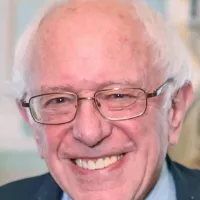
Bernie Sanders is a prominent American politician and the senior...
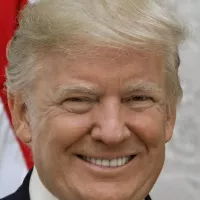
Donald John Trump is an American politician media personality and...
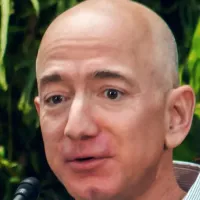
Jeff Bezos is an American businessman best known as the...
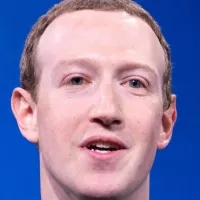
Mark Zuckerberg is an American businessman and programmer best known...
Barack Obama the th U S President - was the...
Peter Thiel is a prominent American entrepreneur venture capitalist and...
Trending
4 hours ago Barcelona and Real Madrid Announce Starting Lineups for Highly Anticipated El Clásico Match
4 hours ago Drake London Set to Play Despite Injury Concerns Before Week 7 NFL Matchup
4 hours ago Marvin Harrison Jr. Faces Speculation Following Unusual Exit From Arizona Cardinals
4 hours ago Knife-Wielding Man Arrested on Michael B. Jordan's Miami Vice 85 Film Set
4 hours ago Tee Higgins Suffers Injury During Bengals vs Ravens NFL Week 7 Matchup

4 hours ago Cleveland Browns Address Deshaun Watson's Contract Status Amidst Ongoing NFL Performance Speculation
Popular
Ilhan Omar is a prominent American politician currently serving as...

Ken Paxton is an American politician and lawyer serving as...

Elon Musk is a visionary entrepreneur and engineer known for...

Michael Joseph Jackson the King of Pop was a highly...
Barack Obama the th U S President - was the...
Greg Abbott is the current and th Governor of Texas...