


An anthem is a celebratory musical piece, often symbolizing a specific group, most notably as a country's national anthem. Historically, it refers to a short, sacred choral work, originating around 1550 in English-speaking churches. Anthems are sung in English, contrasting with the Latin texts used in Roman Catholic motets. The term maintains this original meaning in music theory and religious contexts, referring specifically to a form of liturgical music.
1908: "The Island Hymn" Composed
The song "The Island Hymn" was created in 1908, and would later become the anthem of Prince Edward Island.


1912: Edward Elgar's "Great is the Lord"
In 1912, Edward Elgar composed "Great is the Lord" with orchestral accompaniment.
1914: Edward Elgar's "Give unto the Lord"
In 1914, Edward Elgar composed "Give unto the Lord", which featured an orchestral accompaniment.
1915: Arizona State Anthem Written
In 1915, Arizona had a song written specifically as a state anthem.
1917: "The Internationale" Used as Regional Anthem
From 1917 to 1944, the Russian Soviet Federative Socialist Republic used "The Internationale" as its regional anthem.
1926: Mazurek Dąbrowskiego becomes the anthem of Poland
Since 1926, Mazurek Dąbrowskiego has been the anthem of Poland.
1937: Ban on regional symbols in Brazil
During the Vargas Era in 1937 all regional symbols including anthems were banned in Brazil.
1937: IBM releases collection of corporate songs
In 1937, IBM released a collection of 100 "happy songs" for IBM corporate gatherings using existing tunes with altered lyrics.
1940: Adoption of "Carry Me Back to Old Virginny"
In 1940, Virginia adopted "Carry Me Back to Old Virginny" as its state song.
1943: Benjamin Britten's "Rejoice in the Lamb"
In 1943, Benjamin Britten composed "Rejoice in the Lamb", a modern multi-movement anthem.
March 1944: The Internationale replaced as anthem of Soviet Union
Before March 1944, "The Internationale" was the anthem of the Soviet Union and the Comintern.
1944: "National Anthem of the Soviet Union" Used as Regional Anthem
From 1944 to 1990, the Russian Soviet Federative Socialist Republic used the "National Anthem of the Soviet Union" as its regional anthem.
1945: Legalization of regional symbols in Brazil
In 1945, during the Eurico Gaspar Dutra government, regional symbols, including anthems, were legalized again after being banned during the Vargas Era.
1947: "Hyōgo Kenminka" adopted
In 1947, Hyōgo adopted the song "Hyōgo Kenminka" as its official prefectural song.
1949: Newfoundland joins Canada
Before Newfoundland and Labrador became part of Canada in 1949, it was the independent Dominion of Newfoundland and had its own regional anthem.
1952: Ralph Vaughan Williams's "O Taste and See"
In 1952, Ralph Vaughan Williams wrote "O Taste and See" for the coronation of Queen Elizabeth II.
1958: "Forged from the Love of Liberty" Composed
In 1958, "Forged from the Love of Liberty" was composed as the national anthem for the West Indies Federation.
1971: Performance of "Song of Fujitsu"
In 1971, Japanese jazz singer Martha Miyake and the Polydor Orchestra performed the "Song of Fujitsu" which failed to entice employees as a karaoke sing-along because not many of them could read sheet music.
1975: "E scris pe tricolor Unire" shares melody with Albania
Between 1975 and 1977, the national anthem of Romania "E scris pe tricolor Unire" shared the same melody as the national anthem of Albania "Himni i Flamurit", which is the melody of a Romanian patriotic song "Pe-al nostru steag e scris Unire".
1977: "E scris pe tricolor Unire" shares melody with Albania
Between 1975 and 1977, the national anthem of Romania "E scris pe tricolor Unire" shared the same melody as the national anthem of Albania "Himni i Flamurit", which is the melody of a Romanian patriotic song "Pe-al nostru steag e scris Unire".
1982: "Arizona" adopted as alternate state anthem
In 1982, Arizona adopted the 1981 country hit "Arizona" as its alternate state anthem.
January 1984: Apple screens "We Are Apple (Leading the Way)"
In January 1984, Apple screened "We Are Apple (Leading the Way)" during a corporate presentation to celebrate the rollout of Macintosh 128K to authorized Apple dealers and retailers.
1985: Release of "We Built This City"
Jefferson Starship released the song "We Built This City" in 1985.
1989: Slovene anthem joins Croatian one
Around 1989, on the brink of the breakup of Yugoslavia, the Slovene anthem joined the Croatian one as an official anthem of the country's constituent states.
1990: Romania adopts "Deșteaptă-te, române!"
In 1990, Romania adopted "Deșteaptă-te, române!" as its national anthem.
1990: Instrumental national anthem introduced in Russia
In 1990, an instrumental national anthem was introduced in Russia. This was later replaced in 2000.
1990: Russian SFSR uses the "National Anthem of the Soviet Union"
Until 1990, the Russian Soviet Federative Socialist Republic, the last of the Soviet constituent states to do so, used the "National Anthem of the Soviet Union" as its regional anthem.
1991: Dissolution of the Soviet Union
The "Hymn of the Soviet Union" was used until its dissolution in 1991, and was given new words and adopted by the Russian Federation in 2000.
1996: Cape Verde replaces "Esta É a Nossa Pátria Amada" as national anthem
In 1996, Cape Verde replaced "Esta É a Nossa Pátria Amada" as its national anthem.
1997: Poland criminalized dissemination of totalitarian symbolism
In 1997, Poland criminalized the dissemination of items which are “media of fascist, communist, or other totalitarian symbolism”.
1997: Rescission of "Carry Me Back to Old Virginny"
In 1997, the Virginia General Assembly rescinded "Carry Me Back to Old Virginny" as the state song due to its racist language.
1997: South Africa adopts hybrid national anthem
Since 1997, the South African national anthem has been a hybrid song combining new English lyrics with extracts of "Nkosi Sikelel' iAfrika" and the former state anthem "Die Stem van Suid-Afrika".
1997: Turkmenistan changes anthem
Turkmenistan kept the melody of their Soviet-era regional anthem until 1997, but with different lyrics.
2000: Silverchair's "Anthem for the Year 2000"
In 2000, Silverchair released their song "Anthem for the Year 2000", which is artistically styled as an anthem.
2000: Russian Federation adopts new words for "Hymn of the Soviet Union"
The "Hymn of the Soviet Union", was used until its dissolution in 1991, and was given new words and adopted by the Russian Federation in 2000 to replace an instrumental national anthem that had been introduced in 1990.
2003: University of Warwick reports lack of efficacy and potential for ridicule
In 2003, the University of Warwick reported the lack of efficacy and potential for ridicule.
2004: Montenegro adopts regional anthem
In 2004, the Montenegrin region of Serbia and Montenegro adopted its own regional anthem.
2005: Serbia adopts regional anthem
In 2005, the Serbian region of Serbia and Montenegro adopted its own regional anthem.
2006: Montenegro and Serbia become independent
In mid-2006, both Montenegrin and Serbian regions became independent sovereign states, their regional anthems then became their national anthems.
2006: Kazakhstan changes anthem
Kazakhstan kept the melody of their Soviet-era regional anthem until 2006, but with different lyrics.
2010: Prince Edward Island adopts provincial anthem
In 2010, Prince Edward Island adopted "The Island Hymn" as its provincial anthem, making it the second Canadian province with its own anthem.
2011: Poland's Constitutional Tribunal finds sanction unconstitutional
In 2011, Poland's Constitutional Tribunal found the sanction against dissemination of totalitarian symbolism to be unconstitutional.
March 7, 2014: West Virginia Legislature approves resolution for "Take Me Home, Country Roads"
On March 7, 2014, the West Virginia Legislature approved a resolution to make John Denver's "Take Me Home, Country Roads" one of four official state songs of West Virginia.
March 8, 2014: "Take Me Home, Country Roads" becomes state song of West Virginia
On March 8, 2014, Governor Earl Ray Tomblin signed a resolution into law, making John Denver's "Take Me Home, Country Roads" one of four official state songs of West Virginia.
2015: Adoption of "Our Great Virginia"
In 2015, "Our Great Virginia" was made the new state song of Virginia.
2018: Two Koreas March Together at Winter Olympics
During the 2018 Winter Olympics, North and South Korea marched together with folk song "Arirang" played as a shared anthem.
2021: Maryland rescinds "Maryland, My Maryland"
In 2021, Maryland rescinded "Maryland, My Maryland" due to its racist language and has yet to adopt a replacement.
2025: Most prefectures of Japan have official songs
As of 2025, forty-four of the forty-seven prefectures of Japan have one or more official prefectural songs.
Mentioned in this timeline

Starbucks is an American multinational coffeehouse chain established in Seattle...
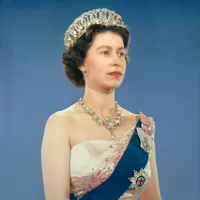
Elizabeth II reigned as Queen of the United Kingdom and...
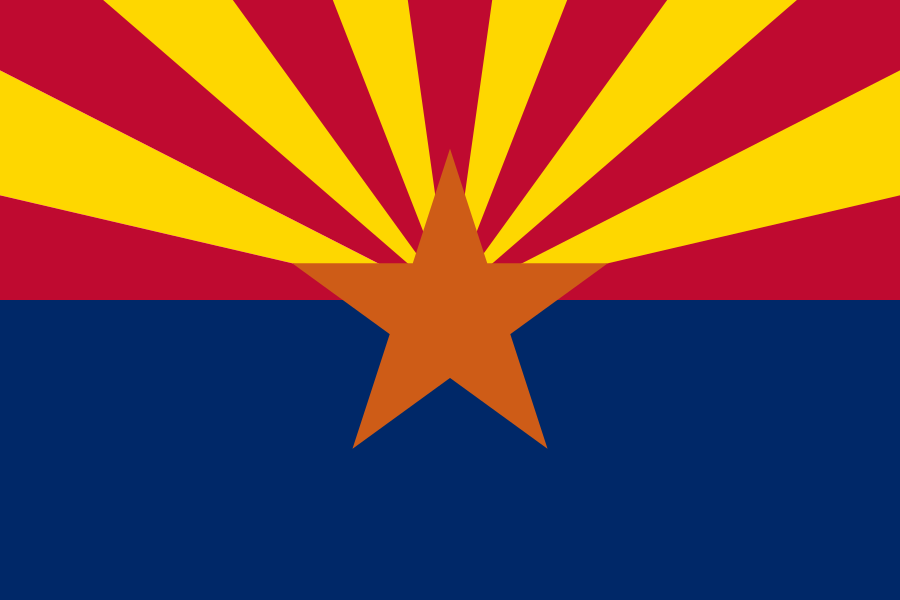
Arizona is a state in the Southwestern United States part...

The Union of Soviet Socialist Republics USSR existed from to...

Seattle is the most populous city in Washington and the...

The apple is a widely cultivated edible fruit originating from...
Trending

4 hours ago Speculation Grows Over Jayson Tatum and Jaylen Brown Partnership Dynamics

5 hours ago Kevin Bacon Seeks Fan Assistance Following Recent Heartbreaking Personal Loss
5 hours ago Tacoma Grocery Owner Extradited from India Over $600K Food Stamp Fraud Scheme

6 hours ago Elizabeth Hurley and Billy Ray Cyrus Announce Their Engagement

6 hours ago Fabio Wardley Praises Anthony Joshua's Aura Ahead of Daniel Dubois Boxing Match

6 hours ago Ariel Winter Reveals Modern Family Connection to New Boyfriend Introduced by Nolan Gould
Popular

Ilhan Omar is a prominent American politician currently serving as...

Ken Paxton is an American politician and lawyer serving as...

Elon Musk is a visionary entrepreneur and engineer known for...

Michael Joseph Jackson the King of Pop was a highly...

Jameis Winston is an American football quarterback currently playing for...

Cristiano Ronaldo widely considered one of the greatest footballers captains...