



Kuwait, a small city-state in West Asia, is situated at the head of the Persian Gulf, bordering Iraq and Saudi Arabia. Its coastline spans approximately 500 km. The majority of its 4.82 million population resides in Kuwait City. A significant portion of Kuwait's population (3.29 million) consists of foreign nationals, making up over 70% of the total population.
1912: First Kuwaiti recordings
The first known Kuwaiti recordings were made between 1912 and 1915.


1913: Autonomous Kaza
After the Anglo-Ottoman Convention of 1913, Kuwait was established as an autonomous kaza of the Ottoman Empire and a de facto protectorate of Great Britain.
1915: Succession pattern after Mubarak Al-Sabah's death
Since the death of Mubarak Al-Sabah in 1915, there has been an informal pattern of alternation between the descendants of his sons Jabir and Salem.
1915: First Kuwaiti recordings
The first known Kuwaiti recordings were made between 1912 and 1915.
1919: Sheikh Salim's Commercial City Plan
In 1919, Sheikh Salim Al-Mubarak Al-Sabah intended to build a commercial city in the south of Kuwait which led to intervention by Britain.
1919: Kuwait-Najd War Erupts
The Kuwait-Najd War of 1919 erupted in the aftermath of World War I because Ibn Saud of Najd wanted to annex Kuwait.
1920: Battle of Hamdh and Jahra
In 1920, the Ikhwan's attempt to build a stronghold in southern Kuwait led to the Battle of Hamdh and the subsequent Battle of Jahra, with British troops intervening after the latter.
1920: Border Clashes
The Kuwait-Najd war resulted in sporadic border clashes throughout 1920.
1922: Uqair Conference
At the Uqair conference in 1922, the boundaries of Kuwait and Najd were set; Kuwait had no representative at the Uqair conference due to British interference.
1923: Trade Blockade Imposed
In 1923, following the Kuwait–Najd War, Ibn Saud imposed a trade blockade against Kuwait.
1932: Recognition of 1932 Border
In 1963, Iraq recognised the 1932 border of Kuwait by signing a treaty of friendship.
1934: Decline in Regional Economic Importance
Before Mary Bruins Allison visited Kuwait in 1934, Kuwait had already lost its prominence in long-distance trade.
1934: Establishment of St. Thomas Indian Orthodox Pazhayapally Ahmadi
The first Malankara Orthodox parish, St. Thomas Indian Orthodox Pazhayapally Ahmadi, was established in Kuwait in 1934.
1936: Kuwait granted scholarships in the arts
Beginning in 1936, Kuwait was the first Gulf Arab country to grant scholarships in the arts.
1937: End of Trade Blockade
The trade blockade imposed against Kuwait by Ibn Saud, which began in 1923, ended in 1937.
February 1938: First Oil Discovery
On 22 February 1938, oil was first discovered in the Burgan field in Kuwait.
1938: Discovery of Oil Reserves
In 1938, oil reserves were discovered in Kuwait which changed Kuwait's economic landscape.
1946: Modernization Based on Oil Income
From 1946, Kuwait underwent large-scale modernization, largely based on income from oil production.
1946: First Crude Oil Export
In 1946, crude oil was exported for the first time, initiating a period of prosperity for Kuwait.
1950: Public-Work Programme Began
In 1950, a major public-work programme began to enable Kuwaiti citizens to enjoy a luxurious standard of living.
1951: First desalination plant commissioned
The history of desalination in Kuwait dates back to 1951 when the first distillation plant was commissioned.
1952: Largest Oil Exporter
By 1952, Kuwait became the largest oil exporter in the Persian Gulf region. The first masterplan of Kuwait was also designed in 1952 by Minoprio, Spenceley, and Macfarlane.
1952: Founding of the National Bank of Kuwait
In 1952, the National Bank of Kuwait was founded, becoming the first local publicly traded corporation in the GCC region.
1953: Start of KIA Foreign Investments
Since 1953, the Kuwaiti government, through the Kuwait Investment Authority (KIA), has directed investments into Europe, the United States, and the Asia–Pacific region.
1958: Publication of Al-Arabi Magazine
In 1958, Al-Arabi magazine was first published.
1959: International debut of Kuwait national basketball team
The Kuwait national basketball team made its international debut in 1959.
June 1961: Independence of Kuwait
In June 1961, Kuwait became independent with the end of the British protectorate and the Sheikh Abdullah Al-Salim Al-Sabah became Emir of Kuwait.
June 1961: End of British Protectorate
In June 1961, the protectorate agreements between Kuwait and the United Kingdom officially ended, marking Kuwait's transition to an independent state.
July 1961: Operation Vantage Crisis
In July 1961, the short-lived Operation Vantage crisis evolved as the Iraqi government threatened to invade Kuwait.
1961: Initial Refusal of Independence Recognition by Iraq
Although Kuwait formally gained independence in 1961, Iraq initially refused to recognize the country's independence.
1961: Initial Implementation of Military Conscription
In 1961, Kuwait initially implemented military conscription, which remained in effect until 2001, although it wasn't fully enforced at the time.
1961: Creation of Kuwait Fund for Arab Economic Development
In 1961, the Kuwait Fund for Arab Economic Development, an autonomous state institution, was created following the pattern of international development agencies.
1961: End of British Protectorate
In 1961, the Sheikhdom of Kuwait ceased to be a British protectorate.
1961: Official Name of Kuwait
Since 1961, the country's official name has been the "State of Kuwait".
1961: Establishment of first foreign affairs department bureau
The first foreign affairs department bureau was established in 1961.
1962: Establishment of Kuwait Public Transportation Company
In 1962, the state-owned Kuwait Public Transportation Company was established to run local and long-distance bus routes.
1962: Promulgation of the Constitution of Kuwait
The Constitution of Kuwait was promulgated in 1962.
May 1963: Kuwait becomes member of the United Nations
Kuwait became the 111th member state of the United Nations in May 1963.
1963: Coup in Iraq and Reduced Military Threat
In 1963, Iraqi prime minister Abd al-Karim Qasim was killed in a coup, reducing the perceived military threat to Kuwait.
1963: Treaty of Friendship with Iraq and First Elections
In 1963, a treaty of friendship between Iraq and Kuwait was signed, and Kuwait held its first parliamentary elections.
1965: Plan for a modern water-supply system for Kuwait City
In 1965, the Kuwaiti government commissioned VBB (Sweco) to develop and implement a plan for a modern water-supply system for Kuwait City.
1966: Establishment of Kuwait University
Kuwait University was established in 1966.
1967: Inauguration of the Kuwait International Biennial
The Kuwait International Biennial was inaugurated in 1967, with more than 20 Arab and foreign countries participating.
October 1969: Kuwait inaugurated first satellite ground station
In October 1969, Kuwait inaugurated the first satellite ground station in the Middle East, named "Um Alaish", seven years after the launch of the world's first communications satellite, Telstar 1.
1971: Continued British Monitoring
Until 1971, Britain continued to monitor the situation in Kuwait and kept forces available to protect it, despite the lack of Iraqi military action.
March 1973: Kuwait-Iraq Border Skirmish
On 20 March 1973, the Kuwait-Iraq Samita border skirmish evolved when Iraqi army units occupied El-Samitah near the Kuwaiti border.
February 1974: Occupation of Japanese Embassy
On 6 February 1974, Palestinian militants occupied the Japanese embassy in Kuwait, taking hostages to support members of the Japanese Red Army and Palestinian militants involved in the Laju incident.
1974: First colored broadcast by Kuwait Television
In 1974, state-owned Kuwait Television (KTV) offered its first colored broadcast and operated five television channels.
1974: Expansion of Kuwait Fund's Lending Mandate
In 1974, the lending mandate of the Kuwait Fund for Arab Economic Development was expanded to include all developing countries in the world.
August 1976: Suspension of Constitution Articles
On 29 August 1976 under Sheikh Sabah Al-Salim Al-Sabah, the Emir suspended various articles of the constitution.
1976: Kuwait national football team runners-up of the 1976 AFC Asian Cup
In 1976, the Kuwait national football team were the runners-up of the AFC Asian Cup.
1976: Suspension of Parliament Protests
In the 1980s the most serious threat to the continuity of Al Sabah came from home-grown democrats, who were protesting the 1976 suspension of the parliament.
1977: Um Alaish 2 ground station established
In 1977, Kuwait added Um Alaish 2 to its satellite ground station complex.
1977: Sheikh Jaber Al-Ahmed ruled as Emir for 29 years
Sheikh Jaber Al-Ahmed of the Jabir branch was named crown prince and eventually ruled as Emir for 29 years from 1977 to 2006.
1979: Opening of Kuwait International Airport
In 1979, Kuwait International Airport was opened by the Al Hani Construction with a joint venture of Ballast Nedam.
1980: Aga Khan Award for Architecture
"The Water Towers" (Kuwait Tower and the Kuwait Water Towers) were awarded the Aga Khan Award for Architecture (1980 Cycle).
1980: End of the Golden Era
Between 1946 and 1980, Kuwait experienced a period of prosperity driven by oil and its liberal cultural atmosphere; this period is called the "golden era of Kuwait".
1980: Kuwait national football team won the 1980 AFC Asian Cup
In 1980, the Kuwait national football team were the champions of the AFC Asian Cup.
1981: Um Alaish 3 ground station established
In 1981, Kuwait added Um Alaish 3 to its satellite ground station complex.
1981: Gerrymandering of Electoral Districts
In 1981, the Kuwaiti government gerrymandered electoral districts in favour of the Islamists.
1982: Period of Instability and Economic Crisis
In 1982, Kuwait experienced a period of geopolitical instability and an economic crisis following the stock market crash.
1982: Kuwait participated in the FIFA World Cup
In 1982, Kuwait participated in its first and only FIFA World Cup, drawing 1–1 with Czechoslovakia before losing to France and England.
1983: Criminalization of Alcohol Consumption
In 1983, the parliament in Kuwait criminalized alcohol consumption.
1983: Establishment of the National Museum
The National Museum in Kuwait was established in 1983.
1984: Promulgation of Kuwait's Code of Personal Status
In 1984, Kuwait's Code of Personal Status was promulgated.
1984: Kuwait national football team took third place of the 1984 AFC Asian Cup
In 1984, the Kuwait national football team took third place of the AFC Asian Cup.
July 1986: Suspension of Constitution Articles
On 3 July 1986 under Sheikh Jaber Al-Ahmed Al-Sabah, the Emir suspended various articles of the constitution.
1986: Government Refusal of Documentation for Bedoon
Since 1986, the Kuwaiti government has refused to grant any form of documentation to the Bedoon, including birth certificates, death certificates, identity cards, marriage certificates, and driving licenses.
July 1987: Kuwait refuses to allow U.S. military bases
In July 1987, Kuwait refused to allow U.S. military bases in its territory.
August 1990: Iraq invades and annexes Kuwait
In August 1990, Iraqi forces invaded and annexed Kuwait without any prior warning.
1990: Destruction of Um Alaish satellite station
In 1990, the Um Alaish satellite station was destroyed by the Iraqi armed forces during the Iraqi invasion of Kuwait.
1990: Invasion and Annexation by Iraq
In 1990, the state of Kuwait was invaded, had a puppet regime installed, and was subsequently annexed by Ba'athist Iraq under Saddam Hussein.
1991: Kuwaiti oil fires and environmental impact
During the 1991 Kuwaiti oil fires, more than 500 oil lakes were created, and the resulting soil contamination due to oil and soot accumulation made parts of Kuwait uninhabitable, while oil spills drastically affected marine resources.
1991: Security Partnership with the United States
In 1991, the United States became Kuwait's main security partner, conducting training exercises with its military. Kuwait also participates in the Gulf Cooperation Council's Peninsula Shield Force. The Kuwaiti military uses American, Russian, and western European equipment.
1993: Study on Psychiatric Morbidity in Prisons
Data from a 1993 study indicated a higher rate of psychiatric morbidity in Kuwaiti prisons compared to the general population.
1995: Human Rights Watch Report on Stateless Bedoon
According to Human Rights Watch in 1995, Kuwait had produced 300,000 stateless Bedoon.
1995: Al Sabah ruling family deports stateless Bedoon
In 1995, it was revealed that the Al Sabah ruling family deported 150,000 stateless Bedoon to refugee camps in the Kuwaiti desert near the Iraqi border.
1995: Kuwait faces its first fiscal deficit since 1995
The COVID-19 pandemic exacerbated Kuwait's economic crisis and in 2020, Kuwait's economy faced a budget deficit of $46 billion, which was Kuwait's first fiscal deficit since 1995.
2000: Failaka Island Settlement
In 2000 BC, Mesopotamians first settled in the Kuwaiti island of Failaka and traders from the Sumerian city of Ur inhabited Failaka.
2001: Suspension of Mandatory Military Service
In 2001, Kuwait suspended the mandatory military service that had been in effect since 1961, though it had not been fully enforced.
March 2003: Kuwait becomes springboard for US-led invasion of Iraq
In March 2003, Kuwait served as the springboard for the US-led invasion of Iraq.
2004: Launch of Jazeera Airways
In 2004, Jazeera Airways, the first private airline of Kuwait, was launched.
2004: Inauguration of the Al Kharafi Biennial for Contemporary Arab Art
In 2004, the Al Kharafi Biennial for Contemporary Arab Art was inaugurated.
2005: Women enfranchised
Despite multiple prior attempts at granting Kuwaiti women suffrage, they were not permanently enfranchised until 2005.
2005: Founding of Wataniya Airways
In 2005, Wataniya Airways, the second private airline in Kuwait, was founded.
2005: Women win the right to vote and run in elections
In 2005, women in Kuwait were granted the right to vote and run in elections.
2005: Highest ranking of all Arab countries in the annual Press Freedom Index
Since 2005, Kuwait has frequently earned the highest ranking of all Arab countries in the annual Press Freedom Index by Reporters Without Borders.
January 2006: Sheikh Saad Al-Sabah succeeds Emir Jaber but is quickly removed
In January 2006, upon the death of Emir Jaber, Sheikh Saad Al-Sabah succeeded him but was removed nine days later due to his failing health, leading to Sheikh Sabah Al-Ahmad Al-Jaber Al-Sabah being sworn in as Emir.
January 2006: Death of Emir Sheikh Jaber Al-Ahmed and subsequent abdication
On 15 January 2006, Emir Sheikh Jaber Al-Ahmed died, and his crown prince, Sheikh Saad Al-Abdullah, was named Emir. On 23 January 2006 the National Assembly unanimously voted in favor of Sheikh Saad Al-Abdullah abdicating.
2006: Kuwait ranked highest in Human Development Index in the Arab world
From 2006, Kuwait had the highest Human Development Index ranking in the Arab world.
2006: Start of Kuwait Gulf Link Public Transport Services
In 2006, Kuwait Gulf Link Public Transport Services, a private bus company, began operating local and long-distance bus routes.
2006: Cargo Handling at Shuwaikh and Shuaiba Ports
In 2006, the Shuwaikh and Shuaiba seaports in Kuwait handled a combined cargo of 753,334 TEU.
2007: Corruption Perceptions Index Ranking
In 2007, Kuwait was ranked 60th out of 179 countries in the Corruption Perceptions Index, with a score of 4.3 out of 10.
2009: Dyslexia Rate Among Youth in Juvenile Centers
In 2009, 20% of the youth in juvenile centers in Kuwait had dyslexia, compared to 6% of the general population.
2009: Kuwait surpassed Israel as the country with the greatest press freedom in the Middle East
In 2009, Kuwait surpassed Israel as the country with the greatest press freedom in the Middle East.
2009: Kuwait ranked highest in Human Development Index in the Arab world
Until 2009, Kuwait had the highest Human Development Index ranking in the Arab world.
2010: Trial of Mohammad Abdul-Kader al-Jassem
In 2010, the U.S. State Department voiced concerns regarding the trial of Kuwaiti blogger and journalist Mohammad Abdul-Kader al-Jassem, who faced potential imprisonment for allegedly criticizing the Al Sabah ruling family.
2011: Kuwait surpassed Israel as the country with the greatest press freedom in the Middle East
In 2011, Kuwait surpassed Israel as the country with the greatest press freedom in the Middle East.
2011: Composition of the Kuwaiti Bourse
In 2011, financial and banking companies made up more than half of the market capitalization of the Kuwaiti bourse.
March 2012: China awards Kuwait Investment Authority additional quota
In March 2012, China awarded the Kuwait Investment Authority an additional $700 million quota, adding to the $300 million awarded previously, making it the highest quota granted by China to foreign investment entities.
2013: Kuwait has highest female citizen participation in workforce
In 2013, 53% of Kuwaiti women participated in the labor force, where they outnumber working Kuwaiti men, giving Kuwait the highest female citizen participation in the workforce of any GCC country.
2013: Kuwait surpassed Israel as the country with the greatest press freedom in the Middle East
In 2013, Kuwait surpassed Israel as the country with the greatest press freedom in the Middle East.
March 2014: Accusations of Kuwait funding terrorism
In March 2014, Kuwait was accused of funding terrorism, particularly for ISIS and Al-Qaeda, by the United States Secretary of the Treasury for Terrorism and Financial Intelligence, David S. Cohen, and others.
2014: Kuwait surpassed Israel as the country with the greatest press freedom in the Middle East
In 2014, Kuwait surpassed Israel as the country with the greatest press freedom in the Middle East.
2014: Kuwait ranked first in Global Gender Gap Report
In 2014, Kuwait was ranked first among Arab countries in the Global Gender Gap Report.
2014: Qatar Implements Military Conscription
In 2014, Qatar implemented a policy of military conscription. Prior to this, Kuwait was the only Gulf country to have had military conscription until 2014.
June 2015: Suicide bombing at Shia Muslim mosque
On 26 June 2015, a suicide bombing occurred at a Shia Muslim mosque in Kuwait, claimed by the Islamic State of Iraq and the Levant, resulting in twenty-seven deaths and 227 injuries. A lawsuit was filed accusing the Kuwaiti government of negligence and direct responsibility.
December 2015: Kuwait registered 448 patents
As of December 2015, Kuwait registered 448 patents according to the United States Patent and Trademark Office.
2015: Kuwait ranked first in Global Gender Gap Report
In 2015, Kuwait was ranked first among Arab countries in the Global Gender Gap Report.
2015: Kuwait won the IIHF Challenge Cup of Asia
In 2015, Kuwait won the IIHF Challenge Cup of Asia.
2015: Tourism accounted for GDP
In 2015, tourism accounted for 1.5 percent of Kuwait's Gross Domestic Product (GDP).
2015: Kuwait Joins Saudi-led Coalition in Yemen
In early 2015, Kuwait joined the Saudi-led coalition's intervention in the Yemeni civil war, providing an artillery battalion and 15 fighter jets, though their contribution was limited.
July 2016: Highest recorded temperature in Asia
On 21 July 2016, the highest recorded temperature in Asia, 54.0 °C (129.2 °F), was recorded at Mitribah, Kuwait.
2016: Economic challenges and investment in China relations
In 2016, Kuwait faced a severe economic downturn due to declining oil prices and inaugurated Sabah Al Ahmad Sea City, while also investing significantly in economic relations with China, which was Kuwait's largest trade partner at the time.
2016: Food Self-Sufficiency Ratios
In 2016, Kuwait's food self-sufficiency ratios were as follows: 49.5% in vegetables, 38.7% in meat, 12.4% in dairy, 24.9% in fruits, and 0.4% in cereals.
2016: Tourism industry generated revenue
In 2016, the tourism industry in Kuwait generated nearly $500 million in revenue.
2017: Reintroduction of Mandatory Military Service
In 2017, Kuwait reintroduced mandatory military service for male citizens, consisting of four months of training and eight months of service.
July 2018: Controversial Video by Sondos Alqattan
In July 2018, Kuwaiti fashionista Sondos Alqattan released a controversial video criticizing domestic workers from the Philippines.
December 2018: Arab population in Kuwait
At the end of December 2018, Arabs (including Arab expats) constituted 57.65% of Kuwait's total population.
April 2019: Expansion of Banned Countries for Workers
In April 2019, Kuwait added Ethiopia, Burkina Faso, Bhutan, Guinea, and Guinea-Bissau to its list of banned countries for workers, bringing the total to 20.
May 2019: Inauguration of Sheikh Jaber Al-Ahmad Al-Sabah Causeway
In May 2019, the Sheikh Jaber Al-Ahmad Al-Sabah Causeway was inaugurated, connecting Kuwait City to northern Kuwait as part of Kuwait Vision 2035 and the first phase of the Silk City project.
2019: Iraq as Kuwait's Leading Export Market
In 2019, Iraq was Kuwait's leading export market, with food/agricultural products accounting for 94.2% of total export commodities. Mineral fuels, including oil, represented 89.1% of Kuwait's total exports.
2019: Orbital Space established amateur satellite ground station
In 2019, Kuwait's Orbital Space established an amateur satellite ground station named Um Alaish 4, continuing the legacy of the original "Um Alaish" station, to provide free access to signals from satellites passing over Kuwait. Um Alaish 4 is a member of FUNcube distributed ground station network and the Satellite Networked Open Ground Station project (SatNOGS).
2019: WTTC named Kuwait as one of the world's fastest-growing countries in travel and tourism GDP
In 2019, the World Travel & Tourism Council (WTTC) named Kuwait as one of the world's fastest-growing countries in travel and tourism GDP, with 11.6% year-on-year growth.
September 2020: Sheikh Nawaf Al-Ahmad Al-Jaber Al-Sabah becomes Emir
In September 2020, Kuwait's Crown Prince Sheikh Nawaf Al-Ahmad Al-Jaber Al-Sabah became the 16th Emir of Kuwait, succeeding Emir Sheikh Sabah Al-Ahmad Al-Jaber Al-Sabah, who passed away.
October 2020: Sheikh Mishal Al-Ahmad Al-Jaber Al-Sabah appointed Crown Prince
In October 2020, Sheikh Mishal Al-Ahmad Al-Jaber Al-Sabah was appointed as the Crown Prince of Kuwait.
December 2020: Launch of Kuwait's Experiment to the ISS
On December 6, 2020, "Kuwait's Experiment: E.coli Consuming Carbon Dioxide to Combat Climate Change" was launched on SpaceX CRS-21 (SpX-21) spaceflight to the International Space Station (ISS), with astronaut Shannon Walker conducting the experiment on behalf of the students.
2020: Christian population in Kuwait
As of 2020, there were an estimated 837,585 Christians in Kuwait, comprising 17.93% of the population, making them the second-largest religious group.
2020: Startup Funding Ranking in MENA Region
In 2020, Kuwait ranked fourth in the MENA region in startup funding, following the UAE, Egypt, and Saudi Arabia.
2020: Kuwait's domestic travel and tourism spending
In 2020, Kuwait's domestic travel and tourism spending was $6.1 billion.
2020: Diplomatic Crisis with Egypt
In 2020, there was a diplomatic crisis between Kuwait and Egypt due to the mistreatment of Egyptian workers in Kuwait.
July 2021: Kuwait University announces national satellite project
In July 2021, Kuwait University announced the launch of a national satellite project as part of state-led efforts to pioneer the country's sustainable space sector.
July 2021: Deployment of QMR-KWT satellite
On July 16, 2021, QMR-KWT, Kuwait's first satellite, was deployed into its final Sun-synchronous orbit.
2021: KIA Holdings Valued at $700 Billion
In 2021, the Kuwait Investment Authority's (KIA) holdings were valued at around $700 billion in assets, making it the 3rd largest sovereign wealth fund in the world.
May 2022: Kuwait hosted the Third Gulf Cooperation Council (GCC) Games
In May 2022, Kuwait hosted the Third Gulf Cooperation Council (GCC) Games at the 360 Marina. The event featured 16 different sports and attracted over 1,700 players.
December 2023: Sheikh Mishal Al-Ahmad Al-Jaber Al-Sabah becomes Emir
In December 2023, Kuwait's Emir Sheikh Nawaf al-Ahmad al-Jaber al-Sabah died and was replaced by Mishal Al-Ahmad Al-Jaber Al-Sabah.
December 2023: Death of Sheikh Nawaf Al-Ahmed
On 16 December 2023, Sheikh Nawaf Al-Ahmed died, and Sheikh Mishal Al-Ahmad Al-Jaber would be the successor.
2023: Kuwait's Population
In 2023, Kuwait's population was 4.82 million people, of which 1.53 million were Kuwaitis and 3.29 million were expatriates.
May 2024: Suspension of Constitution Articles
On 10 May 2024 under Sheikh Mishal Al-Ahmad Al-Jaber Al-Sabah, the Emir suspended various articles of the constitution.
May 2024: Suspension of the National Assembly
The National Assembly in Kuwait was suspended on 10 May 2024.
2024: Global Peace Index
According to the 2024 Global Peace Index, Kuwait is the 25th most peaceful country in the world.
2024: Kuwait Population and Demographics
In 2024, Kuwait had a population of 4.82 million, with 1.53 million Kuwaiti citizens and 3.29 million foreign nationals. Kuwait also had the world's seventh largest number of foreign nationals as a percentage of the population in 2024.
2024: Establishment of Kuwait National Space Research Center
In 2024, the Kuwait Foundation for the Advancement of Sciences (KFAS) established the Kuwait National Space Research Center (KNSRC) at Kuwait University, providing a dedicated platform for space research, policy, and international cooperation.
January 20, 2025: Hydrocarbon Discovery at Al Jlaiaa Offshore Field
On January 20, 2025, the Kuwait Oil Company announced a major hydrocarbon discovery at the Al Jlaiaa offshore field, marking a significant milestone in the nation's energy sector and aligning with plans to enhance offshore exploration and production.
March 2025: Citizenship revocation reported
In March 2025, it was reported that the citizenship of 42,000 people was revoked in just six months in Kuwait.
May 2025: Problems at Kuwait International Airport
As of May 2025, Kuwait International Airport is facing issues such as management problems, a weak economy, and tough competition, leading to 14 international airlines ceasing flights to the airport and concerns about its future.
December 2025: Estimated 200,000 people lose Kuwaiti citizenship
By December 2025, it was estimated that as many as 200,000 people had lost their Kuwaiti citizenship.
2025: Kuwait ranked 73rd in the Global Innovation Index
In 2025, Kuwait was ranked 73rd in the Global Innovation Index.
January 2026: US suspends immigrant visas for Kuwaiti citizens
In January 2026, the United States government suspended immigrant visas for citizens of Kuwait and 74 other countries due to the high dependency of Kuwaiti immigrants on American welfare benefits. Kuwait is the only GCC country on the visa suspension list.
February 2026: World's Most Valuable Currency
As of February 2026, Kuwait has the world's most valuable currency, with one Kuwaiti Dinar being worth 3.25 USD.
April 2026: Aerial attacks during the 2026 Iran war
In April 2026, during the wider 2026 Iran war, Kuwait was subjected to a campaign of aerial attacks, despite its self-proclaimed 'neutrality'. Iranian forces and affiliated factions targeted critical infrastructure, causing significant structural damage and challenging the country's energy and water security.
2035: Kuwait Vision 2035
As part of Kuwait Vision 2035, Kuwait aims to position itself as a global hub for the petrochemical industry.
2035: Kuwait Vision 2035 and Healthcare Strategy
As part of Kuwait Vision 2035, Kuwait is investing in its healthcare system and has opened many new hospitals, significantly increasing the capacity of the public hospital sector.
Mentioned in this timeline

Basketball is a team sport played on a rectangular court...
SpaceX founded by Elon Musk in is a private aerospace...
The United States of America is a federal republic primarily...

The stock market is where buyers and sellers trade stocks...
Saudi Arabia officially the Kingdom of Saudi Arabia KSA is...
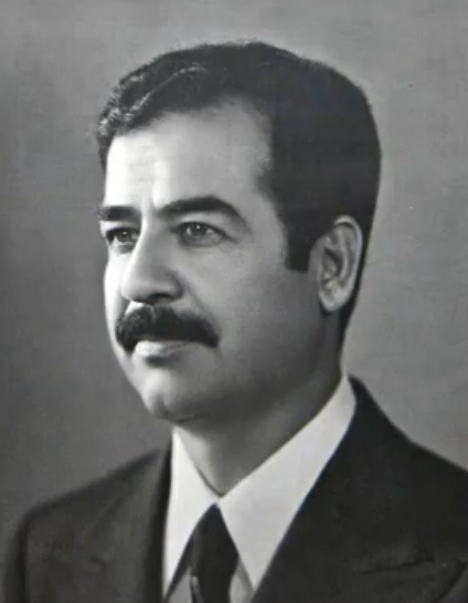
Saddam Hussein was the fifth president of Iraq from to...
Trending
4 hours ago ESPN Analyst Dan Orlovsky Mourns Sudden Family Tragedy Amid NFL Season

4 days ago Elon Musk Promises Affordable Starlink Service in India Amid Feud with Mukesh Ambani
5 hours ago Gartner Warns of Massive $3.5 Trillion Write-Down Risk in Competitive AI Infrastructure Race
6 hours ago Global Tech Sell-Off Intensifies as Enthusiasm for AI Stocks Wanes

6 hours ago Zendaya to Star in New Alex Garland Sci-Fi Film for A24

6 hours ago Investment Firms Increase Positions in Invesco QQQ ETF
Popular

Ilhan Omar is a prominent American politician currently serving as...

Ken Paxton is an American politician and lawyer serving as...

Elon Musk is a visionary entrepreneur and engineer known for...

Jameis Winston is an American football quarterback currently playing for...
Michael Joseph Jackson the King of Pop was a highly...

Cristiano Ronaldo widely considered one of the greatest footballers captains...