


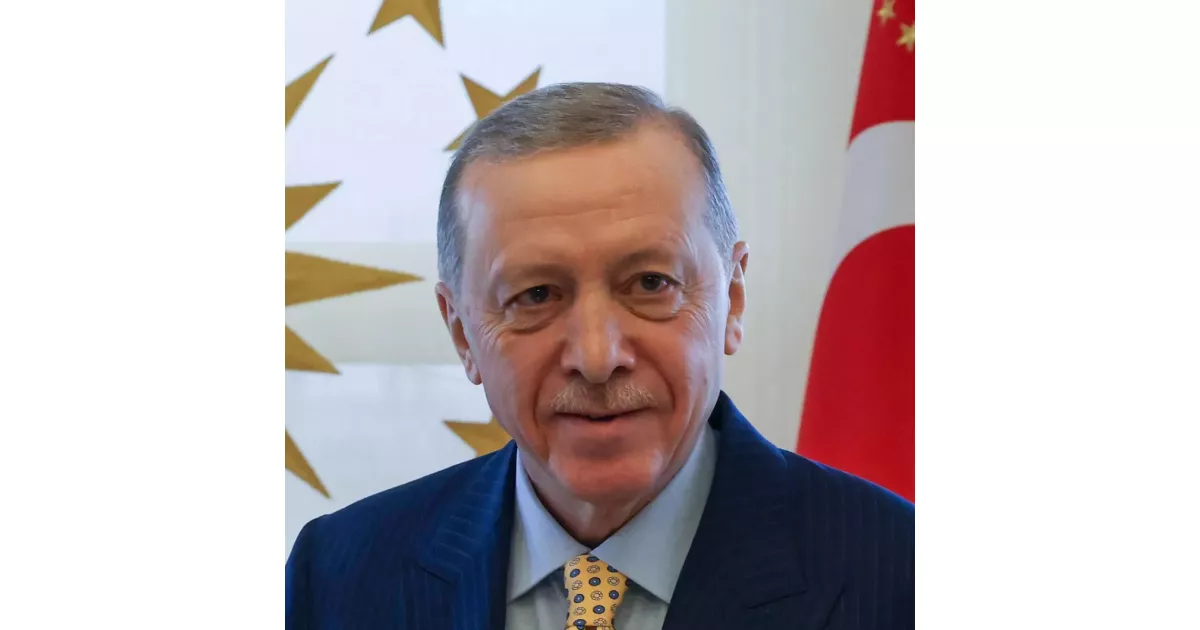
Recep Tayyip Erdoğan is a dominant political figure in modern Turkey, serving as Prime Minister from 2003 to 2014 and as President since 2014. A co-founder of the Justice and Development Party (AKP), his tenure has been marked by significant economic growth, large-scale infrastructure projects, and a shift toward more centralized executive power, notably following the 2017 constitutional referendum. Erdoğan is known for his populist rhetoric, a strong emphasis on religious and conservative values, and an assertive, independent foreign policy that frequently challenges Western alliances. While supporters credit him with stabilizing the economy and elevating Turkey's geopolitical influence, critics have expressed concerns over the erosion of democratic institutions, the restriction of press freedom, and the suppression of political dissent. His long-standing leadership has fundamentally transformed the Turkish political landscape, moving the country away from its secular Kemalist traditions toward a more nationalistic and socially conservative framework.
13 May 2007: İzmir Republic Rally
The wave of demonstrations persisted, culminating in a significant rally in İzmir on 13 May 2007, which saw an attendance of approximately one million protesters.


14 April 2007: Ankara Secularism Protest
On 14 April 2007, approximately 300,000 citizens gathered in Ankara to protest against the potential candidacy of Erdoğan for the presidency, expressing concerns that he would undermine the secular foundations of the Turkish state.
1905: Birth of Ahmet Erdoğan
Ahmet Erdoğan, the father of Recep Tayyip Erdoğan who worked as a coastguard and sea captain, was born in 1905.
1924: Birth of Tenzile Erdoğan
Tenzile Erdoğan (née Mutlu), the mother of Recep Tayyip Erdoğan, was born in 1924.
February 1954: Birth of Recep Tayyip Erdoğan
On 26 February 1954, Recep Tayyip Erdoğan was born in Kasımpaşa, Beyoğlu, into a modest conservative Muslim family.
1965: Graduation from Kasımpaşa Piyale Primary School
In 1965, Recep Tayyip Erdoğan completed his primary education at the Kasımpaşa Piyale Primary School.
1976: Early Political Engagement and MSP Leadership
In 1976, Recep Tayyip Erdoğan began his political career by joining the National Turkish Student Union and subsequently took on leadership roles within the National Salvation Party (MSP), serving as the head of the Beyoğlu youth branch and later as the chair of the Istanbul youth branch.
1980: Transition to Private Sector Post-Coup
Following the 1980 military coup, which led to the dissolution of all major political parties, Erdoğan stepped away from his role in the National Salvation Party and transitioned into the private sector, where he worked as a consultant and senior executive.
1983: Joining the Welfare Party
In 1983, Erdoğan aligned himself with the newly established Welfare Party (RP), following the political path of Necmettin Erbakan and his National View ideology.
1984: Appointed Beyoğlu District Chair
In 1984, Erdoğan took on a leadership role by becoming the Beyoğlu district chair for the Welfare Party.
1985: Elected Istanbul Chair of Welfare Party
Continuing his political ascent in 1985, Erdoğan was promoted to the position of Istanbul provincial chair for the Welfare Party.
1985: Head of Welfare Party's Istanbul Branch
In 1985, Erdoğan continued his rise within the party ranks by being appointed as the head of the Istanbul branch.
1986: Unsuccessful Parliamentary Run
In 1986, Erdoğan contested the parliamentary by-elections in Istanbul's 6th electoral district, but he was ultimately not elected to office.
1988: Death of Ahmet Erdoğan
Ahmet Erdoğan, a sea captain and father to Recep Tayyip Erdoğan, passed away in 1988.
1991: Welfare Party Istanbul General Election Results
During the 1991 general election, the Welfare Party saw its vote share in Istanbul climb to 16.7%. Although initially perceived as a winner for a parliamentary seat, Recep Tayyip Erdoğan ultimately lost the position to Mustafa Baş due to the open-list proportional representation system, which favored Baş by approximately 4,000 preferential votes.
1994: Elected Mayor of Istanbul
Following the local elections held in 1994, Erdoğan achieved a significant political milestone by securing the position of Mayor of Istanbul.
December 1997: Recitation of Ziya Gökalp poem in Siirt
In December 1997, Recep Tayyip Erdoğan recited a modified version of the 'Soldier's prayer' poem by Ziya Gökalp during a speech in Siirt. This recitation, which included verses comparing mosques and minarets to military gear, led to legal consequences under Article 312/2 of the Turkish penal code, as authorities deemed the act an incitement to religious hatred.
1998: Conviction and Political Ban
In 1998, Erdoğan faced a major challenge when he was convicted of inciting religious hatred for reciting a poem by Ziya Gökalp, resulting in a ban from participating in politics.
1998: Conclusion of Mayoral Term
Recep Tayyip Erdoğan concluded his term as the mayor of Istanbul in 1998, having served in the position since 1994.
March 1999: Commencement of Prison Sentence
On 24 March 1999, Recep Tayyip Erdoğan began serving a reduced four-month prison sentence, a period resulting from a conviction that also led to his removal from the mayoral office and a ban from future political elections.
July 1999: Completion of Prison Sentence
On 27 July 1999, Recep Tayyip Erdoğan finished his four-month prison term, having been incarcerated following a legal conviction that significantly altered his political standing at the time.
1999: Release from Prison and Formation of AKP
After his release from prison in 1999, Erdoğan founded the Justice and Development Party (AKP), moving away from his previous overtly Islamist political stance.
1999: Release of This Song Doesn't End Here
In 1999, coinciding with his incarceration at Pınarhisar prison, Recep Tayyip Erdoğan released an album titled 'This Song Doesn't End Here'. The collection, consisting of seven poems, achieved significant commercial success in 1999, becoming the best-selling album in Turkey with sales exceeding one million copies.
2001: Founding of the Justice and Development Party (AKP)
Following the ban of the Virtue Party in 2001, reformist politicians including Recep Tayyip Erdoğan and Abdullah Gül split from Necmettin Erbakan's movement to establish the Justice and Development Party (AKP), a democratic conservative party designed to appeal to a broader segment of the Turkish electorate.
2001: Co-founding of the AKP
In 2001, Recep Tayyip Erdoğan co-founded the Justice and Development Party (AKP), which became his primary political vehicle.
2001: Economic Crisis Recovery
Throughout his early tenure following the 2001 economic crisis, Erdoğan focused on leading Turkey through a period of significant economic recovery.
December 2002: Cancellation of Siirt Election Results
In December 2002, the Supreme Election Board invalidated the general election results for the district of Siirt citing voting irregularities and subsequently scheduled a repeat election for February 9, 2003.
2002: AKP Landslide Election Victory
In 2002, Recep Tayyip Erdoğan successfully led the Justice and Development Party (AKP) to a landslide victory in the election for the Grand National Assembly.
2002: AKP Electoral Victory
In the 2002 general elections, the newly formed Justice and Development Party (AKP) successfully secured 34% of the vote, marking a significant transition for the reformist group into a governing political force.
2002: Rise to de facto leadership
Starting in 2002, Recep Tayyip Erdoğan established himself as the de facto leader of Turkey, a status characterized by significant influence over the nation's governance.
February 2003: Erdoğan's Parliamentary Election and Prime Ministership
On February 9, 2003, following a legal amendment that lifted his political ban, Erdoğan successfully ran as a candidate in the rescheduled Siirt elections; upon winning, he transitioned to the position of Prime Minister after Abdullah Gül stepped down from the role.
March 2003: Erdoğan Becomes Prime Minister
In March 2003, following the conclusion of the Gül government and the lifting of his political ban, Recep Tayyip Erdoğan assumed the office of Prime Minister of Turkey.
2003: Appointment as Prime Minister
Beginning in 2003, Recep Tayyip Erdoğan served as the 25th prime minister of Turkey, a role he maintained until 2014.
2003: Statement on Ethnic Origins
In 2003, Recep Tayyip Erdoğan stated that his family was of Georgian origin with roots in Batumi, a claim he would later retract.
2007: General Election Victory
In 2007, Erdoğan secured his second electoral victory as the leader of the AKP, reinforcing his political mandate.
2011: General Election Victory
Erdoğan led the AKP to a third consecutive election victory in 2011, continuing his tenure as prime minister.
2011: Death of Tenzile Erdoğan
Tenzile Erdoğan, the mother of Recep Tayyip Erdoğan, passed away in 2011.
2012: Initiation of Peace Negotiations
In late 2012, the government led by Erdoğan commenced peace negotiations with the Kurdistan Workers Party (PKK) in an effort to resolve the long-standing Kurdish–Turkish conflict.
2013: Return Visit to Pınarhisar Prison
In 2013, Recep Tayyip Erdoğan revisited Pınarhisar prison for the first time in fourteen years, describing the location as a site of rebirth where the foundations for the Justice and Development Party were originally planned.
2014: Direct Election as President
In 2014, Recep Tayyip Erdoğan achieved a significant milestone by becoming the first president of Turkey to be directly elected by the public, marking a shift in the nation's leadership structure.
2015: Inauguration of the mountaintop mosque in Güneysu
In 2015, Recep Tayyip Erdoğan inaugurated a large mosque situated on a mountaintop near his ancestral village of Güneysu, Rize, a place he has frequently visited throughout his life as his spiritual home.
2025: Arrest and Disqualification of Ekrem İmamoğlu
In 2025, Erdoğan oversaw the arrest of Istanbul mayor Ekrem İmamoğlu, which resulted in his disqualification from the 2028 presidential race and triggered widespread protests across the country.
2028: Target Date for Presidential Election
The year 2028 marks the upcoming presidential election cycle, from which the primary opposition candidate, Ekrem İmamoğlu, was disqualified by the state in 2025.
24 April 2007: Nomination of Abdullah Gül
Following rising tensions and protests, Erdoğan announced on 24 April 2007 that the AKP had officially nominated Abdullah Gül to run as their candidate in the upcoming presidential election.
29 April 2007: Istanbul Republic Rally
On 29 April 2007, protests against the political direction of the government continued, with reports indicating that over one million people participated in a massive rally held in Istanbul.
4 May 2007: Manisa and Çanakkale Protests
Public opposition continued to manifest on 4 May 2007 as tens of thousands of demonstrators gathered for separate protests in the cities of Manisa and Çanakkale.
Mentioned in this timeline

Donald John Trump is an American politician media personality and...
Barack Obama the th U S President - was the...
Vladimir Putin is a prominent Russian politician who has significantly...
Joe Biden served as the th President of the United...
Pope Francis served as the head of the Catholic Church...
Elizabeth II reigned as Queen of the United Kingdom and...
Trending

20 days ago Micah Parsons Injury Status Impacts Packers and NFL Team Performance

1 day ago FTC Seeks Contempt Charges Against Martin Shkreli Over Pharmaceutical Industry Ban Violation

3 hours ago Daniil Medvedev Faces Stefanos Tsitsipas in Rolex Shanghai Masters Fourth Round Match
3 hours ago Record Heat and Approaching Storms Threaten Louisville Region
4 hours ago Chilly and Windy Weather Forecast Impacts Upcoming Cleveland Guardians ALCS Games
4 hours ago US Secretary of State Marco Rubio Plans Strategic India Visit
Popular

Ken Paxton is an American politician and lawyer serving as...

Ilhan Omar is a prominent American politician currently serving as...

Jameis Winston is an American football quarterback currently playing for...

Cristiano Ronaldo widely considered one of the greatest footballers captains...

Michael Joseph Jackson the King of Pop was a highly...

Kimberly Guilfoyle is an American television personality and former prosecutor...