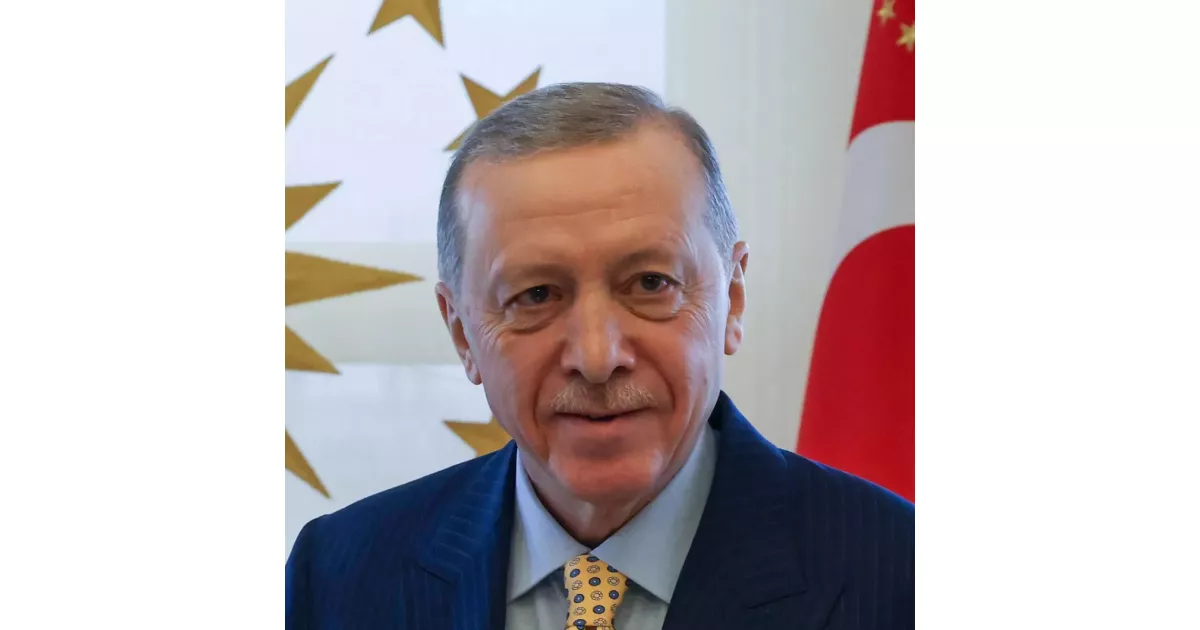
Resilience and perseverance in the journey of Recep Tayyip Erdoğan. A timeline of obstacles and growth.
Recep Tayyip Erdoğan is a Turkish politician serving as President since 2014. He co-founded the Justice and Development Party (AKP) in 2001 and served as Prime Minister from 2003 to 2014. He also served as mayor of Istanbul (1994-1998). His tenure has been marked by socially conservative policies and increasing authoritarianism, democratic backsliding, and suppression of dissent.
Recep Tayyip Erdo?an threatened to invade Israel, leading to heightened tensions. Turkey also referred to Netanyahu as 'Hitler of Our Time,' sparking further conflict. These escalations mark a significant downturn in relations.
In 1980, the military coup dissolved all major political parties, affecting Erdoğan's position.
In 1986, Erdoğan entered the parliamentary by-elections of 1986 as a candidate in Istanbul's 6th electoral district, but failed to get elected.
In 1991, the Welfare Party more than doubled its share of the vote in Istanbul, but Erdoğan was not elected to parliament due to preferential votes.
In December 1997 in Siirt, Erdoğan recited a modified version of a poem and was regarded by the judge as an incitement to violence and religious or racial hatred.
In 1998, Erdoğan was convicted for inciting religious hatred and banned from politics after reciting a poem by Ziya Gökalp.
In March 1999, Erdoğan began serving a four-month prison sentence and was forced to give up his mayoral position.
In 2001, economic crisis was experienced.
In December 2002, the Supreme Election Board canceled the general election results from Siirt due to voting irregularities and scheduled a new election for 9 February 2003.
The original Sledgehammer document containing the coup plans, allegedly written in 2003, was found to have been written using Microsoft Word 2007.
In 2005, Erdoğan and Deniz Baykal proposed the creation of a joint Turkish-Armenian commission to investigate the mass killings of Armenians during World War I, but the offer was rejected by Armenian Foreign Minister Vartan Oskanian.
On 14 April 2007, an estimated 300,000 people marched in Ankara to protest against the possible candidacy of Erdoğan in the 2007 presidential election. On 24 April 2007 that the party had nominated Abdullah Gül as the AKP candidate in the presidential election.
During the chaotic 2007 presidential election, the military issued an E-memorandum warning the government to keep within the boundaries of secularism when choosing a candidate.
In 2007, despite being one of the main pledges of the AKP during the election campaign, the main opposition party CHP was not interested in altering the Constitution on a big scale, making it impossible to form a Constitutional Commission. The amendments lacked the two-thirds majority needed to become law instantly, but secured enough votes to put the proposals to a referendum.
On 14 March 2008, Turkey's Chief Prosecutor asked the country's Constitutional Court to ban Erdoğan's governing party.
On 30 July 2008, Erdoğan's party escaped a ban, although judges did cut the party's public funding by 50%.
In December 2008, Erdoğan criticized the I Apologize campaign by Turkish intellectuals to recognize the Armenian genocide, stating that Turkey did not commit a crime and does not need to apologize.
In 2009, Erdoğan accused China of "genocide" against the Uyghurs in Xinjiang.
In May 2010, Recep Tayyip Erdoğan strongly condemned the Gaza flotilla raid, describing it as "state terrorism" and demanded an Israeli apology.
In 2010, following the Gaza flotilla raid, Erdoğan repeated the suggestion of Israel dominating the world media, remarks characterized as antisemitic.
On 9 August 2011, Ahmet Davutoğlu met with Syrian President Bashar al-Assad for seven hours, attempting to convince him to implement reforms amid the growing conflict and protests. This meeting marked the last visit by a European leader to Assad.
In 2011, Erdoğan ordered the tearing-down of the 33-meter-tall Monument to Humanity, a Turkish–Armenian friendship monument in Kars. He justified the removal by claiming the monument was too close to a tomb and illegally erected.
In 2011, during a visit to Kars, Erdoğan called the Statue of Humanity a "freak," leading to its demolition months later.
In a 2011 interview, Erdoğan stated he supported secularism for Egypt, which sparked criticism from Islamic movements. Commentators suggested his alliance with the military junta during Egypt's transition to democracy may have favored an authoritarian government.
In February 2013, Recep Tayyip Erdoğan described Zionism as a "crime against humanity", comparing it to Islamophobia, antisemitism, and fascism. He later retracted the statement, clarifying his comments were directed at Israeli policies, especially regarding Gaza and settlements. The statement was criticized by UN Secretary-General Ban Ki-moon.
In August 2013, Erdoğan condemned the sit-in dispersals conducted by Egyptian police on August 14, 2013, at the Rabaa al-Adawiya and al-Nahda squares, where violent clashes led to numerous deaths.
Between 2002 and 2012, a major consequence of the policies was the widening of the current account deficit from US$600 million to US$58 billion by 2013.
During the 2013 anti-government protests, the mainstream media did not broadcast any news regarding the demonstrations for three days after they began. The Radio and Television Supreme Council (RTÜK) controversially issued a fine to pro-opposition news channels.
Erdoğan has been criticized for his politicization of the media, especially after the 2013 protests. The opposition Republican People's Party (CHP) alleged that over 1,863 journalists lost their jobs due to their anti-government views in 12 years of AKP rule.
In 2013, a US$100 billion corruption scandal led to the arrests of Erdoğan's close allies and implicated Erdoğan himself.
In 2013, a corruption scandal emerged, leading to a recording of a conversation between Erdoğan and his son Bilal, where Erdoğan allegedly instructed his family to 'nullify' all cash reserves. Subsequently, Erdoğan launched a media campaign to portray his family as frugal.
In 2013, the Gezi Park protests occurred against the perceived authoritarianism of Erdoğan and his policies. These protests started with a sit-in in Istanbul and grew after police used tear gas. Erdoğan's government initially apologized and called for a plebiscite, but later ordered a crackdown on the protesters.
In late 2013, when Gülen withdrew support from the AKP government, a government corruption scandal broke out. Erdoğan accused Gülen of coordinating a "parallel state" within the judiciary in an attempt to topple him from power.
When Gülen publicly withdrew support and openly attacked Erdoğan in late 2013, several imprisoned military officers and journalists were released, with the government admitting that the judicial proceedings were unfair.
In late March 2014, Erdoğan's government blocked access to Twitter and YouTube after the release of a recording of a conversation between him and his son Bilal related to the 2013 corruption scandal.
In April 2014, the President of the Constitutional Court, Haşim Kılıç, accused Erdoğan of damaging the credibility of the judiciary, labeling Erdoğan's attempts to increase political control over the courts as 'desperate'.
On April 23, 2014, Erdoğan's office issued a statement in nine languages, offering condolences for the mass killings of Armenians and stating that the events of 1915 had inhumane consequences.
In May 2014, Erdoğan denounced allegations of dictatorship, stating that the opposition leader would not be able to roam the streets freely if he were a dictator.
In July 2014, one year after the removal of Mohamed Morsi from office, Erdoğan described Egyptian President Abdel Fattah el-Sisi as an "illegitimate tyrant".
In September 2014, Erdoğan signed a bill into law that allowed the Turkish government to block websites without a prior court order, tightening controls over the Internet.
On September 1, 2014, the courts dissolved the cases of 96 suspects, which included Bilal Erdoğan.
On 29 October 2014, Erdoğan was due to hold a Republic Day reception in the new palace. However, after most invited participants announced that they would boycott the event and a mining accident occurred, the reception was cancelled.
Between 2014 and 2019, 128,872 investigations were launched for insulting the president, and prosecutors opened 27,717 criminal cases.
During his 2014 presidential election campaign, Erdoğan was criticized for receiving disproportionate media attention in comparison to his rivals. The British newspaper The Times commented that between 2 and 4 July, the state-owned media channel TRT gave 204 minutes of coverage to Erdoğan's campaign and less than a total of 3 minutes to both his rivals.
In 2014, the Turkish government temporarily blocked access to the social media platform Twitter.
In early 2014, a new law was passed by parliament giving the government greater control over the judiciary, which sparked public protest throughout the country.
In February 2015, a 13-year-old was charged by a prosecutor for allegedly insulting Erdoğan on Facebook.
In March 2015, a judge ordered Erdoğan to pay 10,000 liras to Mehmet Aksoy for "moral indemnities" related to the demolition of the Statue of Humanity.
In April 2015, Pope Francis described atrocities against Armenian civilians in 1915–1922 as "the first genocide of the 20th century", leading to Erdoğan recalling the Turkish ambassador from the Vatican.
On December 20, 2015, Prime Minister Ahmet Davutoğlu threatened that if his party did not win the election, Turkish Kurds would endure a repeat of the era of the "white Toros".
In 2015, 74 US senators sent a letter to US Secretary of State, John Kerry, to state their concern over what they saw as deviations from the basic principles of democracy in Turkey and oppressions of Erdoğan over media.
In 2015, Turkey joined the international military intervention against the Islamic State. The Turkish Armed Forces' Operation Euphrates Shield aimed to conquer areas around Jarabulus and al-Bab from IS.
In 2015, following AKP electoral defeat, the rise of a social democrat, pro-Kurdish rights opposition party, and the minor Ceylanpınar incident, Erdoğan decided the peace process with the PKK was over. He supported the revocation of parliamentary immunity of HDP parliamentarians, leading to a resumption of violent confrontation.
In January 2016, more than a thousand academics signed a petition criticizing Turkey's military crackdown on ethnic Kurdish towns. Erdoğan accused the signatories of "terrorist propaganda" and called for action. Over 30 of the signatories were arrested, and nearly half were fired from their jobs.
In March 2016, the Zaman newspaper was seized by President Erdoğan's government as they continued to press for court action against the remaining free press in Turkey.
In April 2016, rapporteur Kati Piri said that the overall pace of reforms in Turkey has not only slowed down but in some key areas, such as freedom of expression and the independence of the judiciary, there has been a regression, which is particularly worrying.
In May 2016, Merve Büyüksaraç, a former Miss Turkey model, was sentenced to more than a year in prison for allegedly insulting the president.
On 22 June 2016, President Recep Tayyip Erdoğan said that he considered himself successful in "destroying" Turkish civil groups "working against the state".
On June 22, 2016, the Parliamentary Assembly of the Council of Europe warned that "recent developments in Turkey pertaining to freedom of the media and of expression, erosion of the rule of law and the human rights violations in relation to anti-terrorism security operations in south-east Turkey have raised serious questions about the functioning of its democratic institutions".
In the wake of the July 2016 coup attempt, the Erdoğan administration began rounding up tens of thousands of individuals from both within the government and the public sector, incarcerating them on charges of alleged "terrorism."
On 15 July 2016, a coup d'état was attempted by the military to remove Erdoğan from government, but the government managed to regain control by the next day.
On July 20, 2016, President Erdoğan declared a state of emergency, citing the coup d'état attempt as justification. It was initially scheduled to last three months and was approved by the Turkish parliament.
In August 2016, Erdoğan began rounding up and incarcerating journalists who had been publishing articles questioning corruption within his administration. The number of Turkish journalists jailed by Turkey exceeded that of any other country.
In November 2016, Cumhuriyet journalists were detained following a long-standing crackdown on the newspaper. Reporters Without Borders subsequently labeled Erdoğan an "enemy of press freedom."
In November 2016, the Turkish government blocked access to social media throughout Turkey and sought to completely block Internet access for citizens in the southeast of the country. This was followed by the arrest or imprisonment of over 90,000 Turkish citizens after the 2016 coup attempt.
Following the 2016 Turkish coup attempt, representatives and elected HDP members were systematically arrested, removed, and replaced in their offices.
In 2016, a waiter was arrested for allegedly insulting Erdoğan by stating that he would not even serve tea to him if he came to the waiter's establishment.
In the aftermath of the 2016 Turkish coup d'état attempt, a groundswell of national unity and consensus emerged. Erdoğan used this consensus to remove Gulen's followers from the bureaucracy, curtail their role in NGOs, the Ministry of Religious Affairs, and the Turkish military. Relations with Europe soured, and Erdoğan developed relationships with Russia, Saudi Arabia, and Pakistan.
In March 2017, Turkish President Recep Tayyip Erdoğan stated to the Turks in Europe, "Make not three, but five children. Because you are the future of Europe. That will be the best response to the injustices against you."
In April 2017, Erdoğan successfully sponsored legislation making it effectively illegal for the Turkish legislative branch to investigate his executive branch of government. At the time of the legislation's passing, United States President Donald Trump called Erdoğan to congratulate him for his "recent referendum victory".
In April 2017, Turkey blocked all access to the online encyclopedia Wikipedia due to a content dispute.
On April 29, 2017, Erdoğan's administration began an internal Internet block of all of the Wikipedia online encyclopedia site via Turkey's domestic Internet filtering system. Wikipedia co-founder Jimmy Wales responded, "Access to information is a fundamental human right."
In June 2017, Erdoğan condemned the isolation of Qatar as "inhumane and against Islamic values," stating that "victimising Qatar through smear campaigns serves no purpose."
In July 2017, Putin offered the S-400 air defense system to Turkey, leading to warnings from the United States regarding Turkey's F-35 purchase and integration into the NATO air defense net.
In September 2017, Erdoğan condemned the persecution of Muslims in Myanmar and accused Myanmar of "genocide" against the Muslim minority.
In December 2017, President Erdoğan warned Donald Trump after the U.S. President recognized Jerusalem as Israel's capital, stating that "Jerusalem is a red line for Muslims." He also called Israel a "terrorist state".
In 2017, the Disaster and Emergency Management Presidency (AFAD) was centralized under Erdoğan's control due to a constitutional change. AFAD faced intense scrutiny for its slow and disorganized response to disasters.
Violent confrontation continued in 2017, mainly in the South East of Turkey, resulting in higher death tolls and several external operations on the part of the Turkish military.
In January 2018, the Turkish military, along with Syrian National Army and Sham Legion allies, launched Operation Olive Branch in Afrin, Northern Syria, targeting the Kurdish armed group YPG.
By March 2018, the state of emergency declared in July 2016 was continuously extended amidst ongoing purges in Turkey. More than 50,000 people had been arrested and over 160,000 fired from their jobs.
On July 8, 2018, Erdoğan sacked 18,000 officials for alleged ties to US based cleric Fethullah Gülen, shortly before renewing his term as an executive president. 9000 of those removed were police officers and 5000 were from the armed forces, with hundreds of academics.
In August 2018, the U.S. Department of Treasury sanctioned two senior Turkish government ministers involved in the detention of American pastor Andrew Brunson. Erdoğan responded by stating that the U.S. behavior would force Turkey to seek new friends and allies.
Starting in 2018, factors such as Erdoğan's decreasing the independence of the Central Bank, pushing unorthodox monetary policy, excessive current account deficit and foreign-currency debt, and increasing authoritarianism, led to an economic crisis with large depreciation of the Turkish lira and very high inflation.
In April 2019, Erdoğan asserted that the West Bank belongs to Palestinians, responding to Israeli Prime Minister Benjamin Netanyahu's statement about annexing Israeli settlements in occupied Palestinian territories.
In October 2019, after the United States withdrew troops from the border, Turkey proceeded to attack the Autonomous Administration of North and East Syria, leading to criticism from NATO and European Union countries. Erdoğan also filed a criminal complaint against French magazine Le Point.
Between 2014 and 2019, 128,872 investigations were launched for insulting the president, and prosecutors opened 27,717 criminal cases.
Following the 2019 Venezuelan uprising attempt, Erdoğan condemned the actions of lawmaker Juan Guaidó, asserting that only democratic elections can determine how a country is governed.
In 2019, the Turkish Foreign Ministry condemned China's "reintroduction of concentration camps in the 21st century" regarding the Uyghurs. Later that year, Erdoğan softened his stance during a visit to China.
In the 2019 local elections, the ruling party AKP lost control of Istanbul and Ankara for the first time in 25 years. It has been widely attributed to Erdoğan's mismanagement of the Turkish economic crisis, rising authoritarianism as well as the alleged government inaction on the Syrian refugee crisis.
On July 1, 2020, Erdoğan announced that the government would introduce new measures and regulations to control or shut down social media platforms such as YouTube, Twitter, and Netflix. Each company would be required to appoint an official representative in the country to respond to legal concerns.
In September 2020, Joe Biden demanded that Erdoğan "stay out" of the Second Nagorno-Karabakh War between Azerbaijan and Armenia, in which Turkey supported the Azeris.
In 2020, amid the COVID-19 pandemic, Turkey's top Muslim scholar, Ali Erbaş, condemned homosexuality for "bringing illness," insinuating it caused the pandemic; Recep Tayyip Erdoğan backed Erbaş.
In April 2021, US President Joe Biden formally recognized the Armenian genocide. Erdoğan condemned the move as "groundless", "unfair" and "destructive", and accused Biden of bowing to "pressure from radical Armenian groups and anti-Turkish circles".
In 2021, Erdoğan accused Israel of "terrorism" against the Palestinians and said, "they kill children who are five or six years old. They only are satisfied by sucking their blood", which the Anti-Defamation League and others cited as an instance of blood libel.
Reporters Without Borders reported a rank of 153 out of 179 countries on its Press Freedom Index for Turkey in 2021 during Erdoğan's later terms.
In the 2023 presidential election, Erdoğan's candidacy was contested due to his campaign launch in June 2022, with the opposition arguing that a third term would violate the constitution.
As of 2022, the intensity of the PKK-Turkey conflict did decrease in recent years, even though six thousand additional deaths occurred in Turkey alone for 2015–2022.
In 2022, while Turkey closed the Bosphorus to Russian naval reinforcements, enforced United Nations sanctions, and supplied Ukraine with military equipment such as Bayraktar TB2 drones and BMC Kirpi vehicles, it continued dialogue with Vladimir Putin and maintained its stance that Russia must return Crimea to Ukraine.
In February 2023, a catastrophic earthquake struck south-central Turkey and northwestern Syria, resulting in over 50,000 deaths in Turkey during Erdoğan's administration. Collapsed buildings, many constructed under lax regulations, exacerbated the high death toll.
In October 2023, Erdoğan condemned Israeli attacks in the Gaza Strip during the Gaza war, calling them a violation of human rights and likening Israel's response to Hamas's attack as a disproportionate "massacre."
On 15 November 2023, Erdoğan condemned Israel as a "terrorist state" and accused it of committing genocide against the Palestinians.
Between 2016 and 2023 there were trials for insulting the president for having compared Erdogan to Gollum, a fictional character of J. R. R. Tolkien's Lord of the Rings.
In 2023, Erdoğan blamed LGBTQ+ people for "undermining family values" in Turkey and called his political opponents "gays" in a derogatory manner, criticized as a tactic to distract from economic failings and rally his base.
Starting from 2023, Erdoğan began openly speaking against LGBT people, openly saying that his Coalition "are against the LGBT", and accusing the Turkish opposition of being LGBT.
In June 2025, Erdoğan condemned Israeli strikes on Iran, describing them as acts of "state terrorism."
Donald John Trump is an American politician media personality and...
Vladimir Putin is a Russian politician who has dominated Russian...
Barack Obama the th U S President - was the...
Pope Francis served as the head of the Catholic Church...
Ukraine is a country in Eastern Europe the second largest...
Elizabeth II reigned as Queen of the United Kingdom and...
11 minutes ago Bronny James shines, assisting father LeBron in Lakers' victory: A family milestone.
12 minutes ago Clint Capela Discusses World Cup Fever and Rockets' Potential This Season.
12 minutes ago Southwest Airlines Limits Portable Chargers to Prevent In-Flight Fires: New Restrictions Detailed
12 minutes ago Rob Dillingham's NBA Journey: From Wolves Question to Bulls' Rising Star
13 minutes ago Luke Kennard's Emergence: Lakers' Emergency Point Guard and Thriving New Role
13 minutes ago Ryan Nembhard, undrafted rookie, breaks Mavericks' assist record in stunning performance.
Paula White-Cain is a prominent American televangelist and key figure...
William Franklin Graham III commonly known as Franklin Graham is...
Melania Trump is a Slovenian-American former model who served as...
Eric Swalwell is an American lawyer and politician currently serving...
J D Vance is an American politician and author He...
Viktor Orb n is a prominent Hungarian politician and lawyer...