History of Stephen Hawking in Timeline


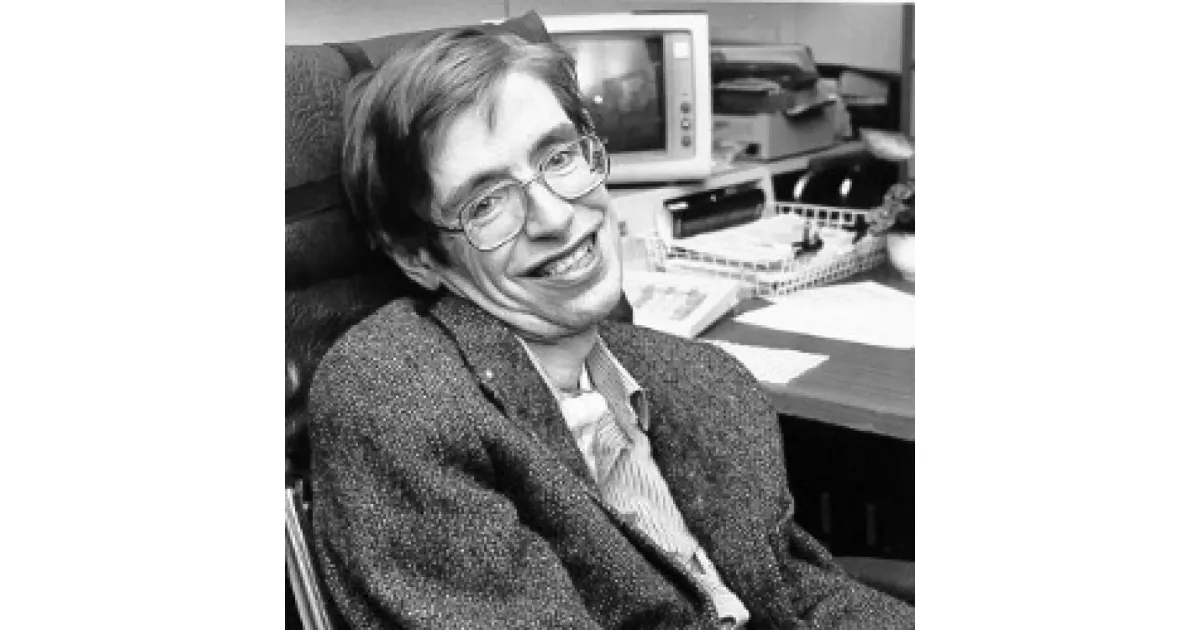
Stephen Hawking was a highly influential English theoretical astrophysicist and cosmologist. He served as the Director of Research at the Centre for Theoretical Cosmology at the University of Cambridge and held the prestigious position of Lucasian Professor of Mathematics at Cambridge from 1979 to 2009. His work significantly contributed to our understanding of black holes, the Big Bang, and the unification of general relativity with quantum mechanics. Despite battling amyotrophic lateral sclerosis (ALS) for most of his adult life, Hawking made groundbreaking contributions to science and became a popular science icon through his books, making complex concepts accessible to a wide audience.
4 hours ago : Stephen Hawking's Reputation Tarnished: Epstein Files Photo Goes Viral, Sparks Controversy
Stephen Hawking's reputation is being questioned due to the release of photos in the Epstein files. The images and associated controversies have sparked debate about his legacy and associations.


January 1942: Stephen Hawking's birth
In January 1942, Stephen William Hawking was born. He would later become a renowned English theoretical astrophysicist, cosmologist, and author.
1950: Hawking family moves to St Albans
In 1950, Stephen Hawking's family moved to St Albans, Hertfordshire, after his father became head of the division of parasitology at the National Institute for Medical Research.
September 1952: Hawking starts at St Albans School
In September 1952, Stephen Hawking began attending St Albans School in Hertfordshire, after passing the eleven-plus exam a year early.
1958: Hawking builds a computer with friends
From 1958, Stephen Hawking, with the help of Dikran Tahta, and his friends built a computer from clock parts, an old telephone switchboard, and other recycled components.
March 1959: Hawking awarded a scholarship
In March 1959, Stephen Hawking was awarded a scholarship after taking examinations, despite his headmaster's advice to wait until the next year.
October 1959: Hawking begins university education at Oxford
In October 1959, at the age of 17, Stephen Hawking began his university education at University College, Oxford.
1959: Hawking builds a record player
In 1959, Stephen Hawking built a record player from spare parts, showcasing his resourcefulness and interest in electronics.
1959: Hawking begins university education
In 1959, at the age of 17, Stephen Hawking began his university education at University College, Oxford.
October 1962: Hawking begins graduate work at Cambridge
In October 1962, after receiving a first-class BA degree in physics, Stephen Hawking began his graduate work at Trinity Hall, Cambridge.
1962: Hawking begins graduate work
In 1962, Stephen Hawking began his graduate work at Trinity Hall, Cambridge, focusing on applied mathematics and theoretical physics.
1962: Hawking meets Jane Wilde
In 1962, Stephen Hawking met his future wife, Jane Wilde, at a party.
1963: Hawking diagnosed with motor neurone disease
In 1963, at the age of 21, Stephen Hawking was diagnosed with an early-onset slow-progressing form of motor neurone disease.
1963: Hawking Diagnosed with MND
In 1963, at the age of 21, Stephen Hawking was diagnosed with motor neurone disease (MND), also known as amyotrophic lateral sclerosis (ALS) or Lou Gehrig's disease), and given a life expectancy of two years.
June 1964: Hawking challenges Hoyle's work
In June 1964, Stephen Hawking publicly challenged the work of Fred Hoyle and his student Jayant Narlikar at a lecture, marking the beginning of his reputation for intelligence and brashness.
October 1964: Hawking and Jane Wilde get engaged
In October 1964, Stephen Hawking and Jane Wilde became engaged, aware of Hawking's new physical limitations and shortened life expectancy due to motor neurone disease.
1964: Higgs Boson Proposed
In 1964, the Higgs boson was proposed to exist as part of the Higgs field theory by Peter Higgs.
July 1965: Hawking and Jane Wilde marry
On 14 July 1965, Stephen Hawking and Jane Wilde were married in their shared hometown of St Albans.
1965: Hawking writes thesis
In 1965, Stephen Hawking wrote his thesis focusing on the application of spacetime singularity theorems to the entire universe.
1965: Doctoral Thesis
In 1965, Stephen Hawking's doctoral thesis titled 'Properties of Expanding Universes, PhD thesis, Cambridge University' was completed. In November 2018, his thesis was auctioned for approximately £1.8 million.
March 1966: Hawking receives PhD degree
In March 1966, Stephen Hawking received his PhD degree in applied mathematics and theoretical physics, specialising in general relativity and cosmology.
1966: Hawking obtains PhD
In 1966, Stephen Hawking obtained his PhD in applied mathematics and theoretical physics from Trinity Hall, Cambridge, specialising in general relativity and cosmology.
May 1967: Birth of Robert Hawking
In May 1967, Robert Hawking, the first child of Stephen Hawking and Jane Wilde, was born.
1968: Hawking's joint essay is runner-up
In 1968, Stephen Hawking's and Roger Penrose's joint essay was the runner-up in the Gravity Research Foundation competition.
1969: Hawking accepts Fellowship for Distinction in Science
In 1969, Stephen Hawking accepted a specially created Fellowship for Distinction in Science to remain at Caius College.
November 1970: Birth of Lucy Hawking
In November 1970, Lucy Hawking, the second child of Stephen Hawking and Jane Wilde, was born.
1970: Hawking publishes proof with Penrose
In 1970, Stephen Hawking and Roger Penrose published a proof that if the universe obeys the theory of general relativity, it must have begun as a singularity.
January 1971: Hawking wins Gravity Research Foundation Award
In January 1971, Stephen Hawking's essay titled "Black Holes" won the Gravity Research Foundation Award.
1972: Bekenstein's theory about black holes
In 1972 Jacob Bekenstein proposed the theory that black holes have an entropy proportional to the area of the event horizon, which would later be supported by Hawking's research.
1973: Hawking develops four laws of black hole mechanics
In 1973, Stephen Hawking and James M. Bardeen developed the four laws of black hole mechanics, drawing an analogy with thermodynamics.
1974: Hawking claims black holes emit radiation
In 1974, Stephen Hawking claimed that black holes emit radiation, which is known today as Hawking radiation, a groundbreaking discovery in theoretical physics.
1974: Appointment at Caltech and Wager on Cygnus X-1
In 1974, Stephen Hawking was appointed to the Sherman Fairchild Distinguished Visiting Professorship at the California Institute of Technology (Caltech). During this time, he made a scientific wager with Kip Thorne about whether the X-ray source Cygnus X-1 was a black hole, as an "insurance policy" against the proposition that black holes did not exist.
1974: Hawking elected Fellow of the Royal Society
In 1974, Stephen Hawking was elected a Fellow of the Royal Society (FRS), becoming one of the youngest scientists to receive this honor.
1974: Hawking takes position at Caltech
In 1974, upon Stephen Hawking's appointment to a year-long position at Caltech, Bernard Carr travelled with the Hawking family as the first of many students who helped with his care.
1975: Return to Cambridge and Awards
In 1975, Hawking returned to Cambridge as reader in gravitational physics. That same year, he was awarded both the Eddington Medal and the Pius XI Gold Medal for his work.
1975: Hawking returns to Cambridge
In 1975, Stephen Hawking returned to Cambridge and Don Page began working as his live-in graduate student assistant.
1976: Academic Recognition
In 1976, Hawking received the Dannie Heineman Prize, the Maxwell Medal and Prize, and the Hughes Medal, furthering the academic recognition of his work.
December 1977: Jane Hawking meets Jonathan Hellyer Jones
Around December 1977, Jane Hawking met organist Jonathan Hellyer Jones when singing in a church choir. He became close to the Hawking family and eventually developed romantic feelings for Jane.
1977: Appointment as Professor
In 1977, Hawking was appointed a professor with a chair in gravitational physics at Cambridge University.
April 1979: Birth of Timothy Hawking
In April 1979, Timothy Hawking, the third child of Stephen Hawking and Jane Wilde, was born.
1979: Election as Lucasian Professor of Mathematics
In 1979, Hawking was elected Lucasian Professor of Mathematics at the University of Cambridge. He proposed N = 8 supergravity as the leading theory to solve outstanding physics problems. This promotion coincided with a health crisis and a transition to a more intuitive approach to physics.
1979: Hawking becomes Lucasian Professor
In 1979, Stephen Hawking was appointed as the Lucasian Professor of Mathematics at the University of Cambridge, a prestigious academic position.
October 1981: Conference in Moscow
Following a conference in Moscow in October 1981, Hawking helped organize a workshop on "The Very Early Universe" focusing on inflation theory.
1981: Information Loss Proposal
In 1981, Hawking proposed that information in a black hole is irretrievably lost when a black hole evaporates. This information paradox violated the fundamental tenet of quantum mechanics, and led to years of debate.
1981: Jane Hawking completes PhD
In 1981, Jane Hawking completed her PhD programme in medieval Spanish poetry through Westfield College.
1981: Awarded the American Franklin Medal
In 1981, Stephen Hawking was awarded the American Franklin Medal.
1982: Decision to Write a Popular Book
In 1982, Hawking decided to write a popular book about the universe to finance his children's education and home expenses. He signed a contract with Bantam Books and received a large advance.
1982: Nuffield Workshop on the Very Early Universe
In the summer of 1982, Hawking and Gary Gibbons organised a three-week Nuffield Workshop in the summer of 1982 on "The Very Early Universe" at Cambridge University, a workshop that focused mainly on inflation theory. Hawking also began a new line of quantum-theory research into the origin of the universe.
1983: Publication of the Hartle-Hawking State
In 1983, Hawking and Jim Hartle published a model known as the Hartle-Hawking state, which proposed that prior to the Planck epoch, the universe had no boundary in spacetime, suggesting time did not exist before the Big Bang.
1984: Membership in American Academy of Arts and Sciences and American Philosophical Society
In 1984, Stephen Hawking became a member of the American Academy of Arts and Sciences and the American Philosophical Society.
1984: Completion of First Draft of "A Brief History of Time"
In 1984, the first draft of Hawking's popular science book, "A Brief History of Time", was completed.
1985: Publication on Arrows of Time
In 1985, Hawking published a paper theorising that if the no-boundary proposition were correct, then when the universe stopped expanding and eventually collapsed, time would run backwards. He later withdrew this concept.
1985: Awarded the Gold Medal of the Royal Astronomical Society
In 1985, Stephen Hawking received the Gold Medal of the Royal Astronomical Society.
1985: Hawking undergoes tracheotomy
In 1985, while visiting CERN, Stephen Hawking contracted pneumonia and underwent a tracheotomy, resulting in the loss of his speech and requiring round-the-clock nursing care.
1985: Hawking contracts pneumonia
In mid-1985, during a visit to CERN, Stephen Hawking contracted pneumonia, which led to a tracheotomy and the loss of his remaining speech. The cost of his subsequent care was funded by an American foundation.
1986: Hawking receives computer program "Equalizer"
In 1986, Stephen Hawking received the "Equalizer" computer program from Walter Woltosz, CEO of Words Plus, which allowed him to select phrases, words, or letters from a scanned bank.
1986: Appointed an Academician at the Pontifical Academy of Sciences
In 1986, Stephen Hawking was appointed an Academician at the Pontifical Academy of Sciences.
1987: Awarded the Paul Dirac Medal
In 1987, Stephen Hawking was awarded the Paul Dirac Medal.
April 1988: Publication of "A Brief History of Time" in the US
In April 1988, Stephen Hawking's book "A Brief History of Time" was published in the US and quickly rose to the top of best-seller lists.
1988: Appearance in "God, the Universe and Everything Else"
In 1988, Stephen Hawking appeared in the documentary film, God, the Universe and Everything Else.
1988: Awarded the Wolf Prize
In 1988, Stephen Hawking, jointly with Penrose, was awarded the Wolf Prize.
1989: Appointed a Member of the Order of the Companions of Honour
In the 1989 Birthday Honours, Stephen Hawking was appointed a Member of the Order of the Companions of Honour (CH).
February 1990: Hawking leaves Jane for Elaine Mason
In February 1990, Stephen Hawking told Jane that he was leaving her for Elaine Mason and departed the family home.
1990: Hawking Acknowledges Losing Bet
In 1990, Hawking acknowledged losing the 1974 bet he had made with Kip Thorne regarding the nature of Cygnus X-1. This was the first of several bets he would make with Thorne and others.
1991: Public scientific wager with Kip Thorne and John Preskill
In 1991, Hawking made a public scientific wager with Kip Thorne and John Preskill of Caltech, betting that Penrose's proposal of a "cosmic censorship conjecture" was correct.
1991: Premiere of "A Brief History of Time" Documentary
In 1991, the documentary "A Brief History of Time", directed by Errol Morris, premiered. It contained material from the book and interviews with Hawking and others.
1992: Conjecture on the Impossibility of Time Travel
In 1992, Hawking conjectured that travel into the past is effectively impossible.
1992: Appearance on Desert Island Discs
In 1992, Stephen Hawking appeared on the radio program Desert Island Discs, where he chose musical works that "[sum] up his life" and George Eliot's Middlemarch as a book to sum up his life.
1992: Membership in U.S. National Academy of Sciences and Honorary Membership
In 1992, Stephen Hawking became a member of the U.S. National Academy of Sciences and was awarded Honorary membership of the Manchester Literary and Philosophical Society.
1993: Co-edited book on Euclidean quantum gravity
In 1993, Hawking co-edited a book on Euclidean quantum gravity with Gary Gibbons and published a collected edition of his own articles on black holes and the Big Bang.
1993: Publication of "Black Holes and Baby Universes and Other Essays"
In 1993, Hawking's popular-level collection of essays, interviews, and talks titled "Black Holes and Baby Universes and Other Essays" was published.
1993: Appeared in Star Trek: The Next Generation
In 1993, Stephen Hawking played a holographic simulation of himself in an episode of Star Trek: The Next Generation.
1993: Synthesiser Voice Recorded for Pink Floyd Song
In 1993, Stephen Hawking's synthesiser voice was recorded for use in the Pink Floyd song "Keep Talking".
1994: Lectures at Newton Institute
In 1994, Hawking and Penrose delivered a series of six lectures at Cambridge's Newton Institute.
1995: Hawking marries Elaine Mason
In 1995, Stephen Hawking married Elaine Mason after divorcing Jane.
1997: Concession in Wager and New Bet on Black Hole Information Paradox
In 1997, Hawking conceded the 1991 public scientific wager made with Kip Thorne and John Preskill regarding Penrose's cosmic censorship conjecture. The same year, a new bet was made between Thorne, Hawking, and Preskill concerning the black hole information paradox.
1997: Conceded 1997 bet with Preskill
In 1997, Hawking conceded the bet he made with Preskill. In 2004 lecture in Dublin, he conceded his 1997 bet with Preskill, but described his own, somewhat controversial solution to the information paradox problem, involving the possibility that black holes have more than one topology.
1997: Release of "Stephen Hawking's Universe" TV Series
In 1997, the six-part television series "Stephen Hawking's Universe" and a companion book were released, focusing entirely on science.
1999: Jane Hawking publishes memoir
In 1999, Jane Hawking published a memoir, Music to Move the Stars, about her marriage and its breakdown, causing a sensation in the media.
1999: Awarded the Julius Edgar Lilienfeld Prize
In 1999, Stephen Hawking was awarded the Julius Edgar Lilienfeld Prize of the American Physical Society, adding to his role as a role model for disabled people and his participation in fundraising activities.
1999: Synthesiser Voice Recorded for The Simpsons
In 1999, Stephen Hawking's synthesiser voice was recorded for an episode of The Simpsons.
2001: Publication of "The Universe in a Nutshell"
In 2001, Hawking published "The Universe in a Nutshell", a popular science book.
2001: Appearance in "The Real Stephen Hawking"
In 2001, Stephen Hawking appeared in the documentary film, The Real Stephen Hawking.
2002: Debate with Peter Higgs
In 2002, Hawking and Higgs engaged in a heated and public debate over the Higgs boson matter.
2002: Appearance in "Stephen Hawking: Profile"
In 2002, Stephen Hawking appeared in the documentary film, Stephen Hawking: Profile.
2002: Hawking ranked in BBC's 100 Greatest Britons
In 2002, Stephen Hawking was ranked number 25 in the BBC's poll of the 100 Greatest Britons, recognizing his significant impact and contributions.
2002: Included in BBC's List of 100 Greatest Britons
In 2002, following a UK-wide vote, the BBC included Stephen Hawking in their list of the 100 Greatest Britons.
2003: Growing consensus among physicists that Hawking was wrong about loss of information
By 2003, consensus among physicists was growing that Hawking was wrong about the loss of information in a black hole.
2004: Conceded 1997 bet with Preskill
In a 2004 lecture in Dublin, Hawking conceded his 1997 bet with Preskill, but described his own, somewhat controversial solution to the information paradox problem, involving the possibility that black holes have more than one topology.
2005: Publication of "A Briefer History of Time"
In 2005, Hawking and Leonard Mlodinow published "A Briefer History of Time", an update to his earlier work intended for a wider audience.
2005: Hawking uses cheek muscles to control communication device
In 2005, Stephen Hawking began controlling his communication device with movements of his cheek muscles, allowing him to communicate at a rate of about one word per minute.
2005: Publication of Paper on Information Paradox
In the 2005 paper he published on the subject, he argued that the information paradox was explained by examining all the alternative histories of universes, with the information loss in those with black holes being cancelled out by those without such loss.
2006: Development of Top-Down Cosmology
From 2006 onwards, Hawking, along with Thomas Hertog and Jim Hartle, developed a theory of top-down cosmology.
2006: Hawking poses open question on the Internet
In 2006, Hawking posed the open question on the internet: "In a world that is in chaos politically, socially and environmentally, how can the human race sustain another 100 years?", to get people to think about it, and to be aware of the dangers we now face.
2006: Hawking and Mason divorce
In 2006, Stephen Hawking and Elaine Mason quietly divorced, leading to Hawking resuming closer relationships with Jane, his children, and his grandchildren.
2006: Hawking and Epstein Present at Gravity Conference
In 2006, Stephen Hawking and Jeffrey Epstein were both present at a conference on gravity, which was also attended by physicist Lisa Randall.
2006: Awarded the Copley Medal from the Royal Society
In 2006, Stephen Hawking was awarded the Copley Medal from the Royal Society.
2006: Expressed Desire to Travel to Space
In late 2006, Stephen Hawking stated his desire to travel to space.
April 2007: Experienced Weightlessness Aboard Modified Boeing 727-200
On April 26, 2007, Stephen Hawking flew aboard a specially-modified Boeing 727-200 jet operated by Zero-G Corp off the coast of Florida to experience weightlessness. The flight was extended to eight parabolic arcs after it was determined that he could withstand the g-forces involved in spaceflight.
2007: Hawking uses DragonMobility Dragon elevating powerchair
From 2007 Stephen Hawking used a DragonMobility Dragon elevating powerchair.
2007: Publication of "George's Secret Key to the Universe"
In 2007, Hawking and his daughter Lucy published "George's Secret Key to the Universe", a children's book designed to explain theoretical physics.
2007: Jane's book is republished
In 2007, a revised version of Jane Hawking's book, re-titled Travelling to Infinity: My Life with Stephen, was published.
September 2008: Unveiled the Corpus Clock
In September 2008, Stephen Hawking unveiled the mechanical "Chronophage" (or time-eating) Corpus Clock at Corpus Christi College, Cambridge.
2008: Continued Debate with Peter Higgs
In 2008, Hawking and Higgs continued their heated and public debate over the Higgs boson matter.
2008: Appearance in "Stephen Hawking, Master of the Universe"
In 2008, Stephen Hawking appeared in the documentary series Stephen Hawking, Master of the Universe.
2008: Received the Fonseca Prize in Spain
In 2008, Stephen Hawking received the Fonseca Prize in Spain as part of his widespread travels that included trips to Chile, Easter Island, South Africa, and Canada.
June 2009: Party for Time-Travelers
On 28 June 2009, Hawking held a party open to all, complete with food and drinks, but publicised the party only after it was over so that only time-travellers would know to attend; as expected, nobody showed up, as a tongue-in-cheek test of the conjecture that time travel is impossible.
2009: "A Brief History of Time" Sales
As of 2009, "A Brief History of Time" has sold an estimated 9 million copies worldwide.
2009: Publication of "George's Secret Key to the Universe" sequels
In 2009, Hawking and his daughter Lucy published sequels of "George's Secret Key to the Universe".
2009: Retirement as Lucasian Professor
In 2009, Hawking retired as Lucasian Professor of Mathematics at the University of Cambridge, as required by university policy.
2009: Difficulty Driving Wheelchair
In 2009, Stephen Hawking could no longer drive his wheelchair independently, and although new typing mechanics were used to drive the chair with chin movements, it proved difficult due to his inability to move his neck, resulting in sporadic and jumpy movement.
2009: Awarded the Presidential Medal of Freedom
In 2009, Stephen Hawking received the Presidential Medal of Freedom, America's highest civilian honour.
2009: Hawking Steps Down as Lucasian Professor
In 2009, Stephen Hawking stepped down from his position as the Lucasian Professor of Mathematics at the University of Cambridge, after holding the post since 1979.
2009: Projected Space Flight
In 2009, the date of Stephen Hawking's trip to space was projected to be as early as this year, but commercial flights to space did not commence before his death.
2010: Hawking warns against contact with aliens
In 2010, Stephen Hawking warned against making contact with alien life forms, suggesting that they might pillage Earth for resources, comparing it to Columbus's arrival in America, which had a negative outcome for Native Americans.
2011: International Travel via Private Jet Only
By 2011, due to practical reasons related to his disability, Stephen Hawking's only mode of international travel had become by private jet.
2011: Publication of "George's Secret Key to the Universe" sequels
In 2011, Hawking and his daughter Lucy published sequels of "George's Secret Key to the Universe".
2011: Hawking: "philosophy is dead"
In 2011, at Google's Zeitgeist Conference, Stephen Hawking stated that "philosophy is dead", arguing philosophers have not kept up with modern science and that science is now the bearer of discovery. He expressed that science can answer philosophical problems and discussed the relationship between physics, morality, love, and faith.
2011: Hawking on the afterlife
In 2011, during an interview, Stephen Hawking expressed his atheism, viewing the brain as a computer that ceases to function upon component failure. He described the concept of an afterlife as a "fairy story for people afraid of the dark".
July 2012: Discovery of the Higgs Boson
In July 2012, the Higgs boson was discovered at CERN following the construction of the Large Hadron Collider.
August 2012: Narrated 2012 Summer Paralympics Opening Ceremony
In August 2012, Stephen Hawking narrated part of the opening ceremony of the 2012 Summer Paralympics in London.
September 2013: Expressed Support for Legalisation of Assisted Suicide
In September 2013, Stephen Hawking voiced his support for the legalisation of assisted suicide for the terminally ill.
2013: Higgs Wins Nobel Prize and Hawking Concedes Bet
In 2013, Peter Higgs won the Nobel Prize for Physics. Hawking conceded that he had lost his bet and said that Higgs should win the Nobel Prize for Physics.
2013: Appearance in "Hawking"
In 2013, Stephen Hawking appeared in the documentary film, Hawking.
2013: Awarded the Russian Special Fundamental Physics Prize
In 2013, Stephen Hawking was awarded the Russian Special Fundamental Physics Prize.
2013: Release of Particle Fever
The science documentary film Particle Fever was released in 2013.
January 2014: Calling Black Hole Information Loss His "Biggest Blunder"
In January 2014, Hawking called the alleged loss of information in black holes his "biggest blunder".
2014: Hawking endorses vote against Scottish independence
Before the 2014 referendum on Scottish independence from the UK, Stephen Hawking was one of two hundred public figures who signed a letter endorsing a vote against independence.
2014: Hawking uses Permobil C350
From 2014 Stephen Hawking used a Permobil C350 wheelchair.
2014: Publication of "George's Secret Key to the Universe" sequels
In 2014, Hawking and his daughter Lucy published sequels of "George's Secret Key to the Universe".
2014: Featured at Monty Python Live (Mostly) Show
In 2014, Stephen Hawking was featured at the Monty Python Live (Mostly) show, shown in a pre-recorded video singing Monty Python's "Galaxy Song".
2014: Hawking's Views on Religion
In 2014, Stephen Hawking's views on religion came to light. He had been a member of Oxford University's humanist group since his university years.
2014: "The Theory of Everything" film released
In 2014, the film "The Theory of Everything", based on Jane Hawking's book, was released.
July 2015: Launch of Breakthrough Initiatives
On 20 July 2015, Hawking helped launch Breakthrough Initiatives, an effort to search for extraterrestrial life.
August 2015: New Theory on Information Retrieval from Black Holes
In August 2015, Hawking said that not all information is lost when something enters a black hole and there might be a possibility to retrieve information from a black hole according to his theory.
2015: Email from Epstein Alleging Hawking's Participation in Orgy
In 2015, Jeffrey Epstein sent an email alleging Stephen Hawking participated in an "underage orgy" in the U.S. Virgin Islands.
2015: BBVA Foundation Frontiers of Knowledge Award
In 2015, Stephen Hawking and Viatcheslav Mukhanov received the BBVA Foundation Frontiers of Knowledge Award in Basic Sciences for their discovery that galaxies were formed from quantum fluctuations in the early Universe.
2015: Applied to Trademark His Name
In 2015, Stephen Hawking applied to trademark his name, as well as advertising multiple products.
2015: Gravitational waves first observed
In 2015, gravitational waves, first theorized by Oliver Heaviside in 1893, were first observed, validating a key aspect of Hawking's second law of black hole mechanics.
2016: Hawking uses Permobil F3
From 2016 Stephen Hawking used a Permobil F3 wheelchair.
2016: Publication of "George's Secret Key to the Universe" sequels
In 2016, Hawking and his daughter Lucy published sequels of "George's Secret Key to the Universe".
2016: Hawking denounces Brexit
In 2016, Stephen Hawking denounced Brexit, the UK's withdrawal from the European Union (EU). He predicted it would weaken the UK's contribution to global scientific efforts.
2016: Pride of Britain Lifetime Achievement Award
In 2016, Stephen Hawking was awarded the Pride of Britain lifetime achievement award for his contribution to science and British culture. After receiving the award from Theresa May, Hawking jokingly requested that she not seek his help with Brexit.
2016: Stephen Hawking Medal for Science Communication Initiated
In 2016, the Stephen Hawking Medal for Science Communication was initiated as an annual award to honor members of the arts community for contributions that help build awareness of science. Recipients receive a medal bearing a portrait of Stephen Hawking by Alexei Leonov, and the other side represents an image of Leonov himself performing the first spacewalk along with an image of the "Red Special", the guitar of Brian May.
2016: Starmus III Festival and Awards
The 2016 Starmus III Festival paid tribute to Stephen Hawking, and the book of all Starmus III lectures, "Beyond the Horizon", was also dedicated to him. The first recipients of the Stephen Hawking Medals, which were awarded at the festival, were chosen by Hawking himself: composer Hans Zimmer, physicist Jim Al-Khalili, and the science documentary film Particle Fever (2013).
July 2017: Awarded Honorary Doctorate from Imperial College London
In July 2017, Stephen Hawking was awarded an Honorary Doctorate from Imperial College London.
October 2017: Final Broadcast Interview
In his final broadcast interview, given October 2017, Hawking spoke of the scientific importance of GW170817, a black hole merger.
2017: Creation of "Stephen Hawking: Expedition New Earth"
In 2017, Hawking created "Stephen Hawking: Expedition New Earth", a documentary on space colonization, as an episode of Tomorrow's World.
2017: Hawking on the UK general election
In 2017, Stephen Hawking endorsed the Labour Party in the UK general election, citing concerns about the Conservative Party's proposed cuts to the National Health Service (NHS), but he was openly critical of Labour's ability to win a general election under party leader Jeremy Corbyn.
2017: Hawking to speak at Humanists UK conference
In 2017, Stephen Hawking was scheduled to be the keynote speaker at the Humanists UK conference, highlighting his association with atheism and freethinking.
2017: Establishment of the Professor Stephen Hawking Fellowship
In 2017, the Cambridge Union Society, in conjunction with Stephen Hawking, established the Professor Stephen Hawking Fellowship. The fellowship is awarded annually to an individual who has made an exceptional contribution to the STEM fields and social discourse, with a particular focus on impacts affecting the younger generations. Each fellow delivers a lecture on a topic of their choosing, known as the "Hawking Lecture".
March 2018: Voice of The Book Mark II on The Hitchhiker's Guide to the Galaxy
Broadcast in March 2018, before his death, Stephen Hawking was the voice of The Book Mark II on The Hitchhiker's Guide to the Galaxy radio series, and he was a guest of Neil deGrasse Tyson on StarTalk.
March 2018: Stephen Hawking's death
In March 2018, Stephen Hawking passed away, marking the end of a distinguished career in theoretical astrophysics and cosmology.
March 2018: Death at Age 76
Stephen Hawking died peacefully at his home in Cambridge on March 14, 2018, at the age of 76. He was eulogised by figures in science, entertainment, and politics. The Gonville and Caius College flag flew at half-mast and a book of condolences was signed. A tribute was made at the closing ceremony of the 2018 Paralympic Winter Games.
April 2018: Broadcast of Final Interview and Publication of Posthumous Paper
In April 2018, after Hawking's death, his final interview was broadcast as the Smithsonian TV Channel documentary "Leaving Earth: Or How to Colonize a Planet". Hawking's final paper, "A smooth exit from eternal inflation?", was also posthumously published in the Journal of High Energy Physics on 27 April 2018.
June 2018: Service of Thanksgiving at Westminster Abbey
Following cremation, a service of thanksgiving was held at Westminster Abbey on June 15, 2018, after which Stephen Hawking's ashes were interred in the Abbey's nave, between the graves of Sir Isaac Newton and Charles Darwin.
October 2018: Publication of Final Research Study and Last Book
In October 2018, one of Hawking's final research studies, entitled "Black Hole Entropy and Soft Hair", was published. Also in October, Hawking's last book was published, "Brief Answers to the Big Questions", containing his final comments on what he believed were the most important questions facing humankind.
November 2018: Hawking's powerchair sold at Christie's
In November 2018, the earliest surviving example of Stephen Hawking's BEC Mobility motorised wheelchair was sold by Christie's for £296,750.
November 2018: Auction of Personal Possessions
On November 8, 2018, an auction of 22 personal possessions of Stephen Hawking, including his doctoral thesis and wheelchair, took place, fetching about £1.8 million. Proceeds from the wheelchair went to charities, while proceeds from other items went to his estate.
2018: Hawking dies at 76
In 2018, Stephen Hawking died at the age of 76, more than 50 years after his diagnosis of motor neurone disease.
2018: Inscribed on Memorial Stone
In 2018, after his death, Stephen Hawking's memorial stone was inscribed with the words: "Here lies what was mortal of Stephen Hawking 1942–2018" and his famed Bekenstein–Hawking formula.
March 2019: Royal Mint Issues Commemorative Coin and Nurse Struck Off
In March 2019, the Royal Mint announced it would issue a commemorative 50p coin in honour of Stephen Hawking, and his nurse, Patricia Dowdy, was struck off the nursing register for failures in his care and financial misconduct.
2019: Death of Jeffrey Epstein
In 2019, American financier Jeffrey Epstein, who conspired with Ghislaine Maxwell, died. An email of his sent in 2015 mentioned Hawking.
May 2021: Acceptance-in-Lieu Agreement for Hawking's Papers and Memorabilia
In May 2021, an Acceptance-in-Lieu agreement ensured that around 10,000 pages of Stephen Hawking's scientific papers remained in Cambridge, while objects including his wheelchairs, speech synthesisers, and personal memorabilia were housed at the Science Museum.
February 2022: "Stephen Hawking at Work" Display Opens at Science Museum
In February 2022, the "Stephen Hawking at Work" display opened at the Science Museum, London, marking the start of a two-year nationwide tour.
2022: Featured in Google Doodle
In 2022, Google featured Stephen Hawking in a Google Doodle on the occasion of his 80th birthday.
October 2024: Hawking Building Opens at Science and Innovation Park
In October 2024, the Hawking Building was opened to the public at the Science and Innovation Park as a new facility to house the Science Museum's National Collection Centre, including about 80% of the museum's object collection.
2024: Mention in Court Documents Released During Ghislaine Maxwell Trial
In 2024, Stephen Hawking was mentioned in court documents released during the trial of Ghislaine Maxwell, a British child sex trafficker, where an email from Jeffrey Epstein in 2015 alleged Hawking participated in an "underage orgy."
2025: Death of Virginia Giuffre
In 2025, Virginia Giuffre, an alleged victim of Epstein, died. An email from Epstein in 2015 mentioned Giuffre regarding an allegation about Stephen Hawking.
2025: Hawking's law was validated
In 2025, analysis of black hole merger GW250114 validated Stephen Hawking's law.
2026: Correspondence of Lisa Randall with Epstein Found
In 2026, physicist Lisa Randall was found to have corresponded with Epstein; in 2006, Hawking and Epstein were both present at a conference on gravity.
Mentioned in this timeline
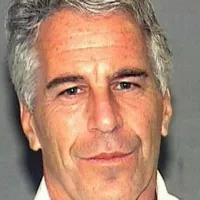
Jeffrey Epstein was an American financier and convicted sex offender...
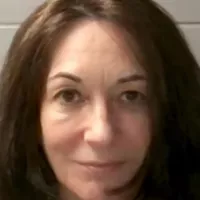
Ghislaine Maxwell is a British former socialite convicted in of...
Google LLC is a multinational technology corporation specializing in a...
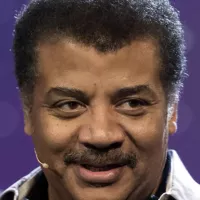
Neil deGrasse Tyson is a prominent American astrophysicist science communicator...
California is a U S state on the Pacific Coast...
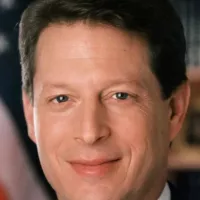
Al Gore served as the th U S Vice President...
Trending

20 minutes ago Uchijima and Kalinina to meet for the Antalya 2026 Megasaray Hotels Open title.
21 minutes ago Southern Lottery Results for March 1st: Searching for the Winning Series

21 minutes ago Cyprus Airports Cancel Flights Amid Rising Tensions Between US, Israel, and Iran.

1 hour ago Kansas City Man Steals Greyhound Bus, Leading Police on I-29 Chase
1 hour ago Matildas Host Filipinas in Asian Cup Opener; Kerr Addresses Injury, Self-Doubt.
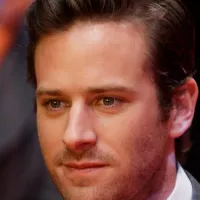
1 hour ago Armie Hammer's Post-Scandal Life: Therapy, Fatherhood, Acting Comeback, and SNL Satire.
Popular
Jesse Jackson is an American civil rights activist politician and...
XXXTentacion born Jahseh Dwayne Ricardo Onfroy was a controversial yet...

Hillary Diane Rodham Clinton is a prominent American politician lawyer...
Kashyap Pramod Patel is an American lawyer who became the...
Barack Obama the th U S President - was the...

Michael Joseph Jackson the King of Pop was a highly...