


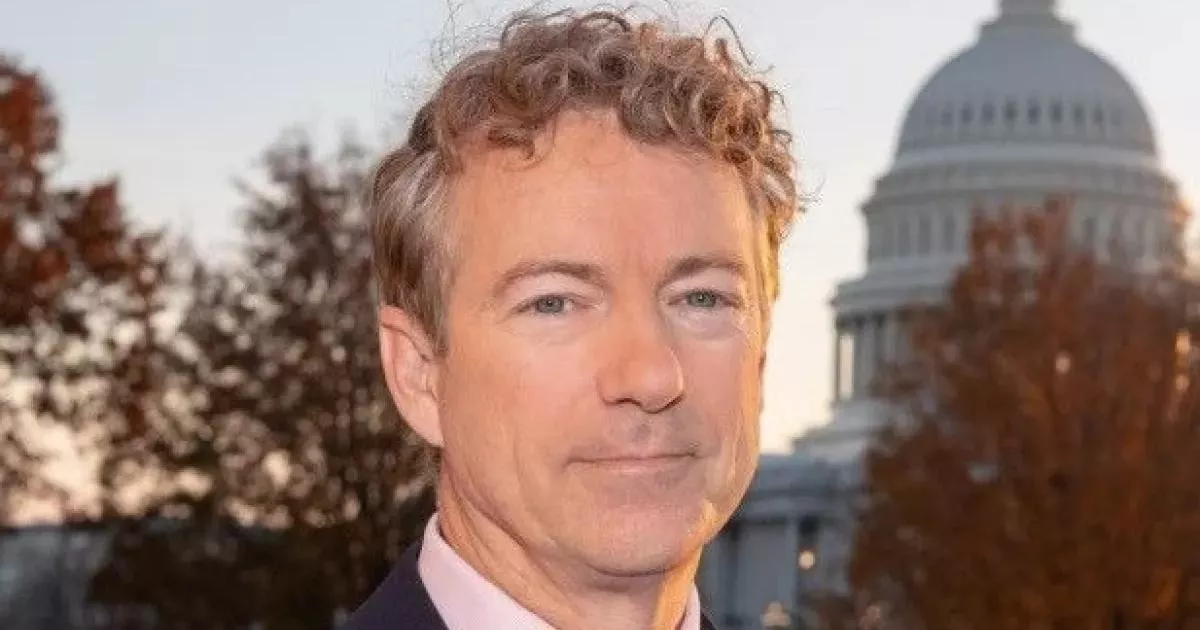
Rand Paul is an American politician and the junior United States Senator from Kentucky, serving since 2011. As a member of the Republican Party, he is known for his libertarian-leaning views, advocating for limited government, lower taxes, and individual liberties. Paul has been a vocal proponent of non-interventionist foreign policy and has often clashed with both Republican and Democratic administrations on issues of government spending and surveillance. He currently chairs the Senate Homeland Security Committee.
1926: Publication of "Notes on Democracy"
In 1926, the book "Notes on Democracy" was published.


1930: Publication of "I'll Take My Stand"
In 1930, the book "I'll Take My Stand" was published.
1941: Publication of "The Managerial Revolution"
In 1941, the book "The Managerial Revolution" was published.
1948: Publication of "Ideas Have Consequences"
In 1948, the book "Ideas Have Consequences" was published.
1951: Publication of "God and Man at Yale"
In 1951, the book "God and Man at Yale" was published.
1953: Publication of "The Conservative Mind"
In 1953, the book "The Conservative Mind" was published.
1960: Publication of "The Conscience of a Conservative"
In 1960, the book "The Conscience of a Conservative" was published.
January 7, 1963: Rand Paul's Birth
On January 7, 1963, Randal Howard Paul was born. He is an American politician who has been serving as the junior United States Senator from Kentucky since 2011.
1964: Publication of "A Choice Not an Echo"
In 1964, the book "A Choice Not an Echo" was published.
1964: Civil Rights Act Controversy
Rand Paul's comments on the Civil Rights Act of 1964 stirred controversy after he questioned the constitutionality of Title II of the Act. This happened in 2010.
1968: Family Moved to Lake Jackson, Texas
In 1968, Rand Paul's family moved to Lake Jackson, Texas, where his father started a medical practice.
1976: Attended Republican National Convention
In 1976, Rand Paul, at age 13, attended the Republican National Convention where his father headed Ronald Reagan's Texas delegation.
1981: Attended Baylor University
In 1981, Rand Paul began attending Baylor University, enrolling in the honors program.
1984: Aided Father's Campaign
In 1984, Rand Paul took a semester off from Baylor University to aid his father's campaign for the U.S. Senate election in Texas.
1984: Left Baylor University
In the summer of 1984, Rand Paul left Baylor University without completing his degree after being accepted into Duke University School of Medicine.
1987: Publication of "A Conflict of Visions" and "The Closing of the American Mind"
In 1987, the books "A Conflict of Visions" and "The Closing of the American Mind" were published.
1988: Earned Doctor of Medicine Degree
In 1988, Rand Paul earned a Doctor of Medicine degree from the Duke University School of Medicine.
1991: Founded North Carolina Taxpayers Union
In 1991, Rand Paul founded the North Carolina Taxpayers Union in response to President George H. W. Bush's broken promise not to raise taxes.
June 1993: Medical License Valid
Since June 1993, Rand Paul's medical license has been continuously valid, with no board actions.
1993: Malpractice Lawsuit
Between 1993 and 2010, Rand Paul faced two malpractice lawsuits.
1993: Moved to Bowling Green, Kentucky
In 1993, Rand Paul moved to Bowling Green, Kentucky, and started practicing ophthalmology.
1993: Practicing Ophthalmologist
In 1993, Rand Paul started his practice as an ophthalmologist in Bowling Green, Kentucky.
1994: Founded Kentucky Taxpayers United
In 1994, Rand Paul founded Kentucky Taxpayers United (KTU) and served as its chair.
1995: Certified by American Board of Ophthalmology
In 1995, Rand Paul was certified by the American Board of Ophthalmology.
1996: Managed Father's Congressional Campaign
In 1996, Rand Paul managed his father's successful congressional campaign, marking his father's return to the House after a twelve-year absence.
1998: Joined Graves Gilbert Clinic
In 1998, Rand Paul joined the Graves Gilbert Clinic, a private medical group practice in Bowling Green.
1999: Incorporated National Board of Ophthalmology
In 1999, Rand Paul incorporated the National Board of Ophthalmology (NBO) to offer an alternative certification system.
2000: NBO Dissolved
In 2000, Rand Paul did not file the required paperwork to renew the National Board of Ophthalmology (NBO), leading to its legal dissolution by the state.
2001: Publication of "The Death of the West"
In 2001, the book "The Death of the West" was published.
2002: KTU Stopped Ratings
Kentucky Taxpayers United (KTU) stopped issuing its ratings and report cards after 2002.
2005: Maintained ABO Certification
From 1995 to 2005, Rand Paul maintained his certification with the American Board of Ophthalmology (ABO).
2005: NBO Recreated
In 2005, Rand Paul recreated the National Board of Ophthalmology (NBO).
2008: Formed Private Practice
In 2008, Rand Paul formed his own private medical practice in Bowling Green.
2008: Grayson Voted for Bill Clinton
In February 2008, Rand Paul ran an ad that made an issue of Grayson's 2008 admission that he voted for Bill Clinton when he was 20 years old.
2008: Campained for Father's Presidential Election
Throughout the 2008 presidential election, Rand Paul spoke on his father's behalf and campaigned door-to-door in New Hampshire and spoke in Boston at a fundraising rally for his father on the 234th anniversary of the Boston Tea Party.
September 2009: Claimed KTU Published Ratings
In September 2009, Rand Paul claimed that Kentucky Taxpayers United (KTU) published ratings on state legislators' tax positions each year.
2009: Founded Southern Kentucky Lions Eye Clinic
In 2009, Rand Paul founded the Southern Kentucky Lions Eye Clinic to provide eye surgery and exams for those who cannot afford to pay.
2009: Paul's position on abortion
In 2009, Rand Paul's position was to ban abortion under all circumstances.
2009: First Political Speech
In early 2009, Rand Paul was asked to run for the U.S. Senate. On April 15, 2009, Rand Paul gave his first political speech as a potential candidate at a Tea Party rally in Bowling Green.
April 26, 2010: James Dobson Endorsed Grayson
On April 26, 2010, James Dobson endorsed Grayson based on advice from "senior members of the GOP".
2010: Settled Malpractice Lawsuit
Between 1993 and 2010, Rand Paul faced two malpractice lawsuits; he was cleared in one case while the other was settled for $50,000.
2010: General Election Against Jack Conway
In 2010, Rand Paul faced Kentucky Attorney General Jack Conway in the general election.
2010: Supported Constitutional Amendment Banning Same-Sex Marriage
In 2010, Rand Paul supported a constitutional amendment aimed at banning same-sex marriage nationwide.
2010: Election to the U.S. Senate
In 2010, Rand Paul was elected to the U.S. Senate.
2010: Reported on KTU's Status
In 2010, The Wall Street Journal reported that KTU had stopped issuing ratings after 2002 and had been legally dissolved in 2000.
2010: Hiring of Jesse Benton
In March 2013, Jesse Benton, Rand Paul's 2010 campaign manager, was hired by Mitch McConnell as his own campaign manager.
2010: Paul's position on abortion changed
Since 2010, Rand Paul has said he would allow for a doctor's discretion in life-threatening cases such as ectopic pregnancies.
January 5, 2011: Sworn into Office
On January 5, 2011, Rand Paul was sworn in as a U.S. Senator along with his father who was simultaneously in the House of Representatives.
April 2011: Paul files for Senate re-election in 2016
In April 2011, Rand Paul filed to run for re-election to his Senate seat in 2016.
2011: Became US Senator
In 2011, Rand Paul began serving as the junior United States Senator from Kentucky.
2011: Blocking bill for refugee benefits
In 2011, Rand Paul blocked a bill providing $36 million in benefits for elderly and disabled refugees, citing concerns it could aid domestic terrorists, referencing two suspects arrested in Bowling Green who entered the U.S. through a refugee program and received welfare. Paul lifted the hold after a promise for a congressional hearing and investigation into the refugee selection process.
2011: Co-Author of "The Tea Party Goes to Washington"
In 2011, Rand Paul co-authored the book "The Tea Party Goes to Washington".

2011: Paul signs No Taxpayer Funding for Abortion Act
In 2011, Rand Paul signed onto the No Taxpayer Funding for Abortion Act which was intended to prohibit federal funding for abortion, with the exception of abortions in the case of rape, incest, and to save the life of the mother.
2011: Proposed Defense Spending Budget
In 2011, shortly after being elected, Rand Paul proposed a budget specifying $542 billion in defense spending.
2011: NBO Dissolved Again
In 2011, the National Board of Ophthalmology (NBO), which was recreated in 2005, was again dissolved.
June 2012: Endorsement of Mitt Romney
In June 2012, Rand Paul endorsed Mitt Romney for the 2012 presidential election after Romney became the presumptive Republican nominee. Paul later voiced disagreements with Romney's policies.
2012: Funding from Oil, Gas and Coal Interests
According to The Guardian, Rand Paul has received over $250,000 from oil, gas and coal interests since 2012.
2012: Author of "Government Bullies"
In 2012, Rand Paul authored the book "Government Bullies".

January 2013: Paul considered potential presidential candidate
Since at least January 2013, Rand Paul was considered a potential candidate for the Republican nomination for the presidency of the United States.
February 13, 2013: Paul delivers Tea Party response to Obama's State of the Union address
On February 13, 2013, Rand Paul delivered the Tea Party response to President Barack Obama's State of the Union address.
March 2013: Threat of Filibuster Against Gun Control and Endorsement of Mitch McConnell
In March 2013, Rand Paul, alongside Senators Ted Cruz and Mike Lee, threatened a filibuster opposing federal gun control expansion. Also in March 2013, Paul endorsed Mitch McConnell's 2014 re-election campaign.
April 11, 2013: Failed Filibuster Against Gun Control
On April 11, 2013, Rand Paul, along with Senators Ted Cruz and Mike Lee, attempted a filibuster opposing legislative proposals to expand federal gun control measures. The filibuster was dismissed by cloture in a 68-31 vote.
July 19, 2013: Opposition to Detroit Bailout
On July 19, 2013, Rand Paul opposed a federal bailout for Detroit after the city declared bankruptcy. Paul stated that he would block any bailout attempt, believing it would send the wrong message to other financially troubled cities.
October 2013: Plagiarism Controversy
In October 2013, Rand Paul faced controversy over plagiarizing parts of a speech supporting Ken Cuccinelli from Wikipedia's article on the movie "Gattaca". Further allegations of plagiarism surfaced in other speeches, including his Tea Party rebuttal to the President's State of the Union address, and portions of his book. The Washington Times ceased publishing Paul's weekly column after similar instances in his op-ed. Paul responded by saying he was held to an "unfair standard" and would restructure his office to prevent future mistakes.
2013: Introduced the Industrial Hemp Farming Act
In 2013, Rand Paul introduced the Industrial Hemp Farming Act to support efforts to legalize industrial hemp cultivation in Kentucky and at the federal level.
2013: Introduced the Justice Safety Valve Act
In 2013, Rand Paul introduced the Justice Safety Valve Act to provide judges with greater sentencing flexibility.
2013: Included in Time's 100 Most Influential People
In 2013, Rand Paul was included in Time magazine's list of the world's 100 most influential people.
2013: Filibuster on John O. Brennan Nomination
In March 2013, Rand Paul filibustered for 12 hours and 52 minutes to delay the nomination vote of John O. Brennan as Director of the CIA. Paul questioned the Obama administration's drone policy and its legal justification, seeking assurance that noncombatants on U.S. soil would not be targeted. The filibuster concluded after a cloture vote and Brennan was later confirmed.
February 2014: Joined Lawsuit Against Federal Government
In February 2014, Rand Paul joined FreedomWorks in filing a class action lawsuit against the federal government's bulk collection of Americans' phone records metadata.
March 2014: Kentucky Senate passes bill allowing Paul to run for two offices
In March 2014, the Republican-controlled Kentucky Senate passed a bill that would allow Rand Paul to run for both U.S. Senator and President, but the Democratic-controlled Kentucky House of Representatives declined to take it up.
April 2014: Paul insists GOP has to broaden appeal
In April 2014, at the GOP Freedom Summit, Rand Paul insisted that the GOP must broaden its appeal, stating it cannot be the party of 'fat cats, rich people and Wall Street'.
December 2014: Support for Changes in U.S. Policy Towards Cuba
In December 2014, Rand Paul supported the Obama administration's changes in U.S. policy towards Cuba, including easing trade restrictions with the country.
2014: Paul launches "Hillary's Losers" social media campaign
During the 2014 election, Rand Paul launched a social media campaign titled "Hillary's Losers" to highlight Democratic candidates who lost their bids for the U.S. Senate despite endorsements from Hillary Clinton.
2014: Blocking Treaty with Switzerland and Receiving Distinguished Service Award
In 2014, Rand Paul blocked a treaty with Switzerland intended to enable IRS tax evasion probes, citing concerns about privacy infringement. He also received the 2014 Distinguished Service Award from the Center for the National Interest for his public policy work.
2014: Cosponsored the Rohrabacher–Farr Amendment
In 2014, Rand Paul cosponsored the Rohrabacher–Farr amendment focused on states' rights regarding cannabis legislation.
2014: Gave Speech on NSA vs Privacy
In 2014, Rand Paul delivered a speech at the University of California, Berkeley, titled "The N.S.A. vs. Your Privacy".
2014: Introduced Several Criminal Justice Reform Acts
In 2014, Rand Paul introduced the Civil Rights Voting Restoration Act, the REDEEM Act, the FAIR Act, and the RESET Act, all focused on various aspects of criminal justice reform.
2014: Paul spends campaign money in legislative elections
In 2014, Rand Paul spent his own campaign money in the legislative elections, helping Republican candidates for the State House in the hopes of flipping the chamber. However, the Democrats retained their majority.
2014: Included in Time's 100 Most Influential People
In 2014, Rand Paul was included in Time magazine's list of the world's 100 most influential people.
2014: Endorsement of Mitch McConnell's Re-election
In March 2013, Rand Paul endorsed fellow Kentucky Republican Senator Mitch McConnell's 2014 re-election campaign.
2014: Views on Political Turmoil in Ukraine
In early 2014, amid political turmoil in Ukraine, Rand Paul advocated for the United States to maintain a respectful relationship with Russia, cautioning against actions that Russia might perceive as provocative, such as Ukraine joining NATO or interference in Russia's relationship with Ukraine.
April 7, 2015: Paul announces presidential candidacy
On April 7, 2015, Rand Paul officially announced his presidential candidacy and raised $1 million within a day of his announcement.
May 20, 2015: Opposition to Patriot Act Reauthorization
On May 20, 2015, Rand Paul spoke for ten and a half hours in opposition to the reauthorization of Section 215 of the Patriot Act. Sections of the Patriot Act were subsequently prevented from being reauthorized on June 1.
2015: Called for a Defense Budget of $697 Billion
In 2015, Rand Paul advocated for a defense budget of $697 billion.
2015: Introduced the CARERS Act and the Marijuana Businesses Access to Banking Act
In 2015, Rand Paul introduced the CARERS Act to legalize medical cannabis at the federal level. He also introduced the Marijuana Businesses Access to Banking Act to allow cannabis businesses increased access to banks.
2015: Introduced Several Criminal Justice Reform Acts
In 2015, Rand Paul introduced the Police CAMERA Act, the Stop Militarizing Our Law Enforcement Act, and the MERCY Act, focused on criminal justice reform.
2015: Spoke Against PATRIOT Act Renewal
In 2015, Rand Paul spoke for ten and a half hours on the Senate floor against renewing provisions of the PATRIOT Act, which he believed were unconstitutional.
2015: Response to Supreme Court's Same-Sex Marriage Ruling
In 2015, following the Supreme Court's decision in Obergefell v. Hodges, which legalized same-sex marriage across the United States, Rand Paul expressed disagreement with the Court's redefinition of marriage but acknowledged Americans' right to contract. He emphasized that marriage has historically been a local issue.
February 3, 2016: Paul suspends presidential campaign
On February 3, 2016, Rand Paul announced the suspension of his presidential campaign shortly after finishing in fifth place in the Iowa caucus.
February 2016: Opposition to Obama's Supreme Court Nomination
In February 2016, following the death of Antonin Scalia, Rand Paul indicated on February 15 that he would oppose any nomination by President Obama to replace the Supreme Court Justice.
May 6, 2016: Obama calls on Paul to stop blocking tax treaties.
During a press briefing on May 6, 2016, President Obama called on Rand Paul to stop "blocking the implementation of tax treaties that have been pending for years", arguing that they assisted law enforcement in off shore investigations into tax evasion.
2016: Russian Interference in the 2016 election
In 2016, Rand Paul had some opinions on Russian interference in the 2016 election.
2016: Opposed US Support for Saudi Intervention in Yemen
In 2016, Rand Paul was one of the first members of Congress to publicly oppose the United States' support for the Saudi Arabian-led intervention in Yemen.
2016: Re-elected to the Senate
In 2016, Rand Paul was re-elected as a U.S. Senator.
2016: Some call Paul a front runner for the Republican presidential nomination
In 2016, Rand Paul won the presidential straw poll for the next two years at the Conservative Political Action Conference, leading some to consider Paul to be a front runner for the Republican presidential nomination.
2016: Publication of "Hillbilly Elegy"
In 2016, the book "Hillbilly Elegy" was published.
2016: Paul files for Senate re-election in 2016
In April 2011, Rand Paul filed to run for re-election to his Senate seat in 2016. State law would prohibit him from simultaneously running for re-election if he became the Republican presidential (or vice-presidential) nominee.
2016: Paul became a close ally of Trump
Since the 2016 Republican primary, when Paul was highly critical of Trump, he has "become one of the president's closest allies despite occasionally voting against Trump's nominees and legislative proposals".
January 25, 2017: Introduction of Bill to Replace Affordable Care Act
On January 25, 2017, Rand Paul introduced a bill to replace the Affordable Care Act, which included a $5,000 tax credit for each person and did not require mandatory coverage, unlike Obamacare.
March 2017: Introduction of Stop Arming Terrorists Act and Criticism from John McCain
In March 2017, Rand Paul introduced the Stop Arming Terrorists Act, aiming to prohibit U.S. government funds from supporting certain terrorist organizations and countries. On March 16, Senator John McCain accused Paul of being an agent of Vladimir Putin after Paul objected to adding Montenegro to NATO. Paul responded the following day by suggesting McCain had become "unhinged" due to his seniority.
April 2017: Questioning Trump's Missile Strike to Syria
In April 2017, Rand Paul questioned President Trump's missile strike to Syria, stating that further action should require congressional authorization.
May 2017: Letter Urging Withdrawal from Paris Agreement
In May 2017, Rand Paul was one of 22 senators who signed a letter to President Donald Trump urging the United States to withdraw from the Paris Agreement.
June 2017: Tried to Block Weapons Sale to Saudi Arabia
In June 2017, Rand Paul attempted to block the Trump administration's plan to sell more weapons to Saudi Arabia.
September 5, 2017: Paul responds to DACA rescission
On September 5, 2017, the Trump administration announced the intended rescission of the Deferred Action for Childhood Arrivals program. In tweets responding to the act, Rand Paul stated the executive order that created DACA was illegal and congressional bipartisanship was needed to solve or fix the program.
October 2017: Threat to Vote Against Republican Budget
In October 2017, Rand Paul stated he would not vote for the Republican budget in the Senate unless billions in spending were removed from the plan.
2017: Introduced the Pretrial Integrity and Safety Act
In 2017, Rand Paul introduced the Pretrial Integrity and Safety Act to encourage states to reform bail policies.
2017: Publication of "The Benedict Option"
In 2017, the book "The Benedict Option" was published.
2017: Views on Affordable Care Act Repeal and Replacement
In March 2017, Rand Paul advocated for separating the repeal and replacement of the Affordable Care Act into two bills, expressed that Republicans were divided on its replacement, and accused House Speaker Paul Ryan of misleading portrayals regarding the American Health Care Act of 2017.
February 2018: Vote Against Immigration Framework
In February 2018, Rand Paul was one of fourteen Republican senators to vote against an immigration framework proposed by President Trump that called for $25 billion for border security in exchange for a pathway to citizenship for 1.8 million immigrants.
April 2018: Criticized U.S.-Saudi Arabia Alliance
In April 2018, Rand Paul criticized the alliance between the U.S. and Saudi Arabia, mentioning Saudi Arabia's funding of radical madrassas and the supply of arms to ISIS in the Syrian civil war. He also pointed out the humanitarian crisis worsened by the U.S.-backed Saudi blockade of Yemen.
April 2018: Voted for Mike Pompeo as Secretary of State
In April 2018, Rand Paul voted in favor of confirming Mike Pompeo as Secretary of State, despite previously expressing that he would not confirm Pompeo due to his hawkish foreign policy beliefs.
July 2018: Described Special Counsel Investigation as a 'Witch Hunt'
In July 2018, Rand Paul described the Special Counsel investigation into Russian interference in the 2016 election as a "witch hunt on the president".
August 2018: Voting Record with Donald Trump
By August 2018, FiveThirtyEight found that Rand Paul had voted with Donald Trump's positions the least out of all Republicans, only voting with him 74% of the time.
August 2018: Traveled to Moscow and Met with Russian Senators
In August 2018, Rand Paul traveled to Moscow and met with several Russian senators, including Sergey Kislyak.
December 2018: Supported Trump's Decision to Withdraw US Troops from Syria
In December 2018, Rand Paul supported President Trump's decision to withdraw the US army from the Syrian Civil War.
December 2018: Playing Down Campaign Finance Violations
In December 2018, following court filings implicating President Trump in campaign finance violations, Rand Paul downplayed the alleged violations, stating that they should not be "over-criminalized".
2018: Called for Investigation of National Science Foundation Grant
In 2018, Rand Paul called for an investigation into a National Science Foundation grant, which was used to educate meteorologists about climate change. Paul described the grant as "propagandizing" rather than scientific research.
2018: Cosponsored the STATES Act
In 2018, Rand Paul cosponsored the STATES Act, which focused on states' rights regarding cannabis legislation.
2018: Introduced the Pregnant Women in Custody Act
In 2018, Rand Paul introduced the Pregnant Women in Custody Act to protect the health and safety of pregnant women in prison.
2018: Publication of "Why Liberalism Failed"
In 2018, the book "Why Liberalism Failed" was published.
January 2019: Condemnation of Mitt Romney's Criticism of Trump
In January 2019, Rand Paul condemned Senator Mitt Romney for writing an editorial criticizing President Trump, stating that Romney's criticism was bad for the country and the Republican Party.
May 2019: Opposed Subpoena of Donald Trump Jr.
In May 2019, Rand Paul opposed the Senate Intelligence committee's decision to subpoena Donald Trump Jr. to testify about his involvement with Russians during the 2016 presidential campaign.
July 17, 2019: Paul blocks motion on September 11th Victim Compensation Fund
On July 17, 2019, Rand Paul, along with Senator Mike Lee, blocked Senator Kirsten Gillibrand's motion for unanimous consent on a bill renewing the September 11th Victim Compensation Fund, arguing for an amendment to offset new spending. This action drew criticism from comedian Jon Stewart and 9/11 first responder John Feal.
November 4, 2019: Paul calls for media to reveal Trump's Ukraine whistleblower
On November 4, 2019, Rand Paul urged the media to reveal the identity of the whistleblower involved in Trump's Ukraine quid pro quo case, even threatening to disclose the name himself.
2019: Voted Against Trump's Border Funding Demand
In 2019, Rand Paul was one of 11 Republicans who voted against President Trump's demand for "emergency border funding".
January 2020: Criticized U.S. Airstrike on Iranian General
In January 2020, Rand Paul criticized the U.S. airstrike on Baghdad International Airport that resulted in the death of Iranian General Qasem Soleimani, warning that it would increase tensions between the U.S. and Iran.
January 2020: Tweeted About Climate Change and Future of Humanity
In January 2020, Rand Paul tweeted about climate change and the future of humanity, stating that humans will likely survive for hundreds of millions of years and should begin creating atmospheres on suitable moons or planets.
February 2020: Paul criticizes YouTube for removing his speech video
In February 2020, Rand Paul criticized YouTube for removing a video of his floor speech regarding Donald Trump's impeachment trial, during which he posed a controversial question about a House Intelligence Committee staffer's relationship.
February 26, 2020: Paul's wife purchases stock in Gilead Sciences
On February 26, 2020, Rand Paul's wife purchased stock in Gilead Sciences, a pharmaceutical company producing an antiviral drug for COVID-19 treatment. The disclosure of this transaction was delayed, raising questions about potential insider trading.
April 2020: Volunteered at Hospital
In April 2020, after recovering from COVID-19, Rand Paul began volunteering at a hospital in Bowling Green to assist in their response to the COVID-19 pandemic in Kentucky.
June 2020: Paul's voting record aligned with Trump's position
As of June 2020, according to FiveThirtyEight, Rand Paul had voted with President Trump's position on congressional issues 70% of the time, which was the second lowest among all Republican senators.
July 1, 2020: Amendment to Withdraw U.S. Forces from Afghanistan Rejected
On July 1, 2020, the Senate rejected Rand Paul's amendment to the National Defense Authorization Act that would have mandated the withdrawal of all U.S. forces from Afghanistan within a year.
September 2020: Paul votes against COVID-19 aid package
In September 2020, Rand Paul was the sole Republican senator to vote against the COVID-19 aid package introduced by Mitch McConnell, citing concerns over the accumulation of debt.
December 2020: Paul claims the election was stolen, later accepts the results
In December 2020, Rand Paul initially claimed that the election was stolen, but later he accepted the state-certified electors that named Biden as president.
2020: Held up Bipartisan Legislation Making Lynching a Federal Crime
In 2020, Rand Paul held up bipartisan legislation that would make lynching a federal crime, seeking an amendment to clarify that non-fatal injuries would not be considered lynching.
2020: Introduced the Hemp Economic Mobilization Plan (HEMP) Act
In 2020, Rand Paul introduced the Hemp Economic Mobilization Plan (HEMP) Act to increase the THC limit of hemp from 0.3% to 1%.
2020: Introduced the Justice for Breonna Taylor Act
In 2020, Rand Paul introduced the Justice for Breonna Taylor Act to end the use of no-knock warrants.
2020: Paul refuses to accept Biden's victory
In 2020, after the presidential election, Rand Paul refused to accept Joe Biden's victory, falsely claiming the election was 'stolen' from Donald Trump.
2020: Paul continues to make false claims of fraud in the 2020 election
Throughout 2020, Rand Paul continued to make false claims of fraud in the election and refused to say the election was not stolen. Paul also condemned the Capitol attack that occurred during the Electoral College session to count the vote.
January 2021: Paul questions constitutionality of Trump's impeachment
In January 2021, Rand Paul questioned the constitutionality of Trump's second impeachment trial, arguing it was unconstitutional due to Trump having left office. He introduced a motion declaring the impeachment unconstitutional, which was defeated.
February 3, 2021: Paul named ranking member of Small Business and Entrepreneurship Committee
On February 3, 2021, Rand Paul was named a ranking member of the Small Business and Entrepreneurship Committee.
February 13, 2021: Paul votes against Trump's impeachment charges
On February 13, 2021, Rand Paul formally voted against the charges in the second impeachment trial of Donald Trump, which sought to convict him on charges of incitement of insurrection.
May 28, 2021: Voted Against Independent Commission to Investigate Capitol Attack
On May 28, 2021, Rand Paul voted against creating an independent commission to investigate the 2021 United States Capitol attack.
2021: Co-sponsored the FDA Modernization Act 2.0
In 2021, Rand Paul and Senator Cory Booker co-sponsored the FDA Modernization Act 2.0, aiming to eliminate the requirement for animal testing in pharmaceutical development before human trials.
January 2022: Video resurfaces of Paul advising students on misinformation
In January 2022, a video resurfaced of Rand Paul advising medical students in 2013, during which he said "misinformation works, so try to trick your opponents".
May 12, 2022: Stopped Vote on Aid Bill for Ukraine
On May 12, 2022, Rand Paul stopped a vote on a $40 billion spending bill for aid to Ukraine, arguing that it was the second such bill and three times larger than the first.
May 2022: Paul blocks aid bill for Ukraine
In May 2022, Rand Paul blocked a bipartisan bill to provide $40 billion in aid to Ukraine, demanding the creation of a special inspector general to oversee the spending.
December 2022: FDA Modernization Act 2.0 Signed into Law
In December 2022, the FDA Modernization Act 2.0, co-sponsored by Rand Paul, was signed into law by President Joe Biden.
2022: Introduced Right to Try Clarification Act and Breakthrough Therapies Act
In 2022, Rand Paul introduced the Right to Try Clarification Act and the Breakthrough Therapies Act, aimed at expanding access to experimental treatments and rescheduling certain drugs for medical purposes.
2022: Won Third Term
In 2022, Rand Paul won a third term as a U.S. Senator.
March 2023: Paul blocks Hawley's "No TikTok on United States Devices Act"
In March 2023, Rand Paul blocked Senator Josh Hawley's "No TikTok on United States Devices Act", which aimed to ban the app TikTok in the United States, arguing it would violate First Amendment rights and may not protect user information.
January 11, 2024: Paul announces major announcement for the following morning
On January 11, 2024, Rand Paul announced that he had a major announcement about the 2024 Republican Party presidential primaries planned for the following morning.
January 2024: Voted for Resolution on Human Rights Provisions for Israel Military Assistance
In January 2024, Rand Paul voted for a resolution proposed by Bernie Sanders, aiming to apply the human rights provisions of the Foreign Assistance Act to Israel's military assistance.
November 2024: Voted Against Resolution Disapproving Foreign Military Sale to Israel
In November 2024, Rand Paul voted against Senator Sanders' joint resolution that proposed congressional disapproval of a foreign military sale of certain defense articles and services to the Government of Israel.
February 2025: Criticized Trump's Statement on Gaza Strip
In February 2025, after Trump announced that America "will take over the Gaza Strip," Rand Paul criticized the statement on Twitter (now X), saying "The pursuit for peace should be that of the Israelis and the Palestinians. We have no business contemplating yet another occupation to doom our treasure and spill our soldiers blood."
June 2025: Criticized Trump's Support for Israeli Strikes Against Iran
In June 2025, Rand Paul criticized Trump's support for Israeli strikes against Iran and voiced his opposition to the potential involvement of the United States in the conflict.
March 2026: Criticized Trump Administration's Justification for Military Action Against Iran
In March 2026, Rand Paul criticized the Trump administration's justification for military action against Iran, asserting that the provided reasons were insufficient. He advocated for exploring all alternative options before resorting to war.
2027: Becoming Kentucky's Senior Senator
In 2027, Rand Paul is set to become Kentucky's senior senator when Mitch McConnell retires.
Mentioned in this timeline

TikTok is a social media platform centered around short-form video...
Donald John Trump is an American politician media personality and...
Barack Obama the th U S President - was the...
Bill Clinton served as the nd U S President from...
Hillary Diane Rodham Clinton is a prominent American politician lawyer...
Joe Biden served as the th President of the United...
Trending
4 hours ago Lesley Stahl Reports on Rising Israeli Settler Violence and Tensions in West Bank
4 hours ago Bernie Sanders Campaigns With Angie Nixon at Florida Senate Rally

4 hours ago Disney's Guardians of the Galaxy Saga Remains a Top Choice for Weekend Binge-Watching
4 hours ago Yandy Díaz and Rays Secure Crucial ALCS Game 4 Victory Over Guardians
4 hours ago Ashley Graham Discusses Motherhood Benefits and Highlights Bold 2026 Fashion Shoe Choices
4 hours ago Cade Smith Secures Crucial Four-Out Save for Guardians in ALCS Game 3
Popular

Ilhan Omar is a prominent American politician currently serving as...

Ken Paxton is an American politician and lawyer serving as...

Elon Musk is a visionary entrepreneur and engineer known for...
Michael Joseph Jackson the King of Pop was a highly...

Cristiano Ronaldo widely considered one of the greatest footballers captains...

Greta Thunberg is a Swedish climate activist who gained international...