


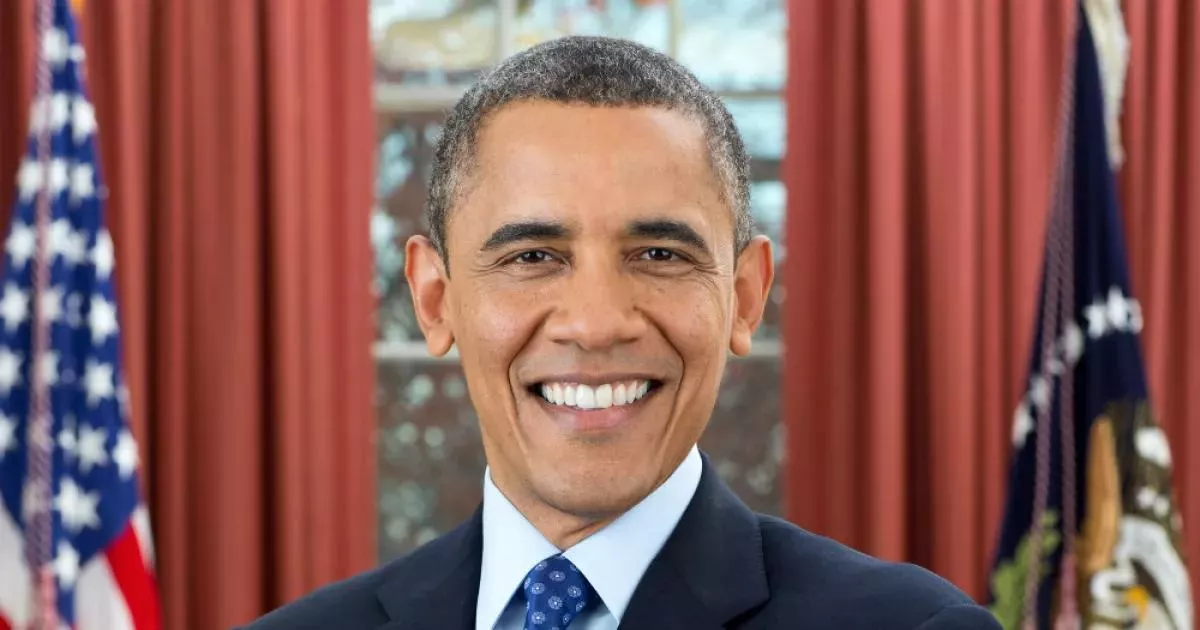
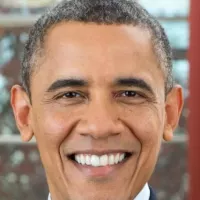
Barack Obama, the 44th U.S. President (2009-2017), was the first African American to hold the office. A Democrat, he served as a U.S. Senator for Illinois (2005-2008) and an Illinois State Senator (1997-2004). His presidency was marked by the Affordable Care Act, the end of the Iraq War, and the killing of Osama bin Laden. He faced challenges including the Great Recession and political polarization. Prior to his political career, Obama was a community organizer and civil rights attorney. His background and rise to the presidency made him a symbol of hope and change for many.
1934: Birth of Barack Obama Sr.
In 1934, Barack Hussein Obama Sr., Barack Obama's father, was born.


1960: Obama's Parents Meet
In 1960, Barack Obama's parents met in a Russian language class at the University of Hawaiʻi at Mānoa.
February 2, 1961: Marriage of Obama's Parents
On February 2, 1961, Barack Obama's parents, Stanley Ann Dunham and Barack Hussein Obama, married in Wailuku, Hawaii, six months before Obama was born.
August 4, 1961: Barack Obama's Birth
On August 4, 1961, Barack Hussein Obama II was born at Kapiolani Medical Center for Women and Children in Honolulu, Hawaii, to Stanley Ann Dunham and Barack Hussein Obama.
August 1961: Move to Seattle
In late August 1961, Barack Obama and his mother moved to the University of Washington in Seattle.
June 1962: Obama's Father Graduation
In June 1962, Barack Obama's father completed his undergraduate degree in economics in Hawaii.
1963: Dunham Meets Lolo Soetoro
In 1963, Ann Dunham met Lolo Soetoro at the University of Hawaiʻi.
March 1964: Obama's Parents Divorced
In March 1964, Barack Obama's parents divorced.
March 15, 1965: Marriage to Lolo Soetoro
On March 15, 1965, Ann Dunham married Lolo Soetoro on Molokai.
1965: Passage of Medicare and Medicaid
In 1965, the passage of Medicare and Medicaid occurred.
1966: Lolo Soetoro Returns to Indonesia
In 1966, Lolo Soetoro returned to Indonesia after two one-year extensions of his J-1 visa.
1967: Move to Indonesia
In 1967, Ann Dunham and Barack Obama followed Lolo Soetoro to Indonesia.
1970: Move to Menteng District
In 1970, the family moved to a wealthier neighborhood in the Menteng district of Central Jakarta.
1971: Father's Visit
In 1971, Barack Obama Sr. visited his son in Hawaii for the only time.
1971: Return to Honolulu
In 1971, Barack Obama returned to Honolulu to live with his maternal grandparents.
1972: Living with Mother and Sister
From 1972 to 1975, Barack Obama lived with his mother and half-sister, Maya Soetoro, in Hawaii.
1975: Mother's Return to Indonesia
In 1975, Barack Obama's mother and half-sister returned to Indonesia, while he stayed in Hawaii.
1979: High School Graduation
In 1979, Barack Obama graduated from high school at Punahou School.
1979: Move to Los Angeles
In 1979, Barack Obama moved to Los Angeles to attend Occidental College on a full scholarship after graduating from high school.
1980: Visit to Kenya
In 1980, Barack Obama visited Kenya and stopped using the nickname 'Barry'.
February 1981: First Public Speech
In February 1981, Barack Obama made his first public speech, calling for Occidental to participate in the disinvestment from South Africa in response to apartheid.
1982: Death of Barack Obama Sr.
In 1982, Barack Hussein Obama Sr., Barack Obama's father, passed away.
1983: Graduation from Columbia University
In 1983, Barack Obama graduated from Columbia University with a Bachelor of Arts degree in political science.
June 1985: Director of Developing Communities Project
In June 1985, Barack Obama was hired as director of the Developing Communities Project in Chicago.
1985: Project Coordinator for NYPIRG
In 1985, Barack Obama worked as a project coordinator for the New York Public Interest Research Group on the City College of New York campus for three months.
May 1988: End of Work at Developing Communities Project
In May 1988, Barack Obama ended his work at the Developing Communities Project.
1988: Enrollment at Harvard Law School
In 1988, Barack Obama enrolled at Harvard Law School.
1989: Summer Associate at Sidley Austin
In 1989, Barack Obama worked as a summer associate at the law firm of Sidley Austin in Chicago.
1990: Summer Associate at Hopkins & Sutter
In 1990, Barack Obama worked as a summer associate at Hopkins & Sutter in Chicago.
1991: Visiting Law and Government Fellow
In 1991, Barack Obama accepted a two-year position as Visiting Law and Government Fellow at the University of Chicago Law School to work on his first book.
1991: Graduation from Harvard Law
In 1991, Barack Obama graduated from Harvard Law School with a Juris Doctor magna cum laude.
October 1992: End of Project Vote
In October 1992, Obama directed Illinois's Project Vote, a voter registration campaign that successfully registered 150,000 African Americans.
1992: Lecturer at University of Chicago Law School
In 1992, Barack Obama began teaching constitutional law as a lecturer at the University of Chicago Law School.
1992: Mother Earns PhD
In 1992, Barack Obama's mother earned a PhD degree.
1993: Named to "40 under Forty"
In 1993, Crain's Chicago Business named Barack Obama to its list of "40 under Forty" powers to be.
1995: Publication of "Dreams from My Father"
In 1995, Barack Obama published his book, "Dreams from My Father".

1995: Death of Obama's Mother
In 1995, Barack Obama's mother passed away in Hawaii following unsuccessful treatment for cancer.
1995: Death of Stanley Ann Dunham
In 1995, Stanley Ann Dunham, Barack Obama's mother, passed away after battling ovarian and uterine cancer.
1996: Senior Lecturer at University of Chicago Law School
In 1996, Barack Obama became a senior lecturer at the University of Chicago Law School.
1996: Election to Illinois Senate
In 1996, Barack Obama was elected to represent the 13th district in the Illinois Senate.
1996: Church Arson Prevention Act
In 1996, Democratic President Bill Clinton signed into law the Church Arson Prevention Act.
1997: Illinois State Senator
In 1997, Barack Obama began his service as an Illinois State Senator.
2004: End of Teaching at University of Chicago Law School
In 2004, Barack Obama ended his teaching career at the University of Chicago Law School.
2004: End of State Senate Term
In 2004, Barack Obama ended his term as an Illinois State Senator.
2004: Run for U.S. Senate
In 2004, Barack Obama successfully ran for the U.S. Senate after teaching at the University of Chicago Law School.
2005: U.S. Senator for Illinois
In 2005, Barack Obama began his service as a U.S. Senator representing Illinois.
2006: Interview on Family Diversity
In 2006, Barack Obama highlighted the diversity of his extended family, describing it as a "mini-United Nations".
2006: Publication of "The Audacity of Hope"
In 2006, Barack Obama published his book, "The Audacity of Hope".

2006: Grammy Award for Dreams from My Father
In 2006, Barack Obama received a Grammy Award for Best Spoken Word Album for Dreams from My Father.
February 10, 2007: Obama Announces Presidential Candidacy
On February 10, 2007, Barack Obama announced his candidacy for President of the United States in front of the Old State Capitol building in Springfield, Illinois. He emphasized ending the Iraq War, increasing energy independence, and reforming healthcare.
August 2007: Obama Addresses Questions About His Identity
In August 2007, during a meeting of the National Association of Black Journalists, Obama expressed puzzlement over questions about whether he is "black enough," stating, "we're still locked in this notion that if you appeal to white folks then there must be something wrong."
October 2007: Obama Acknowledges Youthful Image in Campaign Speech
In October 2007, Obama acknowledged his youthful image during a campaign speech, remarking, "I wouldn't be here if, time and again, the torch had not been passed to a new generation."
2007: Discovery of Irish Ancestor
In 2007, it was discovered that Barack Obama's great-great-grandfather, Falmouth Kearney, emigrated from Moneygall, Ireland, to the U.S. in 1850.
June 2, 2008: Obama Clinches Democratic Nomination
On June 2, 2008, Barack Obama received enough votes to clinch the Democratic presidential nomination after a close primary race against Hillary Clinton.
June 19, 2008: Obama Turns Down Public Financing
On June 19, 2008, Barack Obama became the first major-party presidential candidate since 1976 to turn down public financing in the general election.
August 23, 2008: Obama Announces Joe Biden as Running Mate
On August 23, 2008, Barack Obama announced his selection of Delaware senator Joe Biden as his vice presidential running mate, choosing him over other potential candidates.
October 2008: Presidential Debates
In October 2008, Barack Obama and John McCain engaged in three presidential debates, discussing their platforms and visions for the country.
November 2, 2008: Death of Madelyn Dunham
On November 2, 2008, Madelyn Dunham, Barack Obama's maternal grandmother, passed away, two days before his election to the presidency.
2008: Obama's 2008 campaign highlighted
In 2008, Barack Obama conducted what has been described as one of the most effective campaigns in American history. He is also considered as one of the most talented political orators of the 21st century.
2008: End of Senate Term
In 2008, Barack Obama ended his term as a U.S. Senator representing Illinois.
2008: Time Person of the Year
In 2008, Barack Obama was named TIME Magazine's Time Person of the Year.
2008: Nomination for President
In 2008, Barack Obama was nominated by the Democratic Party for president and selected Joe Biden as his running mate. He later defeated John McCain in the presidential election.
2008: Response to Financial Crisis
In 2008, the Obama administration responded to the financial crisis with measures including the American Recovery and Reinvestment Act of 2009.
January 20, 2009: Obama Inaugurated as 44th President
On January 20, 2009, Barack Obama was inaugurated as the 44th president of the United States. In his first days, he directed the military to develop plans to withdraw troops from Iraq and ordered the closing of the Guantanamo Bay detention camp.
February 2009: Increase in troop levels in Afghanistan
In February 2009 Obama announced an increase in U.S. troop levels to 17,000 military personnel in Afghanistan.
February 2009: Obama Rated Most Respected World Leader
In a February 2009 poll conducted in Western Europe and the U.S. by Harris Interactive, Obama was recognized as the most respected and powerful world leader.
February 17, 2009: Signing of the American Recovery and Reinvestment Act
On February 17, 2009, President Obama signed the American Recovery and Reinvestment Act of 2009, a $787 billion economic stimulus package, aimed at helping the economy recover from the global recession. The act included increased federal spending for health care, infrastructure, education, tax breaks, and direct assistance to individuals.
February 27, 2009: Announcement of End to Iraq Combat Operations
On February 27, 2009, Obama announced that combat operations in Iraq would end within 18 months.
March 11, 2009: Creation of White House Council on Women and Girls
On March 11, 2009, Obama created the White House Council on Women and Girls to advise him on issues relating to the welfare of American women and girls.
March 2009: Announcement of a "New Era" in Foreign Relations
In February and March 2009, Vice President Joe Biden and Secretary of State Hillary Clinton made separate overseas trips to announce a "new era" in U.S. foreign relations with Russia and Europe, using the terms "break" and "reset" to signal major changes from the policies of the preceding administration. On March 19, 2009, President Obama released a New Year's video message to the people and government of Iran.
March 2009: Intervention in the Automotive Industry
In March 2009, President Obama intervened in the troubled automotive industry, renewing loans for General Motors (GM) and Chrysler to continue operations while reorganizing. The White House set terms for both firms' bankruptcies, including the sale of Chrysler to Italian automaker Fiat and a reorganization of GM giving the U.S. government a temporary 60 percent equity stake.
March 2009: Lifting of Ban on Stem Cell Research Funding
In March 2009, President Obama lifted a ban on using federal funds for stem cell research.
March 2009: Obama Reverses Bush-era Stem Cell Policy
In March 2009, President Obama reversed a Bush-era policy that had limited funding of embryonic stem cell research, and pledged to develop 'strict guidelines' on the research.
March 2009: Managing the 2008 Financial Crisis
In March 2009, Treasury Secretary Timothy Geithner, under President Obama's administration, took steps to manage the 2008 financial crisis. This included introducing the Public–Private Investment Program for Legacy Assets, with provisions for buying up to $2 trillion in depreciated real estate assets.
May 2009: Replacement of Military Commander in Afghanistan
In May 2009, Obama replaced the military commander in Afghanistan, General David D. McKiernan, with Lt. Gen. Stanley A. McChrystal.
May 2009: Obama Rated Most Popular World Leader
In a May 2009 Harris poll, Obama was recognized as the most popular world leader and the figure on whom most people pinned their hopes for global economic recovery.
May 26, 2009: Nomination of Sonia Sotomayor
On May 26, 2009, Obama nominated Sonia Sotomayor to replace retiring Associate Justice David Souter on the Supreme Court.
June 4, 2009: Speech at Cairo University
On June 4, 2009, President Obama delivered a speech at Cairo University in Egypt calling for "A New Beginning" in relations between the Islamic world and the United States and promoting Middle East peace.
June 2009: Economic Stimulus and Car Allowance Rebate System
In June 2009, President Obama, dissatisfied with the pace of economic stimulus, called on his cabinet to accelerate the investment. He signed into law the Car Allowance Rebate System, known as "Cash for Clunkers", which temporarily boosted the economy.
June 26, 2009: Condemnation of Iranian Government's Actions
On June 26, 2009, President Obama condemned the Iranian government's actions towards protesters following Iran's 2009 presidential election.
July 14, 2009: Introduction of Health Care Overhaul Plan
On July 14, 2009, House Democratic leaders introduced a 1,017-page plan for overhauling the U.S. health care system, which President Obama wanted Congress to approve by the end of 2009.
July 2009: Launch of Priority Enforcement Program
In July 2009, Obama launched the Priority Enforcement Program, an immigration enforcement program, and the Secure Communities fingerprinting and immigration status data-sharing program.
August 6, 2009: Confirmation of Sonia Sotomayor
On August 6, 2009, Sonia Sotomayor was confirmed as a Supreme Court Justice, becoming the first Supreme Court Justice of Hispanic descent.
October 1, 2009: Obama Administration Increases Nuclear Weapons Production
On October 1, 2009, the Obama administration proceeded with the Bush administration's program to increase nuclear weapons production through the "Complex Modernization" initiative, which expanded two existing nuclear sites to produce new bomb parts.
October 8, 2009: Hate Crimes Prevention Act Signed
On October 8, 2009, Obama signed the Matthew Shepard and James Byrd Jr. Hate Crimes Prevention Act, expanding the 1969 United States federal hate-crime law to include crimes motivated by a victim's actual or perceived gender, sexual orientation, gender identity, or disability.
October 9, 2009: Obama wins Nobel Peace Prize
On October 9, 2009, Barack Obama was awarded the 2009 Nobel Peace Prize by the Norwegian Nobel Committee. The prize was given "for his extraordinary efforts to strengthen international diplomacy and cooperation between peoples". Obama became the fourth U.S. president and third sitting president to receive the award.
October 30, 2009: HIV Travel Ban Lifted
On October 30, 2009, Obama lifted the ban on travel to the United States by those infected with HIV.
November 7, 2009: House Passes Health Care Bill
On November 7, 2009, a health care bill featuring the public option was passed in the House.
November 2009: Obama's Approval Ratings Dip
By November 2009, Obama's approval ratings, which started high, dipped below the majority level.
November 2009: Federal Reserve and Treasury Spending
By the end of November 2009, the Bush and Obama administrations had spent $3 trillion of the $11.5 trillion in spending and loan guarantees authorized from the Federal Reserve and the Department of the Treasury.
December 1, 2009: Announcement of Additional Troop Deployment to Afghanistan
On December 1, 2009, Obama announced the deployment of an additional 30,000 military personnel to Afghanistan and proposed to begin troop withdrawals 18 months from that date.
December 24, 2009: Senate Passes Health Care Bill
On December 24, 2009, the Senate passed its own health care bill—without a public option—on a party-line vote of 60–39.
2009: President of the United States
In 2009, Barack Obama began his service as the 44th president of the United States.
2009: Nobel Peace Prize
In 2009, Barack Obama received the Nobel Peace Prize.
2009: National Defense Authorization Act for Fiscal Year 2010 signed into law
In 2009, Obama signed into law the National Defense Authorization Act for Fiscal Year 2010, which included the Matthew Shepard and James Byrd Jr. Hate Crimes Prevention Act.
2009: Rising Unemployment Rate
In 2009, the unemployment rate rose, reaching a peak in October at 10.0 percent and averaging 10.0 percent in the fourth quarter.
December 31, 2009: Decline in U.S. federal custody inmates
From December 31, 2009, to December 31, 2015, the number of inmates sentenced in U.S. federal custody declined by five percent.
March 2010: Public Stance Against Israeli Housing Projects in East Jerusalem
In March 2010, Obama took a public stance against plans by the government of Israeli prime minister Benjamin Netanyahu to continue building Jewish housing projects in predominantly Arab neighborhoods of East Jerusalem.
March 2010: Agreement Reached with Russia on Nuclear Arms Reduction
In March 2010, an agreement was reached with Russian President Dmitry Medvedev's administration to replace the 1991 Strategic Arms Reduction Treaty with a new pact. This new treaty aimed to reduce the number of long-range nuclear weapons in both countries' arsenals by about a third.
March 2010: CBO Estimate of Deficit Reduction
In March 2010, the Congressional Budget Office (CBO) estimated that the net effect of both laws will be a reduction in the federal deficit by $143 billion over the first decade.
March 21, 2010: House Passes Affordable Care Act
On March 21, 2010, the Affordable Care Act (ACA, colloquially "Obamacare") passed by the Senate in December was passed in the House by a vote of 219 to 212.
March 23, 2010: Signing of the Affordable Care Act
On March 23, 2010, President Obama signed the Affordable Care Act into law.
March 31, 2010: Ending Ban on Oil and Gas Drilling
Prior to the oil spill, on March 31, 2010, President Obama ended a ban on oil and gas drilling along the majority of the East Coast of the United States and along the coast of northern Alaska in an effort to win support for an energy and climate bill and to reduce foreign imports of oil and gas.
April 2010: Obama and Medvedev Sign New START Treaty
In April 2010, Obama and Dmitry Medvedev signed the New START treaty, reducing the number of long-range nuclear weapons.
April 2010: Survey on Stimulus Bill Impact on Employment
In April 2010, a survey of members of the National Association for Business Economics showed an increase in job creation for the first time in two years, however, 73 percent of 68 respondents believed the stimulus bill has had no impact on employment.
April 20, 2010: Deepwater Horizon Oil Spill
On April 20, 2010, an explosion destroyed an offshore drilling rig at the Macondo Prospect in the Gulf of Mexico, causing a major sustained oil leak. President Obama visited the Gulf, announced a federal investigation, formed a bipartisan commission, and announced a six-month moratorium on new deepwater drilling permits and leases.
May 10, 2010: Nomination of Elena Kagan
On May 10, 2010, Obama nominated Elena Kagan to replace retiring Associate Justice John Paul Stevens on the Supreme Court.
June 2010: David Petraeus Replaces McChrystal
In June 2010, David Petraeus replaced McChrystal after McChrystal's staff criticized White House personnel in a magazine article.
July 2010: Federal Reserve's Assessment of Economic Activity
In July 2010, the Federal Reserve noted that economic activity continued to increase, but its pace had slowed, and chairman Ben Bernanke said the economic outlook was "unusually uncertain".
July 2010: CIA Operatives Find Osama Bin Laden Hideout
Starting with information received from Central Intelligence Agency operatives in July 2010, the CIA developed intelligence over the next several months that determined what they believed to be the hideout of Osama bin Laden.
August 5, 2010: Confirmation of Elena Kagan
On August 5, 2010, Elena Kagan was confirmed, bringing the number of women sitting simultaneously on the Court to three for the first time in American history.
August 2010: Obama's Approval in the Low 40s
By August 2010, Obama's approval ratings had declined to the low 40s, mirroring trends observed during the first years of Ronald Reagan and Bill Clinton's presidencies.
August 19, 2010: Exit of last U.S. Combat Brigade from Iraq
On August 19, 2010, the last U.S. combat brigade exited Iraq, marking a significant step in the withdrawal of troops.
August 31, 2010: Announcement of End to U.S. Combat Mission in Iraq
On August 31, 2010, Obama announced that the United States combat mission in Iraq was over, signaling a shift in military strategy.
December 2010: Employment Increase
Between February and December 2010, employment rose by 0.8 percent, which was less than the average of 1.9 percent experienced during comparable periods in the past four employment recoveries.
December 2010: U.S. Senate Ratifies the New START Treaty
In December 2010, the U.S. Senate ratified the New START treaty, which Obama and Medvedev had signed earlier in April.
December 17, 2010: Signing of the Tax Relief, Unemployment Insurance Reauthorization, and Job Creation Act of 2010
On December 17, 2010, President Obama signed the Tax Relief, Unemployment Insurance Reauthorization, and Job Creation Act of 2010. This $858 billion bill included a temporary two-year extension of the 2001 and 2003 income tax rates, a one-year payroll tax reduction, continuation of unemployment benefits, and a new rate and exemption amount for estate taxes.
December 22, 2010: Don't Ask, Don't Tell Repeal Act Signed
On December 22, 2010, Obama signed the Don't Ask, Don't Tell Repeal Act of 2010, fulfilling a promise made in the 2008 presidential campaign to end the 1993 'don't ask, don't tell' policy that had prevented gay and lesbian people from serving openly in the United States Armed Forces.
2010: National Defense Authorization Act for Fiscal Year
In 2010, National Defense Authorization Act for Fiscal Year took place.
2010: Dodd-Frank Wall Street Reform and Consumer Protection Act signed
In 2010, Obama signed into effect the Dodd–Frank Wall Street Reform and Consumer Protection Act in response to the 2008 financial crisis. It brought the most significant changes to financial regulation in the United States since the Great Depression.
2010: Don't Ask, Don't Tell Repeal Act signed
In 2010, Obama signed the Don't Ask, Don't Tell Repeal Act, ending the policy banning open service from LGBT people in the U.S. armed forces.
2010: Affordable Care Act provisions go into effect
In 2010, provisions of the Affordable Care Act (ACA) went into effect. The ACA is considered Obama's most significant accomplishment.
February 2011: Protests Begin in Libya Against Muammar Gaddafi
In February 2011, protests began in Libya against long-time dictator Muammar Gaddafi as part of the Arab Spring, which soon turned violent.
March 2011: CIA Head Leon Panetta reported intelligence to President Obama
In March 2011, CIA head Leon Panetta reported to President Obama intelligence determining what they believed to be the hideout of Osama bin Laden.
April 4, 2011: Obama Files for Reelection
On April 4, 2011, Barack Obama filed election papers with the Federal Election Commission and announced his reelection campaign for 2012 in a video titled "It Begins with Us" posted on his website.
May 1, 2011: Authorization and Execution of Raid Resulting in Death of Osama bin Laden
On May 1, 2011, an operation authorized by President Obama, conducted by United States Navy SEALs, resulted in the shooting death of Osama bin Laden in Abbottabad, Pakistan. Papers, computer drives and disks were seized from the compound. Celebrations erupted across the country.
May 2, 2011: Death of Osama bin Laden Boosts Obama's Approval
Following the death of Osama bin Laden on May 2, 2011, Obama experienced a slight increase in his poll numbers and maintained a 50–53 percent approval rating for about a month before his approval numbers decreased again.
May 2011: Meeting with Irish Cousins
In May 2011, Barack Obama met with his Irish cousins in Moneygall, Ireland.
July 2011: Start of Troop Withdrawals from Afghanistan
In July 2011, troop withdrawals from Afghanistan began, following Obama's announcement in December 2009.
August 2, 2011: Signing of the Budget Control Act of 2011
On August 2, 2011, President Obama signed the bipartisan Budget Control Act of 2011, following a congressional debate over raising the nation's debt limit. The legislation enforced limits on discretionary spending until 2021, established a procedure to increase the debt limit, created a Congressional Joint Select Committee on Deficit Reduction, and established procedures for reducing spending.
August 18, 2011: Obama Calls for Assad to Step Aside
On August 18, 2011, Obama issued a written statement that said: "The time has come for President Assad to step aside."
October 21, 2011: Announcement of Complete Troop Withdrawal from Iraq
On October 21, 2011, President Obama announced that all U.S. troops would leave Iraq in time to be "home for the holidays," marking the end of a long-term military presence.
December 2011: Obama Instructs Agencies to Consider LGBT Rights in Foreign Aid
In December 2011, Obama directed federal agencies to consider LGBT rights when issuing financial aid to foreign countries.
2011: Military Intervention in Libya
In 2011, Barack Obama ordered the military intervention in Libya to implement United Nations Security Council Resolution 1973, contributing to the overthrow of Muammar Gaddafi.
2011: Renewal of Patriot Act
In 2011, Obama signed a four-year renewal of the Patriot Act.
2011: Drone Strike Killing Anwar al-Awlaki
In 2011, President Obama ordered a drone strike in Yemen which targeted and killed Anwar al-Awlaki, an American imam suspected of being a leading Al-Qaeda organizer. al-Awlaki became the first U.S. citizen to be targeted and killed by a U.S. drone strike. The killing led to significant controversy.
2011: Withdrawal from Iraq
In 2011, the U.S. withdrew from Iraq, but later ordered military intervention after gains made by ISIL.
2011: United States Vetoes Security Council Resolution Condemning Israeli Settlements
In 2011, the United States vetoed a Security Council resolution condemning Israeli settlements, with the United States being the only nation to do so.
April 3, 2012: Obama Secures Democratic Nomination for Reelection
On April 3, 2012, Barack Obama secured the 2778 convention delegates needed to win the Democratic nomination, running virtually unopposed in the Democratic Party presidential primaries.
May 9, 2012: Obama Affirms Support for Same-Sex Marriage
On May 9, 2012, shortly after launching his reelection campaign, Obama publicly affirmed his personal support for the legalization of same-sex marriage, becoming the first sitting U.S. president to do so.
June 28, 2012: Supreme Court Ruling on ACA Mandate
On June 28, 2012, the Supreme Court ruled by a 5–4 vote in National Federation of Independent Business v. Sebelius that the individual mandate in the Affordable Care Act, requiring Americans to buy health insurance, was constitutional under the U.S. Congress's taxing authority.
July 2012: Ancestry.com Finds Possible Ancestor
In July 2012, Ancestry.com found a strong likelihood that Barack Obama's mother was descended from John Punch, an enslaved African man.
November 6, 2012: Obama Re-elected as President
On November 6, 2012, Barack Obama won 332 electoral votes, exceeding the 270 required to be reelected as president. He addressed supporters in Chicago, vowing to focus on jobs and work with both parties.
November 2012: Unemployment Rate Decrease
By November 2012, the unemployment rate fell to 7.7 percent.
2012: Re-election as President
In 2012, Barack Obama defeated Republican opponent Mitt Romney in the presidential election, securing his second term as president.
2012: Time Person of the Year
In 2012, Barack Obama was named TIME Magazine's Time Person of the Year.
January 16, 2013: Obama Announces Gun Control Proposals
On January 16, 2013, one month after the Sandy Hook Elementary School shooting, Obama signed 23 executive orders and outlined a series of sweeping proposals regarding gun control.
January 21, 2013: Obama Calls for Full Equality for Gay Americans
During his second inaugural address on January 21, 2013, Obama became the first U.S. president in office to call for full equality for gay Americans, and the first to mention gay rights or the word 'gay' in an inaugural address.
February 2013: Reduction of Troop Level in Afghanistan
In February 2013, Obama said the U.S. military would reduce the troop level in Afghanistan from 68,000 to 34,000 U.S. troops by February 2014.
May 2013: Obama's Approval Ratings Stable
After his second inauguration in 2013, Obama's approval ratings remained stable around 52 percent until May, before declining for the rest of the year.
August 2013: Obama Criticizes Russia's Anti-Homosexual Law
In August 2013, Obama criticized Russia's law that discriminated against homosexual people but did not advocate for a boycott of the 2014 Winter Olympics in Sochi, Russia.
November 2013: Obama Administration Opens Negotiations with Iran
In November 2013, the Obama administration commenced negotiations with Iran to prevent the country from acquiring nuclear weapons, leading to an interim agreement.
December 10, 2013: Meeting between Obama and Raúl Castro at Nelson Mandela Memorial
On December 10, 2013, Cuban President Raúl Castro greeted and shook hands with Obama at the Nelson Mandela memorial service in Johannesburg.
December 2013: Addressing Income Inequality and Trade
In December 2013, President Obama declared growing income inequality a "defining challenge of our time" and called on Congress to bolster the safety net and raise wages. He urged Congress to ratify the Trans-Pacific Partnership.
2013: Global Surveillance Disclosures
Following the 2013 global surveillance disclosures by whistleblower Edward Snowden, Obama condemned the leak as unpatriotic, but called for increased restrictions on the National Security Agency (NSA) to address violations of privacy.
2013: Unemployment Rate Decrease
In the last month of 2013, the unemployment rate decreased to 6.7 percent.
January 22, 2014: Establishment of White House Task Force to Protect Students from Sexual Assault
On January 22, 2014, Obama established the White House Task Force to Protect Students from Sexual Assault to advise him on issues related to sexual assault on college and university campuses.
February 2014: Troop level reduction complete in Afghanistan
By February 2014, the U.S. military reduced the troop level in Afghanistan from 68,000 to 34,000 U.S. troops as previously announced.
June 2014: Deployment of Troops to Baghdad After Capture of Mosul by ISIL
In June 2014, following the capture of Mosul by ISIL, Obama sent 275 troops to provide support and security for U.S. personnel and the U.S. Embassy in Baghdad.
August 2014: Order of Airstrikes Against ISIL During Sinjar Massacre
In August 2014, during the Sinjar massacre, Obama ordered a campaign of U.S. airstrikes against ISIL to combat their advances.
December 2014: Negotiation of Restoration of Relations with Cuba
In December 2014, it was announced that Obama, with Pope Francis as an intermediary, had negotiated a restoration of relations with Cuba, after nearly sixty years of détente.
2014: Obama Discusses Racial Disadvantages
By 2014, Obama began openly discussing the disadvantages faced by many members of minority groups, following events like the shooting of Michael Brown and the rise of the Black Lives Matter movement.
2014: Continued Decline in Unemployment Rate
During 2014, the unemployment rate continued to decline, falling to 6.3 percent in the first quarter.
2014: Ambassador of Humanity Award
In 2014, Barack Obama received The Shoah Foundation Institute for Visual History and Education's Ambassador of Humanity Award.
2014: Authorization of Air Campaign Aimed at ISIL
In 2014, Obama authorized an air campaign aimed primarily at ISIL in Syria.
2014: Obama Likens Zionist Movement to Civil Rights Movement
In 2014, Obama likened the Zionist movement to the civil rights movement in the United States, stating that both movements seek to bring justice and equal rights to historically persecuted peoples.
2014: Russia's Invasion of Crimea
In 2014, Russia invaded Crimea, marking a significant geopolitical event.
February 24, 2015: Veto of Keystone XL Pipeline Bill
On February 24, 2015, President Obama vetoed a bill that would have authorized the Keystone XL pipeline. It was the third veto of Obama's presidency and his first major veto.
March 2015: Authorization of support to Saudis in Yemen intervention
In March 2015, Obama authorized U.S. forces to provide logistical and intelligence support to the Saudis in their military intervention in Yemen, establishing a "Joint Planning Cell" with Saudi Arabia.
June 2015: Supreme Court Ruling in King v. Burwell
In June 2015, the Supreme Court ruled 6–3 in King v. Burwell that subsidies to help individuals and families purchase health insurance were authorized for those doing so on both the federal exchange and state exchanges, not only those purchasing plans "established by the State", as the statute reads.
July 1, 2015: Announcement of Resumption of Formal Diplomatic Relations Between Cuba and the United States
On July 1, 2015, President Obama announced that formal diplomatic relations between Cuba and the United States would resume, and embassies would be opened in Washington and Havana.
July 14, 2015: Announcement of the Joint Comprehensive Plan of Action with Iran
On July 14, 2015, an agreement titled the "Joint Comprehensive Plan of Action" was announced with Iran, which involved the removal of sanctions in exchange for measures to prevent Iran from producing nuclear weapons. This deal was hailed by Obama but faced strong criticism from Republicans, conservatives, and Israeli Prime Minister Benjamin Netanyahu.
August 13, 2015: Upgrade of U.S. Interests Section to Embassy in Havana
On August 13, 2015, the United States upgraded its "interests section" in Havana to an embassy, marking a further step in restoring diplomatic relations with Cuba.
October 2015: Abandonment of Pentagon-run Program to Train Anti-Assad Rebels
In October 2015, the Pentagon-run program to train anti-Assad rebels was formally abandoned after it was found to have failed.
October 2015: Announcement to Keep U.S. Forces in Afghanistan Indefinitely
In October 2015, the White House announced a plan to keep U.S. Forces in Afghanistan indefinitely due to the deteriorating security situation.
November 2015: Reaffirmation of Stance on Assad Stepping Aside
In November 2015, Obama's stance that "The time has come for President Assad to step aside" was reaffirmed.
December 2015: Obama Starts $348 Billion Nuclear Arms Buildup Program
In December 2015, Obama initiated a $348 billion program to support the largest U.S. buildup of nuclear arms since Ronald Reagan's time in office.
2015: Criticism from Israel over Iran Nuclear Deal
In 2015, Obama was harshly criticized by Israel for advocating and signing the Iran Nuclear Deal; Israeli prime minister Benjamin Netanyahu, who had advocated the U.S. congress to oppose it, said the deal was "dangerous" and "bad."
2015: Brookings Institution Survey
In 2015, the Brookings Institution survey ranked Barack Obama as the 18th-greatest American president.
December 31, 2015: Decline in U.S. federal custody inmates
From December 31, 2009, to December 31, 2015, the number of inmates sentenced in U.S. federal custody declined by five percent.
January 5, 2016: Obama Announces New Executive Actions Extending Background Check Requirements
On January 5, 2016, Obama announced new executive actions extending background check requirements to more gun sellers.
March 2016: Obama's Approval Rating Reaches 50 Percent
According to Gallup, Obama's approval rating reached 50 percent in March 2016, a level not seen since May 2013.
March 2016: Obama's Visit to Cuba
In March 2016, Obama visited Havana, Cuba for two days, becoming the first sitting U.S. president to arrive since Calvin Coolidge in 1928.
March 2016: Race Relations Concerns
In a March 2016 Gallup poll, nearly one third of Americans said they worried 'a great deal' about race relations, a higher figure than in any previous Gallup poll since 2001.
September 2016: Snub by Xi Jinping at G20 Summit
In September 2016, Obama was snubbed by Xi Jinping and the Chinese Communist Party upon arrival at Hangzhou International Airport for the 2016 G20 Hangzhou summit, as he was not given the usual red carpet welcome.
December 2016: Permanent Ban on Offshore Oil and Gas Drilling
In December 2016, President Obama permanently banned new offshore oil and gas drilling in most United States-owned waters in the Atlantic and Arctic Oceans using the 1953 Outer Continental Shelf Act.
December 23, 2016: United States Abstains from UN Security Council Resolution 2334
On December 23, 2016, under the Obama administration, the United States abstained from United Nations Security Council Resolution 2334, which condemned Israeli settlement building in the occupied Palestinian territories.
2016: Obama reflects on Libya intervention
In 2016 Obama said "Our coalition could have and should have done more to fill a vacuum left behind" and that it was "a mess". He has stated that the lack of preparation surrounding the days following the government's overthrow was the "worst mistake" of his presidency.
2016: Sanctions Against Russia
In 2016, Barack Obama initiated sanctions against Russia following Russian interference in the U.S. elections.
2016: Ban on transgender people serving openly in the U.S. armed forces ended
In 2016, Obama's administration ended the ban on transgender people serving openly in the U.S. armed forces.
2016: Pentagon Ends Ban on Transgender People Serving Openly in the Military
In 2016, during Obama's presidency, the Pentagon ended the policy that barred transgender people from serving openly in the military.
2016: Interference in U.S. Presidential Election
In 2016, there was interference in the U.S. presidential election, raising concerns about foreign influence on democratic processes.
January 5, 2017: U.S. House of Representatives Condemns UN Resolution
On January 5, 2017, the United States House of Representatives voted 342–80 to condemn the UN Resolution 2334.
January 6, 2017: Israeli Government Withdraws Annual Dues from the UN
On January 6, 2017, the Israeli government withdrew its annual dues from the United Nations, which totaled $6 million, in response to the U.S. abstention from UN Security Council Resolution 2334.
January 2017: Obama leaves office with a 60 percent approval rating
In January 2017, Obama left office with a 60 percent approval rating.
January 20, 2017: End of Obama's Presidency
On January 20, 2017, Obama's presidency concluded with the inauguration of his successor, Donald Trump. The Obama family then moved to a rented house in Kalorama, Washington, D.C.
2017: Obama Leaves Office
In 2017, Barack Obama left office after serving two terms as president, and he remained politically active.
2017: John F. Kennedy Profile in Courage Award
In 2017, Barack Obama received the John F. Kennedy Profile in Courage Award.
2017: End of Presidential Term
In 2017, Barack Obama's term as the 44th president of the United States came to an end.
2017: Penalty for violating the individual mandate was repealed
In 2017, the penalty for violating the individual mandate of the Affordable Care Act was repealed, effective 2019.
May 22, 2018: Obama Signs Deal with Netflix
On May 22, 2018, Barack and Michelle Obama signed a deal with Netflix to produce docu-series, documentaries, and features through their new production company, Higher Ground Productions.
2018: Gallup job approval poll
In 2018 Gallup's job approval poll for the past 10 U.S. presidents, Barack Obama received a 63 percent approval rating.
2018: Robert F. Kennedy Center for Justice and Human Rights Ripple of Hope Award
In 2018, Barack Obama received the Robert F. Kennedy Center for Justice and Human Rights Ripple of Hope Award.
2018: Obama's Retrospective Approval Rating
In 2018, Gallup's retrospective approval polls of former presidents indicated that Obama garnered a 63 percent approval rating, ranking him among the most popular presidents since World War II.
2019: Obama Buys Home on Martha's Vineyard
In 2019, Barack and Michelle Obama purchased a home on Martha's Vineyard from Wyc Grousbeck.
2019: Penalty for violating the individual mandate was repealed
In 2019, the penalty for violating the individual mandate of the Affordable Care Act was repealed.
April 14, 2020: Obama Endorses Joe Biden for President
On April 14, 2020, Obama endorsed his former vice president, Joe Biden, for president in the presidential election, stating that Biden has "all the qualities we need in a president right now."
2020: Campaigning for Biden
In 2020, Barack Obama campaigned for candidates in American elections, including in Joe Biden's successful presidential bid.
2020: American Factory Wins Academy Award
In 2020, Higher Ground's first film, American Factory, won the Academy Award for Best Documentary Feature.
2020: Affordable Care Act provisions went into effect
In 2020, provisions of the Affordable Care Act (ACA) went into effect. The ACA is considered Obama's most significant accomplishment.
January 2021: Obama Attends Inauguration of Joe Biden
In January 2021, Obama and his wife Michelle attended the inauguration of Joe Biden as President of the United States.
February 2021: Obama and Bruce Springsteen Start Podcast
In February 2021, Obama and musician Bruce Springsteen launched a podcast called Renegades: Born in the USA where they discuss "their backgrounds, music and their 'enduring love of America.'"
2021: Presidential Library Construction Begins
In 2021, construction began on Barack Obama's presidential library in the South Side of Chicago.
March 4, 2022: Obama Wins Audio Publishers Association Award
On March 4, 2022, Obama received an Audio Publishers Association (APA) Award in the best narration by the author category for his narration of his memoir, A Promised Land.

2022: Primetime Emmy Award for Outstanding Narrator for Our Great National Parks
In 2022, Barack Obama received a Primetime Emmy Award for Outstanding Narrator for Our Great National Parks.
March 2023: Obama Travels to Australia
In March 2023, Obama visited Australia as part of his speaking tour, meeting with Prime Minister Anthony Albanese and visiting Melbourne for the first time.
October 2023: Obama Discusses Israel-Hamas War
In October 2023, during the Gaza war, Obama stated that Israel must dismantle Hamas following the October 7 attacks. He also warned that Israel's actions could "harden Palestinian attitudes for generations" and weaken international support, suggesting that military strategies should consider the human costs of the war.
2023: Primetime Emmy Award for Outstanding Narrator for Working: What We Do All Day
In 2023, Barack Obama received a Primetime Emmy Award for Outstanding Narrator for Working: What We Do All Day.
2023: Obama's Continued High Approval Rating
In 2023, Gallup's retrospective approval polls indicated Obama again garnered a 63 percent approval rating, maintaining his position as one of the most popular presidents since World War II.
July 2024: Obama Expresses Concerns About Biden's Campaign
In July 2024, Obama conveyed his worries regarding Biden's campaign prospects after a poorly received debate performance against Trump. Subsequently, Biden withdrew his candidacy, endorsing Vice President Harris. Later in July, Obama and his wife Michelle endorsed Harris and Obama delivered a speech at the 2024 Democratic National Convention formally endorsing her.
2024: Sylvanus Thayer Award
In 2024, Barack Obama became the first and so far only President from the Democratic Party to win the Sylvanus Thayer Award.
January 2025: Obama Attends Second Inauguration of Donald Trump
In January 2025, Obama was present at the second inauguration of Donald Trump.
2025: Primetime Emmy Award for Outstanding Narrator for Our Oceans
In 2025, Barack Obama received a Primetime Emmy Award for Outstanding Narrator for Our Oceans.
February 2026: Obama Criticizes Trump's Racist Meme
In February 2026, after Trump posted a racist meme of him and his wife, Obama condemned the post and criticized the lack of decorum as well as the conduct of the United States Immigration and Customs Enforcement.
June 2026: Presidential Library Set to Open
Barack Obama's presidential library is set to open in June 2026 in the South Side of Chicago.
Mentioned in this timeline
Donald John Trump is an American politician media personality and...
John F Kennedy JFK was the th U S President...
Bill Clinton served as the nd U S President from...
Hillary Diane Rodham Clinton is a prominent American politician lawyer...
Joe Biden served as the th President of the United...
Michelle Obama is an American attorney and author best known...
Trending

4 hours ago Aliaksandra Sasnovich Faces Nikola Bartunkova at WTA Toray Pan Pacific Open

4 hours ago Pokimane Expresses Safety Concerns Over Atrioc Following Past Deepfake Controversy

4 hours ago Cordae Addresses Split with Naomi Osaka in New Emotional Track Helpless
4 hours ago Xavier Becerra Launches Gubernatorial Campaign Initiatives and Rallies Supporters in California

4 hours ago Aaron Sorkin Discusses The Enduring Cultural Relevance Of A Few Good Men
5 hours ago Liev Schreiber Criticizes Reporter During Nocturne Premiere
Popular
Ilhan Omar is a prominent American politician currently serving as...

Ken Paxton is an American politician and lawyer serving as...

Elon Musk is a visionary entrepreneur and engineer known for...
William Franklin Graham III known as Franklin Graham is an...
Barack Obama the th U S President - was the...
Kathy Hochul is an American politician and lawyer who has...