


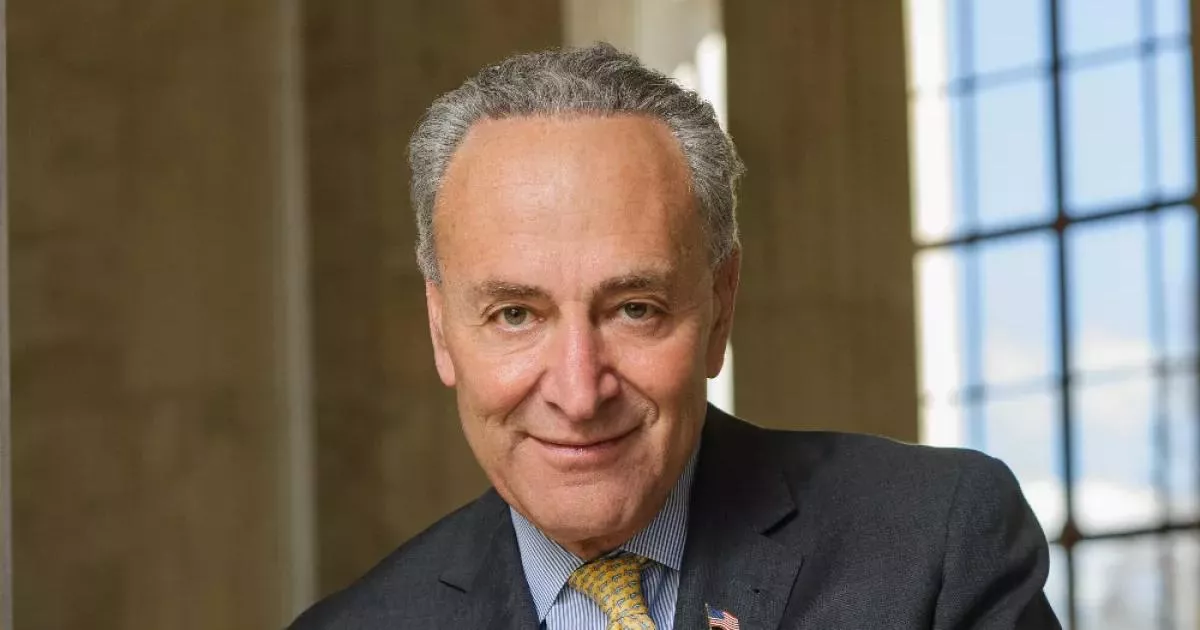
Chuck Schumer is a prominent American politician serving as the senior United States Senator from New York and the Senate Majority Leader. A member of the Democratic Party, he has represented New York in the Senate since 1999, following an extensive tenure in the U.S. House of Representatives. As a key figure in Democratic leadership, Schumer has played a central role in shaping national legislative agendas, managing party strategy, and navigating complex negotiations within a polarized Congress. Known for his focus on his home state and his strategic approach to coalition-building, he was instrumental in the passage of significant legislation, including the Infrastructure Investment and Jobs Act and the Inflation Reduction Act. Throughout his long career, Schumer has evolved from a local assemblyman into one of the most influential legislative powerbrokers in Washington, consistently prioritizing Democratic policy goals while balancing the diverse interests of his constituents.
8 hours ago : Chuck Schumer Faces Pressure Over Campaigning With Progressive Candidate Abdul El-Sayed
Senate Majority Leader Chuck Schumer navigates political tension while avoiding direct answers regarding his potential campaign support for progressive candidate Abdul El-Sayed, who has not committed to backing Schumer's leadership within the Democratic Party.


November 23, 1950: Birth of Charles Ellis Schumer
On November 23, 1950, future American politician Charles Ellis Schumer was born.
1967: Graduation from James Madison High School
In 1967, Chuck Schumer graduated as the valedictorian of James Madison High School after achieving a perfect SAT score and participating in the quiz show It's Academic.
1968: Political volunteer work for Eugene McCarthy
During 1968, Schumer volunteered for Eugene McCarthy's presidential campaign, which influenced him to switch his college major from chemistry to social studies at Harvard.
1971: Graduation from Harvard College
In 1971, Schumer graduated from Harvard College magna cum laude and as a member of Phi Beta Kappa.
1974: Election to the New York State Assembly
In 1974, Chuck Schumer successfully ran for and was elected to the New York State Assembly, succeeding his mentor, U.S. representative Stephen Solarz, in the seat.
1974: Completion of Juris Doctor
In 1974, Schumer earned his Juris Doctor with honors after attending Harvard Law School.
1975: Start of State Assembly Tenure
In 1975, Chuck Schumer began his political career by serving the first of three terms as a member of the New York State Assembly.
1975: Beginning of New York State Assembly Service
In 1975, Schumer began his tenure in the New York State Assembly, where he would serve three terms through 1981.
1975: Passing the New York state bar exam
In early 1975, Schumer successfully passed the New York state bar exam, though he chose to pursue politics instead of practicing law.
1980: End of State Assembly Tenure
Chuck Schumer concluded his three-term tenure as a member of the New York State Assembly in 1980.
1980: Election to the U.S. House of Representatives
In 1980, Chuck Schumer successfully ran for and won the U.S. House seat vacated by Elizabeth Holtzman after she pursued a Senate nomination.
1981: Redistricting of New York's 16th District
Beginning in 1981 and lasting until 1983, Chuck Schumer served his first term representing the 16th district following the redistricting process.
1981: Entry into the U.S. House of Representatives
In 1981, Schumer began his long-standing service in the United States House of Representatives, initially representing New York's 16th congressional district.
1981: Conclusion of New York State Assembly Service
In 1981, Schumer concluded his three-term service in the New York State Assembly, having represented the 181st, 182nd, and 183rd New York State Legislatures.
1982: Fundraising and Redistricting Challenges
In 1982, facing a potential primary challenge from Solarz due to redistricting, Schumer proactively engaged Wall Street firms and law offices to secure campaign funding to bolster his reelection chances.
1983: Congressional Redistricting
During 1983, Schumer was redistricted from New York's 16th congressional district to the 10th congressional district.
1983: Transition to the 10th Congressional District
In 1983, due to shifting district lines, Schumer began representing the 10th district, a role he would hold until 1993.
March 11, 1993: Introduction of the Religious Freedom Restoration Act
On March 11, 1993, Chuck Schumer formally introduced the Religious Freedom Restoration Act, a significant piece of legislation aimed at protecting the exercise of religion from government interference.
1993: Redistricting to the 9th Congressional District
In 1993, the district Schumer represented was renumbered to the 9th district as part of the ongoing redistricting of New York's congressional map.
1995: Oversight of the Waco Siege Hearings
In 1995, Chuck Schumer served as a member of the House Judiciary Committee and was one of four members of Congress tasked with overseeing the congressional investigation into the Waco siege, during which he led the Democratic party's defense of the Clinton administration.
1998: Election to the United States Senate
In 1998, Chuck Schumer successfully campaigned for a seat in the United States Senate. He secured the Democratic nomination by winning 51% of the primary vote against opponents Geraldine Ferraro and Mark Green, eventually defeating the three-term incumbent Republican Al D'Amato in the general election with 54% of the vote.
1999: Conclusion of House Service
Chuck Schumer finished his service in the United States House of Representatives in 1999 after serving nine terms.
1999: Commencement of U.S. Senate Service
In 1999, Charles Schumer began his tenure representing the state of New York as a United States senator.
May 2001: Introduction of Legislation to Facilitate Generic Drug Access
In May 2001, Senator Chuck Schumer and Senator John McCain introduced legislation aimed at preventing brand-name pharmaceutical companies from blocking the entry of cheaper generic drugs into the market. Schumer advocated for this bill by highlighting that it would significantly lower prescription costs for consumers and lead to estimated savings of $71 billion over the following ten years.
October 2001: Advocacy for Generic Ciprofloxacin Production
In October 2001, Senator Chuck Schumer publicly called for the federal government to authorize the production of generic versions of the antibiotic ciprofloxacin to bolster national stockpiles, challenging the exclusive patent rights held by Bayer for its branded drug, Cipro.
2001: Ascension to Senior Senator Status
Following the retirement of Daniel Patrick Moynihan in 2001, Schumer became the senior senator for New York.
July 2002: Senate Passage of Generic Drug Cost-Reduction Legislation
In July 2002, the U.S. Senate passed a significant bill co-sponsored by Chuck Schumer and John McCain. The legislation was designed to accelerate the availability of lower-cost generic medications for consumers, aiming to save billions in healthcare expenses while curbing the ability of brand-name drug manufacturers to initiate frivolous patent-related lawsuits against generic competitors.
2004: Senate Reelection
Chuck Schumer secured reelection to the United States Senate in 2004, capturing 71% of the vote.
2004: 2004 Senate Reelection Victory
In 2004, Chuck Schumer secured reelection to the United States Senate by defeating Republican challenger Howard Mills and conservative candidate Marilyn F. O'Grady with 71% of the vote. Schumer won every county in New York State except for Hamilton County, ultimately surpassing Mills by a margin of 2.8 million votes.
2005: Appointment as Chair of DSCC
In 2005, Chuck Schumer began his tenure as the chair of the Democratic Senatorial Campaign Committee, a position he held until 2009.
2006: Democratic Senate Gains
During the 2006 election cycle, under Schumer's leadership at the DSCC, the Democratic party achieved significant success with gains in the U.S. Senate.
2007: Vice Chair of the Democratic Caucus
Beginning in 2007, Schumer took on the role of Vice Chair of the Democratic Caucus in the Senate, a position he held until 2017.
2007: Publication of Positively American
In 2007, Chuck Schumer published his book titled Positively American, in which he introduced the concept of Joe and Eileen Bailey, a fictional middle-class couple from Long Island that he claimed served as a guide for his political decision-making.
2008: Further Democratic Senate Gains
In the 2008 elections, the Democratic party secured additional gains in the Senate while Schumer was overseeing the campaign committee.
April 2009: SurveyUSA Approval Rating Poll
In April 2009, a SurveyUSA poll revealed that Chuck Schumer held a 62% approval rating among constituents, while 31% of those surveyed expressed disapproval.
2009: Conclusion of DSCC Chairmanship
Chuck Schumer concluded his term as the chair of the Democratic Senatorial Campaign Committee in 2009 after four years of service.
2010: Senate Reelection
In 2010, Schumer was reelected to his Senate seat with 66% of the popular vote.
2011: Chair of the Senate Democratic Policy Committee
In 2011, Schumer assumed the role of chair of the Senate Democratic Policy Committee, a leadership post he maintained until 2017.
2015: Harry Reid Announces Retirement
In 2015, Senator Harry Reid announced his retirement from the Senate, an event that set the stage for Chuck Schumer to be widely expected as the next leader of the Senate Democrats.
November 2016: Schumer Elected Senate Minority Leader
In November 2016, the Senate Democratic Caucus elected Chuck Schumer as the minority leader, marking him as the first Jewish person and the first New Yorker to hold a Senate leadership position.
2016: The Baileys' Reported Voting Behavior
As of 2016, Chuck Schumer stated that his political benchmarks, Joe and Eileen Bailey, had either cast their ballots for Donald Trump or abstained from voting for the presidency entirely.
2016: Senate Reelection
Chuck Schumer won another term in the United States Senate in 2016, receiving 70% of the vote.
2016: Post-2016 Election Strategy Analysis
Following the 2016 election, Chuck Schumer analyzed the Democratic Party's performance and concluded that the primary reason for their loss was the absence of a bold economic platform. Consequently, in 2016, he advocated for policy shifts focused on improving the affordability of college education and updating trade laws.
2016: Election as Democratic Leader
In 2016, Schumer won his fourth term in the Senate and was unanimously elected as the Democratic leader, succeeding the retiring Harry Reid.
2016: Schumer's 2016 Election Strategy Statement
In 2016, prior to the United States presidential election, Chuck Schumer projected that the Democratic Party would offset losses of blue-collar voters in regions like western Pennsylvania by gaining twice as many moderate Republican voters in suburban areas of states like Pennsylvania, Ohio, Illinois, and Wisconsin. This strategic prediction faced significant backlash and criticism from both conservative and left-wing political perspectives in 2016.
November 2017: Announcement of Federal Funding for Erie County Head Start Programs
In November 2017, Senator Chuck Schumer and Senator Kirsten Gillibrand announced that $1,908,486 in federal funding had been secured for the Head Start and Early Head Start programs at the Community Action Organization of Erie County to support educational resources for young students in Western New York.
2017: Departure from Leadership Roles
In 2017, Schumer concluded his tenure as both the Vice Chair of the Democratic Caucus and the chair of the Senate Democratic Policy Committee.
2017: Leadership of Senate Democratic Caucus
Starting in 2017, Schumer took on the role of leader of the Senate Democratic Caucus and also began his first stint as Senate minority leader, which lasted until 2021.
January 2018: Advocacy for New Western New York National Veterans Cemetery
In January 2018, Senator Chuck Schumer formally requested that the U.S. Department of Veterans Affairs finalize the purchase of two land parcels in Pembroke, New York, to begin construction of a new national veterans cemetery, emphasizing the importance of providing local burial options for area veterans.
2020: 2020 Election Dispute
During the year 2020, a presidential election took place which became the subject of unsubstantiated claims of rigging in December 2025 by individuals who targeted Chuck Schumer's offices with bomb threats.
2020: Senate Election Runoffs
Throughout the 2020–21 election cycle, including the special election runoffs in Georgia, the political landscape shifted, ultimately paving the way for a change in Senate control that occurred in early 2021.
January 2021: Schumer Becomes Senate Majority Leader
In January 2021, Chuck Schumer achieved a historic milestone by becoming the first Jewish Senate leader in United States history. During this time, he facilitated the passage of key Biden administration legislative efforts, including the American Rescue Plan Act of 2021, the Infrastructure Investment and Jobs Act, the CHIPS and Science Act, the Bipartisan Safer Communities Act, and the Respect for Marriage Act, while also overseeing the appointment of a historic and diverse group of federal judges, including Supreme Court Justice Ketanji Brown Jackson.
January 20, 2021: Schumer Becomes Senate Majority Leader
On January 20, 2021, Chuck Schumer became the Senate majority leader after Democrats gained control of the chamber following the swearing-in of Georgia senators Jon Ossoff and Raphael Warnock, replacing Mitch McConnell.
2021: Inauguration as Senate Majority Leader
In 2021, Schumer transitioned into the role of Senate majority leader, a position he held until 2025.
2022: Senate Reelection
In 2022, Schumer achieved victory in his Senate reelection bid, securing 56% of the vote.
2022: Election to Fifth Senate Term
In 2022, Schumer was elected to his fifth term in the U.S. Senate, effectively becoming the longest-serving U.S. senator in New York history by surpassing Jacob K. Javits and Daniel Patrick Moynihan.
2022: Passage of the Inflation Reduction Act
Throughout 2022, under the leadership of Chuck Schumer, the United States Senate successfully passed the Inflation Reduction Act of 2022 as part of a broader agenda to support the Biden administration's legislative priorities.
March 12, 2025: Opposition to House-passed Continuing Resolution
On March 12, 2025, Chuck Schumer publicly announced that he opposed the continuing resolution passed by the House of Representatives, which was intended to fund the United States federal budget.
September 30, 2025: Expiration of Federal Budget Funding
September 30, 2025, marks the end date of the federal budget funding period covered by the continuing resolution that Chuck Schumer ultimately voted to advance.
December 2025: Bomb Threats Against Schumer Offices
In December 2025, Chuck Schumer reported that his various offices located in New York City, Long Island, Rochester, and Binghamton were targeted by bomb threats. These threats were delivered via emails bearing the subject line "MAGA" and referenced claims regarding the 2020 election, prompting local and federal authorities to perform security sweeps.
2025: Transition to Senate Minority Leader
As of 2025, Schumer commenced his second stint serving as the Senate minority leader.
2025: Criticism on Last Week Tonight
During a 2025 segment on the television show Last Week Tonight, John Oliver critiqued Chuck Schumer's reliance on the imaginary Bailey couple to shape policy, arguing that this strategy alienated core Democratic voters.
Mentioned in this timeline
Lindsey Graham is a prominent American politician serving as the...

Donald John Trump is an American politician media personality and...
Bill Clinton served as the nd U S President from...

Hillary Diane Rodham Clinton is a prominent American politician lawyer...
George W Bush the rd U S President - is...
Elizabeth Warren is a prominent American politician currently serving as...
Trending

3 hours ago Stephen Curry Sells Massive Atherton Estate for $29.1 Million
3 hours ago Jonah Coleman Emerging as Key Running Back Prospect for 2026 Fantasy Football Season

3 hours ago Ty France drives Padres postseason push with clutch hitting

3 hours ago Guy Fieri Launches New Downtown Flavortown Location and Expands Restaurant Portfolio

3 hours ago Alec Bohm Faces Uncertain Phillies Future Amid Ongoing Trade Speculation and Performance Analysis

3 hours ago Aroldis Chapman and Tanner Scott Featured in Latest Fantasy Baseball Bullpen Rankings update
Popular

Michael Joseph Jackson the King of Pop was a highly...
Tupac Shakur also known as Pac and Makaveli was a...

George Soros is a Hungarian-American investor and philanthropist with a...

Cristiano Ronaldo widely considered one of the greatest footballers captains...
Bernie Sanders is a prominent American politician and the senior...

Mark Zuckerberg is an American businessman and programmer best known...